Dog Training Nation

In Dogs We Trust

  • Home
  • Training
    • Dogs
    • Puppies
    • Clients
  • Behavior
    • Breeds
  • Health
  • Safety
  • Resources
    • Equipment
    • Books
  • Dog Training Videos
  • About
You are here: Home / Archives for Dogs

Why Do Dogs Sniff Your Crotch?

September 9, 2015 by Fanna Easter

What to Do If Your Dog Sniffs Your Crotch

Why Do Dogs Sniff Your Crotch
Pauws99/iStock

Here’s the deal. We all know dogs perceive the world using their brilliant olfactory abilities. Their sense of smell is much stronger than humans, so it’s no surprise that dogs interact with humans scent first. However, sometimes, dogs sniff your crotch. Oops!

Before dying of embarrassment, teach your dog to do something else with his nose and keep everyone’s private parts, well, private.

Why Do Dogs Sniff Your Crotch?

Dogs sniff crotches because most dogs are nose level. Plus, evidence shows dogs are able to sniff out human pheromones, which fluctuate, depending on hormonal changes. Before getting creeped out, understand that dogs are able to sniff out bladder cancer cells in urine, identify ovulating cows, locate bed bugs and the list goes on. If humans can identify it, dogs can find it. Personally, I think dogs have always been able to perform these miracles. We’re just noticing. 🙂

Dogs follow their noses. They don’t know sniffing your crotch freaks you out. Shoot, it’s part of their doggie greeting rituals.

What to Do If Your Dog Sniffs Your Crotch

Most dog owners couldn’t care less why crotch sniffing happens. They just want their dogs to stop. Instead of shooing your infamous crotch-sniffing dog away from forbidden areas, teach him to target your hand instead.

My motto is teach dogs what you want them to do rather than punishing certain dog behaviors. What if you smiled every time a visitor came over for dinner and then your mother punished you for it? Smiling is instinctual, so being punished is utterly confusing. The same logic applies to dogs.

Teach your dog to touch his nose to your hand. This dog obedience cue is called “touch” and can be used in many ways. You certainly need to teach and practice “touch” behavior before guests visit, so grab some treats and get busy.

RELATED: Why Do Dogs Eat Poop?

How to Teach Your Dog to Touch

Hold Out an Open Palm

Open the palm of your hand and hold it out with your fingers pointing sideways. Sometimes, an open-handed cop signal freaks dogs out, especially when we lean our fingers toward their face. If you think about it, when someone says “talk to the hand” or “stop talking” while pushing our open hand (fingers pointed up) in our face, it’s infuriating and intimidating. Turn your hand sideways please.

Wait for Your Dog to Touch

Hold your hand about one to two feet away from your dog’s nose and wait for him to touch his nose in your hand. Keep your hand still. Don’t move your hand toward your dog. The tiny pause is your dog wondering what to do. If your dog remains sitting, he’s confused. No worries. Hold a tiny treat in your open hand and give it to him once he touches your hand.

Mark the Behavior and Treat

Practice again and say “yes,” as you feel his nose touching your hand. By saying “yes,” you’re marking the behavior you want (nose touch hand) and follow with a treat. Continue four or five more times and end the practice session.

Test on Visitors

Making an open palm a visual cue makes it super simple to remember and for guests to learn. Continue practicing a couple of minutes per day. After a week or so, it’s time to test it out on visitors. I highly recommend using super yummy treats as rewards and placing them in small bowls next to busy door entrances.

When guests come over, ask them to hold their open palms six inches away from their crotch. This redirects your dog’s nose to their hand rather than their crotch. Now, practice a few more times, asking your guests to move their hands further away from their crotch and then end the training session.

Keep a small bowl of treats around, as you and your guest visit. If, at anytime, your dog makes a beeline for private areas, ask him to “touch” before he gets to his final destination. 🙂 After several trials with different people, your dog will learn to sniff hands instead of crotches. If your dog does sniff you or your guest’s private parts, you know what to do. This dog training exercise is very empowering for everyone!

You may also like: Teaching Your Dog to Wait for His Food Bowl

Filed Under: Behavior, Dogs, Puppies, Training Tagged With: crotch sniffing dog at park, crotch sniffing dogs, dog training, Dog Training Tips, how to teach a dog, how to train a dog, stop crotch sniffing dog, teach a dog, train a dog

How to Choose a Sport for Your Dog

September 8, 2015 by Fanna Easter

Top 5 Dog Sports

Dog Sports
beardeb/Deposit Photos

Sports aren’t only for humans. Sports can be quite enjoyable for dogs as well. With so many different activities out there, you may feel intimidated choosing the right dog sport for your pet. In this article, we describe the five most popular dog sports you and your dog should try.

Getting involved in a dog sport can help strengthen the bond between you and your dog while providing your companion with an enriching experience. It never hurts to get out there and try something new that you both may enjoy. Remember to have fun with it!

Sports to Play With Your Dog

Not every dog or person, for that matter, will enjoy or excel in every sport. This is why it’s a good idea to make a list of your dog’s characteristics and match them up to the activity that best fits him. Below is a list of the most common sports for dogs.

• Rally Obedience (Rally-O)
• Agility Training Classes
• Flyball Classes
• Disc Dog
• Freestyle

Rally Obedience

During rally obedience, you and your dog navigate through an obedience course that requires stopping at designated stations to perform an obedience cue. This is a great sport for people new to the dog sport world and want to take basic dog obedience up a notch! All purebred and mixed mutts of all ages can compete. Before you play this game, make sure your dog’s vaccinations are updated and he has an understanding of basic obedience, such as “heel,” “sit,” down,” “stay,” and “come.”

Agility 

Agility is a true sport where handler and dog need to work together. In agility, you help guide your dog to complete an obstacle course. This is a timed sport, so faster is better. This course can be challenging, but very enjoyable for you and your dog.

Agility classes are open to all types of dogs–even big, short, fast or slow ones. I’ve watched small dogs dart through an agility course right along with the typical Collie. There is really no breed too big or small for this activity. Is your dog full of energy and has great focus? Then this could definitely be the sport for him. Don’t forget you’re guiding him through the course, so this will be a great workout for you as well!

Flyball

Flyball is a rally race for your dog. This dog sport is fast-paced and fun for everyone involved. Dogs are divided into teams of four. Each dog races across a 51-foot course where he hurdles over a series of jumps, triggers the release of a ball, retrieves the ball and brings it back to the finish line before the next dog is allowed to go.

This sport is open to all dogs of any breed or size that is energetic and loves a challenge. This is a great sport for social dog owners who enjoy being part of a human-human team as well as a human-dog team. It’s also a loud sport because the dogs are having a blast.

Disc Dog

Disc dog is advanced Frisbee for you and your dog. You throw the disc and your dog catches and retrieves it. This sport is judged on distance and tricks–turning an everyday game into some competitive fun!

If you already play Frisbee with your dog and want to step it up a notch, this is a great sport for you. Your dog gets to do what he loves and burn off some energy while you get to spend some quality time with your best friend.

Freestyle

So you like to boogie? Then get your dog involved too! Yup, you can really dance with your dog. It’s called Freestyle. Any breed, big or small that has an owner with a flair for dance, would be great at this dog sport. Find your inner “Night Fever” move!

You may also like: Should You Let Your Dog on the Couch?

Filed Under: Behavior, Dogs, Games, Resources, Training Tagged With: best sport for dogs, choosing dog sport, dog sport, dog training, Dog Training Tips, how to teach a dog, how to train a dog, sports for dogs, teach a dog, train a dog

Rescue Dogs Need Your Help

September 3, 2015 by Fanna Easter

New Take on Dog Rescue

Stop Passing the Buck, You Must Take Action Now

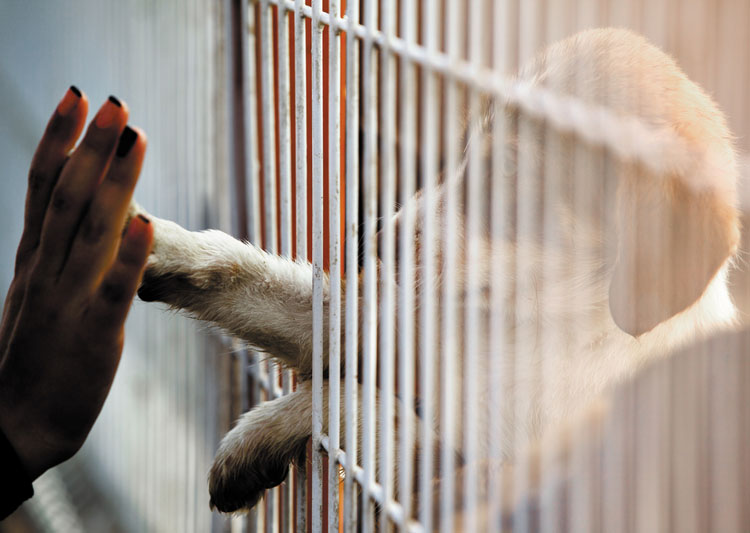
Rescue Dogs
vilevi/Deposit Photos

Somehow, the world envisions non-profit rescue organizations to have unlimited pet-friendly homes and no waiting list. People assume these organizations are able to accept every dog in need. Well, if this were true, shelters would be empty across the world.

Facts About Rescue Organizations

Fact: Foster homes are extremely limited and rescue organizations have very limited resources, such as funds and volunteers. When we see an abandoned dog, we need to take the initiative to rescue the dog rather than beg rescue organizations to step in. Yes, it’s time for us to roll up our sleeves and work with these organizations rather than passing the buck, which is happening at an alarming rate.

Rescue organizations excel at their adoption process. There’s a lengthy application process with requirements, home checks and legal contracts. If rescue organizations redirected all of their time and finances to adoption processes, we could make a big dent in finding forever homes for abandoned dogs. However, they spend valuable time begging and pleading people to find acceptable foster homes for homeless dogs. When no homes are available, they’re not able to welcome in more dogs.

Sound hopeless? Far from it. We need to rethink rescue processes. There’s a huge gap missing in saving and rescuing dogs, and that’s community involvement. If one person saved one dog every year, we most certainly would see a difference. Day in and day out, I see the same people tirelessly saving, nurturing and placing abused dogs into homes. These people need a break. We need fresh faces, new ideas and more people stepping in and helping. Abandoned pets are our problem, so we need to fix it together. No more calling someone else to help. You need to step in, roll up your sleeves and save dogs.

Saving Dogs is a Team Effort

Many people have tirelessly donated their time transporting, grooming, training and fostering dogs. Every bit of blood, sweat and tear is extremely appreciated, but we need more. Even non-pet people need to step in. This is not a “dog people” problem, but rather a humanity problem.

I’m not asking you to open up your home for a pet in need. I’m asking you to open up your wallet and donate time. We need you to help raise funds for these poor abandoned animals. I know you can most certainly help here.


Money makes the world go round. When sprinkled with kindness and good intentions, it’s unstoppable!


What Fundraising Can Pay For

By fundraising for donations, you can certainly ensure neglected dogs receive veterinary care, food in their belly and a safe place to stay.

Safe Housing

Due to the lack of immediate foster homes, a short stay in a boarding kennel is a safe place for stray dogs to lay low and recover until an opening pops up. But kennels cost money.

A home environment is best for all dogs, but they don’t magically appear right away. Most dog lovers are hesitant to open their homes to unknown dogs with unknown illnesses and temperaments. So by raising funds, you can help place a dog in a kennel environment until he or she is temperament tested with children, people and other pets. Kennels are good temporary options, but again they require money.

Veterinary Costs

Veterinary costs can add up, ranging between 50 percent to 80 percent of all donations. These costs can also depend on a stray dog’s needs. Some dogs are found duct-taped, discarded with broken legs or heartworm positive. Most stray dogs need to be spayed or neutered. For a single dog, these costs can quickly add up to $800. Donations can take care of this issue.

Veterinarians are Not the Enemy

Before we point fingers at veterinarians and demand deep discounts off “outrageous” fees, these folks charge a fraction of conventional human medical care cost. In addition, they walk out of college with the same amount of tuition debt as human medical doctors. Veterinarians are not the enemy. These folks are lumped into the tireless rescue fighters who have offered discounts, but they still need to feed their family. It’s our turn to help.

RELATED: Why You Should Get Pet Insurance

Food and Dog Behavior Training

Luckily, this issue is somewhat managed since large pet retailers offer free dog food to non-profit organizations. Just about every big box pet company has an active program in place. They donate toys and treats plus dog food.

Dog trainers are hidden heroes too. Many donate their time to temperament test, provide behavior protocols specific to each stray dog’s needs, and support rescue organizations and foster parents with ongoing advice and mentoring. Now, it never hurts to pay these dedicated folks either. They’re not making large profits like big box retailers. Money helps here too.

How You Can Save Animals

Find your cause. It’s pretty easy, as we’re bombarded with soulful eyes of dogs in need every day. If a stray dog shows up in your neighborhood or a friend finds a dog in deplorable conditions, jump in and help.

Set Up a Fundraising Website

Set up a website using PayPal for donations. It’s much cheaper than GoFundMe and other websites that charge between 3 to 10 percent on fund-raised money. You can also set up direct billing with the veterinarian caring for the dog.

From experience, I would set up both donation options. Some people are uncomfortable paying online while others worry about credit card information getting lost at a veterinary clinic. Setting up both options ensures you’re receiving the maximum amount of donations.

Set a donation limit that’s reasonable. Yes, we would all love to raise a million dollars for a dog, but it’s unreasonable and a bit off-putting to donators. Post a picture of the vet’s estimated bill, so donators can see where their funds are actually going.

Be honest and transparent. Explain why you’re asking for donations. Tell a stray dog’s story because that’s the reason you’re donating your time to help this cause. Keep emotions in check (I know it’s hard) and post pictures and updates. Givers want to know all of their money was used to help the dog rather than being wasted.

Lastly, open up your wallet and donate too. Yes, you’re donating your time, but give $25 or $50. Every bit of money is needed.

RELATED: How to Find an Excellent Dog Training Blog

Spread the Word

Trust me, your fundraising website will not reach goal within 24 hours. (Although I wish it did.) You’ll have to spread the word through social media, friends, family and contacts. Make it a point to meet a new contact every day and post results weekly, so folks know progress is being made.

Involve Rescue Groups

Once fundraising has begun and you’ve found a safe place for a dog in need, contact your local humane society or rescue organization. Explain to them the dog is safe and being seen by a vet, and fundraising has begun. Then, ask if they could post the dog on their website for adoption.

You should also ask if they would accept the dog you’re helping into their program, so potential adopters could be screened and home checked through their organization. As of yet, I haven’t had a rescue group refuse. Instead, they thank me profusely for doing the right thing and not dumping the dog on them.

One person, one dog every year. We can do this!

Filed Under: Clients, Dogs, Safety, Training Tagged With: do donations help dogs in need, dog training, Dog Training Tips, donating for rescue dogs, donations do matter, donations dogs, how to help a dog in need, how to help a stray pet, how to help dog rescue, how to help pet rescue, how to help rescue dogs, how to teach a dog, how to train a dog, I found a stray dog, safe places to donate for dogs, teach a dog, train a dog, worthy pet related causes

Overcoming Thunderstorm Phobia in Dogs

August 21, 2015 by Fanna Easter

How to Help Your Dog Overcome His Thunderstorm Phobia

Dogs Scared of Thunder
klagyivik/iStock

Does your dog show signs of nervousness and anxiety during thunderstorms? If your dog is hitting the hills or shaking like a leaf when the storm rolls in, this article will help you put him at ease.

Thunderstorm phobias are more common than you think. However, just because your dog has a thunderstorm phobia that doesn’t mean he’s fearful or submissive. Lightning and rain usually accompany thunderstorms, which causes more static electricity to run through things like carpet and couches, so it’s not only the noise that bothers your dog. Imagine having all that fur and it being full of static plus loud crashing noises–doesn’t sound very calm and tranquil, does it?

Signs of Stress and Anxiety

There are some tell-tale signs your dog might be experiencing stress or anxiety during thunderstorms. These signs include: hiding under furniture, shaking, whining, howling and even running around the house. However, there are some other, sometimes subtle, signs that can be easily overlooked, including heavy panting, excessive yawning, licking, pulling ears back, tucking tail in, eyes darting back and forth, and widening of eyes (whale eye or moon eye). Whether your dog is showing some of the more prominent signs of stress or more of the subtle signs, helping him cope with the situation will create a happier, calmer dog during stormy weather.

Positive Reinforcement of Alternate Behavior

There are several ways to help your dog overcome his phobia of thunderstorms. The best thing to do is create a treatment plan to modify his behavior. This sounds much more intimidating than it really is. I suggest writing it out, so that it’s easy to follow.

First, choose an alternate, desired behavior you would like to see your dog perform during this time of stress, such as a calm down-stay. You want to begin working on this behavior (if your dog does not already know it) prior to a thunderstorm. I suggest getting a rubber mat for this dog training session, as it helps minimize the static caused during lightning, and putting it in a comfortable spot away from the window where your dog can relax.

Once you have this all picked out, you can begin rewarding your dog when he’s lying quietly on his mat. At first, you may need to place food or a special toy on the mat to get him oriented. I like to call this the “safe zone” where there are nothing but good things. Always, always, always reward calm desired behavior on the mat.

Management and Setting Your Dog Up to Succeed

This is really the biggest, meatiest part of the treatment plan where you do most of your prevention work. Managing the situation and setting your dog up for success is so important. Who doesn’t want to succeed and be praised for a correct behavior? I know I do!

Okay, so how do we do this? Well, there is a lot of desensitizing that goes into the process, which you can do in small increments to fit into your daily life. Now that you have your mat, give your dog something really special to chew on and put a recording of thunder on very low.

If your dog shows no sign of stress, allow this process to go on for about 10 to 15 minutes. Do this on and off for the next couple of weeks, slowly increasing the volume. Don’t hesitate to give additional verbal praise and petting to let your dog know he’s doing a great job.

RELATED: Calming Music for Dogs

A tool available to pet owners and dog trainers for this specific instance is the Thundershirt. The Thundershirt is a shirt with a Velcro opening that wraps around the dog in multiple places. You put the shirt over your dog’s back and attach the Velcro strap under his stomach. To keep the shirt on, there’s another Velcro strap that goes across your dog’s chest.

The material is cotton and has no chemicals or vibrations. The Thundershirt acts like a hug for your dog in a scary situation. Most dogs will become very calm and relaxed when wearing this shirt. You always want to remember to reward your dog when he’s wearing the Thundershirt and showing calm behaviors in stressful situations.

Consequences for Inappropriate Behavior

Consequences are very minimal when it comes to dealing with something your dog is scared of. Using any surprise or corrective technique could cause more harm than good. However, if your dog becomes so frightened that there is no learning taking place, you may want to remove him from the situation. Put him in a dark place with calming music to help drown out the thunderstorm. You can bring him back once he has calmed down enough to re-enter the common area.

Consistency

This is the most important part of the treatment plan and usually the most overlooked. It is very important to follow through with all the exercises mentioned above until your dog is exhibiting calm, relaxed behaviors during thunderstorms. Dogs need to think it is an ordinary day with just another thing happening where good things happen to him!

Anytime you have to watch one of your family members deal with a stressful situation, it probably stresses you out as well. Hopefully, these dog training tips will help your dog with his thunderstorm phobia. If, after you try these dog training techniques and are still having difficulties, I suggest looking for a local dog trainer who can assist you and your companion.

Filed Under: Dogs, Safety, Training Tagged With: dog fears thunderstorms, dog scared of thunder, dog thunderstorm phobia, dog training, Dog Training Tips, how to teach a dog, how to train a dog, teach a dog, thunderstorm phobia in dogs, train a dog

11 Common Questions Dog Trainers are Asked

August 19, 2015 by Fanna Easter

From Your Dog’s Perspective: 11 Common Questions

Dog Obedience Class
HighwayStarz/Deposit Photos

As a dog trainer, I’m frequently asked the same questions over and over again during my dog training classes. Hey, it’s OK to ask since you’d never know the answer if you didn’t! Interestingly enough, many of the same questions are usually asked during the first or second class. This is because dog behavior is totally different than human behavior. So check out 11 of the most frequently asked questions below and understand what’s really going on from your dog’s point of view.

1. Why do dogs pull on leash?

Because you follow them. 🙂

2. Do dogs feel guilt?

Nope, they don’t. Instead, they react to your stern body language–basically, you’re scaring them. Please stop all the shaming photos. It sends the general public the wrong message.

3. Why do dogs bark at doorbells?

Someone (or thing) is on the other side and they are alerting you. Teach your dogs to do something else, such as lying on their bed, rather than bark.

RELATED: Training Dogs Polite Greeting Behavior

4. Why does my dog pee in the formal dining room?

Dogs are smart. Thick carpet and rugs adsorb pee quickly, so they prefer to potty in rooms with that surface. Never punish your dog for peeing. Train your dog to potty in another room or outdoors.

5. Why does my dog walk in front of me and stop?

Dogs have never been taught to not walk in front of you and stop. Dogs are like toddlers. They do the same thing until they’re taught differently. Train your dog to step back or come around by luring a treat into place.

6. Is treat training considered bribery?

Not at all. Lure reward training is a very effective way to teach new behaviors.

7. If my dog doesn’t learn, is he stupid?

Far from it. Dogs are super smart, and it’s our job to figure out how to teach polite behaviors effectively. Take a breather and look at it from your dog’s perspective. He’s probably confused and unsure of what you’re asking. If you’re frustrated, find a positive reinforcement dog trainer.

8. Should I train my dog to protect me?

Oh my gosh, no. Dogs should alert humans about situations, but not attack. Please don’t ever teach your dog to protect you, children or family. This is a dangerous game.

9. Why is my dog hyper?

Because he has never been taught to self-settle. This is a common issue with children too.

10. Will giving my dog people food cause begging?

Nope. The act of giving any type of food from your plate or dinner table causes begging behavior.

11. Should I act as alpha?

This is a myth. Forcing, staring, pushing, pulling and physically correcting dogs is extremely confusing to them. Picture yourself in a foreign country where no one speaks your native language. Now, imagine people trying to communicate with you–yikes! Throw the “alpha status” stuff out the window. It’s old and useless.

Do you have a question? Leave them in the comments section below!

UP NEXT: Confessions of a Dog Owner: I’m Not Getting the Most Out of Class

Filed Under: Clients, Dogs, Puppies, Training Tagged With: alpha dog, being alpha with dogs, common dog training questions, do dogs feel guilt, dog training, Dog Training Tips, how to teach a dog, how to teach dog to protect, how to train a dog, is my dog guility, my dogs my dog pull, people food begging, teach a dog, teach dog to protect me, train a dog, train protective dogs, why does my dog bark, why does my dog pee in the house, why does my dog pull on leash, why is my dog hyper

  • « Previous Page
  • 1
  • …
  • 12
  • 13
  • 14
  • 15
  • 16
  • …
  • 32
  • Next Page »

About

Dog Training Nation is a community of dog trainers, dog owners and dog lovers. Our mission is to provide trainers and owners valuable information to enrich dogs' lives. We cover a range of topics, from socializing puppies to dealing with aggressive dog behavior to selecting the best dog products. It is our hope you share our content to make the dog and owner world a better place.

​

Facebook

Video

Dog Training Nation is a dog training blog for pet owners and dog lovers. We cover a range of topics from puppy socialization tips to dog aggression to dog health. It is our hope you share our content to make the world a better place for dogs.

Dog Training Nation

Quick Links

Dog Training
Dog Behavior
Dog Training Videos
Become a Dog Trainer
About
Contact Us

Copyright © 2026 · Lifestyle Pro Theme on Genesis Framework · WordPress · Log in