Dog Training Nation

In Dogs We Trust

  • Home
  • Training
    • Dogs
    • Puppies
    • Clients
  • Behavior
    • Breeds
  • Health
  • Safety
  • Resources
    • Equipment
    • Books
  • Dog Training Videos
  • About
You are here: Home / Archives for Dogs

Teach Your Dog How to Use a Ramp

March 4, 2015 by Fanna Easter

Training a Dog to Use a Ramp
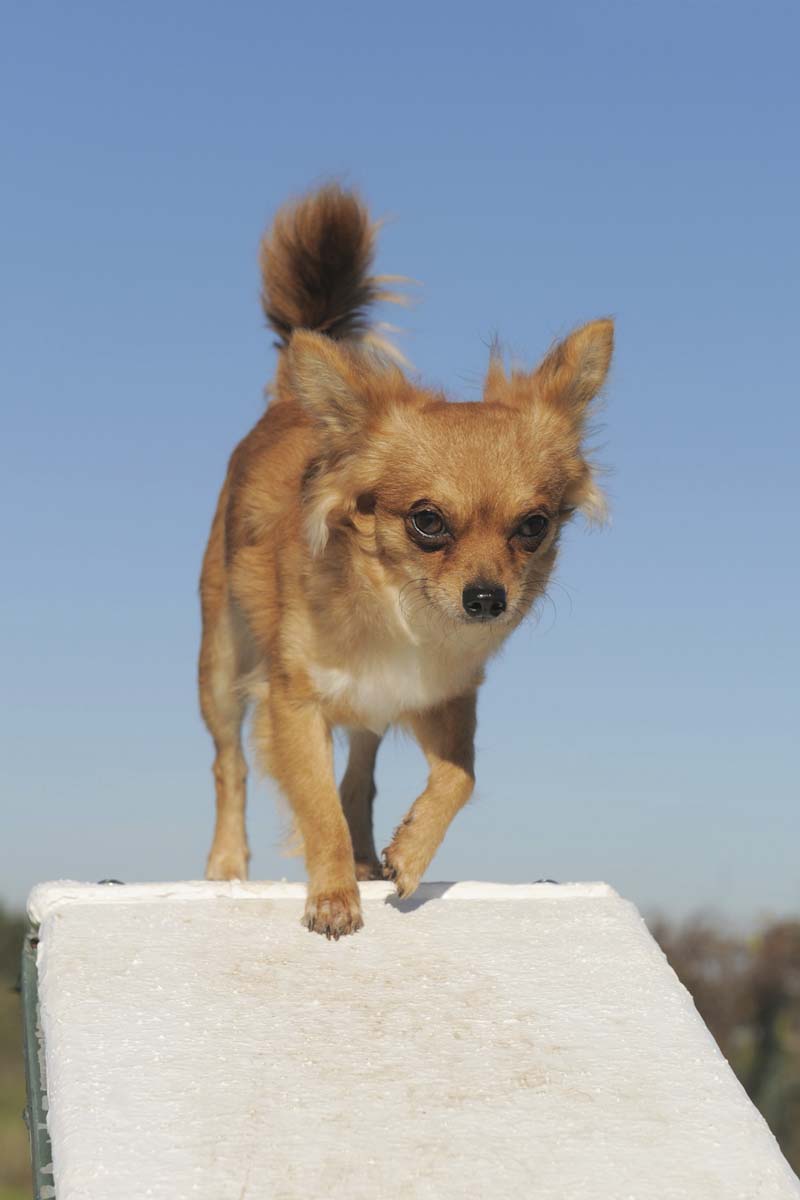
Dog RampsDog ramps are popular, as most dogs will benefit from using one during their lifetime. Ramps are extremely useful. They help small dogs on and off furniture, large dogs into and out of vehicles and prevent dogs from navigating steps after surgery.

The pet industry is filled with plastic, portable, wooden and decorative versions so choose the ramp that works best for the situation needed and your dog’s size.

Ramps are beneficial if your dog uses them. It’s important to teach your dog how to walk up and down a ramp. Dogs are smart and will likely jump over, off or go around a ramp because they haven’t learned how to navigate them yet.

How to Teach Your Dog to Use a Ramp

You’ll need lots of tiny yummy treats and a clicker. Treats should be the size of a pea, as you’ll be using plenty of them in the beginning.

Step One: Going Up

  • Sprinkle a thin trail of treats going up the ramp and take a few steps away from the ramp. Sometimes, our hovering is counterproductive and we, humans, usually feel the need to push or pull a dog closer to or up the ramp. Standing on the side of the ramp will prevent pushing forward.
  • Your dog will likely walk toward the ramp and sniff the treats or even eat a few. Praise her. She’s trying.
  • As she nibbles a few treats, praise her as she places a paw or two on the ramp.
  • If she’s still not sure, ask another member of the family to stand at the top of the ramp and praise her for touching the ramp.
  • After a few minutes, your dog will likely walk halfway up the ramp and look over the sides. Continue to encourage her to walk up the rest of the way.
  • Once she walks up the ramp, give her a handful of treats and lots of praise. I call it “have a party!”

Step Two: Coming Down

  • Using a trail of treats, sprinkle down the ramp. You’ll use the same techniques as teaching her to go up the ramp.
  • Some dogs are hesitant to walk up a ramp and others aren’t too sure about walking down a ramp. Dogs have different comfort levels just like people.

Step Three: Add a Cue

  • Once your dog willingly walks up and down a ramp, it’s time to add a cue.
  • Say “ramp.” As your dog begins to walk up or down the ramp, click and give a treat. Voila. There you go!

VIDEO: Teaching Your Dog How to Use a Ramp

READ ALSO: How to Choose a Dog Ramp

Filed Under: Dogs, Equipment, Resources, Training Tagged With: dog ramp, dog ramp video, dog ramps, dog ramps for car, dog ramps for chairs, dog ramps for furniture, indoor dog ramps, puppy ramp, teaching your dog who to use a ramp

Keep Dog Training Sessions Short

March 2, 2015 by Fanna Easter

Dog Training Practice Session Tips

Keep it Short and Reset

Dog Training Classes

When teaching your dog a new behavior, practice sessions are important. You can’t build muscle doing one repetition of an exercise, right? You need multiple reps to build and sculpt muscles, and this holds true when teaching a new behavior. Practice does make perfect!

Before beginning a dog training practice session, it’s important to follow a few tips to ensure success.

Let’s Get Busy

I gather my clicker and small, yet super yummy treats and head for our training area, which is usually my living room. For a training area, choose an area with non-skid flooring with plenty of space so your dog can move around freely. Personally, I inform my dog a training session is about to start. I say “let’s get busy,” which means “it’s time to punch in for a training session.”

RELATED: 3 Reasons Why You Need Non Slip Socks for Dogs

Is reaching for treats and/or the presence of the clicker a cue? Probably. Is walking to our training a cue too? Maybe. But I like to settle in our training area and give the green light by saying “let’s get busy.” It’s basically like saying “we’re up for business.”

Count Out Five Treats

Count out five treats and practice until they are gone. This is the easiest way to keep training sessions short. I’m as guilty as the next person. I used to time practice sessions for one minute. Oh, when we were on a roll, I would turn off the timer and keep going. My dog suffered the burn out from it too! He would miss a cue or offer “sit” because he was confused.

It’s hard concentrating for five full minutes. Most people tackle a problem for one or two minutes, take a tiny break to refill their coffee cups, take a deep breath or ask a fellow dog owner a question. So give your dog a break, count out five treats and practice until they gone. 🙂

Resetting

Resetting is the easiest way to move a dog during practice sessions. Many times, clients practice “sit” using five treats so how can you ask a sitting dog to “sit” again, right? Allow me to introduce you to resetting. It will make your dog’s life so much easier! Instead of pulling your dog out of a behavior, click and toss her a treat about three feet away. When tossing the treat, she must get up, find and eat it. Now you can ask her to “sit” again. Voila!

Tossing treats on the floor will not teach your dog to “vacuum” for food. This happens during controlled training sessions. If you’re worried about feeding your dog from the ground, place a paper plate about two feet away and toss treats into the plate. 🙂

VIDEO: Dog Training Tip: How to Reset Your Dog

All Done

Once all five treats are gone, say “all done,” which means your dog can take a break, and have a quick game of tug or lots of petting. Now, move away from your training area and catch up on emails or find another short task to complete. Most likely, your dog will take a deep breath, grab a few licks of water and lay down for a bit. After five minutes or so, it’s time for another practice session so “let’s get busy!”

Usually, I complete two or three training sessions per day and mostly in between my dog’s scheduled meals, as everyone needs a snack. 🙂

When to Move On

When you’re willing to bet $5 on your dog for performing the behavior, move onto the next step.

READ ALSO: The Right Way to Do Lure Reward Dog Training

Filed Under: Dogs, Training Tagged With: dog trainer tips, dog training, dog training homework, dog training practice sessions tips, how to add a cue to dog training, how to teach a dog, how to train a dog

The Right Way to Do Lure Reward Dog Training

February 27, 2015 by Fanna Easter

Using a Food Lure During Dog Training

Lure Reward Training
There is a right way to use a lure! pakornkrit/iStock

Using food lures during dog training can jump-start a behavior. However, it’s important to understand how to use a lure effectively. Check out these steps and video on using food lures while training your dog. Lure is not a four letter word–it’s a valuable tool in dog training!

A Bit About Food Lures

Somehow, using food lures and food rewards during dog training is considered cheating. I’m still scratching my head on this concept. Surely, you can capture (click and reward a dog when he’s doing a specific behavior) or shape (reward small steps toward a behavior) a new dog behavior, but sometimes a lure gets you started faster.

Now, some folks feel lures are bribery. Again, I’m scratching my head. I’m not bribing dogs. I’m luring them into a behavior and giving them the treat (lure) when they do the behavior. Treats are your dog’s currency so use properly and reward often. OK, I’m off my soapbox!

How to Use Food Lures Properly

There is a technique to using food lures properly. Follow these steps:

  • When choosing food lures, I use a large piece of treat about ½ inch or so.
  • Tuck the food lure behind your fingers with a tiny bit poking out.
  • Place the food lure on your dog’s nose. Think of it like a magnet.
  • Slowly move your food-lure hand in the direction you want to move your dog.
  • If a dog falls off a lure, meaning he stops following the lure, stop and place back on his nose. Most dogs fall off a lure if you’re moving your hand too fast or the dog doesn’t really like the treat being used.

RELATED: Healthy Dog Treats

Fading Food Lures

I think the confusion about food lures is due to people who never fade a lure so their dogs become dependent on its presence or they won’t do the behavior. Well that’s our fault and not the dogs’. We never taught them otherwise. 🙂

Once you jump-start a behavior, you can fade a food lure. Follow these steps to fade food lures.

Step 1

Once your dog can be lured into a behavior 4 out of 5 times, it’s time to add a cue.

Step 2

Say cue and lure into behavior. Now, you’re pairing a cue with a behavior. Once you’ve practiced for several days, move to step 3.

Step 3

Say cue and wait for dog to perform the desired behavior. Once he does, click and treat.

Usually, when adding a cue to a behavior, your dog may become confused and won’t respond to the new cue. Don’t repeat the cue. Wait a few seconds. If your dog still doesn’t do it, use the food lure. If this happens, this means your dog does not know the cue so go back to step 2.

Step 4

Once your dog responds to a cue 4 out of 5 times during a training session, reward your dog after the behavior is finished. Reward with a food treat, game of tug, toss of the ball or whatever game your dog loves.

VIDEO: Using a Food Lure During Dog Training

READ ALSO: Teaching Your Dog to Wait for His Food Bowl

Filed Under: Dogs, Training Tagged With: dog training with food, food lure for puppies, how to use a food lure dogs, how to use a food lure video, tips on using food during dog training, treats and dog training, using food during dog training

How to Teach Your Dog to Spin

February 25, 2015 by Fanna Easter

Train Your Dog to Spin

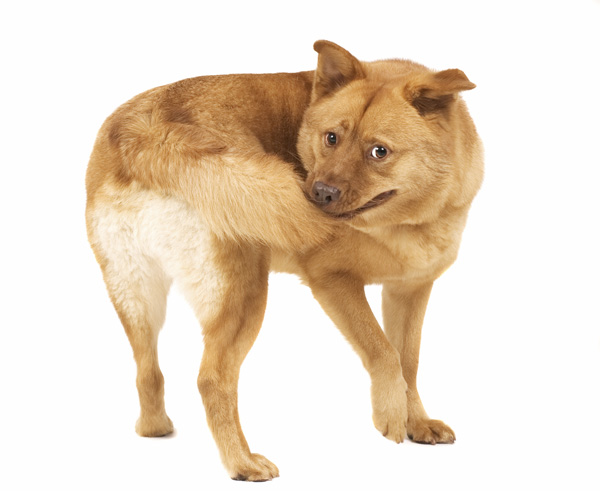
Dog TricksTeaching your dog tricks is fun, but there’s more to it! Spending time to teach your dog new behaviors builds a strong bond of trust between you and your pet. Plus, you’re providing mental stimulation, meaning you’re keeping your dog’s brain sharp and engaged. You’re creating a thinking dog, which is fabulous!
How to Teach Your Dog to Spin

You’ll need several medium to large yummy treats to begin the process. Usually, I use string cheese and break each stick into thirds. You can use hot dogs or chunks of chicken–use whatever your dog loves.

RELATED: Dog Training Treats

Half Moon (Nose to Rear)

  1. Start with your dog facing you.
  2. Place treat on your dog’s nose. Allow him to sniff and taste it, but not grab and chew the treat.
  3. Hold the lure still until your dog reaches for it.
  4. Lure your dog’s nose toward his rear end. Your dog’s body is creating a half circle.
  5. Practice “half moon” a few times. This is a good stretch for dogs too!

Full Spin

  1. Lure your dog into “half moon.”
  2. Now, lure his nose behind his rear end in a sweeping motion.
  3. Lure his nose back toward you.
  4. Voila! A full circle.

Add a Cue

For 2-3 days, practice luring your dog into a spin. After a week of practice, say “spin” before you begin luring. Continue practicing for another week. Now say “spin” and wait for your dog to turn around. If, after 3 seconds, your dog does not spin, it means he’s confused and doesn’t know the cue. Continue pairing “cue” with luring a spin for another week.

VIDEO: How to Teach Your Dog to Spin

You may also like: Teaching Your Dog Focus

Filed Under: Dogs, Training Tagged With: cute dog tricks, dog spin video, easy dog tricks, fun dog tricks, fun games for dogs, games for puppies, how to teach your dog to spin, Spin dog, teach spin dog, tricks for dogs, tricks for puppy

Teaching a Dog “Look at Me:” Capture It

February 19, 2015 by Fanna Easter

Teaching a Dog to Focus

Dog Training
Click and treat for eye contact. Good boy!

If your dog is a “Looky Lou,” meaning he gawks at everyone but you, take a couple of minutes and teach your dog “look at me” instead. Yes, it will make your life easier. 🙂

Training Your Dog to Look at You

Grab super yummy treats, a clicker and your leashed dog of course. When teaching your dog a new behavior, it’s usually easier to keep him leashed so he’ll stay with you instead of becoming distracted by something else. Over time, you don’t have to leash your dog any longer as he’ll learn the presence of a clicker means training time!

Practice each section a few times a day for one minute. After three days, move onto the next section.

Capture Good Behavior

  • Holding a treat in your left hand and your clicker and leash in your right hand, slowly move your left hand away from you.
  • Your dog will likely watch your treat hand so wait for your dog to look back at you instead.
  • The moment your dog’s eyes look back at you, even for an instant, click and give her the treat in your left hand.

Tip: Refrain from staring at your dog’s face. Instead, focus on his chin, as direct eye contact is creepy for dogs and humans alike. 🙂

After a few sessions, you may notice your dog ignoring your “treat moving hand” and focusing on you instead, in which case click and treat. This means you’re doing an excellent job!

VIDEO: Teaching a Dog “Look at Me” Step One

READ ALSO: Teaching a Dog “Look at Me:” Adding a Cue

Filed Under: Dogs, Training Tagged With: how to train a dog, how to train a dog to focus, how to train a puppy, teaching a dog to look at you

  • « Previous Page
  • 1
  • …
  • 18
  • 19
  • 20
  • 21
  • 22
  • …
  • 32
  • Next Page »

About

Dog Training Nation is a community of dog trainers, dog owners and dog lovers. Our mission is to provide trainers and owners valuable information to enrich dogs' lives. We cover a range of topics, from socializing puppies to dealing with aggressive dog behavior to selecting the best dog products. It is our hope you share our content to make the dog and owner world a better place.

​

Facebook

Video

Dog Training Nation is a dog training blog for pet owners and dog lovers. We cover a range of topics from puppy socialization tips to dog aggression to dog health. It is our hope you share our content to make the world a better place for dogs.

Dog Training Nation

Quick Links

Dog Training
Dog Behavior
Dog Training Videos
Become a Dog Trainer
About
Contact Us

Copyright © 2026 · Lifestyle Pro Theme on Genesis Framework · WordPress · Log in