Dog Training Nation

In Dogs We Trust

  • Home
  • Training
    • Dogs
    • Puppies
    • Clients
  • Behavior
    • Breeds
  • Health
  • Safety
  • Resources
    • Equipment
    • Books
  • Dog Training Videos
  • About
You are here: Home / Archives for Large

Golden Retrievers

November 12, 2014 by Fanna Easter

Golden Retriever Breed Info

Golden Retriever Information
Find out if a Golden Retriever is the right dog for you!

The golden angel of the sporting group. Let’s chat about the beautiful Golden Retrievers! Find out if a Golden Retriever is the right dog for your family!

Golden Retriever Facts

Golden Retrievers were bred to cover large fields, including through water, at a high rate of speed to retrieve game. To stand out in the field, their coats are gold, which makes them easy to spot from long distances by hunters. Coat color varies from light, almost white gold, to dark brown gold. Beware of breeders specializing in “rare white goldens.” The color is not rare, it’s just a color variation. When I say beware, some breeders will charge a steeper price. This is your first clue this breeder is not for you.

Goldens are a large, heavy boned dog, standing 21-24 inches at the shoulder and weighing 55-70 pounds as an adult. Goldens can live between 10-12 years old. They are a courageous and lively breed with plenty of energy to master an agility course in lightening fast time. Remember, they were bred to retrieve all day long. 🙂

Temperament

Friendly, smart, happy and social with people and other dogs. They should not be anxious, fearful or aggressive. To keep your Golden mentally happy, provide daily walks, food puzzles for daily meals plus lots of opportunities to earn rewards for polite behaviors.

Goldens are powerhouses and do best in active homes. If you would prefer to stay home and watch TV, this breed is probably not for you. If you enjoy the outdoors, hiking, traveling and socializing, a Golden will fit right in. They will gregariously entertain guests for you!

It’s always important to meet Sire and Dam before choosing a puppy. Their temperaments provide a sneak peak of your puppy’s future temperament. I say “future,” as it’s so important to socialize puppies, especially before 16 weeks of age. Lack of socialization is detrimental for the end result. Hence, his final adult personality (temperament). If his Sire or Dam is anxious, there is a 50% chance your puppy will be anxious too. It’s important to understand, aggression is a symptom of anxiety. If adopting your puppy or older dog, you’re in luck as many knowledgeable shelter workers can temperament test your future dog for you!

Training

As with all dogs, begin socialization early before 16 weeks of age. Due to his large size and activity level, enroll him in a puppy and basic manners course to learn polite manners. Goldens flourish using positive reinforcement training and clicker training! Read tips on locating a professional dog trainer.

To prevent excessive energy, feed his daily meals using food puzzles and daily walks. Also, as a dog trainer, I feel large dogs should focus on a few different behaviors than smaller dogs so it’s important Goldens learn these polite behaviors. Now, you may notice your Golden puppy loves to pick up and hold things in his mouth, as he was bred to hunt and retrieve game. Sometimes rocks, sticks and your arms become game so it’s important to manage puppy mouthing.

Goldens can pretty much do it all. They can hunt, retrieve, run agility courses, excel in obedience venues, move beautifully during conformation shows and even barn hunt! Goldens are fantastic at service and guide dog duties. They’re large enough to easily pick up items, strong enough to brace a person trying to stand up, powerful enough to pull wheelchairs and smart enough to train for anything. Yup, that’s a Golden in a nutshell!

Health Issues

Goldens are susceptible to hereditary Hip and Elbow Dysplasia, which are painful malformations of bones. Cancer is common in the breed too. Also, a small percent develop hereditary heart issues. To minimize these risks, only purchase dogs from reputable breeders that health test their dogs. Now, many unethical breeders are getting smart and advertise health testing, but don’t really do it, so always ask for health certificates from the Orthopedic Foundation of Animals (OFA).

If adopting a Golden, it’s important to understand health issues plaguing this breed and keep an eye out for any signs or symptoms for these diseases. When in doubt, contact your vet.

Grooming

Goldens have a dense coat, which should repel water. Hence their retrieving background. They should be brushed weekly with a slicker brush and mat rake, which removes undercoat, dead hair and keeps their coat tangle free. Using blunt-nosed scissors, trim hair between pads to prevent sliding on smooth surfaces. Don’t forget weekly nail trims, ear cleanings and tooth brushings. While many Goldens have beautiful flowing furnishings (longer hair on backs of front and back legs), these furnishings don’t require trimming unless they’re tangling. To trim furnishings, locate a professional groomer who can trim back their furnishings without shaving them. Even better yet, keep their flashy furnishings and invest in a great coat detangled. 🙂

Find a Golden Retriever

Before buying or adopting a Golden, please choose adopters and breeders from the Golden Retriever Club of America. These folks are the experts on this breed and will guide you in the right direction. For rescues, view Petfinder to locate a Golden in need near you!

Tell me about your Golden Retriever!
Filed Under: Breeds, Large Tagged With: adult golden retriever picture, find a golden retriever, golden retriever, golden retriever care, golden retriever image, golden retriever information, golden retriever puppies, golden retriever puppy training, golden retriever temperament, golden retriever training, golden retriever training techniques, golden retriever traits, how to train a golden retriever

Dog Breed Of The Week: Goldendoodle

November 12, 2014 by Fanna Easter

Goldendoodle Breed Information

Goldendoodle Breed Info
Find out if a Goldendoodle is the right dog for you right here!

Are you thinking about adding a Goldendoodle to your home? If so, learn if this dog breed is right for you and your family.

Goldendoodle Facts

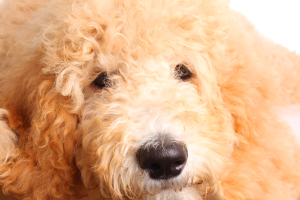
A Goldendoodle, mistakenly spelled golden doodle, is a mix breed. They’re a cross between a Golden Retriever and a Standard Poodle. The original purpose of crossing these two breeds were to develop a hypoallergenic dog for guide and service. Plus, they wanted to maintain a large-sized dog with a social (friendly and outgoing) temperament plus a vest for learning.

While there is no such thing as a 100% hypoallergenic dog, Goldendoodles are non-shedding that produce less dander than shedding breeds. Non-shedding breeds need regular grooming, as their undercoat does not shed on its own. To keep dander to a minimum, for allergy-prone owners, it’s best to bath dogs weekly using a gentle oatmeal shampoo.

Temperament

As a dog trainer, I usually have 2-4 Doodles in each class, so I’ve had plenty of experience with the Goldendoodle temperament and teaching this dog breed polite manners. 🙂 Goldendoodles are usually exuberant and social dogs. However, I’ve noticed a few Doodles with anxiety. Make sure to meet the puppy’s Sire and Dam before choosing him. It’ll provide you insight into your puppy’s adult Goldendoodle temperament.

It’s also important to socialize puppies before 16 weeks of age, as that will help shape your puppy’s temperament. Many shelter workers offer temperament testing if you’re adopting a puppy or older dog.

Grooming

Since Goldendoodles are non-shedding, they need daily brushing to remove their dense undercoat plus scheduled grooming appointments every 6-8 weeks. Interestingly, due to genetics, their coats can vary in length and color. Some will have a flatter (straight hair) or dense (curly hair) coat. Genetics are so interesting!

When brushing, it’s important to brush skin deep to prevent matting. Start in small sections, such as a back leg. Using your finger, divide  small sections of his coat (width of your finger), brush from root to tip with a slicker brush. By brushing in small sections, you’re removing tangles and undercoat,  which prevents matting later. Slicker brushes contain firm steel bristles, which are close together, and capture undercoat and dead hair. Due to the steel bristles, make sure not to touch your dog’s skin with the bristles, just his hair. To make sure all tangles are thoroughly brushed out, follow each section with a comb.

Every 6-8 weeks, schedule a professional grooming, which will shorten your Goldendoodle’s coat length. At home, continue daily brushing and weekly baths, with an oatmeal-based shampoo to keep mats away. After weekly baths, follow up with nail trimmings and ear cleaning.

Dog Training

Goldendoodles are easily trained. They gleefully respond to positive reinforcement dog training. 🙂 Some Goldendoodles can have excessive energy so it’s important to remember Golden Retrievers and Poodles were designed for hunting. They need extra energy to work all day. Due to the Goldendoodle’s larger size, he can pull you around on leash or easily knock you down so enrolling in a group class is a must.

Use food puzzles to feed your dog’s daily meals and take him on daily walks to burn off excess energy. Teach your dog polite behaviors and be aware he may hold rocks, sticks and even your arm in his mouth.

Health

Goldendoodles are predisposed to Gastric Torsion and Hip and/or Elbow Dysplasia. Since they have floppy ears, which block air from entering their ear canals, they can develop ear infections so wipe with a gentle ear cleaner and cotton balls.

Where to Find a Goldendoodle

If you’re considering adding a Goldendoodle in your home, view the experts for Standard Poodles and Golden Retrievers. These folks health test their adult dogs, can put you in touch with recuses in your area, and lead you in the right direction.Also, do a search at Petfinders for local rescues in your area.

Before you bring a Doodle home:

  • Be prepared for a larger adult dog about 25-28 inches (measured from his shoulders) and weighing 50-100 pounds.
  • Enroll in a puppy and basic manners class soon, as Doodles have high energy, are easily excited and are strong enough to pull you on leash.
  • Locate a gentle and patient groomer who accepts Goldendoodles
  • Enjoy his smile, as he inherited this from his Standard Poodle side of the family. 🙂
  • If you purchase a puppy, ask for health testings for both parents.

Filed Under: Breeds, Large Tagged With: do goldendoodles shed, find a goldendoodle, golden doodle, goldendoodle, goldendoodle care, goldendoodle information, goldendoodle personality, goldendoodle picture, goldendoodle puppies, goldendoodle rescue, goldendoodle temperament, goldendoodles, goldendoodles for adoption, how to train a goldendoodle, training a goldendoodle

Best Dog Training Books For Beginners

October 22, 2014 by Fanna Easter

Dog Training Books

Dog Training Books
Continue to learn by reading the best dog training books in the industry. dtatiana/Adobe Stock

Written for dog trainers with less than 2 years of experience.

If you’re a dog trainer, regardless of experience level, it’s so important to continue learning. While attending conferences and seminars are a huge plus, reading dog training books provides an in-depth look into specific topics as well as references when you encounter obstacles. As a dog trainer, I highly recommend this reading list with the assumption that beginner dog trainers have an understanding of basic classroom setup, management and curriculum.

Best Puppy Training Book

“Puppy Start Right – Foundation Training for the Companion Dog”
by Kenneth Martin and Debbie Martin

If you’re looking for the ultimate puppy training book, then you must read this book! Dr. Kenneth Martin and Debbie Martin provide information left out of most books about teaching body handling and muzzle training. Plus, they include a good refresher on clicker training and step-by-step information on shaping behaviors, which is a challenging skill for beginner dog trainers. Reading and referencing this book will certainly prepare you to offer the most current information in puppy classes!

Best Learning Theory Book

“Don’t Shoot the Dog” and “Reaching the Animal Mind”
by  Karen Pryor

If you have not read these books yet, then run and purchase them right away! Karen explains a beautiful dog learning theory, variable schedules of reinforcement and how animals learn. A tip: highlight and bookmark your “ah ha moments” so when you’re feeling burned out, take a peek and understand why you fell in love with dog training in the first place! 🙂

Best Canine Body Language Book

“Canine Behavior: A Photo Illustrated Handbook”
by Barbara Handelman

An important skill to learn, as a dog trainer, is how to read and interpret canine body language. Barbara’s book not only explains body language, but the reference pictures are also amazing! This book is HUGE and packed full of pictures with detailed explanations. Tip: when viewing each picture, think through solutions to prevent this behavior from happening. This will teach you to react quickly, especially to an “agnostic pucker”!

Best Teaching Pet Parents Book

“Ebook: The Human Half of Dog Training – Collaborating with Clients to Get Results”
by Risë VanFleet
&
“It’s Not the Dogs, It’s the People!”
by Nicole Wilde

Oh, but teaching dogs are only half of it and it’s so important to understand how to interact, teach and provide feedback to pet parents. In my opinion, this is the hard part! Not only do you need to interpret human body language, you need to also understand how to tactfully explain instructions, several times if needed, to ensure the pet parent understands specific concepts. Well, here ya go — the two best books out there! Don’t skimp by purchasing only one book (it’s so important to read several points of view).

So you’ve noticed, a few topics are missing, such as dog aggression, anxiety and fearfulness. Beginner dog trainers must have a full understanding of the above topics before diving into the deep end, meaning aggression. For my full thought process on this topic, check out these dog behavior articles.

What is your favorite dog training book?

Filed Under: Books, Clients, Large, Resources, Small, Training Tagged With: animal behaivorist, beginner dog trainer recommended reading, best books for dog trainers, best dog training book review, best dog training book reviews, best dog training books, best dog training books 2014, best rated dog training books, book dog trainer, dog trainer, dog trainer's corner, how to become a dog trainer, so you want to be a dog trainer, top books for dog trainers

German Shepherds

September 25, 2014 by Fanna Easter

German Shepherd Dog Information

German Shepherd

While living in Germany, I was able to witness the German Shepherd dog in its true glory, as they originated from Germany, and learned more than I ever had before. I was lucky enough to attend many dog shows in Europe and watch them move like the wind across the ring. Also, we were part of a Schutzhund Club in Vilseck, Germany, where 90% of the dogs were GSDs. We saw every variation from East German, Czech lines, long coat, short coat to everything in between. Their coloring is usually black and red, tan and black and sable. While the white German Shepherd is frowned upon in the U.S., I did see many white German Shepherds in Germany and they were lovely!

The German Shepherd Dog was designed as a versatile dog and they can do anything! They excel at obedience, service dog work, military work, herding livestock, protecting their family and so on. Most are lighter weight than other guarding breeds, such as the Rottweiler, are able to walk across debris without it caving in and fly like the wind over fences.

Training and Temperament

During my group classes, German Shepherd Dogs excelled at learning new behaviors. Now, they will have fear periods just like any dog, but I feel herding and guarding breeds have a longer or more intense fear period than other breeds. Since these breeds are bred to observe constantly, they may see things a bit different than other breeds. With any fear period, it’s vital they learn positive associations with anything that may cause barking, growling or moving away. I like to play “look at the monster,” which means they look at the scary thing and I click/treat. Make sure you are at a safe distance from the “monster,” which means your GSD will look at you and able to take treats. When in doubt, move further away. This teaches him the “monster” is not that bad because every time you look at it, you get “cheese.” Never force your GSD to walk over or touch anything that causes him to be fearful. This can cause him to be permanently fearful of that object.

They are great family dogs. My best friend and godchildren have owned German Shepard dogs for more than 15 years, and they will sit and walk nicely on leash for my 4-year-old godchild!

Dog Grooming

Now, this breed does shed, especially during spring and fall, as they are blowing their undercoats. I recommend using an undercoat rake to remove excessive undercoat and keep shedding to a minimum.

Exercise

German Shepherds need a minimum of a 30-minute walk per day. Also, feed your dog using interactive food toys, which dispense food as your dog paws, moves or tosses the toy around. This will ensure they receive plenty of mental stimulation.

Learn more about German Shepherd dogs and rescue at German Shepherd Club of America and National List of German Shepherd Dog Rescue Groups.

Tell me about your German Shepherd dog in the comment section below.

READ ALSO: German Shepherd Training

Filed Under: Breeds, Dogs, Large, Training Tagged With: adopt german shepherd dogs, American German Shepherd Rescue Association, before getting a german shepherd, german shepherd, german shepherd dog, german shepherd dog information, german shepherd facts, german shepherd information, german shepherd pictures, german shepherd puppies, german shepherd puppy, german shepherd training, GSD, GSDs

  • « Previous Page
  • 1
  • 2

About

Dog Training Nation is a community of dog trainers, dog owners and dog lovers. Our mission is to provide trainers and owners valuable information to enrich dogs' lives. We cover a range of topics, from socializing puppies to dealing with aggressive dog behavior to selecting the best dog products. It is our hope you share our content to make the dog and owner world a better place.

​

Facebook

Video

Dog Training Nation is a dog training blog for pet owners and dog lovers. We cover a range of topics from puppy socialization tips to dog aggression to dog health. It is our hope you share our content to make the world a better place for dogs.

Dog Training Nation

Quick Links

Dog Training
Dog Behavior
Dog Training Videos
Become a Dog Trainer
About
Contact Us

Copyright © 2026 · Lifestyle Pro Theme on Genesis Framework · WordPress · Log in