Dog Training Nation

In Dogs We Trust

  • Home
  • Training
    • Dogs
    • Puppies
    • Clients
  • Behavior
    • Breeds
  • Health
  • Safety
  • Resources
    • Equipment
    • Books
  • Dog Training Videos
  • About
You are here: Home / Archives for Breeds

Dog Breed of the Week: Pug

June 19, 2015 by Fanna Easter

Meet the Pug

Pug Dog Breed
Valentin Creciun/iStock

Let’s talk about the Pug this week. Pugs are a member of AKC’s Toy Group due to their size and original purpose of being a lap dog. The funny thing is they come from the Mastiff family. That is quite a difference in size if you ask me. However, you can definitely see the resemblance in their markings, extra skin and wide stature.

General Characteristics and Temperament

The Pug is considered a small dog. Pugs are about 10 to 11 inches tall and weigh between 14 and 18 pounds. I personally think they are absolutely adorable with their short and square muzzles, large prominent eyes, big round head and curled tail. This dog breed has lots of wrinkles and a perfect button face, lovingly called the “pug mug” by those who share their homes with these love bugs.

Today, the Pug is bred specifically for a companion. If you’re looking for a dog that is playful, loving and loyal, the Pug is for you! Pugs learn quickly and adapt well to many different environments. As long as Pugs are around their people, they are happy! Due to their small size, this breed is a popular choice for busy families and people who live in apartments.

Pug Grooming

A Pug’s grooming requirements are very minimal. Their smooth coat needs occasional brushing to remove dead fur. Also, frequent baths are needed to keep your dog smelling fresh and feeling great! It’s important to keep their face folds (wrinkles) clean and dry to prevent skin infections so make sure to wipe in between each wrinkle with a dry towel daily.

Teeth

Tartar tends to build up on smaller dogs’ teeth quicker than that of larger dogs. Prevent tartar buildup by brushing your Pug’s teeth every day. Be sure to use a doggy safe toothbrush and toothpaste. You can usually find these at your local pet store with no problems.

RELATED: Small Dog Dental Care Tips

Nails

Pugs have fast growing, hard nails that require regular maintenance. You should keep them clipped, using clippers or a grinder to prevent overgrowth and splitting. If you’re not comfortable trimming your dog’s nails, you can usually stop by a grooming salon and get them cleaned up pretty quickly for a fair price.

Health and Nutrition

Health

Most Pugs have a 12- to 15-year lifespan so they tend to live a long time. While all breeds have health issues, Pugs are prone to hip dysplasia, Pug dog encephalitis, eye disease, patellar luxation, breathing problems due to their small nostrils and nasal passages, and skin infections. A responsible dog breeder can educate you on the specific health concerns with this particular breed. Respectable breeders utilize genetic testing to minimize disease with their puppies, which is a must.

Due to a shorter muzzle, Pugs are super sensitive to heat and humidity, which causes heat stroke. Never leave your Pug outside. Also, expect snoring. It’s common with all short-muzzled dogs.

Nutrition

Good nutrition applies to all dogs. It’s important to feed your dog a high quality diet. Your veterinarian can advise you on which food best fits your dog’s particular needs.

Pugs love to eat so make sure not to overfeed them. With their short and wide stature, obesity can be easily achieved. When giving dog training treats, size does matter so break treats into pea-sized portions. Don’t forget to calculate treat calories given during the day and subtract them from your dog’s daily meals. Too many calories and not enough exercise play a big role in canine obesity.

Dog Training and Exercise

Training

Pugs love having fun and eating food so dog training is pretty easy! It’s a good idea to start training at a young age. Sign up for a puppy class at your local pet store or training center. Pugs also love people and other dogs so providing them with interaction is very rewarding and fun. Sometimes Pugs can be preoccupied, but that is usually fixed with removing what they want most for a couple of minutes–your attention. Once their attention is focused back on you, reward!

RELATED: Walking Two Dogs at Once Tips

Exercise

Pugs require daily exercise. Try playing a fun, lively game of fetch or going on a moderate walk around the park. Be careful though. Pugs don’t mix well with heat and humidity. Choose a cooler time of day. This is a must when setting up your exercise plan.

To get more information on Pugs, please visit any of the following websites: www.akc.org
and www.pugrescuenetwork.com.

You may also like: Dog Breed of the Week: Bulldog
Filed Under: Breeds, Dogs, Training

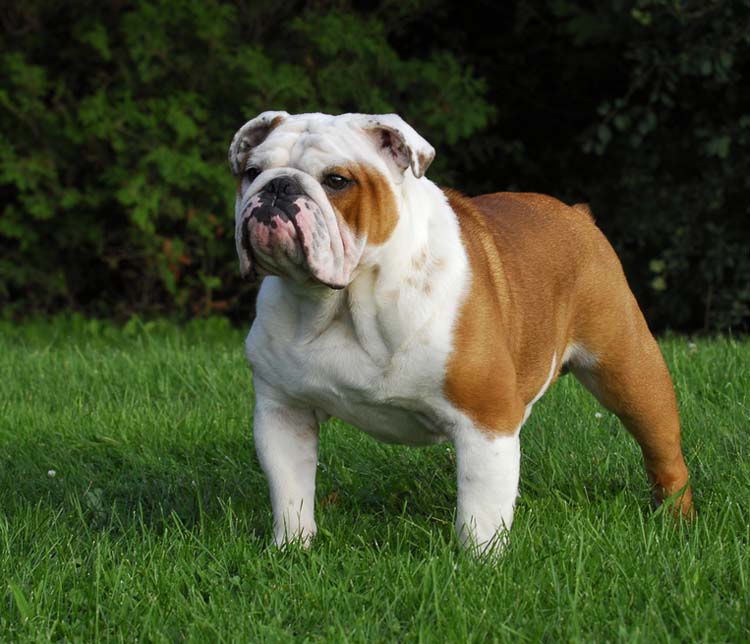
Dog Breed of the Week: Bulldog

June 12, 2015 by Fanna Easter

Meet the Bulldog

Bulldog
willeecole/Deposit Photos

Are you considering getting a Bulldog? Personally, I have always wanted one, but haven’t had the privilege of owning one. However, I have had the pleasure of training several Bulldogs. With that being said, I thought I would put some information together for people who are looking at adding a new member to their family.

Bulldog Characteristics and Temperament

Bulldogs are a part of the AKC Non-Sporting Group and one of the most popular breeds. You’ll find characteristics from several different breed groups in the Non-Sporting group. Their name “bulldog” originated with the dog being used for bull baiting though be it very cruel. Bulldogs tend to be very strong bodied, willed and calm. With them being so strong willed, you’ll want to begin positive training and socialization as soon as possible.

The Bulldog is a medium-sized dog that has short legs with very stout bodies. Bulldogs come in 10 different colors with a variety of four different markings. They have very short muzzles and wrinkled faces. It’s almost like they have wrinkles for you to grab while you get a nice big slobbery kiss from them!

With a short muzzle, you can pretty much guarantee snoring. Bulldogs have a soft upper palette that dangles a bit further down than longer nosed dogs, which creates a snoring sound. Plus, this makes them prone to heat stroke. There’s not much you can do about it, and most Bulldog lovers learn to love it.

Bulldog Grooming

Since Bulldogs have a short flat lying coat, you won’t be spending hours brushing them. However, all of those wrinkles can pose a little bit of a problem in the grooming department. You want to keep all of their folds, especially on their face and neck, nice and clean. A great way to tidy up dirty wrinkles is using cleansing wipes (approved for use on dogs) in between baths. Some Bulldogs are prone to severe allergies, so it’s important to find the right wipe and shampoo for your individual dog.

Nails

It’s important to keep a Bulldog’s nails trimmed on a regular basis. This will prevent overgrowth and splitting, which can be very painful for the dog. You can use traditional nail clippers or a grinder to keep them at a good length.

RELATED: Why Dogs Dislike Nail Trims

Ears

You should check a Bulldog’s ears regularly to avoid buildup and dirt that can cause infections. They have short floppy ears with several folds on their face and near their ears that need to be kept clean to prevent infection.

Teeth

Teeth brushing should be done on a regular basis. You want to make sure you use a toothbrush and toothpaste that are doggy safe. By keeping your Bulldog’s teeth nice and clean, you’ll help prevent tarter buildup, which can lead to heart disease.

Bulldog Dog Training

The key to training your Bulldog is keeping him motivated by using positive reinforcement training as well as keeping dog training sessions short. It’s best to begin potty and leash training as early as possible with your new puppy. This will facilitate boundaries and polite manners.

Finding the right collar and leash is also very important with this breed. As a dog trainer who has worked with several Bulldogs, I recommend a no-pull harness and a six-foot nylon leash for strong pullers. This will give you the best control with the least resistance until you can teach your Bulldog how to walk nicely on leash.

Exercise

Bulldogs have mild energy levels, which is great for busy families that don’t have a ton of time to exercise their dogs. I’m not saying these dogs don’t need exercise, as all dogs need exercise. A quick game of fetch or a nice walk in the morning or evening would be perfect for your Bulldog. It helps provide a healthy body and mind.

Due to their short muzzles, Bulldogs tend to overheat easily. You want to make sure it’s not too hot when exercising your Bulldog. It’s also important to pay attention to the length of time you are engaging in these kinds of activities. It’s always a good idea to have water for your pup just in case!

Conclusion

I hope this article gave you some insight on this awesome fun-loving dog breed! Below I have provided some links so you can get even more information on Bulldogs. Check them out!

  • AKC’s Bulldog Standard
  • Bulldog Rescue

You may also like:  Finding a Dog Breeder: How to Find the Right One

Filed Under: Breeds, Dogs, Training Tagged With: bulldog, bulldog puppy, bulldog rescue, bulldog tips, training a bulldog

Dog Breed Of The Week: Boxer

June 11, 2015 by Fanna Easter

Boxer Dog Breed Information

Boxer Dog Breed
atomadog/Deposit Photos

Have you ever considered adopting a Boxer to add as a new member to your family, but weren’t sure if the Boxer dog breed was right for you? This information will provide you with the ins and outs of owning, caring for and enjoying a Boxer!

General Characteristics

Boxers are a part of the American Kennel Club (AKC) working class and a very popular dog breed. Bred to chase wild game, Boxers love to run and jump. Be prepared, you’ll spend a great deal of time working on jumping and self-control exercises in their younger years. Lots of exercise and games like fetch will help burn some of their excess energy.

Have you noticed Boxers using their paws a lot kind of like a person taking jabs in a boxing ring? That’s how Boxer dogs earned their name. They use their front feet all the time. Take advantage and teach a cute trick like shake or wave. Everyone gets a kick out of it—pun intended.

Temperament

Don’t let excess energy worry you. Boxers are very patient. They’re truly wonderful family dogs. In my opinion, the Boxer dog breed is wonderful with children. They love to run and jump, and playing with kids in the yard is a great day in a Boxer’s world.

Boxers are wicked smart and easily trainable, but can be stubborn. Using something they love like food or their favorite fetch toy to train will help keep their attention. They generally don’t like repetitive things, so keeping dog training fun and their environment enriched.

Size

Boxers are medium to large-sized dogs and range from about 45 to 75 pounds. Male Boxers can be as tall as 25 inches where females tend to be a little smaller. However, in my house, it’s the opposite. My female Boxer is the big one and my male is smaller than average. The most common Boxer colors are fawn (called flashy fawn) and brindle with white markings.

You’ve probably noticed white (albino) Boxers as well. This is a recessive gene. White Boxers tend to be partly or completely deaf or blind, are very sensitive to the sun, and usually have many missing teeth. I don’t recommend them.

RELATED: White German Shepherd Dog

Grooming

Boxers have short and smooth lying coats, so their dog grooming needs are minimal. A nice thorough bath every couple of weeks usually does the job. It’s also a good idea to brush with a short-bristled brush in between baths to keep their coats nice and healthy.

Ears

Depending on your Boxer, he may have cropped or floppy ears. This is a personal preference, as they’re born with floppy ears, but are commonly cropped. Regardless of ear shape, it’s always important to keep their ears nice and clean.

Nails

Boxers tend to have powerful paws with strong nails. Keeping nails trimmed is a must. You definitely don’t want your Boxer sporting long nails since they love to box, right?

Teeth

Don’t forget to brush their teeth daily. Due to their pushed in muzzles, their teeth are closer together than most dogs so tartar builds up quicker.

Nutrition and Health

Boxers generally have a 10 to 12-year life span with great care. Feeding a highly nutritious diet from puppyhood to adulthood will help extend their life expectancy. It’s always a good idea to discuss your Boxer dog breed’s individual dietary needs with your veterinarian.

Every dog breed has its set of health issues. Boxers may have health issues, such as cardiomyopathy (heart muscle disease), hip or elbow dysplasia, bloat, and hypothyroidism. However, Boxers tend to be pretty healthy dogs.

Dog Training and Exercise

Some Boxers may have lots of energy. This can be both beneficial and counterproductive when training Boxers, which is why exercise is so important with this dog breed. Have you ever heard the saying, “A tired dog is a good dog”? Well this is true. These dogs require both mental and physical stimulation. If you provide your Boxer with daily exercise, dog training will be much easier. These dogs are very eager to learn and play. However, they can be a little stubborn at times.

Finding what your Boxer enjoys will be key factor during dog training sessions. Keep your Boxer motivated by providing mental and physical stimulation.

As someone who shares her home with this wonderful dog breed, Boxers are awesome family dogs for a semi-active family. If you’re interested in receiving more information about the Boxer dog breed, check out AKC’s boxer breed standard and American Boxer Rescue.

You may also like: Golden Retrievers

Filed Under: Breeds, Large, Training Tagged With: boxer dog, boxer dog 101, boxer dog adoption, boxer dog facts, boxer dog training, boxer puppy information, boxer puppy training, white boxer dog

The Difference Between AKC, UKC and CKC

May 22, 2015 by Fanna Easter

AKC, UKC and CKC: What’s the Difference?

Dog Breeder
calero/iStock

By far, this is the most asked question from pet parents searching for a purebred dog or puppy in the U.S. They’re looking for a reputable place to begin their research and choose a breeder. Understand, clubs set standards for events (shows or obedience trails) and keep track of puppy registration paperwork. That’s it. Not all breed registration clubs are alike. You will be shocked.

Good Breeder Checklist

Before discussing purebred dog registration clubs, it’s extremely important to understand the difference between dog breeders. They’re not all the same.  A reputable (good) breeder will:

  • Be a member of a national breed-specific club.
  • Health test all parents, grandparents and great grandparents.
  • Show their dogs in conformation (dog shows prove parents fit the breed standard).
  • Keep puppies until 8-10 weeks of age (leaving the mother earlier will cause behavior problems down the road).
  • Vaccinate puppies before placing (vaccinations and deworming).
  • Provide a contract with a lifetime guarantee for inheritable health conditions.
  • Provide documentation on health testing of parents, grandparents and so forth. Don’t accept verbal promises. Ask for health testing certificates.
  • Take back a puppy or dog regardless of the issue.
  • Microchip or tattoo the puppy or dog to identify before placing in a new home.
  • Provide constant support and information about socialization, feeding, caring for and any other questions for the puppy’s or dog’s entire life.

If someone doesn’t meet the above requirements, keep looking and don’t let price spook you. If you forgo health tested parents, you’ll end up paying for it down the road with health problems. I see it every day.

American Kennel Club (AKC)

In my opinion, this is the best place to start your research, but tread carefully, as all is not what it seems. AKC registration doesn’t guarantee a mentally and physically sound puppy or dog. It just means the sire (father) and dam (mother) are AKC registered. Paperwork is meaningless unless a breeder is committed to bettering her breed by following the above requirements.

National Breed Clubs – Start Here

AKC is the mother ship of breed-specific parent clubs so, basically, each breed-specific club is its own entity. National breed clubs are the heartbeat of any puppy registration kennel club. It ensures healthy and sound dogs.

As an example, American Rottweiler Club (ARC) sets the national breed standard (describing how the ideal Rottweiler should behave and look like) with experienced Rottweiler breeders and club members. Now, ARC reports to AKC, which keeps track and enforces breed standards through dog shows and so forth. While it seems completed, it really isn’t and it’s a good thing seasoned Rottie owners make these decisions. Think of these experts as the boots on the ground for a specific breed.

Click here and search for your breed of dog, then click “more” and learn more about the breed, such as breed standard and breed club. Now, click on “National Breed Club” to locate and interview breeders listed. These are the good folks. 🙂

But Don’t Be Fooled

Many pet owners fall into the black hole of “AKC’s Online Breeder Classifieds” on AKC’s website so click carefully and don’t be swooned by glamorous promises or wording. If you’re browsing through it now, notice how many breeders skip over or leave sections of the Breeder’s Profile blank? Yup, do not buy puppies or dogs from these folks.

United Kennel Club (UKC)

The United Kennel Club is a good place to search too. They are larger and recognize more breeds than AKC, however, they’re not as popular. UKC does a nice job hosting events (e.g. dog shows, obedience trails and so forth) since they focus on conformation and working titles.

National Parent Clubs – Start Here

Just like AKC, they have parent clubs, which create breed standards, which is the perfect place to locate a reputable breeder. Just don’t forget to follow the above guidelines.

Click here to locate a national breed club and learn more about your chosen breed. When browsing on the breed club’s website, search for breeders, begin locating and interview them. These are the good folks, but they must offer the above guidelines.

Don’t Be Fooled

When searching under “Dog Finder” and “Breeder List,” be careful of false promises and fancy wording. Now, each classified lists services, event participation and health screenings, which is a good thing, but ask for documentation before exchanging money.

Continental Kennel Club (CKC)

Continental Kennel Club is a newer puppy registration club, which registers all dogs regardless if pure or mixed breed. Don’t get this club confused with Canadian Kennel Club, also known as CKC. They are totally different. CKC is a tough place to narrow down reputable breeders–it’s equivalent to finding a teeny tiny needle in 20 acres of piled up hay.  

No Quality Control

AKC and UKC have field personnel inspecting breeders unannounced to ensure registered dogs are indeed purebred and kept in clean and sanitary environments. CKC does not offer this type of quality control so it’s bad luck on your puppy’s heritage (which helps with health issues later in life) and temperament.

No National Parent Clubs

No national parent club means there aren’t experienced members (breeders) to create a breed standard (which ensures Rottweilers look like Rottweilers) or identify or require health testing–yikes! Also, no breed standard means no temperament requirements, which as a dog trainer, scares me to death. Anyone can breed anything he wants. There are no restrictions.

Classified Ads

There are lots of pictures and promises of beauty, wonderful temperament, no health issues in their line (every bloodline has health issues!), limited health guarantee (um, they should have a contract for life) and cheap prices–very alluring for a novice pet owner. Don’t forget, a reputable breeder will follow the above guidelines so you better lace up your running shoes. This is a difficult place to find a good breeder.

You may also like: Bully Breeds

Filed Under: Breeds, Clients, Puppies, Resources, Training Tagged With: akc breeders, ckc usa puppy registraction, continental kennel club breeders, continental kennel club registered dogs, continental kennel club registered puppies, continental kennel club review, finding registered puppies, tips for puppy buyers, ukc breeders, what's the difference between akc and ukc puppies

Importance of Canine Health Testing

May 18, 2015 by Fanna Easter

Health Testing Dogs

Yes, It’s That Important

Dog Health
KatPaws/iStock

That’s it, I’m taking a stand. I’m tired of seeing dogs affected with crippling and life-shortening inheritable diseases that can be prevented by health testing parents of puppies. I’m also tired of hearing some dog breeders say, “I don’t health test because I don’t have diseases in my lines.” Bologna!

I’ll explain why dog health testing is so important. Official forms are considered acceptable proof that a dog was health tested and had passed.

A Bit About Health Testing

If someone says his breeding lines are free of inheritable disease, he’s lying. I know it’s hard to believe, but it’s true. People will lie to make money. Plus, dogs are so stoic and resilient. They seldom show diseases unless it’s really bad. The only way to know if a dog is free from an inheritable disease is to test for it. If a dog is not health tested, assume a dog has an inheritable disease. It’s that common among dogs.


 The only way to know if a dog is free from inheritable diseases is by testing for them.


Why Health Test Dogs?

Just like people, dogs contain genes that turn on or off specific traits. If a dog is not health tested and carries inheritable disease genes, there’s a chance greater than 50 percent these genes will be passed onto your puppy (using a Punnett Square). If both parents are not health tested, there’s a 75% or higher chance–this is scary stuff.

By health testing parents, grandparents and great grandparents, you’re decreasing the likelihood of your puppy developing preventable diseases. And trust me, inheritable diseases are ugly. It can cripple puppies and young dogs, and significantly shorten their lives. Now, there is a slight chance puppies can develop diseases even if parents are health tested, but it’s usually a mild case and can be managed without expensive surgeries.

RELATED: How Much Exercise Do Dogs Need?

Inheritable Diseases are Common

I’ve seen young dogs (under a year old) die of cardiac arrest while playing in the yard. Dogs lose one or both eyes due to an inheritable eye disease. Dogs can even bleed out and die within hours due to inheritable blood disorders. Yes, folks, it’s that serious. I’m not exaggerating one bit. If you don’t believe me, join a few Facebook groups of dog owners supporting each other through $5,000 surgeries and, worse yet, loss of a beloved dog, which could have been prevented.

To find a list of inheritable disease testing requirements for your specific breed, check out OFA’s database.

Ask for Documentation–Don’t Trust Verbal Promises

If a dog is free of an inheritable disease, Orthopedic Foundation of Animals (OFA) can verify by issuing  a registration number and certificate stating the outcome. Each certificate has the dog’s registered name, owner’s name, microchip or tattoo number and additional information about the dog. If a dog fails, OFA will still issue paperwork stating the dog didn’t pass and is affected with inheritable disease.

Better yet, view a dog’s OFA health testing results here. All you need is the dog’s registered name and search from there. Don’t trust verbal promises. Ask for documentation from the breeder. They can email you copies of OFA certificates for both parents, grandparents and great grandparents.

Check documents closely. Now, some unethical breeders play nasty games by showing you dog OFA certificates. However, these dogs are not the parents of your puppy. Yes, it happens more than you can imagine. These folks know how to deceive informed pet parents. The only way you can ensure this doesn’t happen is by locating a reputable breeder using recommended guidelines and ask for references from past puppy buyers.

What is Orthopedic Foundation of Animals (OFA)?

OFA is a non-profit organization, which sets standards and perimeters for health testing dogs. They collect and share testing results in an effort to decrease inheritable diseases in dogs. Yes, they are the authority for canine health testing and dogs are only considered free of these diseases if they’ve met OFA standards.

Local veterinarians complete most exams and fluid collections. However, vets must ensure these samples meet or exceed standards provided by OFA. If so, a vet signs and mails official OFA documents, then a registration number and certificate are issued. Local vets, on the other hand, capture X-rays and send films to OFA, which are evaluated by orthopedic specialists to determine presence of disease.

You may also like: Understanding Dog Nutrition

Filed Under: Breeds, Clients, Health, Puppies, Training Tagged With: dog heath testing, finding a good dog breeder, health testing dogs, health tests for dogs, how to find a reputable dog breeder, how to tell if dogs are heath tested, ofa, tips for finding a puppy, tips on finding a dog breeder, what does health testing dogs mean

  • « Previous Page
  • 1
  • …
  • 4
  • 5
  • 6
  • 7
  • 8
  • Next Page »

About

Dog Training Nation is a community of dog trainers, dog owners and dog lovers. Our mission is to provide trainers and owners valuable information to enrich dogs' lives. We cover a range of topics, from socializing puppies to dealing with aggressive dog behavior to selecting the best dog products. It is our hope you share our content to make the dog and owner world a better place.

​

Facebook

Video

Dog Training Nation is a dog training blog for pet owners and dog lovers. We cover a range of topics from puppy socialization tips to dog aggression to dog health. It is our hope you share our content to make the world a better place for dogs.

Dog Training Nation

Quick Links

Dog Training
Dog Behavior
Dog Training Videos
Become a Dog Trainer
About
Contact Us

Copyright © 2026 · Lifestyle Pro Theme on Genesis Framework · WordPress · Log in