Dog Training Nation

In Dogs We Trust

  • Home
  • Training
    • Dogs
    • Puppies
    • Clients
  • Behavior
    • Breeds
  • Health
  • Safety
  • Resources
    • Equipment
    • Books
  • Dog Training Videos
  • About
You are here: Home / Archives for Puppies

Puppy Proofing Your Home

January 25, 2015 by Fanna Easter

Make Your Home Safe for Your New Puppy
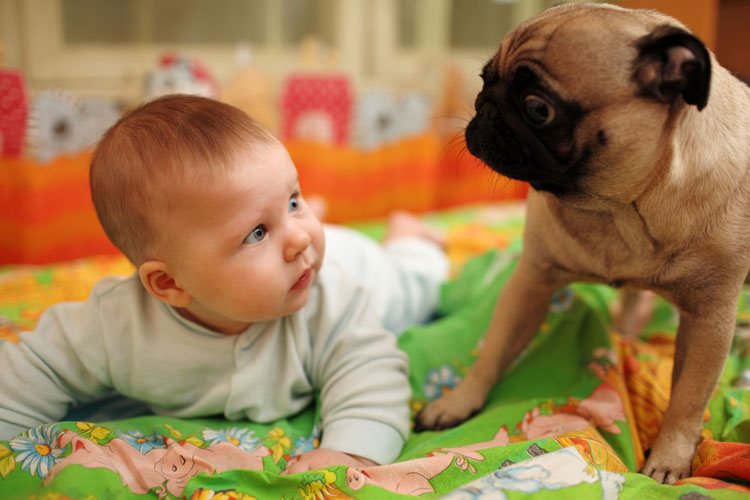
Puppy Proofing
Never allow this to happen. This is a part of boundaries. logoboom/iStock

Before bringing your darling puppy home, it’s important to make a few changes. I’m not suggesting installing cabinet or toilet locks. It’s more about setting boundaries and management.

Setting Boundaries

Setting boundaries is probably one of the most important parts of puppy proofing. Schedule a family meeting so everyone is on the same page and discuss each topic in detail. Capture meeting notes and post in a highly visible area, such as the refrigerator.

Keep Children Away From Eating Dogs

Children should leave puppies and dogs alone while they’re eating or chewing on toys. Supervision is not 100% so it’s best to feed meals or provide chews when children are napping or otherwise engaged. Explain, during your family meeting, that an adult will take all toys and chews away. This prevents resource guarding and it’s best to “trade” instead of “take away.”

RELATED: Resource Guarding

Let Sleeping Dogs Lie

Many children and adults are accidentally bitten when startling a sleeping dog. It’s pretty hard to resist a puppy’s sleeping face, but petting or kissing her while she’s napping is likely to startle her. If you must wake her, say her name and wait for her to waken. Also, puppies and dogs should not be teased when they are crated, as this can cause major issues later.

RELATED: Crate Training

Dogs Don’t Like Hugs

Hugs show affection, but only to people. Hugging a dog or puppy is considered rude in dog language. Instead of hugging, teach children to pet dogs on their chest or under their chin. The internet is filled with photos of children hugging dogs and my heart drops to my feet, as the dog is clearly uncomfortable. Her body language is screaming “Leave me alone!” Please explain this to all children and remind them often during family meetings. Oh, and ask children to remind their friends too!

Management

This part is overlooked. Management means controlling things in a puppy’s environment to prevent certain unwanted behaviors. Now, dog training is totally different because you’re teaching her something new. Management doesn’t teach a new behavior, but it can sure make your life so much easier!

Lidded Trash Cans are Your Best Friend

Switch out indoor trash cans with lidded versions. Choose heavy lidded versions lifted by a step pedal. Dogs will scavenge, even the best trained dogs will do it, especially if something yummy is poking out the trash can. If purchasing lidded trash cans is not an option, place trash cans behind closed doors or cabinets. You can spend tons of time and money (medical bills for the removal of foreign body obstructions) teaching puppies and dogs to ignore trash cans. Trust me, manage this one and redirect your energy (and money) on something else. 🙂

Keep Doors Closed

This means bedroom, closet, bathroom and laundry doors should be closed immediately upon entering or exiting. Funny story, Stella (Mini Bull Terrier) chewed several of my shoes as a puppy so I contacted a local shoe repair guy to fix them. He was a crusty old fella who grumbled, “Lady, just close your closet door.” I still giggle at his comment. He was spot on, but his delivery was a tad sassy!

Invest in Décor Baby Gates

Wow, baby gates are super fancy now! Even though my dogs are adults, I still use baby gates. They are fabulous multi-taskers. When guests come over, my dogs are behind a baby gate. Guests need a moment to walk in the door, greet you and settle on the sofa with a beverage. Now, you can unleash the hounds! Also, I find this creates less jumping and excited greeting behavior from your dog. Plus, baby gates section off areas of your home, which works just like a closed door.

Keep the Floor Safe

After everyone agrees to the above boundaries and management tips, it’s important to remove hazardous items from the floor. Get children involved and have them crawl around at puppy level and identify potential hazards.

  • Tuck wires under entertainment centers or under heavy furniture. If that’s impossible, CritterCord is a clear power cord protector, which features a citrus scent and taste for deterring chewing pets. The protector is clear with “cut to fit” directions. With it’s 4.2 rating on Amazon, it’s worth giving a try. In a pinch, you can spritz a bit of spray deterrent on cords too. I personally found the gel version lasts longer.
  • Remove poisonous household plants or move them to a high shelf to discourage ingestion.
  • Relocate medication, especially if medications are kept on bedroom nightstands. All cleaners should be behind a closed cabinet door.
  • Survey your fence line. Are their holes in or under the fencing? Address now, repair fencing and cover holes with large rocks to prevent escaping.
  • Antifreeze is toxic to dogs so make sure containers are securely locked behind cabinet doors.
  • Keep purses and backpacks off the floor. Xylitol is a sweetener found in gum, candy and some drinks, and it’s highly toxic to dogs. Advil, Tylenol and certain ingredients found in lip balm, lip gloss and cough drops are toxic too. Install coat hangers or cabinets for storage.

Puppy proofing is about common sense rolled into management and boundaries! Enjoy your new fuzzy edition. 🙂

READ ALSO: Surviving the First Night with Your Puppy

Filed Under: Puppies, Training Tagged With: crittercord review, how to puppy proof your home, puppy proofing, puppy proofing apartment, puppy proofing cables, puppy proofing checklist, puppy proofing home, puppy proofing tips, puppy proofing wires, puppy proofing yard

How to Give a Dog a Pill

December 19, 2014 by Fanna Easter

Easiest Way to Give Your Dog a Pill

How to Give a Dog a Pill
It’s not that simple. Learn the easiest ways to give your dog a pill. tonodiaz/Deposit Photos

Oi, having a sick dog is the pits and then having to give pills several times a day — I feel your pain. Recently, Sobek (my Rottweiler) has been sick and his tummy issue has lingered for days. I’ve had plenty of time to test the easiest ways to give dogs pills and I want to share my success!

Hide the Pill

Make it fun with lots of rewards or pill-giving will be you and your dog’s worse nightmare. It’s best to hide pills in strong smelling soft food, which hides the smell and taste of pills. My fav pill-hiding foods are:

  • Peanut butter
  • Cream cheese

Both foods have a low liquid consistency so they easily mold around pills while still tasting really good! During the day, reward your dog with random fingerfulls of peanut butter without hidden medication. By giving pill-free rewards, you’re lessening the chance she will not smell or taste the pill. Teaching positive associations to peanut butter ensures eager swallowing of pills.

Keep Pills Out of Dog’s Meals

Keep pill giving separate from meals. You don’t want your dog to associate meals with pills. This can cause her not to eat meals. I usually give meds right before meals, as they’re hungry and will gobble down their hidden meds.

Oh Oh, She Tasted the Meds

Don’t freak out. Pick up the pill and take a 10-minute break. If you immediately try to hide the broken pill in something else, your dog will refuse it. He knows what you’re up to. 🙂 Bring her outside to potty and try again using another flavored pill hider, such as cream cheese or canned pumpkin. This time, take a large glop and bury the pill from view. As your dog eats the pill glop, reward with lots of praise. Badabing! You did it!

VIDEO: Easiest Way to Give Your Dog a Pill

READ NEXT: Understanding Dog Nutrition

Filed Under: Clients, Dogs, Health, Puppies, Training Tagged With: easiest way to give a pill to dogs, easy way to give medicine to dogs, giving dogs pills ideas, giving dogs pills on prescription dog food, giving pills to dogs, giving pills to dogs tips, giving pills to puppies, how to give a dog a pill, my dog hates pills, my dog refuses to take pills, my dog will not take medicine, my dog won't eat or take medication, my puppy refuses to take pills, trick to giving dogs pills

Dog Handling: Teaching Your Dog to Say “Ah”

December 16, 2014 by Fanna Easter

Body Handling Exercises

Teaching Your Dog to Open His Mouth
Mouth exercises are important for good health and behavior. membio/Deposit Photos

Check your dog’s mouth and teeth a couple of times a week. You’re looking for plaque buildup or lodged foreign bodies. It’s important to teach dog body handling exercises early on so follow these quick tips on teaching your dog to say “ah”!

Using a clicker and yummy treats, remember to click and treat as you’re touching, lifting or opening. Practice for 1-2 minutes with breaks in between. Usually, steps 1-9 take 2 or 3 short sessions to teach. If at anytime, your dog refuses to open his mouth, go back to steps 1-5 for several training sessions.

  1. Using your index finger, touch the side of your dog’s muzzle. Keep clicker away from your dog’s ear. If that’s not possible, use a verbal marker “yes” instead.
  2. Lift the corner of your dog’s lip.
  3. Lift the other corner of his lip.
  4. Place your index finger in his mouth.
  5. Pull back his lips for a second.
  6. Place one hand across his muzzle (keeping your fingers away from his eyes and not applying any pressure).
  7. Place hand under his muzzle.
  8. Using both hands, open front of dog’s mouth. Click or say “yes” as you’re opening his mouth. Keep it short. Open, click, let go of mouth and treat.
  9. Open mouth for half a second.
  10. Extend duration (time) of mouth. Open slowly in small steps until your dog is comfortable for 2-3 seconds.
  11. Add a cue: Before moving your hands to open his mouth, say “Mouth.” Then, proceed to open and take a peek inside!

Mouth Work Means Less “Mouthing” for Puppies Too

Mouth work (touching and massaging gums and muscles of the mouth) works wonders for mouthing or nipping puppies too! Plus, give it a go for easily excited adolescent dogs (ranging between 6-18 months old). You’ll be shocked at the calming results.

How does it work? Using T Touch (Tellington Touch Training), you’re teaching body awareness using calming touch work, which promotes relaxation. Puppies and adolescent dogs have a tough time calming themselves so any opportunity to teach self soothing is highly beneficial.  

Points to remember:

  • Move slowly. Each tiny circle should take half a second to complete.
  • Use light pressure just enough to lightly move skin around. T Touch is different than massage. You’re not kneading muscles. You’re promoting relaxation and body awareness.
  • Teething puppies’ mouths are sore between 4-6 months. Instead try using T Touch around his neck and shoulders. Once all teeth have erupted, begin mouth work again.

Tellington TTouch Mouthwork for Dogs

Here’s a great video demonstrating T Touch for mouth work. Notice how slow and soft her hands move around the dog’s mouth?

Have you taught mouth work yet? If so, how did it go?

Filed Under: Dogs, Puppies, Training Tagged With: brushing dog's teeth, checking puppy teeth, dog body handling, dog will not allow vet to look in mouth, how do you look into a dog's mouth, how to brush dog's teeth, how to look in your dog's mouth, mouth work, puppy body handling, touch mouth work dogs

Using Treats to Train Your Dog

December 15, 2014 by Fanna Easter

Dog Training Treats Work

Dog Training Treats
blacknote/Deposit Photos

A common question from dog owners is if it’s possible to give too many treats during dog training. They’re concerned about treat dependency, digestive issues or the wrong message being delivered during training. Let’s chat about why treat training is so effective as well as when to give treats for maximum effectiveness.

Why Use Treats During Training?

Think of dog training treats as currency for your dog. It’s payment for a job well done. When training your dog a new behavior, it’s important to reward your dog often with clicks and treats. This teaches him what is expected.

Another way of explaining the power of dog treat training is using the child’s game of “Hot and Cold.” Clicking and treating means “hot” and silence (no clicks and treats) means “cold.” As a child, it was pretty frustrating when you heard “cold” for several minutes so you gave up. The game was too hard and you didn’t know what was expected.

If you’re still not convinced, think of each treat your dog eats as money deposited into a banking account. You’ll have withdrawals while your dog is learning, but you’ll hopefully have a nice cushion to prevent overdrafts. 🙂 Each treat given ensures your dog repeats good behavior and, honestly, it’s much easier to reward with a dog treat or two than chase him down the street for hours.

Plus, dog treat training is much faster. You can easily teach a new behavior in minutes!

RELATED: Can I Feed My Dog Eggs?

Dog Training Treat Myths

Digestive Issues

Usually, this is a concern during the first week of class. Many dog owners are convinced that too many dog treats will cause projectile diarrhea and vomiting. This is far from the truth. Training treats are tiny (pea sized), used during short training sessions (1-2 minutes) and cause minimal, if any, digestive upset.

It’s important to choose training treats your dog loves. Would you rather be paid with broccoli or cheesecake? It’s your choice and what you find rewarding. Personally, I would do back flips for cheesecake. 🙂

If digestive issues sneak up, change treats. If you’re using hot dogs, switch to turkey hot dogs, which contain less fat for sensitive tummies. For food allergy dogs, chop up and bake canned variety of their prescription food at 200 degrees for 30 minutes.

Treat Dependency

Contrary to what you may believe, training treats don’t teach your dog to only respond to treats. In all my 22 years of training, I have never encountered a treat dependent dog.

If a dog is dependent on treats, he probably doesn’t understand the cue (i.e. sit, down, come) or hasn’t been weaned from continuous reinforcement (i.e. clicks/treats every time he responds to a cue). Continuous treats (lots of clicks/treats) are used for teaching new behaviors, such as loose leash walking.

Let’s use the example of loose leash walking. Once your dog understands to walk on a loose leash on cue (lets go), start clicking/treating for perfect behavior. Instead of rewarding every two feet, start rewarding every five feet. Now reward as you give the cue (lets go). This teaches your dog to respond to the cue quickly. Finally, reward when your dog when he ignores distractions, such as an approaching dog.

What are your favorite dog training treats?

You may also like: Pros, Cons & Myths of Canned Dog Food

Filed Under: Clients, Dogs, Puppies, Training Tagged With: giving dogs treats, how to train a dog with food rewards, treat training, treat training a dog, treat training a puppy, using treats in dog training, using treats in puppy training, when to treat a dog

Top 10 Puppy Training Tips

August 14, 2014 by Fanna Easter

Puppy Training Guide

Puppy Training Tips
anatema/iStock

Your puppy is an open learning funnel and training this learning funnel is key to your dog’s success. The puppy learning funnel closes around 16 weeks of age.  Implement these 10 puppy tips the moment your puppy is welcomed into his new home. We’ll train your puppy to learn the importance of polite manners from the beginning. Taking the time to train your dog or puppy is what sets everyone up for success!

1. Enroll in Puppy Class (Using Positive Reinforcement)

After your puppy’s first set of puppy vaccinations, enroll yourself and your puppy into a Positive Puppy Group Class. Choose a dog trainer who uses positive reinforcement. This means no yelling, pushing, yanking or pulling your puppy around. During classes, choose treats your dog loves!

2. Socialize Your Puppy

Puppies are sponges until 16 weeks of age so show them the world now. Introduce them to friendly strangers, cars passing by, loud sounds and so on. Ask friendly strangers to give your puppy treats. Your puppy will learn people are fun.

3. Create a Set Potty and Play Schedule

This is a dog training secret! A set schedule provides reminders so your puppy is given plenty of opportunities to potty. We live busy lives and forget it’s been hours since our puppies have had a chance to potty. Two- to three-month-old puppies can only hold it for a couple of hours max! Place the schedule on your refrigerator for quick reference. Also, all members of your family should follow this schedule.

4. Participate in Supervised Puppy Play Time

Supervised dog training means a professional dog trainer is monitoring puppy play at all times, and it’s a great way for puppies to learn dog etiquette. Supervised sessions invite puppies under 5 months old and allow a maximum of 10 puppies to play at one time. This ensures everyone has a positive experience. Stay away from dog parks, as no one is monitoring play sessions (no one with professional experience, that is). This is the #1 reason dogs become aggressive, as they are bullied by an adult dog and learn other dogs are unpredictable.

5. Crate Train

Your dog’s crate is his sanctuary. He feels safe and can relax in his crate so make it fun to be in his crate. Feed meals in his crate and provide special food stuffed toys to enjoy while relaxing in his crate.

6. Have Patience (Mistakes Will Happen)

Mistakes are part of the learning process. Have patience and invest in a good enzyme cleaner for potty mistakes and follow your set schedule. If teaching your puppy a new behavior, setbacks happen so stop and figure out what caused the mistake and vow not to let it happen again. If your puppy makes multiple mistakes, they may be confused.

7. Teach the Trade Game

Never chase a dog or puppy if he has something in his mouth. As you show your puppy a piece of cheese, say, “Trade.” When he  drops the item, pick up the item and give him the cheese. After a week or two of practice, your puppy will learn to drop items when he hears the “trade” cue. This method will not reinforce your dog to pick up random items in hopes of trading. Rather, he is rewarded for dropping the item for cheese. 🙂

8. Keep Training Sessions Short (1-2 mins)

Practice once or twice daily and keep sessions to 1-2 minutes long. Even if your puppy is doing well, end the session. Use a timer or count out 5 treats and practice until these treats are gone. Puppies’ attention spans are limited for right now so keep it short and fun.

9. Teach Him to Enjoy Body Handling

Puppies are sponges so teach them to enjoy body handling now. Click/treat as you touch his ear, paw, tummy, look in his mouth, lift his tail, touch a toenail, pick him up or restrain him with a hug (preparing for vet visits).

Click and treat your puppy during vet visits with a goal of using 60 tiny treats while the vet is examining your puppy. Give your puppy 5 treats in a row while he’s getting a puppy shot. 🙂

VIDEO: Body Handling

10. Prevent Puppy Biting

Puppy teeth on human skin is not allowed so squeak the moment you feel his teeth touch your skin. The squeak tells your puppy this hurts you. Then, reward your puppy when he removes his teeth from your skin. Also, if your puppy is really excited, wiggle a toy next to your body. This redirects him from your skin and onto a toy.

You may also like: Housebreaking a Puppy

Filed Under: Puppies, Training Tagged With: crate training, dog trainer, dog trainer advice, dog training, dog training advice, how to potty train a dog, how to train a puppy, how to train your puppy, puppy, puppy tips, puppy training, puppy training tips

  • « Previous Page
  • 1
  • …
  • 10
  • 11
  • 12
  • 13
  • 14
  • Next Page »

About

Dog Training Nation is a community of dog trainers, dog owners and dog lovers. Our mission is to provide trainers and owners valuable information to enrich dogs' lives. We cover a range of topics, from socializing puppies to dealing with aggressive dog behavior to selecting the best dog products. It is our hope you share our content to make the dog and owner world a better place.

​

Facebook

Video

Dog Training Nation is a dog training blog for pet owners and dog lovers. We cover a range of topics from puppy socialization tips to dog aggression to dog health. It is our hope you share our content to make the world a better place for dogs.

Dog Training Nation

Quick Links

Dog Training
Dog Behavior
Dog Training Videos
Become a Dog Trainer
About
Contact Us

Copyright © 2026 · Lifestyle Pro Theme on Genesis Framework · WordPress · Log in
