Dog Training Nation

In Dogs We Trust

  • Home
  • Training
    • Dogs
    • Puppies
    • Clients
  • Behavior
    • Breeds
  • Health
  • Safety
  • Resources
    • Equipment
    • Books
  • Dog Training Videos
  • About
You are here: Home / Archives for Puppies

How to Potty Train a Puppy

July 16, 2014 by Fanna Easter

Potty Training a Puppy
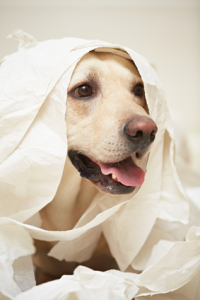
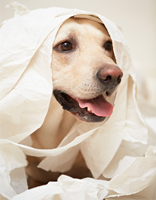
Potty Training a Puppy
Learn the three steps of potty training your puppy.

Still struggling with potty training your puppy? I have potty training tips for you! These work for a new puppy, an older puppy, a newly adopted dog and even a dog that suddenly begins pottying in the house.

Step 1: Create a Set Schedule

This is a huge step. Consistency is key for potty training success. Create a daily schedule for your puppy, such as:

  •  7 a.m.: Wake up and potty.
  • 7:15 a.m.: Feed.
  • 7:30 a.m.: Potty (puppies and dogs will usually poop after they eat).
  • 7:40 a.m.: Supervised playtime.
  • 8 a.m.: Crate time with a food stuffed toy.
  • 10 a.m.: Potty.
  • 10:15 a.m.: 30-min walk in neighborhood.
  • 10:45 a.m.: Water break.
  • 11 a.m.: Crate time. Repeat the above example throughout the day.
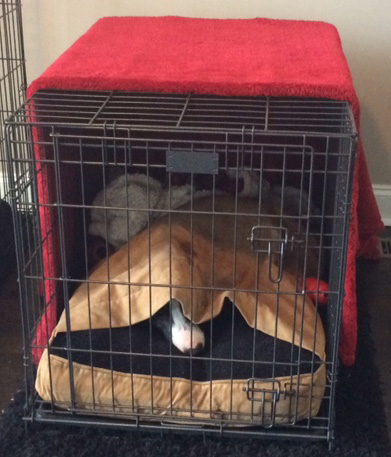
Stella Mae's Spa
Stella Mae’s Spa

Step 2: Confine Your Dog When Unsupervised

Keeping your puppy in a crate (or behind a gate in a small room) teaches your puppy to hold it. This is new for many puppies, but we need to teach them this valuable skill. Crate training should be fun. Your dog should love his crate, as this is his private spot where scrumptious food stuffed toys hide. As a general rule, your puppy should be crated for a maximum of 4 hours at a time. This rule applies for older dogs too. For young puppies, calculate 1 hour per 1 month of age (2 months old, 2 hours; 3 months old, 3 hours and so forth). Keep your puppy in his crate when you are unable to watch him closely even if for a few minutes when cooking dinner or taking a shower. Many pet owners worry their puppies are crated too much during potty training. However, it’s vital your puppy learns potty training skills. Once your puppy has been accident-free for two days, he earns more time outside of his crate. Also, make sure your puppy has plenty of playtime outdoors, regular walks and lots of food stuffed toys to keep him mentally and physically entertained.

Step 3: Bring Your Puppy or Dog to a Designated Potty Area on Leash
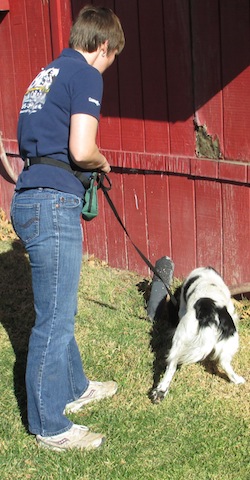
Potty Training on Leash
Potty training on leash.

Many times, I’ve heard: “I let my dog out in the yard to potty, but she came back in the house and peed on the rug!” Oops! Your dog was having way too much fun outside and forgot to potty. 🙂 We need to teach puppies to potty first, then they can play. Bring your puppy on leash to the most boring part of your yard and wait. He will sniff around, pull on the leash (keep your feet planted in one spot like a tree), and it will happen. If your dog has not pottied within 15 minutes, then bring him indoors and put him in his crate (he is learning to hold it). Wait about 20 minutes, bring him back outside to the boring spot and wait. Repeat this process if nothing happens. When your dog does potty in his designated potty area, do the potty dance! The potty dance looks like: high-pitched praise while jumping up and down. You’re cheering for your fur baby! I promise, your neighbors are not watching. 🙂  Now, unclip the leash from his  collar, as he has earned playtime in the yard.

RELATED: Housebreaking a Puppy

Measuring Success

It’s our job to teach dogs where they can potty. When your dog potties in the right spot, you have taken one step forward. When your dog potties in the wrong spot, you’ve taken two steps back. Think about it from your dog’s point of view: who would not want to potty inside? It’s climate controlled with plenty of thick carpet to absorb everything. Our dogs are smart! Teach your dog to signal you when he needs to potty. Some pet owners attach bells that hang from the backdoor knob, and your puppy pushes the bell to signal he needs to potty. Personally, I recommend watching your puppy’s body language and choosing a specific signal, which means, “Oh, you need to potty? Let me grab the leash!” This signal can be puppy pacing in front of you, puppy standing by the backdoor, puppy touching your foot or arm with his nose or paw. Choose the signal and stay consistent. The moment your puppy performs the potty signal, bring him outside. Many times, our puppies become confused when they begin to potty in the house, as they know this will get your attention and you’ll bring them outside. Many owners worry their dogs will potty signal, meaning they want to go outside and play instead of pottying outside. I would not worry about this too much, as your puppy is leashed and potties in the most boring part of your yard (for right now). This may happen when they become adults. However, it can easily be fixed. 🙂

A Few Side Notes

  • If an older dog, whom was previously potty trained, suddenly begins to have accidents in the house, always consult with your veterinarian first. Always rule out a UTI or other ailments.
  • For folks living in the city and want to teach your puppy or dog to potty on puppy training pads (or litter train), click on the blue link for specifics. You will use the three-step potty training process. However, I’ve included a few extra tips for you!
  • Remember, your crate is not punishing your dog. The crate is teaching him to hold it. If you bring him indoors and he has free roam of your home, he will sneak off and potty in another room (usually the formal dining room since no one really uses that room anyways).
  • If you are following the steps and your puppy or dog is pottying on his crate bedding, remove it for one week. Sometimes, dogs will potty on their bedding as it absorbs their urine (the mess is gone!). You can certainly add crate bedding in later. However, we are teaching the puppy to hold it in the crate so let’s set them up for success. 🙂
  • Accidents will happen so don’t worry. Clean the area with pet enzyme-based spot cleaners and vow to watch your puppy closer.
  • Lastly, punishment is useless for potty training. It’s the truth. If you punish for accidents, you’ve confused the dog. Trust me, it does not work. Accidents mean to keep a closer eye on your dog while loose and it’s that simple!

Potty training takes time, consistency and learning your dog’s signal and  sticking to the plan. Please note your questions in the comments section below!

READ ALSO: How to Stop a Puppy From Biting

Filed Under: Puppies, Training Tagged With: house breaking a dog, house training an older dog, potty training a puppy, potty training a puppy at night, potty training tips, puppy training a puppy schedule

Crate Training

July 16, 2014 by Fanna Easter

How to Crate Train a DogCrate Training a Puppy

In the dog world, there are many opinions on how to crate train your puppy and I’ll share mine. But first, I need to explain what crate training is not:

  • A crate is not used for punishment ever.
  • Dogs should not be left in their crates longer than 4 hours at a time. If you work an 8-to-5 job, please hire a pet sitter. Pet sitters are worth every penny. You will definitely get your return on investment. 🙂 You can begin searching and interviewing pet sitters here.

Keep these thoughts in your mind as I explain how to crate train your puppy or dog. 🙂

Choosing a Crate

  • A dog should be able to stand up, turn around and lay down comfortably.
  • For a fast growing puppy, choose a crate he can fit in as an adult. These large crates have a moveable divider so you can adjust as your puppy grows.
  • If a crate is too big (too long or wide), your puppy will sleep in the front and poop in the back- oops! 🙂
RELATED: Choosing a Dog Crate

Purpose of a Crate

  • Teaches your dog bladder and bowel control, and basically how to hold it.
  • Provides your pooch a relaxing and safe napping place and a getaway from distractions (visitors, children playing, etc.).
  • Serves as a secure and safe place to leave your puppy alone when no one is home (keeps him from chewing drapes, carpet, furniture, electrical cords, etc.).
  • Serves as a great tool when traveling with your dog!

Once upon a time, a puppy was left alone in the apartment all day (no crate was used). He chewed through the drywall and entered the next door neighbor’s apartment and destroyed his home too! Yes, it happened!

Training Your Dog to Go in His Crate

Plan on teaching your puppy these steps before you plan on leaving him alone. This will take 1-2 days to teach, depending on your training skills.

Step One

  • Start by tossing a treat in your puppy’s crate so he can walk in and eat it. Keep the crate door open so he can come right back out. Repeat this 10 times in a row.

Step Two

  • Toss a larger treat in the crate. As he enters and eats the treat, close the door. Once he is done eating his treat, open the door and let him out. Say nothing, as the reward is the crate door opening. Repeat this 10 times in a row.

Tip: Toss the treat in the back of the crate so your dog walks all the way inside the crate. Please don’t push your puppy inside.

Good girl, she goes in her crate!
Crate training. Good girl!

Training Your Puppy to Stay in His Crate Quietly

Step One

  • Hide treats in his crate (10 treats) and then open the crate door. Once your puppy goes in the crate, close the door behind him. Once he is done eating the treats, open the door so he can step out.

Step Two

  • Hide 2-3 treats in his crate and close the door after your dog steps all the way inside. Once he is finished eating these treats, throw a few treats in the crate with him (crate door is still closed). Throw treats five times in a row about 10 seconds apart. If you wait too long to give him treats, he will begin to whine in his crate. We want him to learn that staying in his crate quietly earns treats!

Step Three

  • Throw a larger treat (biscuit) in his crate and close the door once he walks inside. Take a few steps away from the crate, then walk over and toss one treat in the crate. Count two seconds silently (1 Mississippi, 2 Mississippi), walk over and toss another treat in the crate. Repeat until your dog can stay in his crate for 10 seconds (Move slowly. We don’t want him to whine!). After 10 seconds, toss a treat and open the crate door. Great job!

Step Four

  • Add a luscious food filled toy in his crate. He only gets this wonderful reward when he is in his crate. Toss the filled toy in his crate, walk away and let him enjoy!
RELATED: Puppy Training Classes

Troubleshooting

Barking/whining in crate:

  • Oops, if this happens, you moved too quickly with the above steps. Take a few steps back and begin again. If your dog is whining, don’t open the crate until he is quiet (opening the crate door is a reward).
  • Ensure your dog has plenty of exercise (a minimum of a 30-minute walk) before going in his crate.
  • Freeze his food stuffed toy so it will last longer.
  • If your puppy or adult dogs whine at night, bring him potty on leash, and put him back in his crate with a treat. You are not rewarding whining, as he may very well need to potty. We don’t want puppies to learn to potty in his crate. 🙂
  • If your dog is pottying on his crate bedding, remove it for a week until he learns to hold it. Once he understands to potty outside, you can add his bedding back.

 Barking at visitors when in crate:

  • Set up a bowl of treats about 6 feet from your dog’s crate.
  • Put dog in his crate.
  • When guests walk by, toss a treat into your dog’s crate and keep walking past him.
  • Have all guests play this game. Soon your dog learns guests equals treats.

Leaving your dog alone in crate:

  • Before leaving your puppy alone in his crate, exercise him mentally and physically.
  • Leave a frozen food stuffed toy in his crate anytime you leave. (A frozen food stuffed toy will help puppies while teething.)
  • Play soft music in the background. Dogs have excellent hearing. Try crinkling a potato chip bag when your dog is upstairs, he will come running! Help him tune out neighborhood dogs’ barking, nearby construction and sirens. I recommend Through a Dog’s Ear Music. I have the entire series and it works! I will admit it helps calm me too, especially when I’m stuck in traffic. 🙂
  • This may sound hokey, but spraying lavender has proven to calm dogs (and humans!). What will it hurt? At least your house will smell wonderful!
  • Another tool I recommend are Dog Appeasing Pheromone Sprays and Diffusers. Personally, I’ve had wonderful results and have a diffuser plugged in near my dogs’ crates. There is supporting research on DAP’s effectiveness.

In the comments below, tell us how you create a spa atmosphere in your dog’s crate.

READ ALSO: Dog Time Out

Filed Under: Puppies, Training Tagged With: crate training, crate training 101, crate training a puppy, crate training an older dog, crate training at night, crate training schedule, crate training while at work, crate training whining, dog training advice, how to train a dog, how to train a puppy

First Puppy Training Session

June 3, 2014 by Fanna Easter

Training Your Puppy for the First Time

Training Your Puppy
Wait for all four feet on the floor, then click and treat! solovyova/Deposit Photos

Training your puppy to have good manners is best done in the first 16 weeks. Given their short attention span, you should train your puppy in short sessions.

Five-Treat Puppy Training Session

Count out five treats and practice one or two dog behaviors until you’ve given your puppy all five treats.

Potty and play with your puppy for the next 30 minutes. Repeat this short puppy training session three times a day.

  • 1 puppy training session in the morning
  • 1 puppy training session in the afternoon
  • 1 puppy training session in the evening

Instead of treats, you can use your puppy’s morning or evening meal as the reward. This dog training session is great because you can continue to train your dog for as long as you and your puppy like.

RELATED: How to Potty Train a Puppy

One-Minute Puppy Training Session

Unlike the first puppy training session, the one-minute puppy training session requires a timer. Set your timer for one minute and practice teaching your puppy a behavior until the timer rings. Give your puppy a break. Bring him to potty and play for 30 minutes. Repeat this short puppy training session three times a day.

When training your puppy, remember to take breaks. Training breaks are invaluable during the learning process. You’ll be surprised how much your puppy learned during your short training lesson when he’s given time to think and process the behavior he’s learned.

New Behavior

Begin your next training session by practicing a behavior your puppy does really well like “sit” or “touch.” This builds your puppy’s confidence and sets him up for success. Next, introduce a new behavior, such as “down” and break into several puppy training sessions.

If your puppy is struggling, say “down.” End the training session with something your puppy does very well, such as “sit” or “touch.” Take a break and think through your training protocol.

There is a reason your puppy became confused. Maybe your treat wasn’t valued enough or you moved too fast. Think through how you could do better. Ask your dog trainer for advice—dog trainers are invaluable for troubleshooting and problem-solving, as they have trained many dogs!

RELATED: Dog Training Treats

Touch Command

Teach your puppy to respond to a cue. Practice several known behaviors back to back.

  • Example: Teach your puppy to “sit,” “down,” “sit” and “down.” This will strengthen both cues, and your puppy will learn the difference between the cues.
  • Example: Teach your puppy to “sit,” “touch,” “sit” and “touch.” Asking your puppy to “touch” will lead him out of the “sit” behavior, so you can keep practicing!

Make it fun and give him the chance to succeed with some cues he knows. It’s always more fun for your puppy when he’s rewarded for performing the right behaviors in puppy training.

WATCH: Teach Your Puppy the Touch Command

Always remember these tips when training your puppy:

– Keep sessions short with lots of rewards and plenty of break time.
– When you’re stuck, reach out to your dog trainer.
– Make puppy training fun.

What was your experience like when you first trained your puppy?

You may also like: Top 10 Puppy Training Tips

Filed Under: Puppies, Training Tagged With: how to train a puppy, puppy training, puppy training tips

Housebreaking a Puppy

May 22, 2014 by Fanna Easter

How to Housebreak a Puppy

How to Potty Train a Puppy
Learn the seven tips to potty pad training your puppy.

What do you do when your puppy really needs to use the restroom. Take your puppy for a walk, right?

Sometimes it’s easier said than done. For many folks who live in high rise apartments, it’s challenging waiting for an elevator when your puppy needs to go now! Also, some people work long hours and would like their puppies to have immediate access to a potty spot. Potty pad training is a nice solution to fulfill these needs.

Benefits of Puppy Pad Training

If your dog is home for long hours, please invest in a pet sitter to provide mental and physical stimulation even if you are potty pad training. They need a walk to burn through their excessive energy just like people. Puppy training classes are a great way for them to learn while burning off some energy.

Before starting, read these tips on how to potty train your puppy. The difference is, instead of bringing your potty outside, you will bring your puppy to his potty pad. Also, instead of placing him in a crate, you will place him in his confined area.

Yes, your puppy will learn to potty on his pad and outside!

Train Your Puppy to Use a Potty Pad

  1. Most dogs will potty in the same spot so we can use this to our advantage. Dip the center of your potty pad in his urine (after the puppy potties outside or if he has an accident indoors). If he poops, you can place one small chunk in the center of the potty pad also. While there are some products that mimic urine smells, I recommend the real stuff. 🙂
  2. Add the scented reminder in the center of the pad so your puppy potties on the pad instead of the edge or slightly off the pad. Also, you can add two potty pads to provide additional potty area (cover one corner of the bathroom between the toilet and bathtub).
  3. Confine your puppy in a small room, such as a bathroom with a baby gate. Trust me, the baby gate will save your closed bathroom door from hideous paw scratches! Place the used potty pad in the far corner away from his food, water, bedding and baby gate.
  4. If you have difficulty confining your puppy to an area, read this crate training article for tips. Crate training has basically the same principle as potty pad training except your puppy is learning to potty in a specific spot of his area.
  5. Always add and rotate toys daily so your puppy plays with food stuffed toys instead of having a party with his puppy pad. 🙂
  6. If your puppy still plays with his pad, you can place it in a plastic potty pad holder.
  7. Once your puppy reliably uses his pad (100% of the time), I recommend placing it in the corner of a bathroom so you can scoop and flush chunks as needed.

As your puppy is learning potty training, always scent the new pad with his urine or poop. Once he understands the pad is the puppy potty spot, you can remove the scented reminder.

Tell us about your puppy potty pad training success stories in the comments section below!

YOU MAY ALSO LIKE: Top 10 Puppy Training Tips

Filed Under: Puppies, Training Tagged With: potty pad training, potty pad training a puppy, potty pad training a small dog, potty pad training an older dog, potty pad training tips

Puppy Biting

May 22, 2014 by Fanna Easter

How to Stop a Puppy From Biting

How to Stop a Puppy From Biting
Puppy nipping — ouch!

As my first puppy training class begins, I notice fresh scratch marks along pet parents’ hands and arms. Their puppies are nipping, mouthing, biting or whatever you want to call it. So we cover puppy nipping during first class. We want to save your skin. 🙂

Puppies teethe. It’s normal and all puppies go through it. Think of a puppy’s teeth as his fingers. He is “touching” everything now and learning how much pressure to use when “touching.” This is called bite inhibition. Also, he is losing his puppy teeth, which hurts!

The goal is to teach your puppy something else to do with his  mouth by giving him treats and rewards when needed.

Five Puppy Biting Tips

  1. Teach your puppy to target his nose to your hand. Your puppy learning to bring his nose to your hand instead of his teeth is rewarded.
  2. When a puppy puts too much pressure with his teeth, let him know by standing still and squealing. Once he stops mouthing, give him a toy he can mouth on instead of you.
  3. If your puppy continues to bite, walk away. If your puppy chases you and begins pulling on your pants, stand still and wait until your puppy lets go and reward him with a treat or toy.
  4. If your puppy is mouthing on your naked ankles, ask him to target your hand and reward. Then, give him a toy that your puppy can chew on. You can teach your puppy to target your ankle or foot for treats too!
  5. Teach the on/off game. Using a tug toy, wiggle it around so your puppy can pull and bite on a tug toy. Then hold the toy and your body still until the puppy releases the toy. Once he releases the toy, begin another game of tug. The tug game will not teach your puppy to be aggressive. It’s a self-control game of which the goal is for a puppy to learn when to play and when to give the toy back.

Always provide your puppy with plenty of chew toys so he can bite them instead of you.

RELATED: How to Stop a Puppy From Biting

Puppy Treats that Help Prevent Biting

I recommend bully sticks, food stuffed toys, tug toys and Jolly Balls. Never leave your puppy unattended when he is chewing on any toys unless it’s a food stuffed Kong.

When your puppy is teething, freeze his food stuffed toy to soothe his  inflamed gums, as teething hurts. I’ve gone as far as dipping a large towel in low sodium broth, freezing it and giving it to my puppy to chew on. Never leave him alone with the frozen towel. This is simply a tool to relieve the inflammation of his gums.

Puppy chewing deterrents can be useful. However, I’ve noticed a large population of dogs that enjoy the taste of bite deterrents. When polling my students, over half of their dogs will happily lick sprayed chewing deterrents—yuck.

If your puppy wants to chew something badly enough, he will endure the taste. 🙂

Filed Under: Puppies, Training Tagged With: puppy biting, puppy nipping at face, puppy nipping at feet, puppy nipping at hands, puppy nipping at pants, puppy nipping tips

  • « Previous Page
  • 1
  • …
  • 11
  • 12
  • 13
  • 14
  • Next Page »

About

Dog Training Nation is a community of dog trainers, dog owners and dog lovers. Our mission is to provide trainers and owners valuable information to enrich dogs' lives. We cover a range of topics, from socializing puppies to dealing with aggressive dog behavior to selecting the best dog products. It is our hope you share our content to make the dog and owner world a better place.

​

Facebook

Video

Dog Training Nation is a dog training blog for pet owners and dog lovers. We cover a range of topics from puppy socialization tips to dog aggression to dog health. It is our hope you share our content to make the world a better place for dogs.

Dog Training Nation

Quick Links

Dog Training
Dog Behavior
Dog Training Videos
Become a Dog Trainer
About
Contact Us

Copyright © 2026 · Lifestyle Pro Theme on Genesis Framework · WordPress · Log in