Dog Training Nation

In Dogs We Trust

  • Home
  • Training
    • Dogs
    • Puppies
    • Clients
  • Behavior
    • Breeds
  • Health
  • Safety
  • Resources
    • Equipment
    • Books
  • Dog Training Videos
  • About
You are here: Home / Archives for Puppies

Use A Positive Interrupter Cue To Stop Bad Dog Behavior

August 18, 2017 by Fanna Easter

How to Stop Bad Dog Behavior
Dog Behavior
Christian Müller/Adobe Stock

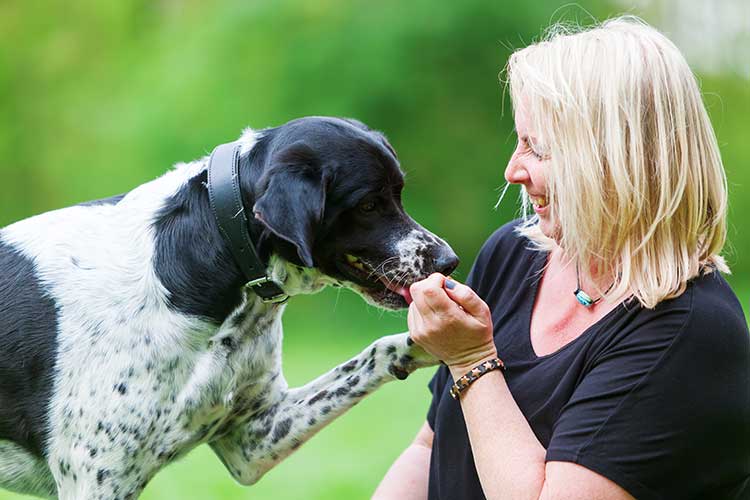
Dogs will be dogs. They bark, run away, chase squirrels, dig, rough house and get super excited. Interestingly, these unwanted behaviors are natural dog behaviors; they’re part of being a dog. Dogs don’t understand why humans find these fun behaviors so annoying.

To stop bad dog behaviors, many pet owners tend to scream “no” or physically punish their dogs. However, there’s a more positive way to interrupt your dog’s behavior. Interrupter cues stop unwanted behaviors by having your dog do something else. Learn how you can incorporate this cue in your training.

Choose a Positive Interrupter Cue

An interrupter cue stops unwanted behavior, so you can redirect your dog’s attention. Yelling “no”or “stop it” doesn’t work, and it will likely frighten your dog. Plus, pet owners tend to become angry when saying “no,” which snowballs into an angry hot mess.

Using a positive word as an interrupter makes a huge difference. Try screaming “no” out loud; it’s a bit scary as it echoes out of your mouth. Now scream “cupcake” out loud. Can you hear and feel the difference? It’s hard to be angry when screaming “cupcake” unless that’s your dog’s name and she’s running away from you. 🙂 This tiny difference is why it’s so important to choose a positive and fun word as an interrupter cue.

An interrupter cue can be a verbal cue (“treat”) or physical cue (one finger touches dog’s body). When choosing a verbal cue, pick something fun and quick, such as:

  • Treat
  • That’ll do
  • Woohoo
  • Cupcake
  • Sprinkles
  • Tequila
  • Beer
  • Cookie

While it’s tempting to use your dog’s name, many pet owners have used it so much that their dogs ignore it. Some pet owners sound like they’re screaming “no” when saying their dogs’ name too, so use a new cue. For hearing impaired dogs, a simple finger touch on their back works beautifully as an interrupter cue.

Once you’ve chosen a positive interrupter cue, pair it with super yummy food.

How to Introduce an Interrupter Cue

Grab lots of super yummy treats, such as baked chicken, chopped up hot dogs or cheese cubes. Treats are your dog’s paycheck, so skip commercial dog treats and use the good stuff! The better the treat, the faster your dog will respond to an interrupter cue.

Start Indoors First

An interrupter cue stops your dog from doing a specific behavior. When your dog is walking forward or looking out of a window, an interrupter cue will stop this behavior. Once a behavior is stopped, it’s important to reward your dog for doing something else like stopping the previous behavior and looking at you.

Start with your dog in the living room and say your interrupter cue. The moment your dog turns around and looks at you, say “yes” (marker word) and give your dog a treat. Practice this behavior 5 times in a row, and then end it. Continue to practice in short training sessions indoors and reward your dog every time he responds to the interrupter cue.

Once your dog responds to the interrupter cue 90% of the time, use the interrupter cue randomly throughout the day. While watching TV, if your dog barks out the window, say “treat” and generously reward your dog when she stops barking and looks at you. Drop your dog’s earned treat at your feet, so your dog walks over to get the treat. This teaches your dog to hang around you instead of the window.

Practice Outdoors

When your dog becomes really good at this behavior indoors (i.e. responds 90% of the time), it’s time to practice the behavior outdoors. Leash your dog and practice saying the interrupter cue, marking and rewarding this behavior for 1-2 minutes. Practice daily for 1-2 minutes with your dog on leash.

Keeping your dog on leash during the first steps of the learning process prevents your dog from wandering off and increases your chances of success. Once your dog will respond quickly to your interrupter cue, take your dog’s leash off and practice saying your interrupter cue and generously reward good behavior.

Using an Interrupter Cue With Multiple Dogs

If you share your home with multiple dogs, practice introducing an interrupter cue indoors with one dog first. Once the first dog responds to your interrupter cue 90% of the time, bring another dog into the mix. Mark and reward each dog when she responds. Once all dogs respond quickly, it’s time to practice with one leashed dog at a time outdoors.

When to Use an Interrupter Cue

Once your dog consistently responds to an interrupter cue, it’s time to use this valuable cue when your dog is barking, playing roughly or digging. Remember, an interrupter cue will only stop bad dog behavior, so ask your dog to do something else.

When indoors, most dogs will stop and look at you once they hear the interrupter cue, so reward this behavior generously. If your dog is in another room or outdoors, say the interrupter cue and toss the reward next to your feet. This will stop your dog’s unwanted behavior and teach him to come to you for the treat. When dogs are playing too roughly, say the interrupter cue and reward each dog the moment she stops playing and looks at you.

It’s important to note that an interrupter cue is different than the “look at me” cue because the interrupter cue is used to stop your dog’s unwanted behavior (barking), so you can redirect him to do something else (look at you). Of course, you can certainly reward your dog the moment she stops barking with a marker word and toss a treat next to your feet. Usually though, unless the dog walks away from the window or digging pit, the unwanted behavior will quickly resume.

What If the Unwanted Behavior Happens Again?

Sometimes, barking, playing and chasing squirrels resumes immediately after hearing an interrupter cue. When this happens, say the interrupter cue again and remove your dog from the situation. Close blinds for window barking, separate rough playing dogs temporarily and bring your dog indoors. This prevents dogs from reengaging in the behavior.

Make interrupter cues more fun than barking, digging and playing, and you’ve hit the jackpot!

Filed Under: Dogs, Puppies, Training Tagged With: dog behavior, dog training, Dog Training Tips, how to stop bad puppy behavior, how to stop dog doing bad things, how to stop unwanted dog behavior, how to teach a dog, how to train a dog, stop bad dog behavior, teach a dog, train a dog

Teething Relief For Puppies

July 3, 2017 by Fanna Easter

3 Puppy Teething Toys to Reduce Pain

Puppy Teething Toys
Grigorita Ko/Adobe Stock

All puppies lose their puppy teeth. The puppy teething process starts around 4 months old and ends around 6 months old. Losing teeth is painful, but new teeth erupting through sensitive gums is even more painful.

If your puppy is currently going through the teething process, provide her cold, soft puppy teething toys to reduce inflammation and pain. This list of teething relief toys will help soothe your puppy’s gums. (There’s even a homemade dog toy too.) Offer a cold toy several times a day while your puppy is teething. Once a toy starts to thaw, remove it and refreeze.

1. Chilly Bone

Multipet Chilly Bone dog chew is an easy way to calm inflamed puppy gums. Toss this puppy teething toy inside the freezer for a couple of hours, and give to your puppy during supervised playtime.

It’s soft enough to lightly chew for sensitive gums and cold enough to reduce pain and inflammation. This toy will thaw as your puppy chews, so never give this item to your dog unsupervised. Once your puppy has thawed out the toy, just toss it right back into the freezer. When choosing a size, always choose a size larger than you think. This toy has beveled sides, so all puppies can gnaw portions of it even if it’s too big.

2. Frozen Kongs

Choose a soft, rubber Kong toy that is made especially for puppy teething and stuff it with cold yogurt, cream cheese or chilled canned food. Inserting cool foods into a Kong will reduce gum pain and inflammation while providing a tasty treat.

To make the treat last longer, stuff the Kong with watermelon chunks, banana cubes, and either peanut butter or applesauce. Freeze overnight and provide it to your teething puppy the following day.

3. DIY Towel Knots

Using a large kitchen towel, tie large knots in the middle and on both ends of the towel. Submerge into water for 5 minutes, wring out excess water and freeze for several hours. On a waterproof surface, and under supervision, give this DIY frozen teething towel for your puppy to chew on. While it’s tempting to soak an item in chicken broth and freeze, this usually results in dogs chewing and ingesting it, which is never a good idea.

Provide plenty of flexible and cold chews during the teething process, and remember puppy teething does not last forever!

Filed Under: Puppies, Resources, Training Tagged With: chilly bone, cold puppy teething toy, diy puppy teething toy, dog training, homemade puppy teething toys, puppy teething, puppy teething toy, puppy teething toys freeze, teething relief for puppies

4 Dog Training Cues Every Dog Should Know

June 2, 2017 by Fanna Easter

Teach Your Dog These Basic Dog Training Cues

Basic Dog Training Cues
Ammit/Adobe Stock

All dogs should learn a series of basic dog training cues to keep them safe while having fun. Most puppy group classes teach these important behaviors, but dogs are never too old to learn these training cues either.

Grab your clicker, super yummy treats and your dog. Practice daily for 1-2 minutes to ensure your dog’s behaviors are sharp. In addition, practicing these cues will provide your dog lots of mental enrichment, which is a good thing.

1. Touch

Touch is such a simple dog behavior that can be used anywhere and for anything; it’s my favorite cue for all dogs. Dogs love this behavior too because it’s easy and super fun.

Teach your dog to touch his nose to the palm of your hand when your hand is presented. There’s no verbal cue. Instead, your hand becomes the signal to play the “touch” game. Once your dog understands to purposefully touch his nose to the palm of your hand, move your hand farther away, so your dog walks over and touches.

This dog game can be played quickly or slowly, and can be played at your vet’s office, in the car, at the park or on the sofa. Touch is extremely useful when teaching loose leash walking and coming when called too.

2. Come When Called

Training a dog to return back to you on cue is invaluable. This training cue prevents dogs from running off and getting lost, chasing things, fence fighting, and so much more.

Start by playing this game indoors and use high value rewards. Every time your dog returns back to you, throw a party! Once your dog reliably returns to you indoors, it’s time to take this game outdoors and make it fun.

Try running away from your dog while rapidly repeating high-pitched sounds to prompt your dog to chase you indoors. When your dog returns to you, make treats rain from the sky. If you’re more interesting than the squirrel, your dog will return back every time.

3. Body Handling

All dogs should learn that body handling is super rewarding. Teach your dog that you touching his ears, paws, tail and belly make treats appear. Once your dog is comfortable with body handling, meaning he doesn’t pull away while you’re touching a body part, reward for longer sessions.

Start slow and click your dog when he comfortably allows you to touch and look into his ear for a second. Gradually increase the time by 1-2 second increments. Reward your dog for mouth handling too, which is a great introduction to tooth brushing. Don’t forget your dog’s rear end too! Click and treat when lifting your dog’s tail, touching his belly and touching his rear paws.

4. Leave It

The “leave it” behavior can be used anywhere too. Train your dog to ignore discarded chicken bones during walks, dropped food in the kitchen or another dog in the distance. “Leave it” is an amazing impulse control game too. Your dog will soon learn that his behavior really matters. Reward this behavior heavily and keep it light and fun.

UP NEXT: Does Positive Reinforcement Dog Training Really Work?

Filed Under: Dogs, Puppies, Training Tagged With: basic dog training, commands that all dogs should know, dog training, dog training cues, dog training cues every dog know should, how to train a dog, list of dog commands, training commands, training cues, what behaviors should you teach your dog, what commands to teach your dog, what cues to teach your dog

Does Positive Reinforcement Really Work?

May 23, 2017 by Fanna Easter

Yes, Positive Reinforcement Dog Training Does Work

Positive Reinforcement Dog Training
Christian Müller/Adobe Stock

Every single day, I’m asked whether or not positive reinforcement dog training works. While many pet owners purposely pursue a positive dog trainer, there are still doubts written across their face. This is very evident when working with reactive dogs; many pet owners just don’t trust the dog training technique.

As with anything, there are pros and cons, but you’ll notice very few cons with positive reinforcement dog training. When doubt creeps in, tell yourself to trust the process because positive dog training really works.

What is Positive Reinforcement Dog Training?

Positive reinforcement dog training is when you reward your dog for a specific behavior, so the behavior will happen more often. When a dog sits, and he gets a treat, he learns to sit more often. Positive reinforcement works even when pet owners don’t suspect it.

Positive Reinforcement Examples

If you open a crate door, while your dog is barking inside it, your dog learns barking means you’ll open the crate door. Begging is a good positive reinforcement example too. If you feed your dog while he sits next to your plate, he learns that sitting close to your plate makes food happen. Yup, this is positive reinforcement too!

Positive reinforcement works in the human world too. We work for paychecks—that’s our reward for working hard. Pats on the back, bonuses and hugs are human rewards too. Super yummy treats are easily great dog rewards because everyone loves food. Praise, pats, fun games, tidbits from your dinner plate, escaping a boring crate or moving away from a scary dog are great positive reinforcement examples for dogs too.

Pros and Cons of Positive Reinforcement Training

Pros

  • Easy to do: You can’t make mistakes.; just reward behaviors you want to see more often.
  • Fun for dog and pet owner: Positive reinforcement is fun because earning rewards is fun! Celebrating wins are much more fun than digesting mistakes.
  • Extremely effective: Hands down, positive reinforcement works much faster than punishment-based dog training methods. Don’t believe me? Check out the latest research on teaching children. 🙂
  • Can be done anywhere: Dog training sessions can happen anywhere; just grab food treats and go!
  • You don’t need fancy equipment: Throw out choke chains, pinch collars and electronic collars. All you need are a handful of treats, a clicker and your dog! If you’re training your dog outside, attach a leash to your dog’s body harness.

RELATED: Clicker Training Game for Beginners

Cons (And Solutions)

  • Treat dependency: Dog will only work for treats.
    • This is an easy fix; just fade training treats once a dog understands a cue.
  • Withholding treats is frustrating: In the beginning, this can happen.
    • Again, this is a quick fix. Set a dog up for success and reward every single step toward a goal.
    • If needed, take a few steps back and build until the desired behavior happens.
  • What if you don’t have treats? Simple. Use praise, games and the happy dance to reward your dog for good behaviors.

Filed Under: Dogs, Puppies, Training Tagged With: best dog training methods, dog behavior, dog training, Dog Training Tips, how to train a dog, how to train a puppy, positive dog trainer, positive dog training, positive reinforcement, positive reinforcement dog training, positive reinforcement examples, positive reinforcement works, treat training dogs, treat training puppy

Dog Training: When & How To Add A “Down” Cue

May 12, 2017 by Fanna Easter

Adding the “Down” Cue

Dog Training Commands
lnichetti/Adobe Stock

When training your dog, it’s important to add a cue once the behavior has been fine-tuned. So often, pet owners will spend oodles of time training their dogs how to lie down, but fail to add a “down” cue to the behavior. Those who do use a training cue assume their dogs know what it means, but half the time their dogs don’t.

Dog training cues are vital when teaching a dog new behaviors because they serve as information for a dog. Check out these steps on when and how to add a “down” cue to the behavior.

Dog Training Commands vs. Cues

Dog training cues are a signal to perform a specific behavior. Many decades ago in the dog training world, cues were known as commands. Commands meant “do this or else” while cues signal information. Thankfully, the term “command” is considered outdated terminology and no longer used in dog training.

What to Use as Dog Training Cues

Cues can be anything. In dog training, cues are usually short verbal words or hand signals (either one or the other). Dogs learn contextual cues too, such as the presence of a leash means walks and the jingling of car keys means car rides.

Dogs usually respond to hand signals quicker than verbal cues because pet owners use hand signals consistently. Verbal cues are tricky because people say them differently, repeat the cue over and over, or add additional words.

When choosing a dog training cue, select a word or hand signal and use it consistently. If you’re using a verbal cue, use a flat tone. Imagine you’re giving directions to a stranger. High-pitched or low growl cues are confusing unless the pet owner uses this tone each and every time, which is very difficult for humans. Keep it simple and use your “follow these directions” voice. 🙂

When to Add a Cue

Most pet owners add training cues way too soon. When teaching a new behavior, it’s important to say nothing. Refrain from saying a cue during the learning process because the dog hasn’t learned the behavior yet.

Think about it this way: If someone is trying to teach you to stand on your left foot and continued repeating “mais,” you would get frustrated. Once you understand standing on your left foot makes it rain $100 bills and then someone said “mais” right before you stand on your left foot, you learn the meaning of “mais.” When practiced, you’ll quickly learn to stand on your left foot every time you hear “mais” because you know you’ll earn money.

Once a dog will readily offer a “down” behavior 90% of the time, it’s time to add a “down” cue. Offering a behavior means a dog will lie down during a dog training session or can be easily lured into the behavior. Take a moment and think of a short word or hand signal cue for the next step. Ensure your entire family is precisely aware of the “down” cue and that everyone says or does the signal consistently.

How to Add a “Down” Cue

Grab a handful of pea-sized high value training treats, a clicker (or marker word, such as “yes”) and start a session with your dog. Right before your dog offers the desired behavior, give the “down” cue and click/reward the behavior. Practice this 3-4 more times, then end the training session. After a 5-10 minute break, practice adding the cue before the behavior 5 more times, then end the session.

If, for some reason, your dog offers a “sit” or “stand” when given a “down” cue, wait until your dog chooses to do the “down” behavior. The moment your dog finally lies down, click and reward. When this happens, your dog is learning exactly what the dog training cue means, and is brilliantly problem solving. Reward generously (give 2-3 treats) when your dog chooses to lie down.

RELATED: Healthy Dog Treats

Reward Cued Behavior Only

Once your dog will lie down when given a “down” cue, it’s time to reward cued behavior only. This is called stimulus control, and it’s an important step. If you miss this step, your dog will learn to walk right in front of the TV (during movie night) and “down” for a treat. 🙂

WATCH: How to Add a “Down” Cue

Filed Under: Dogs, Puppies, Training Tagged With: dog training, dog training commands, dog training cue, Dog Training Tips, down command dog training, down cue dog training, how to add command dog training, teaching a dog to lie down, teaching down command dog, teaching puppy down command, training cue

  • « Previous Page
  • 1
  • 2
  • 3
  • 4
  • …
  • 14
  • Next Page »

About

Dog Training Nation is a community of dog trainers, dog owners and dog lovers. Our mission is to provide trainers and owners valuable information to enrich dogs' lives. We cover a range of topics, from socializing puppies to dealing with aggressive dog behavior to selecting the best dog products. It is our hope you share our content to make the dog and owner world a better place.

​

Facebook

Video

Dog Training Nation is a dog training blog for pet owners and dog lovers. We cover a range of topics from puppy socialization tips to dog aggression to dog health. It is our hope you share our content to make the world a better place for dogs.

Dog Training Nation

Quick Links

Dog Training
Dog Behavior
Dog Training Videos
Become a Dog Trainer
About
Contact Us

Copyright © 2026 · Lifestyle Pro Theme on Genesis Framework · WordPress · Log in