Dog Training Nation

In Dogs We Trust

  • Home
  • Training
    • Dogs
    • Puppies
    • Clients
  • Behavior
    • Breeds
  • Health
  • Safety
  • Resources
    • Equipment
    • Books
  • Dog Training Videos
  • About
You are here: Home / Archives for Puppies

What to Do When Your Puppy Won’t Walk on Leash

August 15, 2016 by Fanna Easter

How to Teach a Puppy to Walk on Leash
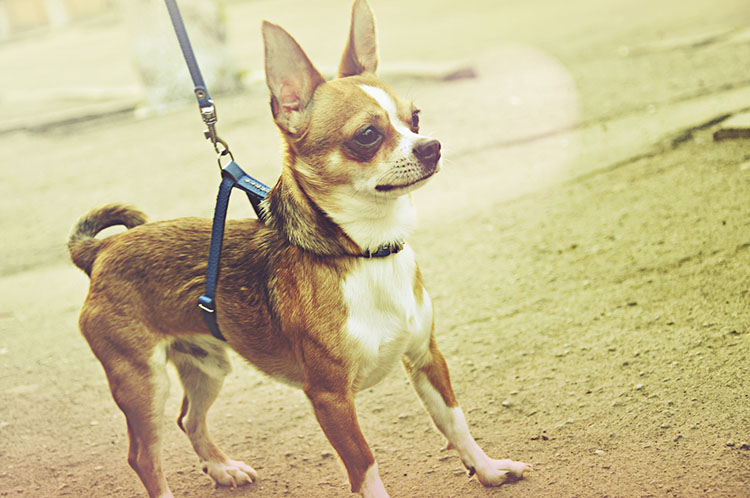
Leash Training a Puppy
Ollleke/iStock

Puppies refusing to walk on leash is an extremely common behavior. Walking with restricted movement due to a leash is unnatural for dogs, so we as pet owners should positively teach puppies and dogs that walking on leash is a good thing.

So many times, we snap a leash onto a puppy’s collar and take off walking, but the puppy becomes confused and tries running the opposite direction or refuses to walk. They flatten themselves onto the ground like a pancake. When we continue to pull on the leash, it causes the dog to panic. If you combine this scary scenario with a highly distracting environment, such as the park, neighborhood or vet’s office, or continue to pull on your confused puppy’s leash, you’ll teach your puppy that leashes make scary things happen.

Now, let’s start on the right paw and discuss how to teach a puppy to walk on leash. 🙂 Dog leashes are basically a safety line that keeps pets safe. They should never be used for jerking, yanking or any other type of punishment.

Leash Training a Puppy Tips

Teaching a puppy to walk on leash is pretty easy. You’ll need lots of super yummy treats, a body harness, and a six-foot nylon or cotton leash.

There are a few steps on teaching this dog behavior, so take your time and teach your puppy each step thoroughly before moving on. If your puppy or dog becomes confused, take a step or two back until your puppy is comfortable again. Understand, it’s completely normal to take a few steps backwards before moving forward again; it’s part of the learning process. I’m sure you painfully remember learning a foreign language or algebra at one point. 🙂

Also, it’s important to teach this behavior before attaching a leash to your puppy. Plan ahead and teach this puppy training skill before vet visits or walks around the neighborhood.

Step One: Introduce the Leash

Goal: Teach your puppy that leashes are positive things and leashes make treats happen.

With your dog indoors, sit on the floor and put your puppy’s leash on the floor in front of you. Whenever your puppy looks at the leash, click and give your dog a treat. If your puppy stays next to the leash (that’s a good thing), toss a treat in the opposite direction of the leash (e.g. toss treat across the room). That way your puppy must approach the leash for another click and treat. Play this game for a minute or two, then pick up the leash and put it in a location where your puppy can’t see it.

Practice this step 2-3 times per day for 3 days. By then, your puppy will run toward the leash whenever you bring it out.

Step Two: Fun Happens While Wearing a Leash

Goal: Puppy is comfortable with a leash attached to his harness or collar.

For this step, I’ll assume your puppy is already comfortable wearing a harness or flat collar. If not, take a moment and teach your dog that wearing a harness/collar is a good thing before completing this step.

Fill an interactive toy with food and freeze overnight. Now, attach a leash to your dog’s harness and let your dog drag it around the house for a bit. To make this experience positive and to keep a puppy from chewing on the leash, give your dog a frozen food stuffed toy to enjoy while wearing and dragging his leash around the house.

Once your dog has finished his food stuffed toy, remove the leash and put it away. Practice this game several times a day. You can certainly fill interactive toys with your dog’s daily meals for more leashes-make-fun-things-happen moments.

Remember, you’re not holding the other end of the leash. Your dog is learning that attached leashes are harmless and make good things appear like food stuffed toys. Practice for 3-4 days before moving onto the next step.

Step Three: Hold Other End of Leash

Goal: Puppy learns that leash pressure is fun.

By now, your dog has learned that fun things happen when a leash is present, so it’s time to hold the other end of the leash. This is the part that usually freaks some puppies out. They’re not used to limited mobility caused by leash restraint, so they pull, buck or lie flat on the ground. Teach your puppy or dog that collar pressure is a good thing by watching the video below.

WATCH: Teaching Collar Pressure

https://youtu.be/I39BE4xOnLY

Treats = Leash Pressure

You’ll need a handful of super yummy treats and a clicker. Attach the leash to your puppy’s harness and hold the leash handle in one hand. Lure your puppy around with a treat while holding the leash, and give him the treat. You’ll notice your puppy pulling ahead or lagging behind. Call your puppy to you and reward with many dog treats. Practice for 1-2 minutes and end the dog training session.

If your puppy freaks out when he feels leash tension, don’t pull the leash toward you. Instead, move toward your dog to release the pressure. Once your puppy is completely comfortable walking on a leash, you can then teach him how to walk politely on leash. Remember, crawl before walking. 🙂

Practice this step for 3-4 days and make a game out of it. Reward your puppy often like every 10-20 seconds.

Step Four: Walk on Leash Outdoors

Goal: Puppy learns how to walk on leash outdoors.

By now, your puppy should be completely comfortable walking on leash indoors, so it’s time to take leash walking outside. Practice luring and holding the other end of the leash in your backyard for several days—you’re not ready for walks in the neighborhood just yet.

You’ll notice your puppy becoming a bit more distracted, so he’ll probably feel more leash resistance while in the backyard due to him lunging toward squirrels or watching neighbors walk by. When your dog pulls, stand still and reward your dog the moment you feel less pressure on the leash. I recommend tossing a few treats in front of your feet, so your dog returns to you for rewards.

Once your puppy will walk around your backyard on leash comfortably, then you can try walking in your neighborhood.

Make walking on leash fun for your puppy, so he learns that fun things happen when leashes are present no matter where you are.

Filed Under: Behavior, Puppies, Training Tagged With: dog afraid collar, dog afraid of leash, dog freaks out on leash, dog hates leash, dog refuses to walk on leash, dog training, Dog Training Tips, dog will not walk on leash, how to teach a dog, how to train a dog, leash aversion, puppy afraid leash, puppy freaks out on leash, puppy refuses to walk on leash, puppy training, puppy will not walk on leash, teach a dog, train a dog

Do Dog Boarding and Training Programs Work?

July 12, 2016 by Fanna Easter

Think Twice About Dog Boarding and Training Programs

Dog Boarding and Training Programs
filrom/iStock

Pet owners want fast dog training results, so they choose to board their dog with a dog trainer (i.e. dog lives with dog trainer) and the dog trainer trains their dog to a certain level of training. Sounds quick and simple right? Even though this is an extremely fast growing segment of dog training, not all dog trainers agree with dog boarding and training philosophies. There are so many bad things that can happen when you choose this route, so know the facts first before dropping your dog off at someone’s house for weeks of boarding and training.

Typical Dog Boarding and Training Options

As mentioned above, pet owners drop their dog off at a dog trainer’s facility or home, and the dog trainer teaches their dog specific agreed upon behaviors. Length of stay with a dog trainer depends on the behaviors that will be taught to the dog, so it can vary between 2-6 weeks.

Learning takes times, especially when teaching challenging behaviors, such as walking on a loose leash in public and coming when called around tons of distractions. It’s important to understand dogs aren’t furry little computers; we can’t download information into their brains. If only it were that easy for dogs and humans! 🙂 Be prepared for sticker shock as well: boarding and training programs are extremely expensive. A two-week program can cost more than $500—that’s an insane amount of money.

How to Find a Good Dog Boarding and Training Program

Oh, this is where board and train programs can get really sticky. Finding the right dog trainer is key! There are several excellent board and train dog trainers out there and some rotten ones too. Learn how to stay clear of the rotten ones.

Research Good Dog Trainers

Choose a dog trainer who uses only positive reinforcement, meaning he doesn’t use punishment (physical or verbal), choke chains, pinch collars and/or electronic collars.

Look for dog trainers who will:

  • Reward good behavior
  • Redirect/ignore bad behavior
  • Only use flat buckle collars, Martingale collars, harnesses, head halters, clickers and yummy treats.

Check out my article on finding a good dog trainer. It lists websites that will help you in your search and point you in the right direction.

Don’t fall for the hype. Reward-based dog trainers can teach behaviors just as fast as punishment-based dog trainers. I know this personally, as I was a punishment-based dog trainer during the first 10 years of my dog training career. I switched to positive reinforcement because it was the humane thing to do for dogs, pet owners and myself. Also, it just works faster. Yes, I’ve been a positive reinforcement dog trainer for more than 15 years now and I’ve seen results from both sides of the dog training fence. Positive reinforcement is the clear winner by a landslide.

If a punishment-based dog trainer claims his methods work faster, ask for scientific research to back up those claims. Do know his personal experience is biased and wrong. Check out the multiple studies done on the effectiveness of positive reinforcement here.

Check Out the Facility

If a dog trainer offers a dog boarding and training program, ask to view where your dog will live while under his care. Ask how often your dog will be trained per day, if she’ll be crated and if she’ll go on daily walks. Ask if the dog trainer will follow your feeding instructions.

In addition, ask for contact information of previous clients and ask them for their reviews. You’re leaving a living and defenseless being in the care of this person. Interview the dog trainer ruthlessly and view the dog training facility thoroughly.

Dog Boarding and Training Program Horror Stories

Every day, I hear horror stories about dog boarding and training programs that will make you nauseous. I’m only sharing this information to inform you about the terrible possibilities that can happen to your dog. I’ve witnessed dogs starve during board and trains, as the dog trainer insisted dogs must earn all of their food or he simply forgot to feed them.

Some dogs would be left in their crates for 23 hours and forced to potty on themselves, which would cause large open sores. Other dogs were beaten and shocked with electronic collars so much so that the dogs would develop huge wounds. Others would be sent home with broken toes, legs and spines from physical abuse. I’ve also heard of dogs being left in extreme weather conditions that caused permanent damage; I could go on and on.

This stuff happens more than you think. I’ve witnessed these poor dogs being rushed into a veterinary clinic where I worked. Once you’re aware of the bad, you know what to look for during the interview phase and when visiting the dog training facility.

Don’t worry about offending a dog trainer either. An honest dog trainer actually admires and respects pet owners searching for the very best person to train their dog. We love it! If a dog trainer is rude, dismissive, unprofessional, lies or appears offended during your interview, end it and continue with your search.

Will Pet Owners Learn How to Train Their Dogs Too?

Professional board and train dog trainers will require pet owners to attend several dog training sessions with their dogs. While board and train dog trainers will teach your dog certain behaviors and put her on cue for you, you should still learn how to ask and reward cues, and know what to do if your dog becomes confused.

If a board and train facility doesn’t offer this option, or charges you more for it, this dog trainer and facility is not for you. Find someone else.

Final Thoughts

If you want a fast and effective way to train your dog, attend group training classes with your puppy or dog. Not only will you both learn together from a skilled dog trainer, but you will also build an unbreakable bond with your dog that will last a lifetime. If group class isn’t an option, choose private lessons in your home with a professional dog trainer. Working and learning together is key to success. Plus, you’ll save lots of money in your pocket. 🙂

Filed Under: Behavior, Clients, Dogs, Puppies, Resources, Training Tagged With: board and train costs, board and train dog trainers, board and train dogs, board and train prices, board and train puppies, board and train training, dog boarding for training, dog training, Dog Training Tips, how to teach a dog, how to train a dog, puppy training, should I board and train my dog, should I board my dog for training, should I board my puppy for training, teach a dog, train a dog

Help! My Dog Won’t Poop On Leash

June 30, 2016 by Fanna Easter

What to Do When Your Dog Won’t Poop on Leash

Dog Won't Poop
iStock/Carosch

Some pet owners will laugh at this subject, but many will understand the struggle of standing outdoors and waiting for nature to happen. In most cases, dogs won’t poop on leash. You need to teach them it’s okay to potty or poop while on a leash. It’s not natural for dogs to use the bathroom on leash because they’re used to having privacy in their backyard. You’re probably still giggling at this topic, but I can promise you that one day, you’ll need this dog training skill. 🙂

Why a Dog Won’t Poop on Leash

Attaching a leash to your dog changes everything. Your dog’s space suddenly becomes restricted, which can quickly frustrate him. You’ve probably heard about “leash frustration,” which occurs when a dog becomes extremely frustrated due to the restrictiveness of a leash (yes, it’s a real thing). I’m not saying you need to toss your leash in the trash because they’re still an important safety line, but you do need to teach your dog that leashes can be fun.

Understanding that dog leashes will restrict your dog’s personal space, you can see why your dog gets a bit creeped out pottying right next to you. 🙂 Most dogs head to the farthest corners of the backyard to poop in privacy, which I consider to be polite behavior that’s most appreciated. Try walking a dog accustomed to pooping in the backyard on a six-foot leash and expect him to poop. It’s almost impossible. It’s easy to see why your dog won’t poop on leash.

How to Teach Your Dog to Poop on Leash

This dog behavior can certainly be taught. I advise teaching your dog to poop (and pee) on a leash now rather than later. Anyone who’s traveled with her dog is probably familiar with walking around for hours until her dog finally pooped. Also, when your dog won’t poop on leash and holds it for days, he’s sure to explode.

If your dog rarely travels with you, and only poops in the backyard, then you’ll need to teach your dog to poop on leash because you may still need the skill someday. Most dogs will need some type of surgery, such as spaying or neutering, that require limited movement. It can also get frustrating when your dog won’t poop on leash during a blizzard or monsoon.

When your dog won’t poop on leash, you’ll need to take a step back to potty training 101. First, attach a leash to your dog’s collar. Then, grab several yummy treats and take your dog outside to potty in his favorite pooping area. Stand still and wait for it to happen. If it doesn’t happen within 5-10 minutes (it can take some time), then continue taking your dog out to potty on leash until it does. Lastly, be prepared to wait a day or two for your dog to poop on leash. Dress warmly if it’s chilly outside.

While we want to jump for joy when our dog finally poops on leash, keep quiet as your dog potties. The moment when stuff stops coming out, and before your dog stands up straight, say “yes.” Then, reward your dog with several treats. If you’d like, you can do the happy potty dance too.

To help stimulate your dog to poop on leash, take your dog for a walk around the neighborhood. However, in most instances, dogs will hold it until they get home. Walking through your neighborhood is certainly an option for teaching your dog to potty on leash, but I suggest teaching that behavior in the backyard as well.

Practice the Behavior

Now that your dog has learned to poop on leash, it’s time to keep practicing. At our house, we leash our dogs and take them out to potty in the backyard once a week to reinforce this behavior.

Filed Under: Behavior, Dogs, Puppies, Training Tagged With: dog not potty leash, dog potty leash, dog training, Dog Training Tips, dog will not go to bathroom on leash, dog will not pee on leash, dog will not poop on leash, dog won't poop on walks, how to teach a dog, how to train a dog, teach a dog, train a dog

Ask The Dog Trainer: Why Is My Dog Stubborn?

May 23, 2016 by Fanna Easter

Dealing With a Stubborn Dog

Stubborn Dog
David Baileys/iStock

It’s highly unlikely your dog is stubborn—he’s probably confused—but not stubborn. With that said, when a dog chooses to chase a squirrel instead of coming when called on cue, that’s not stubbornness; that’s lack of training around such distractions. And know that it happens to the best of us. Dogs are not robots nor should they be expected to be, but stubborn they are not. When a student starts using the word “stubborn,” I know her training message is not clearly reaching her dog.

Getting stuck during the learning process is a valuable part of learning, believe it or not. As the teacher, it’s your job to figure out what will work, so your dog understands not to jump on people, chew your hands or jump up on furniture. You probably just need a few tweaks to make sure your message is crystal clear to your dog.

The Word “No” Means Nothing

If your dog is jumping up or chewing on your hands, figure out what your dog could do differently, so they’re unable to do those annoying things. So many pet owners say “no” loudly or over and over again, which basically means nothing to their dogs.

Since I love a good analogy, let’s look at this from a human perspective. If you walk into a room and someone says “no, no, no,” you would become completely confused. What does “no” mean? Stop? Don’t walk, don’t stand, don’t look, don’t breathe, what? The word “no” is meaningless communication and can cause confusion quickly, so throw that word in the trash can. 🙂

How to Train a Stubborn Dog

Ask For Something Different

Now that we understand “no” means nothing, it’s time to reward your dog for doing something else. If your dog barks, reward him for being quiet. Here are a few other examples:

  • Reward your dog for keeping all four feet on the floor instead of jumping up. It’s impossible to jump up and keep your feet on the floor.
  • The moment you feel your dog’s (or puppy’s) teeth on your skin, leave the area or redirect him to another toy. By getting up and leaving whenever your dog’s teeth touch your skin, your dog learns to keep his teeth to himself.
  • Teach and heavily reward your dog for lying on anywhere else but furniture. Crate him when you leave, so he doesn’t learn to relax on your expensive sofa while you’re away. It won’t be forever; just until your dog learns what is expected.

Take a moment and think about what you want your dog to do instead of an annoying behavior. Usually the opposite behavior is key, such as standing still at the doorway instead of dashing out. If you can’t decide on an opposite behavior, you can always teach stationary behaviors, such as “sit,” “down” or “place.” Usually, dog movement is an underlying part of an undesirable behavior for people (e.g. pulling, running away, jumping up, dashing out doors, knocking people over, etc.).

Remember, teaching your dog an alternative behavior is much more effective than punishing him.

Make Sure Everyone is on the Same Page

To keep confusion to a minimum, make sure each family member understands how to manage a puppy chewing on his hands or what to do when a dog jumps up. Let’s use another analogy to further explain this concept. If you’re learning a new language, let’s say German, and each family member pronounces things completely different, it would be very challenging to learn German.

With that said, once you have figured out when to reward your dog, hold a family meeting to discuss and practice your dog training solution, so everyone is on the same page. I ask clients to keep homework directions in a highly visible place like the refrigerator, so each family member gets a quick refresher every time she grabs a beverage or food.

Practice, Practice, Practice

Now that you have developed a crystal clear solution for your dog’s unwanted behavior, practice it several times a week with really good rewards in a low distraction environment. Once your dog understands to stand instead of jump, keep teeth off human skin, be quiet instead of bark, or lie on his bed instead of the sofa, it’s time to practice with family members around for distractions. Expect a few hiccups until everyone gets into a rhythm and keep dog training sessions short (1-2 minutes long).

It’s impossible to be fluent in German without practicing it over and over—the same goes for dog training. 🙂

Dogs Forget Just Like We Do

Let’s take a step back to the foreign language analogy again. If you don’t practice speaking German several times a month, you’ll likely forget how to pronounce even the easiest words. Well, this applies to training your dog too. If your dog forgets, take a few steps back and practice your crystal clear solutions again. Going forward, vow to practice every week, so your dog doesn’t forget. We all forget; it’s not stubbornness. It’s either confusion or lack of training. 🙂

Filed Under: Behavior, Dogs, Puppies, Training Tagged With: dog behavior, dog training, Dog Training Tips, how to make a dog listen, how to make a puppy listen, how to teach a dog, how to train a dog, how to train a stubborn dog, how to train a stubborn puppy, my dog doesn't listen, my dog ignores me, my puppy doesn't listen, puppy training, stubborn dog, stubborn dog breeds, stubborn dog training tips, teach a dog, train a dog, training stubborn dog breeds, why does my dog not listen, why is my dog so stubborn, why is my dog stubborn

Best Store Bought Dog Training Treats: Dog Trainer Recommendations

April 22, 2016 by Fanna Easter

Best Store Bought Dog Treats

Best Store Bought Dog Training Treats
BettinaSampl/iStock

As a professional dog trainer, super yummy treats are a must-have during dog training sessions. Dog treats are your dog’s paycheck for choosing a polite behavior, and we all work for paychecks. The better the paycheck, the faster good behavior will happen. Fresh soft dog treats are easily the best option for training dogs. Check out why and which dog treat brands are best.

Soft or Hard Store Bought Dog Training Treats?

Oh, there’s a huge difference between soft dog treats and hard dog treats! When teaching new behaviors, you want fun and exciting sessions with lots of yummy treat rewards, but some treats will hold back the process.

I don’t recommend adding low value (dry pieces of kibble or biscuits) with high value treats. When teaching a new dog behavior or changing a dog’s perspective on something, always use high value dog treats every time. When weaning a dog from treats, using a variable schedule of reinforcement (i.e. rewarding the best “sits, downs or whatever” instead of every attempt) works much better once a dog understands a cue in all situations.

Soft Fresh Training Treats

From my experience training thousands of dogs, fresh training treats work best! When selecting dog treats, “fresh” means treats that contain higher moisture content that enhances aroma (smells strongly) and heightens taste. Additionally, fresh dog treats can be easily broken into pea-sized portions, quickly chewed and safely swallowed whole. Most fresh dog treats contain high percentages of meat, which means meat is usually the number one ingredient with a small percentage of vegetables or grains sprinkled in.

RELATED: Pros, Cons & Myths of Canned Dog Food

Dry Training Treats

Dry training treats can become a nuisance during training. They have little smell. If you don’t believe me, take a whiff of freeze-dried cow liver; it smells like nothing. No one enjoys eating scentless food because there’s a pretty good chance it will be tasteless too (hence rice cakes, yuck). Plus, store bought dry dog treats crumble easily, especially when breaking them into small portions for dog training sessions. There’s nothing worse than asking your dog to “down” and he’s busy hunting each and every dropped crumb instead of focusing on you.

If you’ve ever used dry training treats with an easily excited dog, you’ve probably witnessed your dog coughing or hacking after he swallows a dry treat whole. For smaller dogs, they will take their sweet time chewing a dry treat, which quickly deflates a high-energy training session.

Lastly, some pet owners swear their dogs love dry treats, but when I offer a fresh treat instead of a dry treat to their dog, the fresh treat is always gobbled up quickly. Plus, dogs tend to focus on other pet owners carrying fresh treats instead of their owners holding dry treats in their bait bag. Still don’t believe me? Place dry kibble or biscuit next to a chunk of tuna fish–case closed. 🙂

Recommended Dog Training Treats

As promised, check out a couple of brand names I highly recommend. All recommendations can be purchased at your local pet retailer and even large chain versions.

Freshpet

By far, Freshpet is my favorite! Due to an upsurge interest in cooked and raw food, Freshpet hit the pet and grocery store markets several years ago with a bang. Basically, this is a refrigerated cooked dog food with chicken as it’s first ingredient and a bit of vegetables and brown rice mixed in. Also, there’s a grain-free option for dogs watching their carbs. 🙂 Fresh Pet is a balanced dog food, which means it meets a dog’s daily needs if fed as a meal. It’s also made in the U.S.

Personally, I like the resealable bag option of Fresh Pet because it’s super convenient. No chopping needed. Just dump in your bait bag and go! If chopping is your thing, then choose from grain-free or regular rolls options. Now, Fresh Pet needs refrigeration, so I recommend freezing it a bit (1-2 hours max) during warmer months before heading out to group dog training class. As you arrive at the dog training facility, you’ll notice these treats will thaw a bit, but still remain cool during training sessions. Discard any remaining treats. I dump my bait bag contents on the floor for my dog to enjoy as class wraps up. Always wash your hands thoroughly afterwards, and don’t forget to wash your bait bag too.

Natural Balance Rolls

These rolls have been around for a long time, and I still use them during training. Meat is the number one ingredient in each role variety. Natural Balance rolls are nutritionally balanced, meaning these rolls can be fed as your dog’s regular meal (it would get expensive really quick though!).

Unfortunately, Natural Balance tweaked their roll recipe recently, which causes treats to crumble a bit when chopping. A tip: when chopping pea-sized treats, make sure the roll is nice and cold before cutting. This will keep crumbling to a minimum. I must say, dogs love this stuff–crumbs and all! Plus, there’s many protein options if your dog is unable to tolerate chicken or beef.

Natural Balance rolls must be refrigerated too. Freeze chopped treats (about 1-2 hours max) before heading out for training during warmer months. After training, discard any leftover treats. I usually dump my bait bag contents on the floor for my dog to enjoy at the end of class. Always wash your hands thoroughly and your bait bag too.

Regardless of which brand you choose, make sure your dog absolutely adores his or her treats. Fabulous dog treats make training dogs much easier!

Filed Under: Dogs, Equipment, Puppies, Resources, Training Tagged With: best dog training treats, best store bought dog training treats, dog trainer recommended training treats, dog training, Dog Training Tips, dog training treats store, fresh pet dog training treats, how to teach a dog, how to train a dog, natural balance roll dog training treats, teach a dog, train a dog

  • « Previous Page
  • 1
  • …
  • 4
  • 5
  • 6
  • 7
  • 8
  • …
  • 14
  • Next Page »

About

Dog Training Nation is a community of dog trainers, dog owners and dog lovers. Our mission is to provide trainers and owners valuable information to enrich dogs' lives. We cover a range of topics, from socializing puppies to dealing with aggressive dog behavior to selecting the best dog products. It is our hope you share our content to make the dog and owner world a better place.

​

Facebook

Video

Dog Training Nation is a dog training blog for pet owners and dog lovers. We cover a range of topics from puppy socialization tips to dog aggression to dog health. It is our hope you share our content to make the world a better place for dogs.

Dog Training Nation

Quick Links

Dog Training
Dog Behavior
Dog Training Videos
Become a Dog Trainer
About
Contact Us

Copyright © 2026 · Lifestyle Pro Theme on Genesis Framework · WordPress · Log in