List of Human Medications That are Poisonous to Dogs
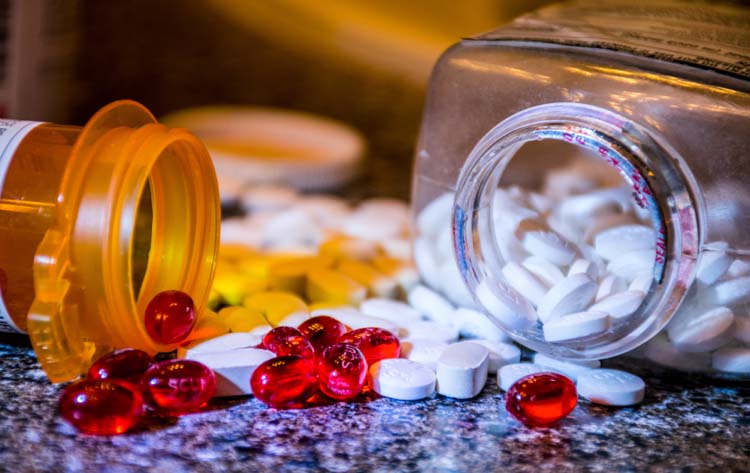
Many times, we reach into our medicine cabinets when our dogs are feeling under the weather, but not all human medication can be given to dogs. Before giving your dog human medication, make sure you research each medication first. As a resource, here’s a brief list of human medication poisonous to dogs regardless of size. Don’t assume dogs need to ingest a lot of pills to feel the effects. It usually only takes one.
Nonsteroidal Anti-Inflammatory Drug
Just about every human nonsteroidal anti-inflammatory drug (NSAID) is poisonous to dogs. Everything from Advil to Aleve to Motrin should never be given to your dog under any circumstances. Veterinarians do prescribe NSAIDs made especially for dogs, as human dosages can be lethal. Plus, many NSAID compounds contain additional ingredients that can cause severe liver damage.
Believe it or not, NSAIDs rank as the top dog-ingested poison and most are accidental. Many poison control hot line calls are a result of dogs finding a bottle of NSAIDs on a nightstand and chewing the bottle open to ingest the pills. Please keep all medication behind a tightly closed door or inside a drawer. If your dog learns how to open a cabinet door, move all medications to a top cabinet out of your dog’s reach.
If you should drop a pill on the ground, immediately step on it, so your dog isn’t able to swallow it. Better yet, teach your dog the “leave it” cue, so he learns to ignore anything that drops on the floor. Once you safely remove the pill and discard it in a closed container, reward your dog with a yummy treat for ignoring the fallen pill. Sometimes, pills are dropped unknowingly, so I highly advise crating your dog when you’re taking daily pills.
RELATED: Crate Training
Tylenol
We all know Tylenol (acetaminophen) can cause liver damage, especially if taken over long periods of time or at high doses. Well, this stuff can most certainly cause liver failure in dogs. Keep this stuff out of your dog’s reach.
While a few over-the-counter medications are safe for dogs, many have compounds of other ingredients and you’ll likely notice acetaminophen hidden in the mixture. Read the fine print. If acetaminophen is found anywhere in the ingredient list, don’t give it to your dog.
Decongestants
Many dogs rely on Benadryl (diphenhydramine) during seasonal allergy months, but not all allergy medications are the same. Always flip the bottle or box over and look at the ingredients. You’ll likely find some type of decongestant listed even if it’s way down the ingredient list. All decongestants are toxic to dogs.
When reading an allergy medication ingredient list, look for pseudoephedrine, which is an extremely common decongestant found in most major and generic brands of allergy medications. Make sure to choose products with diphenhydramine listed as the only ingredient. Better yet, ask your veterinarian for a recommended brand and dosage for your dog.
RELATED: What Human Foods are Bad for Dogs?
Human Prescriptions
Just like we never share our prescriptions with friends or family, the same applies for dogs. For most of us, we don’t intentionally give our prescribed drugs to our dogs, but they still end up swallowing it because they find a dropped pill or the bottle on the ground. As you would with your children, keep all medications out of your dog’s reach at all times.
Xylitol
You’re probably aware that xylitol is not a prescription or even a medication. Rather, it’s a sugar substitute that is extremely toxic to dogs even in tiny amounts. Unfortunately, this stuff is popping up in more and more human medications every day. Xylitol is usually found in chewable tablets, as the sugary taste masks most bitter-tasting medicine. Xylitol is also found in beverages marketed for children because again sweet-tasting stuff makes it easy to dose sick children. Unfortunately, this toxic stuff is finding its way into many supplements and herbs as well.
Always look at the back side of the bottle to ensure none of the ingredients above are listed. When in doubt, ask your vet!
You may also like: Best Multivitamin for Dogs
