Dental Care for Large Dogs
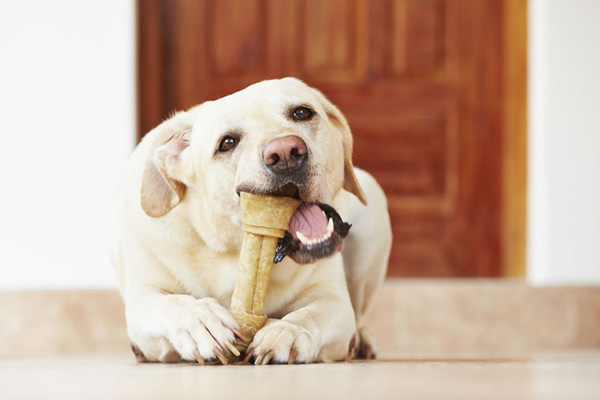 “Periodontal disease usually appears around three years of age in larger dogs,” cites the American Animal Hospital Association (AAHA). This is worrisome, as most pet parents consider periodontal disease as a senior dog issue. Before reaching for a dog chew, upon hearing this news, it’s best to use a combination of dental care products for best results.
Tooth Brushing
Brushing your dog’s teeth is the single most effective means to maintain oral health between professional dental examinations. By brushing your dog’s teeth, you’re effectively removing the bacteria film known as plaque, which prevents periodontal disease, according to the American Veterinary Dental College (AVDC).
Before you grab any old toothbrush and paste, check out a few tips on choosing products that work. Then, learn how to teach your dog to enjoy tooth brushing, which increases owner compliance. Since it’s easy and fun, we are more likely to continue doing it. 🙂
Choosing a Toothbrush
Before teaching your dog to enjoy the tooth brushing experience, choose a Veterinary Oral Health Council (VOHC) approved dog toothbrush. The VOHC recommends American Dental Association (ADA) compliant, soft-bristle, flat head toothbrush. For large to giant dogs, I recommend an adult or children-sized brush — whichever is easiest for you to hold and maneuver.
Dog Toothpaste
Always use toothpaste made especially for dogs, as human toothpaste contains high levels of fluoride, bleaching agents and detergents, which are toxic to pets, especially if swallowed. Plus, dog-specific toothpastes are usually flavored, which is very enticing for dogs and makes tooth brushing a bit easier.
Pressure
Use light pressure when brushing your dog’s teeth. The bristles should be touching teeth, not flatten against teeth. Stop frequently, and check, as rough tooth brushing will cause damage to gums.
Chews and Treats
With larger dogs, we usually provide extremely hard chews and treats because large chews are expensive. It’s tough watching your Rottweiler devour a $10 bully stick in 10 minutes — I’ve been there! However, those large and extremely hard chews can cause slab fractures and broken teeth, which usually goes unnoticed by pet owners.
So what are large dog owners to do? Choose VOHC-approved products, which have been proven to remove plaque instead of those huge plastic bone-shaped chews. As for treats, I started giving Science Diet T/D nuggets for good behavior, such as coming when called outside. Wow, I was shocked at how clean both of my dog’s teeth were even after one week.
RELATED: “Come When Called” Part 1: Intro
Vet Wellness Exams
Regular checkups are vital, as your vet can take a peek in your dog’s mouth and look for anything abnormal. Plus, it’s kind of nice showing off your dog’s pearly whites because you’ve been good and you followed your dog’s dental care program!
READ ALSO: 5 Reasons Why You Need a Dog Dentist
