Service Dogs Helping People in Need
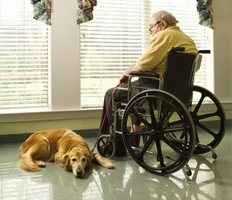
We can train a dog to assist a person in every aspect of his life. How wonderful! Every day, I hear of another way a dog has touched someone’s life. Have I said how much I worship dogs? Let’s discuss the top five purposes for a service dog, in which dogs have enriched lives even further.
Top 5 Service Dog Types
Vision/Hearing Impairment
Service dogs are extensively trained to guide a person around his home, neighborhood, shopping centers, airports and so much more. Training a service dog can take over 1 year. Service dogs used for the vision and hearing impaired have been trained for years to stop at curbs, go around cars, alert a person of sounds and keep both of them safe.
Seizure Alert
Not knowing when a seizure happens can be frightening and many people have stayed hidden in their homes afraid a seizure may happen anytime and anywhere. Somehow, service dogs are able to detect when a person is going to have a seizure and no one can give specifics on how they know. Could it be a specific scent or behavioral change in the person? Maybe. Dog trainers don’t know for sure, but well trained service dogs can detect seizures minutes or hours before they happen. When seizure alert dogs alert a person, they usually sit or lay on them. This cues the person to take medication or move to a safe place.
Diabetic Alert
As with a seizure alert dog, service dogs for diabetics are able to detect when a diabetic person’s blood sugar drops to a dangerous level. Per Dogs 4 Diabetics Inc. notes, “Our dogs are trained to identify a scent obtained from a diabetic when the diabetic is undergoing a low (blood sugar generally below 70). This type of service dog is trained to identify that particular scent from other scents that are presented to them.” Dogs are trained to sit, lay on, stare, nose push the person to let him know his blood sugar has dropped.
Assistance
This covers a wide range, as dogs are taught to complete everyday tasks for people whom are unable to. Dogs are taught to pick up dropped items, pull a wheelchair, turn lights off/on and stand and brace themselves so a person can place a hand on the dog’s back to assist with the person standing up.
Post Traumatic Stress Disorder (PTSD)
Many people suffer from PTSD for many different reasons. These injuries are commonly found with military veterans returning from war. Many times, veterans come back from a tour with PTSD and/or traumatic brain injury. Soldiers and veterans with these injuries are generally withdrawn, angry, show signs of increased anxiety and can’t stop thinking about what they have endured while at war. Dogs have found a way into their hearts. Service dogs are often assigned to these veterans to help heal from such tragic situations and flashbacks. I’ve seen young soldiers whisper their most terrifying moments in a dog’s ear, knowing they’ll never be heard and judged. The power of service dogs in these types of circumstances are extraordinary.
Did you know dogs are able to detect cancer in urine and cancerous melanomas? I’m sure dogs are able to detect many more illness. We just need to learn how to listen to our dogs. Hug your dog today and smile when you see a service dog doing his job. He deserves the utmost respect and gratitude.
Are you following us on Twitter? Follow us @DogTrainNation.
You may also like: Service Dogs

[…] Service Dogs Types of Service Dogs Therapy Dogs: How to Become a Healing […]