Dog Breed Names
Don’t Let Adjectives Fool You
When someone describes a Mastiff as an English Mastiff, the little hairs on the back of my neck stand straight up. You’re probably asking, “Why? It’s just a name, right?” Well, it’s a mispronunciation of a proper noun (breed of dog).
With all the horrible things happening daily, why are my hackles raised by this issue? Is it because my name is mispronounced 20 times per day? Maybe.
Or it could be when someone adds a point of origin (English) placed strategically in front of a proper breed name (Mastiff), it implies a bit of superiority (my English Mastiff is better than your Mastiff). Yes, that’s it, especially when someone emphasizes the added adjective. Not only does it denote highbrow smarty pants, but it is also used to deceive. It’s a pet peeve of mine, as I’m sure you can certainly tell. 🙂
Before other countries begin a debate, let’s be clear: I’m talking about breeds of dogs recognized by the AKC and UKC. 🙂
It’s All Marketing, Folks
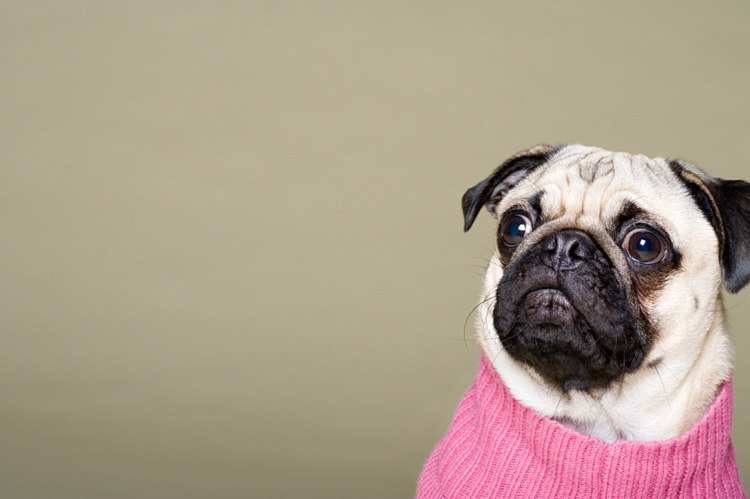
Another reason it rubs me the wrong way is adjectives are used by deceptive breeders to market their dogs to unsuspecting puppy buyers. Think about it: Chinese Pugs look and sound much more appealing than their proper name (Pug). Just reading or hearing the word “Chinese,” your brain secretly transports itself to Shanghai and you’re envisioning silk-wrapped Pugs trotting effortlessly along the Great Wall of China. Allow me to pop your bubble. 🙂
This is called marketing: someone is trying to sell their product by indulging in your secret need to possess something others don’t have. Before you blush, it’s normal human behavior. Sometimes, we fall for slick wording and advertising.
Reputable breeders use proper breed names because they’re part of a breed club, which helps develop the AKC and UKC breed standard. Now, this makes me swoon! These folks are preserving (or changing, depending on breed traits) and improving Pugs, Mastiffs and their chosen breeds.
Grammar Police
It’s Rottweiler and not German Rottweiler. In Germany, they’re called Rottweilers too–place of origin not included. If I had a penny every time someone asked if Sobek was a German Rott, I could pave Interstate 10 from beginning to end. Instead, I reply back, “Nope, he’s from Virginia.”
One time, some dog owners introduced me to their Imperial Royal Shih Tzu. Wowza! Personally, I think “Shih Tzu” is striking on its own (and it’s correct).
By the way, it’s Bull Terrier or Miniature Bull Terrier and not English Bull Terrier. While they originated from England, Stella Mae is a Miniature Bull Terrier born in South Carolina. 🙂
Beware of Adjectives & Mispronunciations
When clicking on a picture of Australian Peek-a-Poo puppies, understand their parents were a Pekingese and Poodle, and must’ve been born in Australia. If their address states Alabama or Wisconsin, it’s deceitful and false advertising at its best. Stay away.
By all means, if a dog breeder mispronounces a breed, run away. I’ve heard Bichon Frise called “B*tchs in freeze,” Shih Tzus pronounced as “Sh#t zoos,” Rottweilers referred to as “Rock wallets” and French Bulldogs labeled as “Frenchton Bulldogs.” Yeah, no. If a dog breeder or breed expert can’t pronounce a breed’s name correctly, they have no clue about breed standards.
To protect yourself, it’s vital to research your chosen breed and that means visiting AKC or UKC’s website for correct pronunciation of the breed and the breed standard. Check out tips on finding reputable breeders here.
WATCH: Proper Dog Breed Names: No Such Thing as “Chinese” Pugs or “English” Mastiffs
READ NEXT: Dog Breed of the Week: Great Dane
