What Dog Smiles Mean
Dogs smile when they’re happy, but their smiles are different from human grins. From a human perspective, when a person displays a large, toothy, upturned, cornered grin stretching from ear to ear, this giant smile is interpreted as friendly and happy behavior. So, when a dog displays the same smiling behavior, it’s understandable why humans interpret this behavior as friendly. However, the majority of dog smiles aren’t happy ones. Here’s the difference.
Dog Smiles are Different
Taking into consideration that humans automatically interpret smiling behavior as friendliness, let’s take it a step further with an analogy. Not all dog smiles are friendly. To interpret whether or not a smiling dog is a happy dog, we must look at his body language first.
Smiling Human Body Language
Let’s assume we’re walking down a busy street and watching people interact. We notice a woman grinning from ear to ear while stiffly standing still. Her eyes are wide and round and her arms are held tightly at her sides while making direct eye contact with her greeter. Immediately, we would interpret this behavior as a bit bizarre and assume she wasn’t excited about meeting her greeter. Even though she’s smiling at her greeter, she looks a bit worried or scared. So much so, that some people would intervene in this situation by asking, “Are you okay?”
Now, if we watch a smiling woman touching her greeter’s arm and moving her neck, arms, hands and body freely, we could easily assume and interpret that she’s happy to see her greeter. With this example in mind, let’s discuss smiling dogs again.
RELATED: Why Your Dog is Shaking or Shivering When Not Cold
Smiling Dog Body Language
It’s so important to look at your dog’s entire body language before trying to understand how she feels in certain situations. Dogs will grin, which is actually called a grimace in the animal world, but this is often not friendly dog behavior.
Dog Grimace
Grimacing happens when a dog retracts the corners of his mouth backwards (toward his ears). This causes its lips to lengthen horizontally, which exposes a fair amount of teeth. Some dog experts call this a submissive grin, but I interpret a dog grimace as discomfort, stress and fear.
If you watch smiling dog videos online, you’ll notice a grimace is pretty much always accompanied by a stiff body (non-moving), pinned back ears (flat against the head), wide open eyes (white of eye showing) and firm legs. While many well-meaning pet owners assume their dog is smiling when given a verbal cue, the dog will grimace when the camera is pushed into her face. If you look within the entire video frame, the dog is usually backed up against a wall or furniture, meaning there’s no way out because a human is standing right in front of her holding a scary, flashing box.
Watch What Happens After the “Smile”
While watching smiling dog videos, watch the dog’s behavior after she smiles. You’ll notice the dog is displaying stressed behavior. She’ll turn away from the camera, yawn, constantly blink her eyes, scratch longer than 10 seconds or remain frozen in place. Thinking back to the stiff, smiling woman, we know this isn’t normal behavior.
What are Happy Dog Smiles?
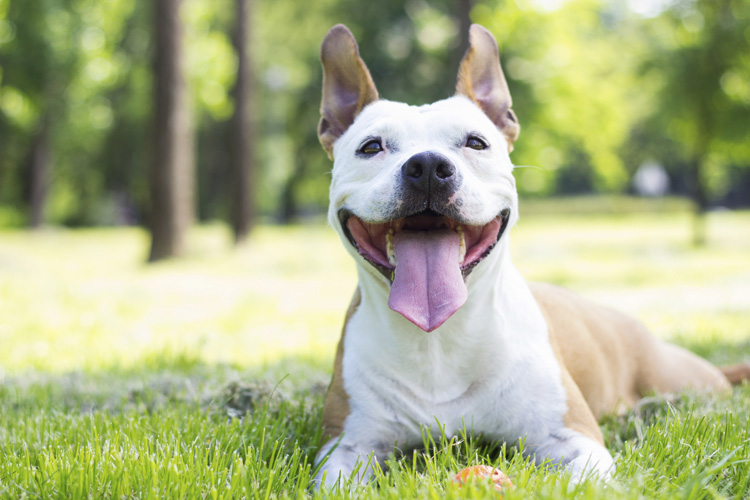
Dogs smile when they’re happy and excited. They’ll also loosely wag their tails, do the happy dance (pick paws up and down quickly) and have relaxed ears (natural placement) while moving toward their greeter. In my professional opinion, this article’s photo displays a beautiful example of a happy dog smile.
Now, I’ve personally witnessed very happy dogs flash a quick grin, with front teeth showing, when their pet owners arrive home. I was there to witness each dog’s body language, and both dogs were over the moon excited. So much so, that a tooth grin just so happened to appear on one dog’s muzzle. These happy grins were quick, less than a second, and followed by happy dancing, tail wagging and friendly dog body language.
Interpreting your dog’s reaction by focusing only on a smile is like reading a sentence and ignoring certain words—you’ll never understand the whole meaning.