Dog Training Nation

In Dogs We Trust

  • Home
  • Training
    • Dogs
    • Puppies
    • Clients
  • Behavior
    • Breeds
  • Health
  • Safety
  • Resources
    • Equipment
    • Books
  • Dog Training Videos
  • About
You are here: Home / Archives for crate training

Separation Anxiety in Dogs

September 2, 2014 by Fanna Easter

Preventing & Treating Separation Anxiety in Dogs
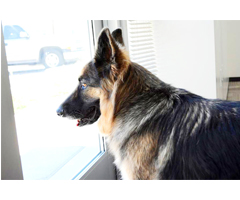
Separation Anxiety in Dogs
Is dog barking a symptom of separation anxiety?

Is your dog barking due to separation anxiety (SA)? Learn how to identify and prevent dog separation anxiety, and how to seek professional help if needed.

What is Separation Anxiety?

Separation anxiety occurs when a dog has a panic attack when left home alone. It’s like your dog freaks out and can’t control his terror or panic. He’s terrified to be left alone.

Dogs with mild separation anxiety usually pant heavily, vocalize, spin in their crates or at the back door when they’re left alone. Moderate to severe SA dogs will self-mutilate themselves trying to escape, such as ripping out their teeth or crashing through glass windows in an effort to escape.

Identifying Separation Anxiety

As a professional dog trainer, I can usually spot dogs predisposed to separation anxiety. It’s almost like they’re super sensitive and feel things at a deeper level than most dogs. Lovingly, I refer to them as “velcro dogs,” as dogs with separation anxiety are always by your side and looking into your soul. 🙂

Most dogs with anxiety follow you from room to room, watch over you while taking a shower or bath (I think they’re making sure you don’t drown), scream in excitement when you come home and crawl in your lap when you’re sad.

While most dogs will bark and whine when they’re alone, especially when left in a crate, it’s important to differentiate between a dog that isn’t crate trained and a dog with separation anxiety.

When in doubt, revisit “Crate Training Tips” to brush up on your crate training skills. If after putting those dog training tips in practice and your dog still stresses out, then you need to seek professional help from animal behaviorists.


 Still not sure if your dog has separation anxiety? Record your dog when left alone.

If you don’t have a dog monitor camera, use Skype or FaceTime.


How to Prevent Separation Anxiety in Dogs

Our behavior is critical to preventing and managing separation anxiety in dogs. Many times, pet parents reward separation anxiety behaviors because it’s really reinforcing us to be unconditionally loving and we don’t want to upset our velcro dog.

Trust me, I totally understand the feeling and emotion when coming home to your dog. He celebrates with unbridled enthusiasm and vocalizes as if his heart is full again. He’s thinking, “You’re home!” Be careful though. It’s not fair to your dog when you reinforce his excitement for your arrival. He needs to learn coping skills when left alone.

  • Make leaving uneventful
    • Give your dog a yummy food stuffed toy about 5 minutes before leaving.
    • Get your car keys, say nothing to your dog and leave.
  • Make your return uneventful
    • The moment you step into the door, ignore your dog. Trust me, I know it’s hard! Not only are you preventing SA, you’re teaching your dog not to jump on you.
    • Set your keys down and then take your dog out to potty.
    • Once he potties, then reward your dog, but keep celebrations to a minimum. No more happy dances. 🙂
  • Teach your dog that alone time is good
    • When taking a shower:
      • Give your dog a food stuffed toy.
      • Close the bathroom door to separate you and your dog.
      • When opening the door, don’t celebrate.
    • When leaving for 5-10 minutes:
      • Get the mail alone every other day.
      • Work in the yard alone for 10 minutes, then bring your dog out to enjoy yard work.
    • Close a door between you and your dog for a few minutes every day to teach your dog how to be alone.

Additional Valuable Tips

  • Exercise your dog or puppy daily. Most tired dogs will sleep when left alone.
  • Pair yummy food stuffed toys with leaving. This redirects his attention rather than worry about being left alone.
  • Turn on calming music for dogs. Personally, I use and recommend Through A Dog’s Ear CDs or downloads. They’re very relaxing—even for me. 🙂
  • Invest in pheromone plugins or sprays. These emit pheromones mimicking a nursing mother dog and have proven very effective with dog separation anxiety cases.

Yes, in the past and currently, I share my home with SA dogs with variable degrees of anxiety. It’s a tough road, but with professional help, this can be successfully managed and your dog can learn to be alone. 

When Separation Anxiety is Serious

If your dog displays moderate-to-severe separation anxiety symptoms, you need professional help.

Your dog’s behavior will only worsen. It won’t resolve itself, and your dog won’t get over it. I’ve witnessed dogs de-gloving their ears trying to escape from their crates. One client’s dog amputated his own tail, trying to escape his home when left alone. It can get that serious.

What are your questions about separation anxiety? I’m listening!

Filed Under: Behavior Tagged With: barking dog complaint, crate training, dog anxiety, dog bark, dog barking, dog barking all night, dog barking stop, dog behavior, how to stop a dog barking, no bark collar, separation anxiety, stop dog barking, velcro dog, velcro dogs, why dogs bark

Top 10 Puppy Training Tips

August 14, 2014 by Fanna Easter

Puppy Training Guide

Puppy Training Tips
anatema/iStock

Your puppy is an open learning funnel and training this learning funnel is key to your dog’s success. The puppy learning funnel closes around 16 weeks of age.  Implement these 10 puppy tips the moment your puppy is welcomed into his new home. We’ll train your puppy to learn the importance of polite manners from the beginning. Taking the time to train your dog or puppy is what sets everyone up for success!

1. Enroll in Puppy Class (Using Positive Reinforcement)

After your puppy’s first set of puppy vaccinations, enroll yourself and your puppy into a Positive Puppy Group Class. Choose a dog trainer who uses positive reinforcement. This means no yelling, pushing, yanking or pulling your puppy around. During classes, choose treats your dog loves!

2. Socialize Your Puppy

Puppies are sponges until 16 weeks of age so show them the world now. Introduce them to friendly strangers, cars passing by, loud sounds and so on. Ask friendly strangers to give your puppy treats. Your puppy will learn people are fun.

3. Create a Set Potty and Play Schedule

This is a dog training secret! A set schedule provides reminders so your puppy is given plenty of opportunities to potty. We live busy lives and forget it’s been hours since our puppies have had a chance to potty. Two- to three-month-old puppies can only hold it for a couple of hours max! Place the schedule on your refrigerator for quick reference. Also, all members of your family should follow this schedule.

4. Participate in Supervised Puppy Play Time

Supervised dog training means a professional dog trainer is monitoring puppy play at all times, and it’s a great way for puppies to learn dog etiquette. Supervised sessions invite puppies under 5 months old and allow a maximum of 10 puppies to play at one time. This ensures everyone has a positive experience. Stay away from dog parks, as no one is monitoring play sessions (no one with professional experience, that is). This is the #1 reason dogs become aggressive, as they are bullied by an adult dog and learn other dogs are unpredictable.

5. Crate Train

Your dog’s crate is his sanctuary. He feels safe and can relax in his crate so make it fun to be in his crate. Feed meals in his crate and provide special food stuffed toys to enjoy while relaxing in his crate.

6. Have Patience (Mistakes Will Happen)

Mistakes are part of the learning process. Have patience and invest in a good enzyme cleaner for potty mistakes and follow your set schedule. If teaching your puppy a new behavior, setbacks happen so stop and figure out what caused the mistake and vow not to let it happen again. If your puppy makes multiple mistakes, they may be confused.

7. Teach the Trade Game

Never chase a dog or puppy if he has something in his mouth. As you show your puppy a piece of cheese, say, “Trade.” When he  drops the item, pick up the item and give him the cheese. After a week or two of practice, your puppy will learn to drop items when he hears the “trade” cue. This method will not reinforce your dog to pick up random items in hopes of trading. Rather, he is rewarded for dropping the item for cheese. 🙂

8. Keep Training Sessions Short (1-2 mins)

Practice once or twice daily and keep sessions to 1-2 minutes long. Even if your puppy is doing well, end the session. Use a timer or count out 5 treats and practice until these treats are gone. Puppies’ attention spans are limited for right now so keep it short and fun.

9. Teach Him to Enjoy Body Handling

Puppies are sponges so teach them to enjoy body handling now. Click/treat as you touch his ear, paw, tummy, look in his mouth, lift his tail, touch a toenail, pick him up or restrain him with a hug (preparing for vet visits).

Click and treat your puppy during vet visits with a goal of using 60 tiny treats while the vet is examining your puppy. Give your puppy 5 treats in a row while he’s getting a puppy shot. 🙂

VIDEO: Body Handling

10. Prevent Puppy Biting

Puppy teeth on human skin is not allowed so squeak the moment you feel his teeth touch your skin. The squeak tells your puppy this hurts you. Then, reward your puppy when he removes his teeth from your skin. Also, if your puppy is really excited, wiggle a toy next to your body. This redirects him from your skin and onto a toy.

You may also like: Housebreaking a Puppy

Filed Under: Puppies, Training Tagged With: crate training, dog trainer, dog trainer advice, dog training, dog training advice, how to potty train a dog, how to train a puppy, how to train your puppy, puppy, puppy tips, puppy training, puppy training tips

Crate Training

July 16, 2014 by Fanna Easter

How to Crate Train a DogCrate Training a Puppy

In the dog world, there are many opinions on how to crate train your puppy and I’ll share mine. But first, I need to explain what crate training is not:

  • A crate is not used for punishment ever.
  • Dogs should not be left in their crates longer than 4 hours at a time. If you work an 8-to-5 job, please hire a pet sitter. Pet sitters are worth every penny. You will definitely get your return on investment. 🙂 You can begin searching and interviewing pet sitters here.

Keep these thoughts in your mind as I explain how to crate train your puppy or dog. 🙂

Choosing a Crate

  • A dog should be able to stand up, turn around and lay down comfortably.
  • For a fast growing puppy, choose a crate he can fit in as an adult. These large crates have a moveable divider so you can adjust as your puppy grows.
  • If a crate is too big (too long or wide), your puppy will sleep in the front and poop in the back- oops! 🙂
RELATED: Choosing a Dog Crate

Purpose of a Crate

  • Teaches your dog bladder and bowel control, and basically how to hold it.
  • Provides your pooch a relaxing and safe napping place and a getaway from distractions (visitors, children playing, etc.).
  • Serves as a secure and safe place to leave your puppy alone when no one is home (keeps him from chewing drapes, carpet, furniture, electrical cords, etc.).
  • Serves as a great tool when traveling with your dog!

Once upon a time, a puppy was left alone in the apartment all day (no crate was used). He chewed through the drywall and entered the next door neighbor’s apartment and destroyed his home too! Yes, it happened!

Training Your Dog to Go in His Crate

Plan on teaching your puppy these steps before you plan on leaving him alone. This will take 1-2 days to teach, depending on your training skills.

Step One

  • Start by tossing a treat in your puppy’s crate so he can walk in and eat it. Keep the crate door open so he can come right back out. Repeat this 10 times in a row.

Step Two

  • Toss a larger treat in the crate. As he enters and eats the treat, close the door. Once he is done eating his treat, open the door and let him out. Say nothing, as the reward is the crate door opening. Repeat this 10 times in a row.

Tip: Toss the treat in the back of the crate so your dog walks all the way inside the crate. Please don’t push your puppy inside.

Good girl, she goes in her crate!
Crate training. Good girl!

Training Your Puppy to Stay in His Crate Quietly

Step One

  • Hide treats in his crate (10 treats) and then open the crate door. Once your puppy goes in the crate, close the door behind him. Once he is done eating the treats, open the door so he can step out.

Step Two

  • Hide 2-3 treats in his crate and close the door after your dog steps all the way inside. Once he is finished eating these treats, throw a few treats in the crate with him (crate door is still closed). Throw treats five times in a row about 10 seconds apart. If you wait too long to give him treats, he will begin to whine in his crate. We want him to learn that staying in his crate quietly earns treats!

Step Three

  • Throw a larger treat (biscuit) in his crate and close the door once he walks inside. Take a few steps away from the crate, then walk over and toss one treat in the crate. Count two seconds silently (1 Mississippi, 2 Mississippi), walk over and toss another treat in the crate. Repeat until your dog can stay in his crate for 10 seconds (Move slowly. We don’t want him to whine!). After 10 seconds, toss a treat and open the crate door. Great job!

Step Four

  • Add a luscious food filled toy in his crate. He only gets this wonderful reward when he is in his crate. Toss the filled toy in his crate, walk away and let him enjoy!
RELATED: Puppy Training Classes

Troubleshooting

Barking/whining in crate:

  • Oops, if this happens, you moved too quickly with the above steps. Take a few steps back and begin again. If your dog is whining, don’t open the crate until he is quiet (opening the crate door is a reward).
  • Ensure your dog has plenty of exercise (a minimum of a 30-minute walk) before going in his crate.
  • Freeze his food stuffed toy so it will last longer.
  • If your puppy or adult dogs whine at night, bring him potty on leash, and put him back in his crate with a treat. You are not rewarding whining, as he may very well need to potty. We don’t want puppies to learn to potty in his crate. 🙂
  • If your dog is pottying on his crate bedding, remove it for a week until he learns to hold it. Once he understands to potty outside, you can add his bedding back.

 Barking at visitors when in crate:

  • Set up a bowl of treats about 6 feet from your dog’s crate.
  • Put dog in his crate.
  • When guests walk by, toss a treat into your dog’s crate and keep walking past him.
  • Have all guests play this game. Soon your dog learns guests equals treats.

Leaving your dog alone in crate:

  • Before leaving your puppy alone in his crate, exercise him mentally and physically.
  • Leave a frozen food stuffed toy in his crate anytime you leave. (A frozen food stuffed toy will help puppies while teething.)
  • Play soft music in the background. Dogs have excellent hearing. Try crinkling a potato chip bag when your dog is upstairs, he will come running! Help him tune out neighborhood dogs’ barking, nearby construction and sirens. I recommend Through a Dog’s Ear Music. I have the entire series and it works! I will admit it helps calm me too, especially when I’m stuck in traffic. 🙂
  • This may sound hokey, but spraying lavender has proven to calm dogs (and humans!). What will it hurt? At least your house will smell wonderful!
  • Another tool I recommend are Dog Appeasing Pheromone Sprays and Diffusers. Personally, I’ve had wonderful results and have a diffuser plugged in near my dogs’ crates. There is supporting research on DAP’s effectiveness.

In the comments below, tell us how you create a spa atmosphere in your dog’s crate.

READ ALSO: Dog Time Out

Filed Under: Puppies, Training Tagged With: crate training, crate training 101, crate training a puppy, crate training an older dog, crate training at night, crate training schedule, crate training while at work, crate training whining, dog training advice, how to train a dog, how to train a puppy

About

Dog Training Nation is a community of dog trainers, dog owners and dog lovers. Our mission is to provide trainers and owners valuable information to enrich dogs' lives. We cover a range of topics, from socializing puppies to dealing with aggressive dog behavior to selecting the best dog products. It is our hope you share our content to make the dog and owner world a better place.

​

Facebook

Video

Dog Training Nation is a dog training blog for pet owners and dog lovers. We cover a range of topics from puppy socialization tips to dog aggression to dog health. It is our hope you share our content to make the world a better place for dogs.

Dog Training Nation

Quick Links

Dog Training
Dog Behavior
Dog Training Videos
Become a Dog Trainer
About
Contact Us

Copyright © 2026 · Lifestyle Pro Theme on Genesis Framework · WordPress · Log in
