How to Teach a Puppy to Walk on Leash
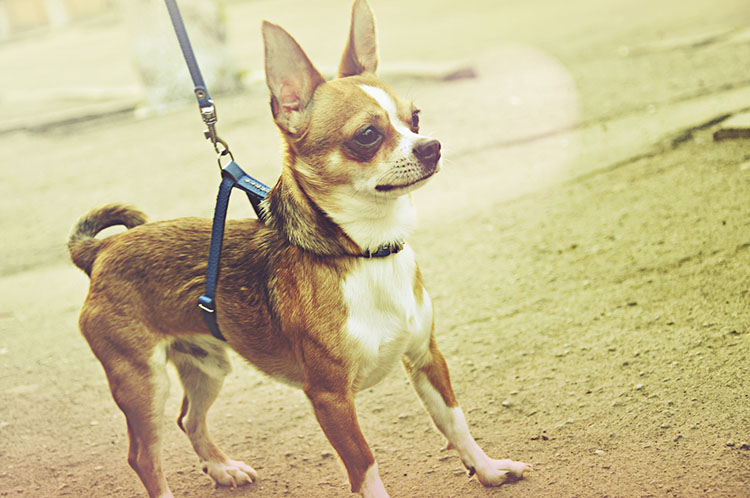
Puppies refusing to walk on leash is an extremely common behavior. Walking with restricted movement due to a leash is unnatural for dogs, so we as pet owners should positively teach puppies and dogs that walking on leash is a good thing.
So many times, we snap a leash onto a puppy’s collar and take off walking, but the puppy becomes confused and tries running the opposite direction or refuses to walk. They flatten themselves onto the ground like a pancake. When we continue to pull on the leash, it causes the dog to panic. If you combine this scary scenario with a highly distracting environment, such as the park, neighborhood or vet’s office, or continue to pull on your confused puppy’s leash, you’ll teach your puppy that leashes make scary things happen.
Now, let’s start on the right paw and discuss how to teach a puppy to walk on leash. 🙂 Dog leashes are basically a safety line that keeps pets safe. They should never be used for jerking, yanking or any other type of punishment.
Leash Training a Puppy Tips
Teaching a puppy to walk on leash is pretty easy. You’ll need lots of super yummy treats, a body harness, and a six-foot nylon or cotton leash.
There are a few steps on teaching this dog behavior, so take your time and teach your puppy each step thoroughly before moving on. If your puppy or dog becomes confused, take a step or two back until your puppy is comfortable again. Understand, it’s completely normal to take a few steps backwards before moving forward again; it’s part of the learning process. I’m sure you painfully remember learning a foreign language or algebra at one point. 🙂
Also, it’s important to teach this behavior before attaching a leash to your puppy. Plan ahead and teach this puppy training skill before vet visits or walks around the neighborhood.
Step One: Introduce the Leash
Goal: Teach your puppy that leashes are positive things and leashes make treats happen.
With your dog indoors, sit on the floor and put your puppy’s leash on the floor in front of you. Whenever your puppy looks at the leash, click and give your dog a treat. If your puppy stays next to the leash (that’s a good thing), toss a treat in the opposite direction of the leash (e.g. toss treat across the room). That way your puppy must approach the leash for another click and treat. Play this game for a minute or two, then pick up the leash and put it in a location where your puppy can’t see it.
Practice this step 2-3 times per day for 3 days. By then, your puppy will run toward the leash whenever you bring it out.
Step Two: Fun Happens While Wearing a Leash
Goal: Puppy is comfortable with a leash attached to his harness or collar.
For this step, I’ll assume your puppy is already comfortable wearing a harness or flat collar. If not, take a moment and teach your dog that wearing a harness/collar is a good thing before completing this step.
Fill an interactive toy with food and freeze overnight. Now, attach a leash to your dog’s harness and let your dog drag it around the house for a bit. To make this experience positive and to keep a puppy from chewing on the leash, give your dog a frozen food stuffed toy to enjoy while wearing and dragging his leash around the house.
Once your dog has finished his food stuffed toy, remove the leash and put it away. Practice this game several times a day. You can certainly fill interactive toys with your dog’s daily meals for more leashes-make-fun-things-happen moments.
Remember, you’re not holding the other end of the leash. Your dog is learning that attached leashes are harmless and make good things appear like food stuffed toys. Practice for 3-4 days before moving onto the next step.
Step Three: Hold Other End of Leash
Goal: Puppy learns that leash pressure is fun.
By now, your dog has learned that fun things happen when a leash is present, so it’s time to hold the other end of the leash. This is the part that usually freaks some puppies out. They’re not used to limited mobility caused by leash restraint, so they pull, buck or lie flat on the ground. Teach your puppy or dog that collar pressure is a good thing by watching the video below.
WATCH: Teaching Collar Pressure
https://youtu.be/I39BE4xOnLY
Treats = Leash Pressure
You’ll need a handful of super yummy treats and a clicker. Attach the leash to your puppy’s harness and hold the leash handle in one hand. Lure your puppy around with a treat while holding the leash, and give him the treat. You’ll notice your puppy pulling ahead or lagging behind. Call your puppy to you and reward with many dog treats. Practice for 1-2 minutes and end the dog training session.
If your puppy freaks out when he feels leash tension, don’t pull the leash toward you. Instead, move toward your dog to release the pressure. Once your puppy is completely comfortable walking on a leash, you can then teach him how to walk politely on leash. Remember, crawl before walking. 🙂
Practice this step for 3-4 days and make a game out of it. Reward your puppy often like every 10-20 seconds.
Step Four: Walk on Leash Outdoors
Goal: Puppy learns how to walk on leash outdoors.
By now, your puppy should be completely comfortable walking on leash indoors, so it’s time to take leash walking outside. Practice luring and holding the other end of the leash in your backyard for several days—you’re not ready for walks in the neighborhood just yet.
You’ll notice your puppy becoming a bit more distracted, so he’ll probably feel more leash resistance while in the backyard due to him lunging toward squirrels or watching neighbors walk by. When your dog pulls, stand still and reward your dog the moment you feel less pressure on the leash. I recommend tossing a few treats in front of your feet, so your dog returns to you for rewards.
Once your puppy will walk around your backyard on leash comfortably, then you can try walking in your neighborhood.
Make walking on leash fun for your puppy, so he learns that fun things happen when leashes are present no matter where you are.