Dog Training Nation

In Dogs We Trust

  • Home
  • Training
    • Dogs
    • Puppies
    • Clients
  • Behavior
    • Breeds
  • Health
  • Safety
  • Resources
    • Equipment
    • Books
  • Dog Training Videos
  • About
You are here: Home / Archives for dog aggression

How to Deal With Fear Aggression in Dogs

October 15, 2015 by Fanna Easter

Dealing With Dog Fear Aggression

Fear Aggression in Dogs
wujekspeed/Deposit Photos

Is your dog showing signs of fear and aggressive behavior at the same time? This behavior can be categorized as fear aggression. Fear is not uncommon in dogs and most aggressive behaviors derive from it. This behavior could be caused by a multitude of things, such as genetics, possible mistreatment or lack of socialization during the impressionable stages of the dog’s life (fear imprint period). Sometimes you may be dealing with a combination of these things, depending on the dog and situation.

What Causes Your Dog’s Fear?

First, you want to identify the source of your dog’s fear whether it’s strangers, other dogs or specific objects. Once you can identify the cause of your dog’s fear, you can work on the behavioral threshold (the distance where the dog is not reacting). This will help your dog learn to overcome and deal with the cause of his fear.

As someone who has owned a dog that suffers from fear aggression, I recommend working with a professional dog trainer who is experienced with this type of behavior. Dealing with fear aggression can be complex and a little overwhelming for a dog owner to deal with, so coupling up with a dog trainer will help your dog tremendously.

What You Can Expect and When

You’ll see your dog’s fear aggressive behavior become more intense around six months of age or at the beginning of the dog’s adolescence. The sooner you begin modifying this behavior, the better. As stated above, you might see your dog show signs of fear toward strangers, other animals and even inanimate objects.

Flight or Fight Response

Some dogs will show the flight response (running away) to the things they’re fearful of. This is generally categorized as being fearful. On the other hand, you might have a dog that shows the fight response (trying to move toward the object), which is considered fear aggression. The dog that shows the fight response is trying to scare the thing she is fearful of away.

Your Dog’s Body Posture

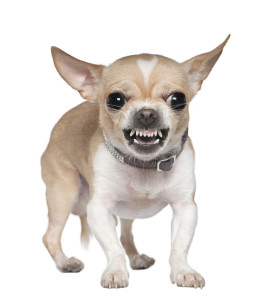
A dog suffering from fear aggression may bark, growl, show teeth, lunge and hug the ground within seconds, or have his hackles raised from the tail all the way to the shoulder blades trying to appear bigger than he is. His body posture may make him come off as indecisive. One minute he’s lunging and growling and the next he’s cowering and running behind you.

RELATED: Dog Aggression

How to Train a Dog With Fear Aggression

First and foremost I want to state that using any correction on a fearful dog can be detrimental to dog training. This will only cause a bigger negative association to what the dog is fearful to. The dog is scared. You can’t tell him to stop being scared. Building a positive association and teaching redirection with the use of positive reinforcement techniques will be ideal in a situation like this.

Select a High Value Reward

Begin by finding the highest value reward for your dog, such as steak, chicken or liver. A head collar is also a great tool to use in this training program, as it gives you much more control. Our goal is to have the dog become aware of the triggers and not react to them.

Treat Your Dog Around Triggers

As soon as your dog sees the trigger, feed your dog a treat one after another. Do not give the dog a chance to redirect onto the stimulus. While the dog is focusing on you and the reward, start moving the dog away from the stimulus where you know he won’t act aggressively. You will begin doing this for several weeks in small increments.

Move Closer

Once your dog is successful at seven feet from the stimulus, begin moving closer. For the next couple of weeks, work with your dog at a distance of five feet. As your dog’s confidence builds, then work with him at a closer distance.

Involve Strangers

When your dog is comfortable around strangers, start using them in your dog training. A great way to begin is to have strangers toss high value food rewards near your dog, as they walk by. Do not have strangers approach quickly or look at your dog–have them just toss a treat and move on.

If your dog doesn’t react to this, then you know you’re making great progress and can move forward. If your dog does show reaction to the stranger, take a couple of steps back and continue to build her behavioral threshold without additional stimulation from strangers.

Take It Slow

Remember to take these exercises very slowly. By going at a slower pace, you’ll be much more successful. It’s normal to want to push a little more when you see progress, but I wouldn’t recommend doing this, as you can overwhelm the dog and jeopardize your training.

I know this can be a frustrating situation, but there is light at the end of the tunnel. My Boxer Chanel began showing signs of fear aggression at five to six months old, which escalated quickly. She is now seven years old and lives with cats, a three-year-old child and another Boxer. There was a lot of training and emotions involved over the years, but I wouldn’t change it. She is my success story!

Sources:
www.iaabc.org
www.apdt.com
www.aspca.org

Filed Under: Behavior, Dogs, Puppies, Training Tagged With: dog aggression, dog aggression training, dog fear aggression, dog training, Dog Training Tips, fear aggression in dogs, how to teach a dog, how to train a dog, teach a dog, train a dog

Dog Aggression

January 9, 2015 by Fanna Easter

Dog Aggression Training

Dog Aggression Training
Dealing with dog aggression.

This series explains the different types of dog aggression in an easy-to-understand format for everyday pet owners.

While a few complex and technical terms are used, each category goal is designed to reach individuals searching for answers pertaining to dog aggression. Information provided contains current prevention tips and behavior protocols as well as how to find professional help if needed.

What is Dog Aggression?

Aggression means “often harmful, social interaction with the intention of inflicting damage or other unpleasantness upon another individual.” In the dog world, most dogs display aggressive behaviors to warn they can and will cause harm before actually engaging in a fight. Basically, this means most dogs are not born aggressive. Instead, dogs learn to use aggressive behaviors to guard favorite toys, protect themselves from perceived threats or redirect their frustration onto another dog or person.

Before labeling a dog with aggression issues, it’s important to understand that aggression is a symptom of anxiety. Fixing aggression does not help a dog; you’re just masking a symptom of an underlying cause. Instead, focus on managing anxiety, which will decrease aggression. Think of it this way: If someone has the flu, lowering a high fever, a symptom of illness, does not cure the flu. This is the same with aggression. Check out this article to dispel a few dog aggression myths.

What Does Not Work?

Punishment rarely works. Instead, punishment causes an increase in anxiety, which causes a surge in aggression. Punishment is usually categorized as leash correcting, yelling, screaming, scolding and physically striking a dog. If you’re scared of heights, would my screaming and pushing help your fear? Probably not. Instead, your fear will worsen or you’ll redirect your frustration by punching me in the nose!


 Aggression is extremely frustrating and scary for pet owners. No one wants his dog to cause harm to himself or anyone else.

Instead of redirecting your frustration at your dog, channel your frustration to solving the issue.


Can You Fix Aggression?

This is a controversial topic in the dog training world, and I’m going to tackle it head on. No, you can’t fix or cure aggression, but you can teach a dog how to manage his anxiety. While you can’t fix aggression, you can surely teach a dog how to respond without acting aggressively.

Before you become discouraged, allow me to explain further.

If you’ve been violently mugged by a man wearing a red shirt, you understand the terror felt when another man wearing a red shirt approaches you. We all know men wearing red shirts are not scary, but you’ve learned to fear them. Over time, you learn red-shirt-wearing men are harmless, but your heart still pitter-patters when you see one.

Types of Aggression

Redirected Aggression

Road rage is basically redirected aggression. You’re turning your frustration onto another motorist. Instead of honking your horn, learn how to manage road rage by driving slower, keeping additional distance between cars and rewarding yourself for disengaging or ignoring a fellow road rage-er. I’ll be the first to admit, this is my personal struggle and I’m still learning how to cope with my frustration. 🙂

Resource Guarding

Oh and let’s chat about resource guarding. 🙂 How do you feel when a stranger or friend leans or sits on your new car? Mercy! You’ve worked hard to pay for that shiny new car so folks need to show respect, right? Now, you understand why dogs guard their new and shiny toys.

Short Answer

While you can’t fix aggression, you can surely teach a dog how to respond without acting aggressively. Not only will this reduce aggression, it also builds confidence and lowers anxiety. I think you are starting to see the whole picture now.

Let’s Jump Into Our Series Now!

One more thing, understand that fixing should only be used with cars. You can’t fix dogs nor people, but you can surely change behavior for the better!

Be your dog’s voice!

More:
Defensive Aggression
Offensive Aggression
Redirected Aggression
Resource Guarding

Filed Under: Behavior Tagged With: can you fix dog aggression, cause of dog aggression, defensive dog aggression, dog aggression, dog scared at vet's office, dog scared of other dogs, dog trainer tips for aggression, flight and flight dogs, how to fix dog aggression, how to prevent dog aggression, leash reactivity, managing dog aggression, puppy training tips, should I go to dog parks

Defensive Dog Aggression

January 9, 2015 by Fanna Easter

Defensive Aggression in Dogs

Dog Aggression Training
Flee behavior is when a dog has moved away from a threat and hides. Never try to pet this dog.

This breaks my heart. Defensive dogs are begging to be left alone because they’re terrified. Before preventing or managing defensive dog aggression, learn how to identify and understand the cause of defensive dog aggression.

What is Defensive Dog Aggression?

Defensive means to defend oneself. Aggression means “hostile or violent behavior toward something.” When combined, defensive aggression means defending oneself by using aggression. Every living being has an automatic defensive response when encountering a perceived threat; we flee, fight or freeze. This reaction is hardwired into our brains. It’s a defense mechanism. We flee if this is an option. If not, we freeze or fight.

Defensive aggression encompasses all three reactions: fight, flee and freeze. If your dog displays any one of these three reactions, he’s scared. Remove him from the situation immediately. When polling pet parents during my group classes, most label “fight” as defensive aggression, as this is the most problematic of the three. Usually, pet parents ignore “flee” and “freeze” because they’re unaware these components are, indeed, a part of defensive aggression.

During safe puppy play, puppies practice these behaviors if they’re unsure they will “flee” or “freeze.” Other puppies learn what these behaviors mean and ignore the scared puppy. If the other playing puppies ignore “flee” or “freeze” behavior, the scared puppy is most likely to “fight.” While pet parents think, “Good. This puppy is teaching my bully puppy a lesson,” the scared puppy is actually learning offensive aggression, meaning if I attack when scared, it works. Yikes! This is the perfect recipe for dog aggression behavior. That’s why puppies should only play during safe play sessions organized by professional dog trainers.

Preventing Defensive Aggression in Dogs

Listen to your dogs. If they’re scared or nervous, remove them from the situation. Remember, defensive aggression happens when your dog is cornered by a perceived threat. If he can’t get away, he will resort to aggression. Dogs don’t understand that veterinarians are trying to help him. They feel cornered and don’t want to be there any longer.

Flight (Flee)

When given the opportunity, most dogs will flee. If not, they will either freeze or fight. Usually a dog will lower herself to the ground, tuck her tail, lean back from the scary trigger and run. If the scary thing catches up, she will freeze, then try to run away again. If the scary thing keeps chasing her, and “flee” and “freeze” are not working, she will fight.

Freeze

Dog Aggression
The “freeze” behavior is when a dog’s body language is low and leans away from the threat, yet his eyes are focused if the threat continues to follow him.

Just as the word describes, “freeze” means a dog will stop and stand completely still. This makes the hair on the back of my neck stand straight up. Yikes! This dog is terrified. If this happens, remove your dog from the situation immediately. If pushed, a “freeze” will turn into a fight. Their options have been limited.

Tips on removing a dog from a scary situation:

  • Small to medium size dogs: Pick them up and hold at chest level. Don’t forget to tuck the tail in too. It’s no fun having a bully pull at your tail.
  • Large to giant dogs: Step in between dogs and grab the bully dog’s collar. Ask someone to come over and grab the bully’s collar so you can leash your dog. Leave the area while the bully dog is being restrained by the collar. Most folks try to grab their scared dogs, but that only aids bully dogs in pinning your dog down. Grab the bully instead.

Leash reactivity is a newer phenomenon; dogs are unable to “flee” from approaching strange dogs or people because they’re attached to a leash so most will “fight.“ Dogs then learn to bark, growl or lunge at other dogs or people, when on leash, because they know they can’t “flee.” This is an example of offensive aggression.

Fight

How to Stop Dog Aggression
A dog freezes right before fighting.

Dogs will fight as a last resort when feeling threatened. Now, some dogs may choose to “fight” before “freezing” or “fleeing.” Usually, these dogs have underlying anxiety issues, meaning they’re in a constant state of “flee” or “freeze” behavior. You never want it to get this far. Your dog is basically fighting for his life; he is terrified.

Managing Defensive Aggression

Listen to your dog. Be his voice.

  • If your dog is stressed when another dog approaches, turn around and walk the other way.
  • When a strange person tries to pet your dog and she moves away, support her decision. Never force your dog to meet or accept petting.
  • During play, never allow your dog or puppy to be bullied. When in doubt, end the play session.
  • Use yummy treats at the vet’s office. Practice body handling and restraint at home. Several times a week, pop in for fun vet visits, such as standing on the scale, reception folks giving out treats and so forth. Trust me, your vet wants dogs to have positive experiences. It’s no fun restraining frightened dogs. 🙂

Be your dog’s voice.

Filed Under: Behavior Tagged With: can you fix dog aggression, cause of dog aggression, defensive dog aggression, dog aggression, dog scared at vet's office, dog scared of other dogs, dog trainer tips for aggression, flight and flight dogs, how to fix dog aggression, how to prevent dog aggression, leash reactivity, managing dog aggression, puppy training tips, should I go to dog parks

Redirected Aggression in Dogs

January 9, 2015 by Fanna Easter

Dealing with Redirected Aggression in Dogs

Redirected Aggression
This can turn into redirected aggression within nanoseconds.

Redirected aggression is interesting and scary rolled up into one ball of madness.

And it’s common. Dogs, cats and humans will redirect their frustration onto the closest thing. Dogs can’t browse the self-help section of a bookstore so it’s up to their humans to understand why it happens before preventing it.

Examples of Redirected Aggression

An example of redirected aggression is when you’re walking two dogs at the same time in the park and one dog becomes really excited at seeing another dog in the distance. The excited dog becomes overly agitated. She is unable to get to the other dog. Then, she turns and attacks her walking mate, and they begin squabbling.

Road rage is a perfect human example of redirected aggression. A person becomes so frustrated by lack of control in a stressful situation so she lashes out at the nearest person. Lashing out ranges between horn blowing or snapping at the children in their car seats. This person is trying to deal with her frustration.

What is Redirected Aggression?

Redirected aggression is when a dog takes out his frustration on others when dealing with his frustration. Others can be dogs, pet parents and even objects. Once, when dealing with dog aggression in a client’s home, I witnessed a dog fighting with his neighbor dog along their fence line. Both dogs were separated by a chain link fence and you could tell they’ve practiced the game for a long time, as they would immediately lock eyes and their fence fighting began. This consult was during the fall and a large leaf had fluttered through the wind right next to the frustrated dog, and he attacked it. Wow, he was in a total frenzy.

Redirected aggression is not revenge seeking. I don’t think dogs plot revenge, at least I’ve not witnessed it yet. 🙂 But redirected aggression, in its mildest form, can turn into bullying behavior, which needs to be addressed quickly.

I’ve witnessed on numerous occasions dogs redirecting their frustration onto their pet parents. They become so overwhelmed, they’ll turn around and pinch or bite their owners in the leg or arm. Scary stuff!

Usually, dogs susceptible to redirected aggression have underlying anxiety struggles. These dogs can react quickly to perceived threats and have difficulty calming themselves during stressful situations. It’s the same for people too and I fit right into this category myself. I can get worked up in a matter of seconds!

By understanding the fact dogs prone to redirected aggression can react quickly, it’s important to:

  • Stop frustration before it starts.
  • Teach dogs how to deal with frustration without resorting to violence.

How to Deal with Redirected Aggression

Identify Frustration Triggers

It’s time to do a bit of homework. Find your dog’s frustration triggers. Now, list them in order of highest to lowest levels of frustration. For example, if your dog lunges and barks at other dogs, this will probably be first on the list followed by watching movement from a window and barking at a ringing doorbell. These are only examples so put on your detective hat and find your dog’s frustration triggers.

Stop Frustration Before it Starts

Redirected Aggression in Dogs
Prevent this from happening. This is redirected aggression waiting to happen!

This means avoid frustration triggers.

  • If you see another dog approaching, turn and walk the opposite direction.
  • Ask guests to knock instead of ringing the doorbell. Duct tape across the doorbell works great as a reminder (cue). 🙂
  • Close curtains or blinds. For “lookie loos,” block access to windows and move a chair or piece of furniture to block access.
  • Block visual access for fence fighting. I’ve successfully used rolls of felt about four feet wide and zip-stripped it along the inside of my fence. You can purchase felt at Home Depot or Lowe’s.
  • Walk one dog at a time. This prevents squabbling around triggers.

I promise you will not have to live with your sofa blocking a window or ugly felt-covered fences. These measures are to prevent a dog from practicing this behavior until you can teach him how to deal with frustration.

Dealing with Frustration

Ah, here’s the fun part! What do you want your dog to do instead of XYZ. It’s easy to say “don’t do that” but what do you want him to do instead? What if I told you to stop talking while driving? So, should you sing, hum, listen to music or read text messages instead? The devil is in the details!

  • Dog approaching: Your dog looks at you.
  • Fence fighting: Dog eats a food stuffed Kong.
  • Lay on mat when doorbell rings.
  • Heel when walking on a leash.

Seeking Professional Help

If anyone gets hurts (person, dog, cat, whatever), seek professional assistance. Having an experienced person advising you provides quicker results and prevents injuries. When in doubt, seek help.

Filed Under: Behavior Tagged With: aggressive dog behavior, aggressive puppy behavior, dealing with redirected aggression in dogs, dog aggression, dogs and redirected aggression, how to stop dog aggression, managing dog aggression, redirected aggression dogs, redirected aggression of dog to owner, stop redirected aggression in dogs, tips to avoid redirected aggression

Offensive Dog Aggression

January 9, 2015 by Fanna Easter

Dog Aggression

Offensive Aggression
This Spaniel warns not to proceed forward with a direct stare.

You reach for the dog nail trimmers. As you’re approaching your dog, he freezes, lowers his head and growls. His warning growl says, “Don’t do it.” You stop in your tracks, sigh and feel defeated so you put the nail trimmers back in the cabinet and watch TV instead. Sound familiar?

Learn how to identify and successfully manage offensive dog aggression. The solution is probably not what you’re thinking. 🙂

What is Offensive Dog Aggression?

Offensive means to stop something before it happens. Aggression means “hostile or violent behavior toward something.” When paired together, offensive aggression means to threaten violence toward someone before something bad happens. Usually, this is a learned behavior; a dog learns how to successfully stop a perceived threat before it happens.

Offensive aggression exists in the human world too. People usually stare threateningly at past enemies, freeze when an opponent walks into a room or verbally threaten attackers to prevent them from approaching.

When I say “learned,” it takes practice to figure out what aggressive displays work best to prevent a perceived attack. Direct eye contact may work, but what if it doesn’t? Offensive aggression is a fine line. Push too hard, then violent fights break out. Immediate physical attack can cause a fight, which dogs want to prevent. That’s why they’re learning to warn instead. 

Prevention

Prevention means listening to your dog. If he is uncomfortable, stop. Offensive aggression stems from past negative experiences. Dogs learn that “x” equals “y” so they better stop “x (dog, person, whatever)” from “y (hurting them again).”

Instead of forcing nails trims or body handling, teach dogs to allow it. As much as we want dogs to be “little humans,” they’re not. So instead of grabbing your dog’s toenail and trimming, touch his nail, click and give a treat. The same goes for body handling. Most dogs dislike restraint so teach them it’s fun and they will not be harmed.

Never force a dog or puppy to meet strange dogs. This can create a dog aggressive dog in seconds. Dogs, which are scared of other dogs, will display offensive aggressive body language when they see another dog. It’s almost like they’re saying, “I’ll get you before you get me!” Yikes!

RELATED: Introducing Dogs with Boundaries

Still don’t believe me? Remember when Great Aunt Emma would grab and hug you until your eyes popped out at Christmas dinner? Soon you learned to avoid her by hiding under the table. But what if Great Aunt Emma gave you candy, as she hugged you, it wouldn’t be so bad, huh?

What Does Not Work?

For some reason, we feel that forcing a dog to deal with negative things is part of life. Have you looked into your dog’s mouth? Do you see those big teeth? Yeah, they can and will use them. Dogs are not fuzzy humans. Force means threats in their world and dogs will learn to fend off threats. Would you force a silverback gorilla to trim his nails? You probably wouldn’t because they’re bigger and stronger, and can cause serious harm — same with dogs. Dogs will never enjoy nail trims, but they will learn to tolerate. They trust you to not harm them and you will stop when they need a break. Plus, they earn yummy treats (their paycheck).

Management

Dog Aggression
“I said no!”

If your dog already displays offensive aggression when her nails are being trimmed or when a strange dog approaches, then it’s time to teach her fun things happen instead.

To begin, you’ll need a clicker and yummy treats.

Nail Trims

Practice each step 5 times a day for 3 days. If your dog becomes confused, take a step back. I’ve found restraint of the paw usually causes a dog to become uncomfortable so practice often.

  1. Touch a front paw with your hand and click/treat.
  2. Touch a back paw with your hand and click/treat.
  3. Touch a front toenail with your finger.
  4. Now practice touching a back toenail with your finger.
  5. Show your dog the nail trimmer (dog does not need to touch nail trimmer). Just pair a click/treat with the presence of the nail trimmer.
  6. Touch nail trimmer to paw.
  7. Now, touch nail trimmer to front toenail (Don’t trim a nail yet. If you do, you’ll most likely have to start back at step 1).
  8. Touch trimmer to back toenail.
  9. Hold front foot in your hand for 1 second.
  10. Hold back foot in your hand for 1 second.
  11. Trim a tiny tip off one toenail and end session.
  12. Continue to practice until each toenail can be easily trimmed.

Body Handling

Take a peek at this video, which provides great tips on teaching body handling. Same principles apply when teaching your dog to allow nail trims too!

Coming Out of Crate

Move away from the crate opening. Better yet, stand next to the side of the crate. Toss a super yummy treat about 6 feet outside the crate opening. Bingo!

Strange Dog Approaching

This Dog Socialization Tips article covers prevention and management in detail.

Prevention is key!

Filed Under: Behavior Tagged With: dog aggression, dog growls during nail trims, dog hates nail trims, dog hates other dogs, my dog growls at me, offensive dog aggression, preventing dog aggression, puppy growls at me, stop dog aggression, stop dog from growling at you, what is offense dog aggression

  • « Previous Page
  • 1
  • 2
  • 3
  • 4
  • Next Page »

About

Dog Training Nation is a community of dog trainers, dog owners and dog lovers. Our mission is to provide trainers and owners valuable information to enrich dogs' lives. We cover a range of topics, from socializing puppies to dealing with aggressive dog behavior to selecting the best dog products. It is our hope you share our content to make the dog and owner world a better place.

​

Facebook

Video

Dog Training Nation is a dog training blog for pet owners and dog lovers. We cover a range of topics from puppy socialization tips to dog aggression to dog health. It is our hope you share our content to make the world a better place for dogs.

Dog Training Nation

Quick Links

Dog Training
Dog Behavior
Dog Training Videos
Become a Dog Trainer
About
Contact Us

Copyright © 2026 · Lifestyle Pro Theme on Genesis Framework · WordPress · Log in