Dog Training Nation

In Dogs We Trust

  • Home
  • Training
    • Dogs
    • Puppies
    • Clients
  • Behavior
    • Breeds
  • Health
  • Safety
  • Resources
    • Equipment
    • Books
  • Dog Training Videos
  • About
You are here: Home / Archives for dog anxiety

Review: Most Cost-Effective Hemp Oil For Dogs

October 2, 2017 by Fanna Easter

Hemp Oil Brands for Dogs of All Sizes

Hemp Oil for Dogs
brszattila/Adobe Stock

Hemp oil provides amazing results for many dogs with arthritis, seizures and anxiety. However, with so many brands of hemp oil made specifically for dogs, it’s tough finding a quality product that really works. For pet parents, searching for the best hemp oil for dogs is like finding a tiny needle in a massive haystack.

To help make your search a little easier and narrow down your options, here’s my brand recommendation for dogs of all sizes (even extra large ones).

Hemp Oil Recommendation for Small Dogs

Many holistic veterinarians recommend RX Vitamins For Pets – HempRX due to its effectiveness. HempRX is available by veterinary prescription only, and it’s a bit pricey for larger dogs. One bottle costs $100 and lasts two months for a 25-lb dog. This product is not very cost-effective for large or extra large dogs, but it works great for smaller dogs.

HempRX is available as a liquid. Use the dropper provided to add the recommended dosage to your dog’s meals each day. Ask your holistic vet for a recommended dose for your dog’s size and needs, as dogs with chronic issues usually require higher doses. Regardless of the high price tag, this hemp oil brand really works.

Hemp Oil Recommendation for Large Dogs

Sharing your home with a large dog can get quite expensive quickly. Extra large dogs usually need two different sizes of heartworm medications per month and human size medication prescriptions, which means pet owners are spending twice the amount of money. With hemp oil, costs will add up even faster.

So far, the most cost-effective brand for large dogs is Treatibles. This product offers hemp oil in liquid capsule form. When the pill is punctured, you’ll find that the liquid has a bright yellow color and strong odor. If you opt to open the pills and sprinkle on your dog’s food instead, protect your countertops because this product may stain. Follow dosage directions for your dog’s size and needs, and consult a holistic veterinarian with any questions.

Hemp oil for dogs is certainly worth the price, but make sure you’re choosing products that work!
WATCH: HempRX and Treatibles Hemp Oil For Dogs Review

Filed Under: Health Tagged With: best hemp oil brand for large dogs, best hemp oil brands, cannabis for dogs, dog anxiety, dog health, dog training, Dog Training Tips, hemp oil dog, hemp oil for dogs, hemp rx review, rx vitamins for dogs reviews, treatibles for dogs, treatibles review

Help! My Dog Is Afraid Of Walking Through Doorways

August 30, 2017 by Fanna Easter

Dog Training Tips for Dogs Afraid of Doorways

Dog Afraid of Thresholds
javier brosch/Adobe Stock

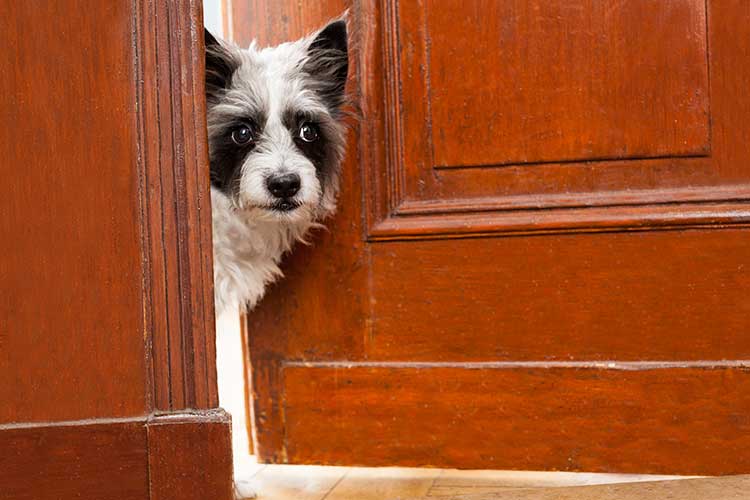
When approaching narrow spaces, some dogs will suddenly stop and refuse to walk forward while others will run through doorways quickly with their tails tucked and ears pinned back. Either way, both types of dogs are afraid to walk through doorways and it’s essential to positively change their behavior to increase their quality of life.

What Causes This Fear?

As humans, we assume hundreds of reasons why dogs behave a certain way, which is unfair to dogs. Let’s remove our anthropomorphic tendencies and try to understand the cause behind a dog’s fear of walking through thresholds.

Fearfulness is the main cause of your dog’s behavior. We can assume hallway echoes, loud noises, loudly slamming doors and many other reasons are the cause, but fearfulness is the real cause. When dogs are fearful, they may overreact to many things. When fearful dogs are exposed to scary doorways or entrance ways several times, they may develop anxiety. If a dog is punished when he’s scared of a scary situation, his anxiety deepens.

How to Teach Dogs to Love Walking Through Doorways

Regardless of why your dog became afraid of walking through doorways, it’s imperative to teach him to love walking through them. Grab super yummy treats, such as cheese cubes, deli lunch meat or hot dogs, and chop into pea-sized bites. Treats are a dog’s paycheck, so use the yummiest treats possible.

Start teaching your dog this behavior inside your home, using hall and doorways. Even though your dog may not be fearful of walking through indoor entrances, it’s a safe place to start changing your dog’s behavior.

Hold a treat in front of your dog’s nose, and lure him through the doorway. If your dog is too scared, click and treat your dog when he walks close to a doorway. Slowly shape this behavior until your dog will walk through the entrance.

Once your dog is comfortable walking through indoor entrances, leash your dog and practice outside. Walk out the back door and click as your dog walks through. Even if he slinks through the doorway, he’s being brave and choosing to walk through the doorway.

Pairing good things (yummy food) with scary things (entrances) will positively change your dog’s behavior. Think about it this way: If it rains $100 bills while you’re walking through a haunted house, you will learn that haunted houses are not scary. 🙂

What Doesn’t Work

Never force a dog through a doorway; your dog is scared. Back away from the door, regroup by grabbing treats and lure your dog inside. Ideally, you should practice this behavior before he has to walk through scary doorways, such as the vet clinic.

Take 1-2 minutes each day, and make doorways and entrances fun to walk through!

WATCH: Tips For Dogs Afraid To Walk Through Doorways

Filed Under: Behavior, Training Tagged With: anxiety in dogs, dog afraid of threshold, dog afraid to walk through doorways, dog anxiety, dog behavior, dog refuses to walk through threshold, dog scared of door, dog scared of entrances, dog training, dog who is afraid of doorways, dog won't walk through door, how to teach a dog, how to train a dog, how to train a dog to come, teach a dog, train a dog

Your Dog Is Anxious, Now What?

August 14, 2017 by Fanna Easter

Behavior Protocol for Dog Anxiety

Dog Anxiety
mdennah/Adobe Stock

It’s a difficult moment when a dog trainer confirms your sneaking suspicion: your dog has anxiety. While it’s something you always kind of knew, it’s still difficult to digest once a professional confirms it. Before freaking out, and withdrawing from society, there are steps that can help reduce your dog’s anxiety. These tips will help get you started on a behavior protocol for success.

Take a deep breath, summon all your patience and get busy teaching your dog that scary things make good things happen. It works!

Stop the Trigger Exposure

Give your dog a trigger-free siesta from scary stuff. This will reduce your dog’s stress level and prevent your dog from practicing unwanted behavior (e.g. barking, lunging, running away, etc.). This seems simple, but it’s very difficult for most pet owners. A “trigger-free” siesta means halting all trigger exposure until your dog learns how to handle scary exposure positively. A undetermined “behavior” siesta will have a profound effect on your and your dog’s success.

During your dog trainer’s consultation, your dog’s triggers were likely discussed in detail. Triggers are events or things that cause your dog to become anxious. If your dog is afraid of meeting new people, stop all greetings immediately. When guests come over, crate your dog in another room (away from guests) with a food stuffed toy and play soft music in the background.

Many dogs are afraid of other dogs, so stop all dog-to-dog greetings and daycare events immediately. If you’re unsure of your dog’s triggers, consult a professional dog trainer who has experience working with anxious dogs.

Put a Plan Into Place

During the consultation, your professional dog trainer should provide you a list of recommended behaviors to reduce your dog’s anxiety. Of course, a trigger-free siesta should be the first step.

Next, your dog trainer should explain, demonstrate and provide a dog training plan with exact steps for the next 2 to 3 weeks. It may seem odd teaching your dog “touch” and “leave it” when your goal is to reduce your dog’s anxiety, but there’s a reason for it.

Teaching your dog to do something else, instead of freaking out, works great. Once your dog is ready and willing to greet people, “touch” is a non-confrontational way to greet guests. Also, your dog trainer should recommend tips for counter conditioning and desensitizing your dog to scary triggers, which is another important part of your dog’s behavior protocol.

Follow Your Training Plan

Training sessions should be short and fun with lots of yummy rewards. Practicing over and over again becomes exhausting so much so that many dogs will react or quit. Keep dog training sessions to 1-2 minutes long, and progress to the next step only when your dog is ready. Work at your dog’s pace, and reward generously!

Follow Up With a Dog Trainer

Solving complex dog behavior issues within a one-hour consultation is impossible, so plan to follow up with your dog trainer regularly. On average, plan a virtual phone consult every 2 weeks and an in-person consult monthly.

Each session will build upon itself until your dog’s anxiety is reduced. Skipping regular follow-up sessions will certainly halt your dog’s training process, so it’s important to have a professional guide you through the next steps.

When to Seek Additional Help

Sometimes, dogs and pet owners need additional help and that is OK. Professional dog trainers will bring in veterinary behaviorists when progress has halted. Many times, dog trainers will reach out to fellow dog trainers for a second opinion, which is a wonderful way to identify any issues. Partnership is critical when progress has stopped, so ask your dog trainer for a second opinion to boost your success.

Anxiety in dogs is quite common, but you can help reduce it by following these steps. Remember to always reach out for help when progress halts or regresses. 

Filed Under: Behavior Tagged With: anxiety dogs, anxious dog tips, dog anxiety, dog behavior, dog training, Dog Training Tips, help for anxious pet, help for scared dog, help for scared puppy, how to teach a dog, how to train a dog, my dog is fearful, my dog is scared, puppy anxiety, teach a dog, train a dog

Separation Anxiety in Dogs

September 2, 2014 by Fanna Easter

Preventing & Treating Separation Anxiety in Dogs

Separation Anxiety in Dogs
Is dog barking a symptom of separation anxiety?

Is your dog barking due to separation anxiety (SA)? Learn how to identify and prevent dog separation anxiety, and how to seek professional help if needed.

What is Separation Anxiety?

Separation anxiety occurs when a dog has a panic attack when left home alone. It’s like your dog freaks out and can’t control his terror or panic. He’s terrified to be left alone.

Dogs with mild separation anxiety usually pant heavily, vocalize, spin in their crates or at the back door when they’re left alone. Moderate to severe SA dogs will self-mutilate themselves trying to escape, such as ripping out their teeth or crashing through glass windows in an effort to escape.

Identifying Separation Anxiety

As a professional dog trainer, I can usually spot dogs predisposed to separation anxiety. It’s almost like they’re super sensitive and feel things at a deeper level than most dogs. Lovingly, I refer to them as “velcro dogs,” as dogs with separation anxiety are always by your side and looking into your soul. 🙂

Most dogs with anxiety follow you from room to room, watch over you while taking a shower or bath (I think they’re making sure you don’t drown), scream in excitement when you come home and crawl in your lap when you’re sad.

While most dogs will bark and whine when they’re alone, especially when left in a crate, it’s important to differentiate between a dog that isn’t crate trained and a dog with separation anxiety.

When in doubt, revisit “Crate Training Tips” to brush up on your crate training skills. If after putting those dog training tips in practice and your dog still stresses out, then you need to seek professional help from animal behaviorists.


 Still not sure if your dog has separation anxiety? Record your dog when left alone.

If you don’t have a dog monitor camera, use Skype or FaceTime.


How to Prevent Separation Anxiety in Dogs

Our behavior is critical to preventing and managing separation anxiety in dogs. Many times, pet parents reward separation anxiety behaviors because it’s really reinforcing us to be unconditionally loving and we don’t want to upset our velcro dog.

Trust me, I totally understand the feeling and emotion when coming home to your dog. He celebrates with unbridled enthusiasm and vocalizes as if his heart is full again. He’s thinking, “You’re home!” Be careful though. It’s not fair to your dog when you reinforce his excitement for your arrival. He needs to learn coping skills when left alone.

  • Make leaving uneventful
    • Give your dog a yummy food stuffed toy about 5 minutes before leaving.
    • Get your car keys, say nothing to your dog and leave.
  • Make your return uneventful
    • The moment you step into the door, ignore your dog. Trust me, I know it’s hard! Not only are you preventing SA, you’re teaching your dog not to jump on you.
    • Set your keys down and then take your dog out to potty.
    • Once he potties, then reward your dog, but keep celebrations to a minimum. No more happy dances. 🙂
  • Teach your dog that alone time is good
    • When taking a shower:
      • Give your dog a food stuffed toy.
      • Close the bathroom door to separate you and your dog.
      • When opening the door, don’t celebrate.
    • When leaving for 5-10 minutes:
      • Get the mail alone every other day.
      • Work in the yard alone for 10 minutes, then bring your dog out to enjoy yard work.
    • Close a door between you and your dog for a few minutes every day to teach your dog how to be alone.

Additional Valuable Tips

  • Exercise your dog or puppy daily. Most tired dogs will sleep when left alone.
  • Pair yummy food stuffed toys with leaving. This redirects his attention rather than worry about being left alone.
  • Turn on calming music for dogs. Personally, I use and recommend Through A Dog’s Ear CDs or downloads. They’re very relaxing—even for me. 🙂
  • Invest in pheromone plugins or sprays. These emit pheromones mimicking a nursing mother dog and have proven very effective with dog separation anxiety cases.

Yes, in the past and currently, I share my home with SA dogs with variable degrees of anxiety. It’s a tough road, but with professional help, this can be successfully managed and your dog can learn to be alone. 

When Separation Anxiety is Serious

If your dog displays moderate-to-severe separation anxiety symptoms, you need professional help.

Your dog’s behavior will only worsen. It won’t resolve itself, and your dog won’t get over it. I’ve witnessed dogs de-gloving their ears trying to escape from their crates. One client’s dog amputated his own tail, trying to escape his home when left alone. It can get that serious.

What are your questions about separation anxiety? I’m listening!

Filed Under: Behavior Tagged With: barking dog complaint, crate training, dog anxiety, dog bark, dog barking, dog barking all night, dog barking stop, dog behavior, how to stop a dog barking, no bark collar, separation anxiety, stop dog barking, velcro dog, velcro dogs, why dogs bark

Choosing an Animal Behaviorist

July 23, 2014 by Fanna Easter

Animal Behaviorist

Animal BehavioristDealing with dog aggression, moderate to severe anxiety or fearfulness or obsessive compulsive behaviors (OCD) is extremely trying for pet owners. I’ve held these owners in my arms, as they sobbed. It’s a difficult situation for dogs and their owners.

That is why I refer these cases to a qualified animal behaviorist. Within my 20 years of dog training experience, I find difficult cases are solved much quicker and with better results when a qualified animal behaviorist is involved.

What is an Animal Behaviorist?

An animal behaviorist is an expert who deals with difficult behavior cases, such as dog aggression, anxiety and obsessive compulsion behaviors on a daily basis.

Veterinarians, whom are board certified in animal behavior:

  • Bring their expert veterinary knowledge plus four years of solving and studying dog behavior (and many other animals) to their cases
  • Have completed their vet requirements and studied dog behavior, solving difficult behavioral cases for a minimum of four years, plus have passed a demanding animal behavior board certification
  • Can prescribe medications, if needed, so a dog can learn how to overcome his fears

Applied Animal Behaviorists have:

  • Earned a Masters or PhD degree in animal behavior
  • Studied dog behavior for a minimum of 7 years
  • Been required to successfully solve difficult cases under supervision with field experts during their internships

Prescribed Anti-Anxiety Medications

Some pet owners are reluctant to use anti-anxiety medications and I understand. You’re scared you will make your dog worse or drug him. Personally, when training dogs with life-destroying anxiety, I’ve seen amazing results when anti-anxiety medications are used. “The ultimate goal is to reach a point where the drugs are no longer necessary, a point where your dog has overcome his anxiety and learned to react in an appropriate fashion,” says Dr. Lorie Hudson DVM.

RELATED: Medical Modalities for Dogs

Why Contact an Animal Behaviorist?

Dog trainers and animal behaviorists are two different professions, yet they work together as a fabulous team. Think of dog trainers as general practitioners (GPs) and animal behaviorists as specialists in dog behavior. 

  • Animal behaviorists study and treat difficult cases daily with great success rates. They are required to complete yearly continuing education in their field of study and stay updated on the latest findings with fear, anxiety, aggression or OCD.
  • Animal behaviorists provide immediate assistance and solutions for the issue at hand, which provides quicker results for your dog and saves money. Dog trainers (GPs) teach polite manners, solve everyday pet issues and are usually a pet owner’s first contact when dealing with difficult behaviors. 
  • Dog trainers’ knowledge is vast. They are prepared for anything that might walk through their training center doors, complete yearly continuing education and provide recommendations to ensure the success of a dog and their owners. They are the general practitioners of the dog training world. They triage to specialists when needed. Personally, I’m extremely proud to be a dog trainer and empowered to have qualified animal behaviorists to call upon when needed.

Referral Process and Consultation

  1. When dog trainers encounter moderate to extreme fear, aggression, anxiety or OCD, they refer pet parents to an animal behaviorist, as these cases require one-on-one attention that provides specific training protocols for success. Dog trainers usually have their preferred animal behaviorist and will always ensure this person works for you and your dog too.
  2. An animal behaviorist will ask you to complete an extensive history background. Answer to the best of your knowledge. This history report is key to note triggers (what causes your dog to act fearful, aggressive, anxious or causes OCD behavior to happen).
  3. Then, an animal behaviorist will involve your local veterinarian to rule out any health issues.
  4. Once heath issues have been ruled out, the animal behaviorist will schedule a time to discuss your dog’s history background. Ask questions and observe your dog.
  5. After the consultation, a training protocol is designed and medications are prescribed if needed.
  6. Dog trainers will assist you with your prescribed training protocol and report back to the animal behaviorist on progress.
  7. Most animal behaviorists require a six-month check-in, especially if medications were prescribed.

Contacting an Animal Behaviorist

Usually, local positive reinforcement dog trainers work with an animal behaviorist in the area. However, still research your dog trainer’s referral. Qualified animal behaviorists should be listed in the below database:

  • American College of Veterinary Behaviorists Directory
  • American Veterinary Society of Animal Behavior
  • Animal Behavior Society

If you’re unable to find a qualified person in your area, the below vets (both are board certified in animal behavior) provide phone consultations through your regular vet:

  • Tufts Behavioral College Vet Fax Program
  • Veterinary Behavior with Dr. Martin

Animal Behaviorist Tips

  • Not recommended: Dog trainers or unqualified animal behaviorists boasting they can fix any issue is equivalent to a general practitioner saying they can preform open heart surgery.
  • Choose a qualified animal behaviorist. The cost is the same or less than an unqualified animal behaviorist.
  • Do not choose an animal behaviorist using punishment-based training methods.

You’re more than welcome to ask any questions on this subject in the comment section below. This is a tough situation and I hope this article points you in the right direction with solutions.

READ ALSO: ASPCA – Finding Professional Help

Filed Under: Behavior Tagged With: animal behaviorist, Certified Dog Trainer, dog aggression, dog anxiety, dog behavior, dog bites, dog growls, dog trainer, dog training classes, Dog Training Tips, fearful dog, how to train a puppy, obedience dog trainer, obedience training, puppy aggression, puppy obedience training, scared dog, stop a dog from biting, stop a dog from growling

About

Dog Training Nation is a community of dog trainers, dog owners and dog lovers. Our mission is to provide trainers and owners valuable information to enrich dogs' lives. We cover a range of topics, from socializing puppies to dealing with aggressive dog behavior to selecting the best dog products. It is our hope you share our content to make the dog and owner world a better place.

​

Facebook

Video

Dog Training Nation is a dog training blog for pet owners and dog lovers. We cover a range of topics from puppy socialization tips to dog aggression to dog health. It is our hope you share our content to make the world a better place for dogs.

Dog Training Nation

Quick Links

Dog Training
Dog Behavior
Dog Training Videos
Become a Dog Trainer
About
Contact Us

Copyright © 2026 · Lifestyle Pro Theme on Genesis Framework · WordPress · Log in