Dog Training Nation

In Dogs We Trust

  • Home
  • Training
    • Dogs
    • Puppies
    • Clients
  • Behavior
    • Breeds
  • Health
  • Safety
  • Resources
    • Equipment
    • Books
  • Dog Training Videos
  • About
You are here: Home / Archives for dog barks

Help! My Dog Barks Relentlessly At My Neighbor’s Dog

April 20, 2016 by Fanna Easter

How to Stop Your Dog From Barking at Your Neighbor’s Dog
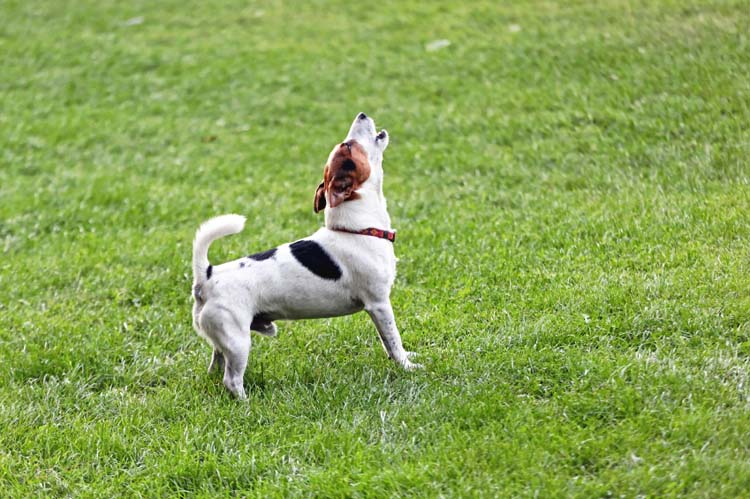
Stop Your Dog From Barking
Baloncici/iStock

When your neighbor’s dog barks relentlessly at your dog, she will probably respond back. It’s like having someone yelling at you through a fence; eventually, you’ll become frustrated and yell back.

However, it doesn’t always have to be this way. Instead, teach your dog to ignore the rude neighbor dog’s barking. I know, you’re probably thinking you’ll have a better chance at seeing a unicorn grazing in your backyard than this working for your dog, but it works quickly and reliably! The only thing you need is a leash, super yummy treats and lots of patience.

Don’t Let Dog Barking Become a Habit

We assume barking is natural dog behavior; dogs should be allowed to speak when they want to. Well, that’s all fun and games until your dog becomes the neighborhood yapper. If dog barking behavior is practiced over and over, it becomes tougher to change.

If your dog has practiced this behavior so much that she immediately runs out and barks at anything and everything, it will take a couple of weeks to change this behavior. While this seems like a long time, think about habits for a moment. When trying to lose weight, it takes time to lose it effectively and permanently. Quick fixes never work in the long run, and weight sneaks back on.

Like all habits, it takes time and due diligence to change a behavior reliably, so it’s always best to prevent. Although I have a few dog training tips that work really well to change behavior too if it has already become a habit.

Prevention

Let’s look at prevention. This is the easiest way to keep unwanted behavior from sneaking up. First, let’s review barking a bit. Barking is a slippery slope. It’s very self-reinforcing, meaning dogs will learn to bark when bored, scared or frustrated. Interestingly, barking becomes a way for a dog to self-soothe herself like humans yelling when stuck in traffic, biting their nails or eating during stressful times.

Prevention means you’re rewarding your dog whenever she ignores your neighbor’s barking behavior. Reward with treats. Usually, I’ll toss super yummy treats away from the fence of the barking dog. This not only rewards my dog, but also teaches her she can move away from the stressful situation.

How to Stop a Dog From Barking

We recently experienced our dog barking at our neighbor’s dog when moving back into the suburbs. During the day, many dogs are left in the backyard while pet owners are at work, which teaches dogs to relentlessly bark at neighbors, dogs or the air just to hear themselves bark. Privacy fences prevent dogs from seeing each other, but dogs can still learn to fence fight, which is a horrible habit. Check out this article for tips on creating a visual barrier.

Bring Your Dog Out on Leash

As an example, I’ll share my story. Our backyard fence is made of cinder block, so dogs were unable to see each other. Stella, my little Bull Terrier is a typical Terrier; she will bark back at other dogs whenever she has a chance. The moment we moved into our new home, our neighbor’s little dog welcomed us with rapid non-stop barking whenever anyone was out in the backyard. The second Stella heard her rude doggie neighbor yelling at her, hackles went up and growling started.

For two weeks, we brought Stella out into the backyard on a retractable leash (the only place retractable leashes should ever be used) and I was armed with lots of yummy treats. Having Stella on leash prevents her from running away, engaging in barking behavior and going over threshold. Once a dog goes over threshold, she is oblivious to treats, yelling and anything else. Basically, never allow your dog to “go there” during dog training. If it happens, you’ve just taken 10 steps backwards. While it’s tempting to give quick leash corrections, it will only make it worse as your dog learns that pain happens whenever that dog barks, so your dog’s behavior will become much worse.

Ask Your Dog to “Touch”

The second I heard our neighbor’s dog start barking, I asked Stella to “touch” my hand and rewarded her generously (3-5 treats in a row). Understand, it’s hard for Stella to ignore a rude dog so close to her, but after a couple of “touches,” her hackles went down and her tail started wagging loosely.

Keeping Stella next to me sets us both up for success. It keeps her under threshold and allows change to happen. By asking Stella to do another behavior (touch) instead of letting her bark, it gives her something else to focus on rather than the barking dog next door. Additionally, it teaches her another way to react to a barking dog instead of barking back.

Our Success

Now, when our neighbor’s dog comes running out barking, Stella either ignores it completely or walks over and touches my hand. Do know, I never take her good behavior for granted, so I randomly reward her good behavior. Many pet owners set themselves and their dogs up for failure the moment they forget to reward good behavior. Always let your dog know she made the right choice.

You can use these same protocols to prevent your dog from barking at your human neighbors too!

Talk To Your Neighbor

This is easily the most difficult part. Start by keeping the conversation light and explain you want to keep the peace between both dogs. With our neighbor, she admitted she didn’t hear her dog bark anymore. She became used to it. I provided a few suggestions, and now she brings her dog indoors the moment she starts barking. You don’t have to be a dog trainer to provide suggestions. Just print these barking tips for your neighbor. Our neighbor was actually grateful.

If Habits Sneak Back In

Habits are tough to break, so expect some slip ups between both barking dogs. Take a few steps back and grab your leash and yummy treats to practice a bit more. Don’t forget to reward good behavior–that’s the key to success when tackling strong habits.

Good luck!

Filed Under: Behavior, Training Tagged With: dog barks, dog barks at neighbor, dog barks at neighbor dog, dog barks at neighbor dog how to stop, dog barks at neighbor dog through fence, dog barks at other dogs, dog behavior, dog training, Dog Training Tips, how to teach a dog, how to train a dog, my dog barks at my neighbors, neighbors dog barks, stop dog barking a neighbor, stop dog from barking at neighbor dog, teach a dog, train a dog

Request Dog Barking

August 26, 2014 by Fanna Easter

How to Stop a Dog From Barking

How to Stop Dog BarkingDoes your dog wake you up at 5 a.m. for breakfast? Or remind you it’s time to eat at 5 p.m.? Ah, this is “request barking” at its finest!

Request barking is pretty close to “attention seeking barking” except a few minor tweaks when teaching dogs to stop barking.

This is pretty easy to fix. You’ll just need patience. 🙂

Dogs thrive on schedules. They are pretty dependent on us so having a set schedule predicts when they will potty, eat and when you arrive home. Funny how dogs will wake up from a nap at exactly 5 p.m. because their person is due to arrive!

Let’s get back to your dog breathing in your face at 5 a.m. on Saturday asking for breakfast. 🙂

Try this:

o   When your dog tries to wake you up, ignore him.

o   Turn over and go back to sleep. Cover your head — whatever it takes to disengage from your dog.  I know it’s hard to ignore a dog demanding breakfast, but this is the first step to teaching him to sleep in.

o   Once your dog ignores you and lays down, sit up, put your feet on the ground, bring him potty and serve his breakfast. Now, I know you’re thinking you’ve just rewarded your dog by feeding him at 5 a.m., but actually you rewarded quiet behavior instead.

o   Now practice every morning.  Slowly add duration, meaning wait until your dog is quiet and it’s later than 5 a.m.

Start to finish, this usually takes two weeks to teach so hang in there. 🙂

What if my dog never stops barking?

If your dog has practiced request barking for a long time, the barking will get worse before it gets better. We call it extinction bursts, and they are very normal. 🙂

Think of it this way:

  • Your dog barks.
  • You ignore your dog.
  • Dog barks louder and longer. Maybe you did not hear him bark the first time (very big grin!).

Whatever you do, continue to ignore your dog. Even when barking worsens, your dog will think, “I need to scream for 10 minutes while standing 2 inches from my owner’s nose. Then, he can hear me.” Your dog is  learning that any type of vocalization does not work. When the dog is quiet, then you’ll wake up and feed him.

If you live in an apartment or townhouse, begin the training process by sleeping in a room furthest away from your neighbor. Once your dog understands “quiet” means “breakfast,” then move back to your main bedroom. This really helps for extinction bursts. Again, this usually takes a maximum of two weeks to teach your dog.

Dog Barking Constantly to Go Outside

If you’re potty training a puppy, then acknowledge his request and bring him outside on a leash. Once he potties, he earns playtime in the yard so unsnap the leash.

However, if your adult dog is constantly asking to go outside, attach a leash and walk outside. Once he potties, then take off his leash so he has plenty of yard playtime.

If once you bring your dog indoors and requests to go back out, ignore him. If you’re not sure if your dog needs to potty, put him on a set schedule so he will predict when he will potty again.

Personally, my dogs have a specific cue to tell them they need to potty. Stella Mae, a mini Bull Terrier, decided to use her “potty alert” over and over again because this means I’ll open the door. After the third “potty alert,” I caught on real quick and ignored her requests. It took a few days, but she now knows this no longer works. 😀

Bark back! I’m listening! Any questions about request barking please add in the comment section below.

More:
Dog Barking – Finding the Trigger
Dog Barking at Sounds
How to Stop a Barking Dog
Attention Seeking Barking
Barking When Excited

Filed Under: Behavior Tagged With: barking dog complaint, barking in crate, dog bark, dog barking, dog barking at people, dog barks, Dog Training Tips, dogs barking, how to get your dog to stop barking at you, how to teach your dog not to bark, how to train a dog, how to train a puppy, my dog barks at everything, stop dog barking, stop my dog barking, stop puppy barking, teaching dogs not to bark, whining dog, why do dogs bark

Stop Dog Barking Next Door

August 25, 2014 by Fanna Easter

Stop Your Neighbor’s Dog From Barking

How to Stop Dog BarkingDoes your dog bark at night? How about your neighbor’s dog? Learn how to stop dog barking even at night plus how to effectively communicate to your neighbor that his dog is keeping you up at night.


Why Dogs Bark Outside

Dogs bark outside because they’re bored, or lonely, especially at night. Take this journey with me. I’m honestly and openly explaining from my dog trainer’s point of view why your “outside dog” barks and how to fix his behavior permanently. This article is not meant to point fingers or blame anyone. We do better when we know better.

Seeing things differently:

For the most part, the idea of living on multiple acres of land with no neighbors in sight is long gone. With the increase of new homes being built to accommodate rapid human population growth, most folks live pretty close to their neighbors. We need to rethink and evolve. Dogs should not be kept outdoors. It’s not fair to your neighbor and certainly not fair to your dog.

Dogs are domesticated, which means they must have constant social interactions with people. Getting your dog a friend, or bringing another dog into your household, and putting him outside with your current dog will only result in two dogs barking at night. I do not recommend this.

How to Stop Dog Barking at Night

Bring your dogs inside. Many readers will shake their heads and say, “I don’t allow dogs in my house.”

First, understand your dog’s point of view. Dogs left in the yard are bored because there is nothing to do. Pet owners leave their homes several times a week, but your dog does not. He is bored seeing the same thing day in and day out. It’s like living as a “shut in,” which is not fair.

I’m not a fan of bark control collars because using them would be punishing your dog for being bored and lonely, which isn’t fair to him. Plus, they are very expensive and don’t always work, and can lead to aggression.


 Instead, bring your dog indoors at night to keep barking to a minimum or stop it completely.


How to Bring Your Barking Dog Indoors

  • Place a crate inside your home, but close to the backdoor.
  • Bring your dog inside. This will stop excessive barking and noise complaints from your neighbors.
  • Learn Crate Training Tips for your dog. This is much easier to teach than trying to stop your dog from barking in the backyard.
  • During the day, when you’re not home, bring your dog indoors. Invest $10-$20 a day for a pet sitter to walk your dog for 30 minutes.

I’m not saying your dog should live in his crate. A crate is a tool to teach polite indoor manners so your dog will eventually be allowed indoors at all times.

What this means for you:

Bringing your dog indoors, using the above steps, takes less time and money than trying to teach your dog not to bark. Plus, bringing your dog indoors will stop him from:

  1. Escaping out of the yard
  2. Excessive barking
  3. Digging holes
  4. Chewing outdoor items
  5. Experiencing hyperactivity (Yes, just because a dog is outside does not mean he is getting exercise.)
  6. Being exposed to hot or cold temperatures

Your Neighbor’s Dog is Barking

I live by the motto, “Doing nothing is the worst mistake.” First, understand that judgement, anger and accusations will do nothing to help this issue. Instead, if you know someone with an excessively barking dog or an outside dog, print this article and place in his mailbox or forward as an email.

If forwarding as an email, write, “I’ve noticed your dog barks at night. This article contains real solutions and will really help you both.” By providing solutions, your message will be successfully delivered, as you want to help both the pet parent and his dog. Plus, if they have any questions, I’m here to answer them, I promise. 🙂

This is not a gimmick to popularize this blog. This is to help dogs live a better life. Period. You can remove our tagline. The goal of this blog is to share because we care, and I promise you we live by these words everyday.

This was a tough article to write, probably the toughest in many years. I feel many ignore this increasing problem so I’m hoping this article can help at least one dog enjoy living inside with his family.

More:
Request Dog Barking 
Attention Seeking Barking 
Dog Barking at Sounds 
How to Stop a Barking Dog

What questions do you have? I’m here to help.

Filed Under: Behavior Tagged With: bark collar, dog bark, dog barking all night, dog barking at night, dog barks, dog training, dogs barking, how to train a dog, neighbor's dog barking, no bark collar, stop dog barking

Attention Seeking Barking

August 18, 2014 by Fanna Easter

Barking Dog

Barking Dog
Dog seeking attention from pet parent.

Attention seeking barking means your dog barks for your attention, and we’ve all been there (very big grin). Let’s roll up our sleeves and get clicking to fix this behavior!

Attention seeking barking is quite common. When a dog barks, we look away from the TV, computer screen or visitor and look at the dog. Your dog just learned how to get your attention! And yes, just by looking at your dog, you can reinforce his barking. It’s very hard for people to ignore a loud sound, especially a barking dog, because it’s instinctual to look toward the sound.

Instead, try:

  • Reward your dog when he is quietly laying at your feet, enjoying a chew toy or being calm and quiet.
  • When he barks, ignore him. Don’t look at him or laugh (yes, laughter is reinforcing too). 🙂
  • When your dog is quiet, turn toward him and reward with treats and cuddles.

The Barking Will Get Worse

So you just tried ignoring your dog when he barks and it’s worse! Ah, brace yourself, this can happen. This means you’re making progress — happy dance! If your dog’s been practicing attention seeking barking for a long time, the barking will get worse before it gets better. We call it extinction bursts, and this is very normal. 🙂

Classic Example of a Barking Dog Extinction Burst:

  • Your dog barks.
  • You ignore your dog.
  • Dog barks louder and longer. He keeps getting louder, louder and louder. Ride it out. Your dog is learning that attention seeking barking is ignored.

Whatever you do, please continue to ignore your dog even when barking is at its worse. If, accidentally, you glance at your dog while an extinction burst is happening, your dog will think, “I need to scream for 10 minutes while standing 2 inches from my owner’s nose. Then, he can hear me.” He needs to learn any type of vocalization does not work. Only when he is quiet does he have your undivided attention. I recommend walking away when your dog starts barking. This way you will not accidentally glance at him. 🙂

Don’t Give Up

Many pet parents, especially those in the beginning of the “no barking” process, are concerned their dogs’ barking never ends. However within a few minutes, you’ll witness the power of positive training. Trust me, these methods work. 🙂

It’s physically impossible for a dog to bark and breath at the same time even if your dog learns to breath fast in between barks. 🙂 All barking dogs must take a breath, which means they are quiet for a nano-second. Reward! Your dog will learn that barking does not pay, but it is ignored. When your dog is quiet, he gets attention and treats — woot woot!

Some pet parents are concerned they will inadvertently teach their dogs to bark instead of quiet when using this training method. I promise, if your timing is spot on, your dog will totally understand that barking does not pay, but quiet behavior does!

How do you know if your timing is off? Your dog’s barking will get worse. Or he’ll bark and look at you, which means you’ve accidentally rewarded barking (we can fix this, don’t worry!). Plus, if your dog will bark a few times then look at you while not barking, take advantage! Instead of clicking the moment he is quiet, wait for your dog to be quiet for one second, then click/treat. Continue until your dog is quiet for longer periods of time. 🙂

If you’re not using a clicker, I would add this into the mix because the click sound is much faster than our voice or showing our dog a treat. Learn more about clicker training at Clicker Training Tips.

RELATED: Clicker Training for Dogs

You Can Stop Your Dog’s Barking Forever

Yes. If you continue to practice the behavior of ignoring him when he’s been vocal, then reward for quiet. This is a new skill for both of you, but I promise it’s worth it.

It’s your turn. Bark back! Add your questions about attention seeking barking in the comment section below. 🙂

More:
Dog Barking
Dog Barking at Sounds
Request Dog Barking
Stop Dog Barking Next Door

Filed Under: Behavior Tagged With: bark control, barking dogs, dog bark, dog bark sounds, dog barking, dog barks, dog barks for attention, dog training, Dog Training Tips, dogs barking, stop barking dog, stop dog barking

How to Get Your Dog to Stop Barking

June 4, 2014 by Fanna Easter

Stop Your Dog From Barking Now

Barking Dog
Elenarts/Deposit Photos

Wow wee, this is a tough one! But don’t worry folks, I have lots of tips for your barking dog. 🙂

Barking is a symptom and we need to find the cause to effectively address this behavior. First, it helps to understand why your dog is barking so we can manage and redirect this behavior. Many clients will correct their dogs whenever they are barking instead of understanding what is causing them to bark. This will confuse you and your dog quickly, which leads to frustration.

Now, some dogs are more vocal than others. I’m hesitant to label a specific breed of dog as more vocal than others. I’m just not a fan of labels. Think about a litter of puppies: some are quiet and others are vocal (Sobek, my Rottie, is super vocal and has been since he was 2 days old). Now, think of your family. We all have a talker in the group. In my family, it’s me! I’m much more vocal than my sister and our family video confirms it every holiday!

Why Do Dogs Bark?

Vocalizing (aka barking), for some, is a reinforcing way to release stress and tension. Again, let’s think in human terms. Some folks can deal with stress by bottling it up inside and never speak a word about it. Others must talk it out with anyone who will stand still long enough to listen. Managing a dog and person, both who vocalize due to stress is a tough one, but it can be managed.

Managing vs. Fixing Behaviors

Note that I mention managing an inappropriate behavior instead of saying fixing an issue. With my past experience, I don’t think we can 100% fix an issue with a living being. You can fix a car or TV, but living beings have learned behaviors that will pop up no matter how much you try to fix them. So, when I say manage, we can manage 99.9% of the time, which works for me! Example: I’m terrified of crickets. You can manage my dislike by feeding me donuts when around a cricket, but if I’m shopping at Macy’s (odd place for a cricket) and a cricket suddenly jumps on me, you better believe I will react! My fear of crickets is a learned behavior. Okay, I’ll contain my nerdy side now — back to managing barking.

3 Steps to Stop a Barking Dog

  1. Identify the trigger. What is causing your dog to bark in that environment?
  2. Choose an incompatible behavior to teach your dog (e.g. quiet, look at you or touch).
  3. Reward the incompatible behavior that prevents your dog from barking.

Dog Training Tips

  • Notice I said in that environment, which means the very moment that caused your dog to bark. Was it another dog that approached, a loud sound, a person walking up to your dog, doorbell ringing, umbrella opening, your dog noticing a strange object, or was he standing too close to another dog?
  • If your dog is a stress barker, find out what triggers the stress. Does it happen when you ignore him (attention-seeking behaviors, frustration due to confusion during a training session, an approaching dog, etc.)? Now address the stress and reward the dog when he is quiet (if he exhibited attention-seeking behavior). Take a step back in your training session and reward a simple behavior or walk the opposite way of an approaching dog.
  • Ask your dog to perform the incompatible behavior before he begins barking. If he begins barking, it’s too late. I say, “The horse is already out of the barn.” Back up until your dog quiets and try again. Timing is key!
  • If your dog barks, will not take a treat, or stop barking, back up from the trigger. In the dog training world, we say your dog is over threshold.
  • You need a really good reward. Barking is self rewarding, especially for stress barkers. Break out the really good stuff (cubed lunchmeat!).
  • At first, keep your dog on a leash so you have some control to move away from the trigger.
  • Manage the environment so your dog does not practice the behavior. This means, don’t let him bark at the trigger as this will only strengthen that behavior (think many repetitions of practice to strengthen muscles).

Example: Your dog barks at other dogs through the window.

  1. Close the curtains when you are not around. We don’t want the dog to practice this behavior and it getting stronger.
  2. Leash your dog and click/treat an incompatible behavior, such as quiet. Yes, he needs to breathe in between barks so reward the nanosecond of quiet. Or ask him to look at you and reward that behavior.
  3. If your dog will not focus on you, then back up from the window and try again.
  4. Practice this several times with fabulous treats.
  5. Keep curtains closed until your dog has more success with the incompatible behavior instead of barking at the dogs.
  6. Trust me, your dog will learn not to bark at other dogs through the window. 🙂

What Not to Do

  • Screaming, yelling and telling him to stop it right now. Basically, you are joining in with the barking party. 🙂
  • Penny cans, spray bottles and leash corrections. While it may seem to stop the behavior, it more or less suppresses it in my opinion. And I’ve seen it time and time again, corrections scare the dog and the dog thinks the trigger caused it. Now you have a dog that is scared of other dogs, people, etc. Punishment may work, but you really need to know what you are doing to prevent fallout behaviors. Make your mistakes with positive reinforcement, as it’s much more forgivable and it works!

Barking dogs of the world, unite! Share what causes your dog to bark in the comments below.

More:
Request Dog Barking
Stop Dog Barking Next Door
Attention Seeking Barking
Calming Music for Dogs

Filed Under: Dogs, Training Tagged With: dog barking, dog barking all night, dog barking at night, dog barking in crate, dog barking stop, dog barks

About

Dog Training Nation is a community of dog trainers, dog owners and dog lovers. Our mission is to provide trainers and owners valuable information to enrich dogs' lives. We cover a range of topics, from socializing puppies to dealing with aggressive dog behavior to selecting the best dog products. It is our hope you share our content to make the dog and owner world a better place.

​

Facebook

Video

Dog Training Nation is a dog training blog for pet owners and dog lovers. We cover a range of topics from puppy socialization tips to dog aggression to dog health. It is our hope you share our content to make the world a better place for dogs.

Dog Training Nation

Quick Links

Dog Training
Dog Behavior
Dog Training Videos
Become a Dog Trainer
About
Contact Us

Copyright © 2026 · Lifestyle Pro Theme on Genesis Framework · WordPress · Log in