Dog Training Nation

In Dogs We Trust

  • Home
  • Training
    • Dogs
    • Puppies
    • Clients
  • Behavior
    • Breeds
  • Health
  • Safety
  • Resources
    • Equipment
    • Books
  • Dog Training Videos
  • About
You are here: Home / Archives for dog behavior

How To Stop Bleeding After Trimming Your Dog’s Nails Too Short

November 21, 2017 by Fanna Easter

Using Styptic Powder to Stop Dog Nail Bleeding

Stop Dog Nail Bleeding
imfotograf/Adobe Stock

Sometimes, pet owners trim their dog’s nails a little too short, causing their dog’s nail to bleed. If your dog’s nail starts bleeding during a trim, don’t panic and grab the styptic powder to stop dog nail bleeding quickly. Here’s the easiest way to apply styptic powder to your dog’s nail.

Why Dog Nails Bleed When Trimmed Too Short

Dogs have a quick running along the center of each nail. The quick is basically the nail’s blood supply. When dogs’ nails grow longer, their blood supply grows too. When trimming dog nails, it’s very easy to nick or cut into the quick, which causes bleeding. Nicking a dog’s nail quick is very painful for your dog. If this happens often, your dog will eventually learn to dislike nail trims. When trimming dog nails, less is more.

What is Styptic Powder for Dogs?

Before trimming a dog’s nails, pet owners must always have styptic powder on hand. Styptic powder has anti-coagulant properties, which stops dog nail bleeding quickly. Since styptic powder can sting a bit during the application process, some styptic powder dog blends contain topical anesthetic to ease the sting. Most styptic powders also contain antiseptic properties to prevent infection.

For dogs, styptic powder is only used when a nail is trimmed too short. It should never be used on wounds, cuts or gashes. Additionally, it’s inhumane to purposefully trim a dog’s nail too short; it’s that painful.

How to Apply Styptic Powder

If you accidentally trim your dog’s nail too short, reach for the styptic powder immediately. Wet your fingertip with water, and then dip your wet fingertip into the styptic powder. Ensure your fingertip is thoroughly coated, and then place your styptic powder coated fingertip against the bleeding nail tip. Apply a bit of pressure by holding your finger in place for at least 10 seconds. If your dog moves around, provide a plate smeared with peanut butter or a food stuffed toy for your dog to enjoy while you apply pressure.

Sometimes, “quicked” nails are challenging and will continue to bleed. Continue to apply styptic powder until there’s no blood left on your fingertip. Then, give your dog something quiet to do, such as lick a food stuffed toy in her crate. After 10-20 minutes, bring your dog outdoors to ensure her nail has stopped bleeding. It’s best to keep your dog off white furniture and carpeting for a few hours.
WATCH: How To Apply Styptic Powder To A Dog’s Nail

Filed Under: Grooming Tagged With: dog behavior, dog grooming, dog grooming tips, dog nail quick, dog nail trimming, dog training, Dog Training Tips, how to put styptic powder to dog nails, how to teach a dog, how to train a dog, powder to stop bleeding, powder to stop bleeding for dogs, stop dog nail bleeding, styptic powder dog, teaching a dog, training a dog, trimmed dog nails too short, trimming dog nails

Who Should Walk Through The Door First?

November 20, 2017 by Fanna Easter

Walking Through Doors With Your Dog

Who Should Walk Through Door First
K. Thalhofer/Adobe Stock

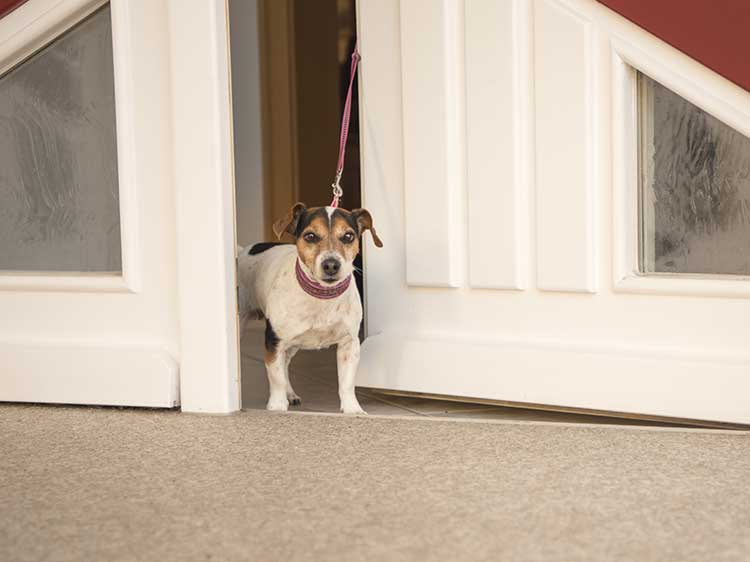
As pet owners, it’s our job to keep our beloved dogs safe. One situation that can cause stress in dogs is walking through doors, especially if something scary is on the other side. Opening doors to strangers walking by or to a vet clinic can be scary. Before walking through a door, follow these steps to keep your dog safe and stress-free.

You Should Walk Through the Door First

When something distracting or scary lurks on the other side of a door, it’s vital for you to walk through the door first. This provides plenty of time for you to assess the situation before bringing your dog along with you. When dogs walk through doorways first, especially in apartment complexes, they can easily become startled when encountering strangers, other dogs or children.

Open, Look & Listen

When bringing your dog out for a walk, grab yummy treats and leash your dog before opening the door. Then, crack open the door and peek outside for any close distractions that can scare your dog. If the coast is clear, open the door a bit wider and poke your head out for any distractions approaching or leaving the area. If it’s safe, open the door, so your dog can step out and toss a few treats on the ground. This gives your dog something fun to do while you scan the area for further distractions down the road.

If a distraction approaches that scares your dog, take a step back indoors. Close the door and give your dog several yummy treats. Pairing something good, such as treats, with a scary situation positively changes your dog’s behavior. Plus, it gets your dog back indoors quickly. Wait until the coast is clear again, then head out for a nice walk.

When walking into a veterinarian’s office, look through the glass door or poke your head through the doorway to ensure no dogs are standing nearby. If a dog or person is standing nearby, ask if they could move back, so your dog can enter. Once the doorway is clear, walk quickly to the exam room.

Dispelling Dominance

Walking through doors before your dog has nothing to do with dominance. This is a myth. Of course, dogs should learn polite manners around doorways to prevent them from running out of open doors, but again this has nothing to do with dominance. When someone mentions dominance between dogs and humans, understand they still believe in a myth that was dispelled more than a decade ago.

When pet owners walk through doors first, they’re making sure their dogs are safe.

Filed Under: Safety Tagged With: dog behavior, dog safety, dog safety tips, dog training, Dog Training Tips, doorway safety for dogs, how to teach a dog, how to train a dog, should you or your dog walk through a door first, teaching a dog, training a dog, walk through door before your dog, walking into vet office tips, walking through doorways with dogs, you should walk through door first

4 Ways To Prepare Your Dog For Holiday Parties

November 17, 2017 by Fanna Easter

Preparing Your Dog for Holiday Parties and Guests

Prepare Your Dog For Holiday Parties
JackF/Adobe Stock

Holiday season is in full swing, and everyone’s preparing their homes for festive gatherings. This week, I’ve been overwhelmed with private dog training lessons focused on teaching Fido polite manners during holiday parties. Before I share my recommended holiday safety tips for pets, it’s important that pet owners understand and set fair expectations for themselves and their dogs.

Having Fido lie leisurely under the dining table is a pipe dream. Yes, everyone wants this picturesque holiday moment, but it’s stressful and unrealistic for pet owners and their dogs. Additionally, holiday parties are noisy and confusing to dogs. And it only takes a second for your dog to run out the door while guests come in and out. Lastly, holiday guests can easily step on or unintentionally feed your dog dangerous foods.

By taking the time to prepare your dog for holiday parties, you can keep your dog safe and relaxed throughout the festivities.

1. Take Your Dog on a Long Walk

About an hour or so before your party guests arrive, take your dog out for a long walk. Ensure your dog has plenty of sniffing opportunities because sniffing is just as exhausting as walking. If the weather is terrible, play Nose Work, tug or fetch with your dog instead.

2. Prepare Pumpkin Stuffed Toys Beforehand

Giving your dog a yummy food stuffed toy will keep your dog’s brain busy during holiday parties. The night before your holiday party, prepare yummy food stuffed toys and freeze them overnight. In keeping with your holiday party theme, stuff bits of lean turkey (white meat with skin removed) and pumpkin into a food stuffed toy and store in your freezer.

If your dog is watching his waistline, mix pumpkin and blackstrap molasses together and stuff inside a toy. Pumpkin is a low calorie option and molasses provides a healthy, yet sweet taste that will keep your dog busy for hours.

3. Keep Your Dog Happily Contained

Place your dog’s crate in your bedroom and place cozy bedding inside. About 30 mins before your guests arrive, crate your dog and leave him with a food stuffed toy and a few treats. Close his crate door and turn on soft music. When leaving your bedroom, firmly close the door behind you. Post a note on the door saying, “Please don’t open.” This will ensure lost guests understand this door doesn’t lead to the bathroom.

4. Meeting Guests

Of course, you should introduce your dog to guests as long as your dog and guests are comfortable meeting each other. Once everyone has sat down with a beverage, bring your dog out on leash to greet everyone. Keep a stash of yummy dog training treats in your bedroom, and grab them as you’re walking your dog out to greet everyone. This is the perfect time to reward your dog for polite choices around guests and show off your dog’s skills. After 10 minutes, grab another frozen food stuffed toy and crate your dog in your bedroom again. Your dog will be exhausted after meeting guests.

Happy Holidays!

Filed Under: Clients, Small, Training Tagged With: dog behavior, dog safety tips, dog training, Dog Training Tips, dogs and thanksgiving tips, holiday safety tips for pets, how to teach a dog, how to train a dog, prepare your dog for holiday guests, prepare your dog for holiday parties, preparing dog for holiday parties, should I let me dog loose during parties, teaching a dog, teaching dog polite manners during parties, thanksgiving safety tips for pets, thanksgiving safety tips for your dog, training a dog

Tug Toy Safety Tips For Your Dogs 

November 15, 2017 by Fanna Easter

Playing With Dog Tug Toys Safely

Dog Tug Toy
kkolosov/Adobe Stock

Dogs loves to play tug. It’s a fast moving game that’s extremely stimulating. This dog game is physically exhausting for dogs and pet owners, so it’s best to follow a few tug toy safety tips to keep everyone safe. Grab your dog’s favorite tug toy and start tugging!

Never Pick Up Your Dog During Tug

When a dog is tugging on a toy, never pick her up off the ground. This tug maneuver wreaks havoc on a dog’s neck, shoulders and teeth, and it can cause permanent damage. Make sure every family member and your friends understand that dogs must keep all four feet on the ground to continue playing tug.

Placement of Dog Tug Toy Matters

Placement of your dog’s tug toy, during a game of tug, matters. While attending a dog training conference, Dr. Christine Zink DVM recommended holding tug toys to work different muscle groups.

For example, she recommends holding a tug toy level with your dog’s shoulders to work her rear end. When dogs are using their rear muscles to pull, you can see their behind and back doing most of the pulling work.

To work your dog’s shoulders and neck, hold a tug toy above her head. When dogs pull downward, their neck and shoulders are getting a workout. If your dog has previous neck or back injuries, use this information to adjust tug playing placement. Of course, if your dog has an injury, ask your veterinarian if your dog is able to play tug first because this game is a workout.

Dog Tug Toy Rules

As with everything, there’s a set of rules pet owners and dogs must follow to keep everyone safe. If, and when, your dog chokes up on the tug toy (i.e. grabs the toy closer to your hand), let go of the toy and end the session.

Playing tug with your dog has nothing to do with dominance; it’s just a game. Dogs learn quickly that tug is only fun when pet owners are pulling on the opposite end. If your dog refuses to let go of the tug toy, just drop your end and walk away. Also, it’s normal for dogs to growl while playing tug. It’s fun! If, at anytime, you become uncomfortable, just drop the toy to end the session.

WATCH: Teach Your Dog The Tug Game

Filed Under: Games, Resources Tagged With: dog behavior, dog games, dog rope, dog tether toy, dog toys, dog training, Dog Training Tips, dog tug toys, how to teach a dog, how to train a dog, play tug with dog, teach dog to tug, teaching a dog, tether tug dog toy, toy safety tips for dogs, training a dog, tug toy, tug toy safety for your dog, tug toy safety tips

Is Your Dog Trainer A Bully?

November 6, 2017 by Fanna Easter

Signs You Should Find a New Dog Trainer

Good Dog Trainer
michaelheim/Adobe Stock

Yes, you read that correctly. Some dog trainers are capable of bullying pet owners. Bullying behavior is common within all professions, and it happens within the dog training industry too. Some dog trainers can be downright mean to pet owners and dogs while others are sneakier about it. Is your dog trainer a bully?

Expectations of a Dog Trainer

Before discussing bullying behavior, it’s important to understand the expectations of a dog trainer. Dog trainers are hired to teach pet owners how to communicate with their dogs effectively. Of course, dog trainers can teach dogs polite manners quickly, but it’s pretty ineffective unless pet owners learn how to teach and reinforce polite behaviors themselves.

In essence, dog trainers teach people and not dogs. Since dog trainers teach people, they must have excellent communication skills. Professional dog trainers should treat pet owners and dogs with respect and kindness, set everyone up for success, use positive reinforcement training methods, and celebrate wins.

Belittles Pet Owners

When teaching pet owners how to communicate with their dogs, some dog trainers will belittle pet owners throughout the entire process. Dog trainers should not blame pet owners for their dogs’ behavior if pet owners are seeking professional help. Everyone makes mistakes; you do better when you know better. Dog trainers should acknowledge that, and then explain to pet owners what to do instead of focusing on negative behavior. Finger-wagging and blaming halts the learning process and teaches nothing.

Positive reinforcement dog trainers should treat clients with the same kindness and respect they would extend to their canine clients. Additionally, good dog trainers understand pet owners are learners, so they must adjust their communication style to ensure all learners understand the concepts. If your dog trainer is belittling you, then it’s time to find a new dog trainer.

Makes Questionable Choices

There’s no room for physical pain, force, fear or yelling in dog training. These methods do not work. Instead, punishment inhibits behavior and will cause anxiety and fear. Dog trainers should never recommend hurting dogs or putting dogs in a situation that makes their behavior worse. Additionally, dog trainers should not joke about a dog’s breed tendencies or assume all breeds of dogs learn the same because every dog is an individual. Dog trainers should never recommend physical corrections with collars, leashes, shock or force.

As an advocate for your dog, if something feels wrong, don’t do it and leave immediately.

Filed Under: Clients, Training Tagged With: am I making dog training mistakes, dog behavior, dog trainer, dog trainer is mean, dog trainer near me, dog training, dog training methods, Dog Training Tips, finding a dog trainer, how to find a good dog trainer, how to teach a dog, how to train a dog, questionable dog trainer, teaching a dog, tips for finding a dog trainer, training a dog

  • « Previous Page
  • 1
  • 2
  • 3
  • 4
  • 5
  • 6
  • …
  • 12
  • Next Page »

About

Dog Training Nation is a community of dog trainers, dog owners and dog lovers. Our mission is to provide trainers and owners valuable information to enrich dogs' lives. We cover a range of topics, from socializing puppies to dealing with aggressive dog behavior to selecting the best dog products. It is our hope you share our content to make the dog and owner world a better place.

​

Facebook

Video

Dog Training Nation is a dog training blog for pet owners and dog lovers. We cover a range of topics from puppy socialization tips to dog aggression to dog health. It is our hope you share our content to make the world a better place for dogs.

Dog Training Nation

Quick Links

Dog Training
Dog Behavior
Dog Training Videos
Become a Dog Trainer
About
Contact Us

Copyright © 2026 · Lifestyle Pro Theme on Genesis Framework · WordPress · Log in
