Dog Training Nation

In Dogs We Trust

  • Home
  • Training
    • Dogs
    • Puppies
    • Clients
  • Behavior
    • Breeds
  • Health
  • Safety
  • Resources
    • Equipment
    • Books
  • Dog Training Videos
  • About
You are here: Home / Archives for dog behavior

Does Positive Reinforcement Really Work?

May 23, 2017 by Fanna Easter

Yes, Positive Reinforcement Dog Training Does Work
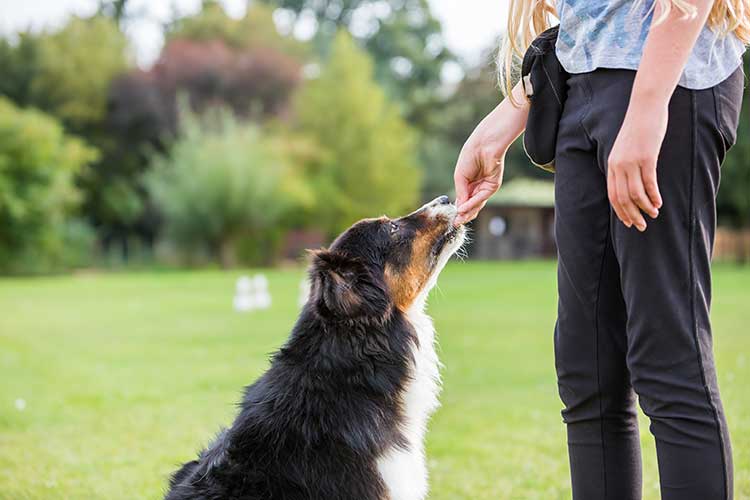
Positive Reinforcement Dog Training
Christian Müller/Adobe Stock

Every single day, I’m asked whether or not positive reinforcement dog training works. While many pet owners purposely pursue a positive dog trainer, there are still doubts written across their face. This is very evident when working with reactive dogs; many pet owners just don’t trust the dog training technique.

As with anything, there are pros and cons, but you’ll notice very few cons with positive reinforcement dog training. When doubt creeps in, tell yourself to trust the process because positive dog training really works.

What is Positive Reinforcement Dog Training?

Positive reinforcement dog training is when you reward your dog for a specific behavior, so the behavior will happen more often. When a dog sits, and he gets a treat, he learns to sit more often. Positive reinforcement works even when pet owners don’t suspect it.

Positive Reinforcement Examples

If you open a crate door, while your dog is barking inside it, your dog learns barking means you’ll open the crate door. Begging is a good positive reinforcement example too. If you feed your dog while he sits next to your plate, he learns that sitting close to your plate makes food happen. Yup, this is positive reinforcement too!

Positive reinforcement works in the human world too. We work for paychecks—that’s our reward for working hard. Pats on the back, bonuses and hugs are human rewards too. Super yummy treats are easily great dog rewards because everyone loves food. Praise, pats, fun games, tidbits from your dinner plate, escaping a boring crate or moving away from a scary dog are great positive reinforcement examples for dogs too.

Pros and Cons of Positive Reinforcement Training

Pros

  • Easy to do: You can’t make mistakes.; just reward behaviors you want to see more often.
  • Fun for dog and pet owner: Positive reinforcement is fun because earning rewards is fun! Celebrating wins are much more fun than digesting mistakes.
  • Extremely effective: Hands down, positive reinforcement works much faster than punishment-based dog training methods. Don’t believe me? Check out the latest research on teaching children. 🙂
  • Can be done anywhere: Dog training sessions can happen anywhere; just grab food treats and go!
  • You don’t need fancy equipment: Throw out choke chains, pinch collars and electronic collars. All you need are a handful of treats, a clicker and your dog! If you’re training your dog outside, attach a leash to your dog’s body harness.

RELATED: Clicker Training Game for Beginners

Cons (And Solutions)

  • Treat dependency: Dog will only work for treats.
    • This is an easy fix; just fade training treats once a dog understands a cue.
  • Withholding treats is frustrating: In the beginning, this can happen.
    • Again, this is a quick fix. Set a dog up for success and reward every single step toward a goal.
    • If needed, take a few steps back and build until the desired behavior happens.
  • What if you don’t have treats? Simple. Use praise, games and the happy dance to reward your dog for good behaviors.

Filed Under: Dogs, Puppies, Training Tagged With: best dog training methods, dog behavior, dog training, Dog Training Tips, how to train a dog, how to train a puppy, positive dog trainer, positive dog training, positive reinforcement, positive reinforcement dog training, positive reinforcement examples, positive reinforcement works, treat training dogs, treat training puppy

Dog Shock Collars are Cruel and Unnecessary

July 20, 2016 by Fanna Easter

Dog Shock Collars: They Hurt and They Don’t Work

Dog Shock Collars
GalpinPhotos/iStock

A few days ago, I stumbled upon a news article in which a mother was accused of shocking her toddler with one of these dog shock collars. What? Is this article for real?

Unfortunately, it’s very real and the mother is being prosecuted for child abuse. She had witnessed a pet owner using a shock collar on his dog to change the dog’s behavior. She thought the collar would change her toddler’s behavior too, so she shocked her child whenever he wouldn’t swallow food or didn’t potty in the toilet. I’ll spare all the gory details because it’s truly disturbing. However, if you want to read the full article, click here.

The world and I were disgusted that a mother would shock her child, but don’t we use shock collars to train dogs every day? Is there a difference?

Why It’s Upsetting

As a positive reinforcement dog trainer, I don’t use shock collars for dogs and stay clear from people who use them. I guess it’s my way of ignoring the problem. However, when I read this news article pertaining to a mother shocking her child, my heart dropped and that angry fire started burning inside me again. I asked myself, “Why are we still using dog shock collars?”

Everyone has a right to do as he pleases unless he’s harming someone else. For the most part, adults have a voice and can defend themselves if someone hurts them. They’ll fight back or press charges, or even do both. I don’t pick sides and I try to stay out of other people’s business, but when a voiceless and defenseless child or animal is hurt, I get really angry.

Dog Shock Collars Cause Pain

There is no reason to shock an animal. I’ll never be convinced that shocking or physically hurting an animal will teach it quicker, faster, more efficiently or more humanely. I’ll never believe any and all other buzzwords that further defend the use of pain during training.


Dr. Karen Overall, MA, VMD, PhD, DACVB, believes everyone should understand that:
“The use of shock is not treatment for pets with behavioral concerns;
the use of shock is not a way forward;
the use of shock does not bring dogs back from the brink of euthanasia; instead, it may send them there, and;
such adversarial techniques have negative consequences that those promoting these techniques either dismiss or ignore.”


I Used to Train Dogs With Shock Collars

You’re probably thinking I’m that dog trainer with limited dog training experience who has only used positive reinforcement methods. That’s not true. More than 25 years ago, I trained dogs with electronic collars (or e-collars), pinch collars and choke chains because that’s all I had known.

As I became more experienced, I knew something was wrong. I felt icky shocking a dog if he made the wrong choice. The look in his eyes would say everything. After a decade of training this way, I learned that rewarding good behavior instead of correcting bad behavior was the best way to train dogs (or any living creature for that matter).

Not only did my dog training skills improve, but my group classes were much happier too. We celebrated wins instead of waiting for bad things to happen, so we could correct them.

Oh yes, I’m on my soap box! If everyone clasps their pearls when they hear a mother shocking a defenseless child, why don’t they react the same way when a pet owner shocks a defenseless dog? Dog shock collars hurt. I’ve tried them on my leg, arm and neck at the lowest settings possible. Even knowing the shock was coming, it would still hurt. Shock collars don’t deliver a tickle, vibration or a buzzing sound. They stinking hurt.

Research Proves Shock Collars for Dogs Hurt

If you don’t find dog shock collars painful, you’re fooling yourself. Research has finally caught up and proven that shock collars do cause dogs harm. If you’re interested, you can find the latest research here and here. There’s more than a dozen research findings by real experts in this article too. The results all point to the same painful conclusion.

You may also be interested in: The Real Reason Why Dog Trainers Dislike Cesar Milan

Shock Collars Aren’t the Last Resort

Dog shock collars aren’t the last resort for saving a troubled dog’s life. I highly doubt you would consciously choose shock therapy to save your life. However, you have a choice whereas a child or dog doesn’t. Positive reinforcement dog training works better and quicker and changes dog behavior.

All creatures should be treated humanely because it’s the right thing to do regardless of your beliefs. I’m stepping off my soap box now and I strongly hope this article will stop at least one pet owner or dog trainer from purchasing or using a shock collar on a dog. As for new dog trainers entering the pet industry, you don’t have to use these painful collars. You can find much better ways to train dogs.

Choose to be kind. It’s the right thing to do.

Filed Under: Dogs, Equipment, Resources, Safety, Training Tagged With: ask a dog trainer, dog behavior, dog trainer advice, dog trainer tips, dog training, Dog Training Tips, electronic collar dog, how to teach a dog, how to train a dog, how to train a puppy, shock collar dogs, should I use a shock collar on my dog, should I use a shock collar on my puppy, stop barking behavior, stop dog barking

Put an End to Dog Fence Fighting Aggression

July 18, 2016 by Fanna Easter

Dog Fence Fighting Solutions That Work

Dog Fence Fighting Solutions
woyzzeck/iStock

It seems my article on fence fighting dogs has generated a lot of activity lately. Fence fighting dogs is so complex and very frustrating, which is why I’m going to explain different dog fence fighting solutions to help you restore peace to your backyard.

I’ve had to deal with fence fighting dogs at home and with many dog training clients. The trick to stop fence fighting in dogs is to teach your dog to ignore the taunting neighbor’s dog that’s running along the fence line. I know that seems impossible, but teaching this dog behavior works!

Causes of Fence Aggression in Dogs

Some dogs fence fight out of frustration while others can’t resist the barking and rapid running of a neighbor’s dog taunting them on the other side of the fence. Fence fighting is a frustrating behavior that is usually learned, and, once your dog gets really good at it, the behavior is harder to extinguish. I could go on and on about the causes, but I’m pretty sure you would rather learn how to fix it instead. 🙂

Movement

Movement is so powerfully enticing, especially for dogs bred to herd, chase prey or work livestock. These dogs become mesmerized by movement. As a dog trainer, I find it fascinating that dogs fence fighting almost becomes a dance where both dogs run along the fence together, stop and then run a different way all while barking. A few times, I’ve watched dogs run along a fence together, yet not one sound was uttered from either dog. It was all about movement.

Sound

Sound is very stimulating for dogs too, especially rapid repeating barking, whining and growling while running along a fence. Interestingly, sound can become a cue to fence fight. For example, the neighbor’s dog may quickly run toward your side of the fence when he hears your back door opening, your dog’s nails tapping or even your dog’s ID tags jingling.

Dog Fence Fighting Solutions

Create a Visual Barrier

Creating a visual barrier is the first step to stopping fence fighting in its tracks, and it’s an easy fence fighting solution as well. Set up a visual barrier on the inside of your fence, so both dogs are unable to see each other. Believe it or not, privacy fences are not that private. Dogs can still view fleeting glimpses of the other dog running back and forth, and I know several dogs that will peep through a wood knot hole to see what’s happening on the other side.

Visual barrier materials can be dark-colored plastic tarps, outdoor carpet or even cement blocks. You can use any type of material that your dog cannot see through. To attach this material to your fence, you can zip strip it into chain fences or staple it in place for wooden privacy fences. Make sure to place the material high enough so your dog is unable to jump on the fence and see the other dog. It’s amazing how about 70% of fence fighting aggression cases end once a visual barrier is in place.

Train Your Dog to Stop Fence Fighting

If your dog continues to engage in fence fighting even after a visual barrier is in place, then it’s time to teach your dog to ignore the other dog. Before you begin, make sure your dog is unable to see the other dog. Walk the fence line and verify there aren’t any holes, gaps and tears and that your dog is unable to see anything through the visual barrier material.

For this step, you’ll need a 6-foot leash, your dog’s flat collar or harness, a clicker, and some super yummy treats. During this exercise, you’re rewarding your dog for ignoring the neighbor dog one step at a time—literally.

  • Before walking outdoors, shorten your dog’s leash to 4 feet. Take one step outdoors while giving your dog a yummy treat. 
  • Now, take a few more steps in the opposite direction of your neighbor’s dog and reward your dog for each step.
  • If your dog looks toward your neighbor’s barking dog, make a smoochie sound to distract your dog and reward her the moment she looks back at you. There’s no cue right now. You’re just teaching your dog that looking at you instead of the barking dog means treats rain from the sky.
  • Bring your dog to her potty spot, so she can relieve herself, and reward each and every time she looks at you instead of the barking dog next door.

Additional Dog Training Tips

Bring your dog outdoors on leash every time for the next two weeks. If you let her out to potty just one time off leash, and she engages in fence fighting, you’ve just undone all of your training.

After a week of training, bring her out on a retractable leash and practice this behavior—again without saying a word. Cues or commands aren’t needed for training your dog to stop fence fighting. They become a crutch in this type of situation. You want your dog to learn that ignoring another barking dog is normal behavior, so she doesn’t need a constant verbal reminder.

Soon, your dog will happily potty and play in the backyard while totally ignoring her rowdy neighbor. Now, you might notice your dog slip a little and approach the fence growling at your neighbor’s dog. If this happens, make a smoochie noise and reward her when she ignores the other dog. If she doesn’t ignore the dog, it’s time to bring your retractable leash back out and practice polite behavior again.

Finally, never leave your dog alone in the backyard. This is a recipe for disastrous dog fence fighting. If you work long hours (more than 5 hours), hire a pet sitter to walk your dogs in the neighborhood.

Speak With Your Neighbor

Speaking to your neighbor is the only permanent fence fighting solution, yet it’s only done as a last resort. Instead of speaking with neighbors first, pet owners focus on stopping the fence fighting behavior themselves, which takes weeks of dog training. It’s impossible to expect perfect behavior from your dog every time, but you can expect a permanent fence fighting solution by speaking with your neighbor.

I know you don’t want to talk to your neighbor, but you have to. Walk over there, ring the doorbell and have a polite conversation with your neighbor. Ask if you can both coordinate different times to bring your dogs outside. If your neighbor keeps his dog in the backyard all day, ask if he can bring her inside, so you can exercise your dog with no distractions.

In my 25+ years of working with fence fighting aggression clients and sharing my home with fence fighters, I’ve only had one neighbor tell me to “go fly a kite.” Well, I contacted our local animal control and took a video of my neighbor’s dog barking relentlessly and engaging in fence fighting. AC ended up leaving a notice on my neighbor’s front door. Magically, he kept his dog indoors and we could enjoy our yard again.

My neighbors never invited us over for pool parties after that, but I didn’t care. I enjoyed silence in the backyard. If you live in an HOA (Home Owner’s Association) neighborhood, file a complaint with your local HOA office.

Still Having Issues?

While this article provides dog fence fighting solutions and dog training tips, it can never replace having a professional dog trainer work directly with you and your dog. If installing a visual barrier, teaching your dog to ignore the other dog or chatting with your neighbor haven’t helped, please set up an appointment with a positive reinforcement dog trainer in your area. Nothing beats a one-on-one evaluation in your home; a dog trainer can make suggestions and troubleshoot with your dog.

Lastly, never punish your dog for fence fighting. It’s not fair. Fence fighting isn’t your dog’s fault. Your dog will do better once she learns better, so take the time to teach her polite behaviors. Be honest: it’s impossible to ignore a screaming neighbor. No one can ignore it all the time. 🙂

Filed Under: Behavior, Dogs, Training Tagged With: dog barks at fence, dog behavior, dog fence aggression, dog runs along fence, dog training, Dog Training Tips, dogs fence fighting, fix dog fence fighting, how to stop fence fighting, how to teach a dog, how to train a dog, stop dog fence fighting, stop dog from barking at fence line, stop dogs fence fighting, why dogs fence fight

Can You Stop Dog Aggression?

May 26, 2016 by Fanna Easter

How to Deal With an Aggressive Dog

Stop Dog Aggression
Eldad Carin/iStock

Within the dog world, dog aggression is an extremely controversial topic. Not only is this topic hotly debated among dog trainers, but it’s also an explosive topic within the dog rescue world too. Many experts have strong lines drawn in the sand on both sides, so it’s become extremely difficult for pet owners of aggressive dogs to seek concrete answers. I’ll give my honest opinion as a professional dog trainer who has intimately worked with dog aggression cases for more than 20 years.

Aggression in Dogs Never Really Goes Away

It’s true, you can’t stop dog aggression completely. While this seems like grim news, it’s important for pet owners to understand that dog aggression never goes away. Once pet owners are empowered with this knowledge, they can positively change the majority of their dog’s aggressive behavior. However, they must know that aggression will always linger. With that said, pet owners shouldn’t become discouraged. They can certainly teach their dog to react differently in certain situations, but they must have realistic expectations.

Living in a reactive world is a tough path to follow, and I don’t believe dogs enjoy living in a constant state of anxiety, panic and fear. Anxious dogs learn that aggression works to stop a scary behavior from happening. Or they become so anxious, they just freak out and panic. Do know, aggression in dogs is genetic too. If a puppy’s parents and grandparents were fearful or reactive, there’s a high chance the puppy will be predisposed to reactivity.

Can We Rescue All Aggressive Dogs?

I don’t believe you can. Some dogs just can’t fight their anxiety demons and become a danger to society. It’s a horrible decision to make, but sometimes releasing these precious souls from their ever-haunting demons is the best thing we can do.

Have Realistic Expectations

Pet owners of aggressive dogs are probably wondering what exactly to expect from their aggressive dog during and after behavior protocols. Honestly, that’s a fair question.

Before I get into specifics, do know I’m speaking about realistic expectations for the majority of dogs. A small percent of dogs will blossom into friendly extroverts, but that’s a rarity. For the most part, the majority of aggressive dogs can successfully learn to offer a different behavior when they’re face-to-face with a trigger (i.e. thing that causes a dog to react). However, it takes time for an experienced dog trainer to coach an aggressive dog and lots of practice in a multitude of situations while keeping a safe distance away.

RELATED: When Dogs Wag Their Tails, Are They Happy?

How to Deal With Dog Aggression

Dog Aggressive Toward Other Dogs

  • If a dog has been aggressive to other dogs, don’t expect him to enjoy playing with other dogs. The dog has been pretty clear in letting you know he doesn’t like other dogs, so listen to him. 🙂
  • Never allow a dog that has been aggressive to other dogs off leash to greet another dog. If this happens, you’re playing Russian roulette with the other dog’s life, which is cruel and punishable by law.
  • Expect your dog to politely ignore another dog from a safe distance, and your dog to determine that distance. Honestly, that’s a huge win in my book, especially if a dog constantly barks and lunges every time he sees a dog anywhere.

Dog Aggressive Toward Humans

  • It’s important to understand that a dog aggressive toward humans will never become a gregarious greeter.
  • If your dog has been aggressive to men, women or children, don’t expect him to enjoy interactions with people. You may need to crate your dog in another room, away from guests, which is what your dog wants. It’s not worth unraveling all your hard work due to a scary encounter with a person, which will likely end up with a dog bite.
  • Never force a human aggressive dog to meet people; you will only make it worse. Most fearful dogs will run away, which is a good thing! When a scared dog is unable to get away from a scary situation, he will likely bite, which can permanently damage a person and is punishable by law.
  • Do expect your dog to politely ignore a person from a safe distance, and understand your dog determines that distance with lots of practice.

Pet owners should stay away from false promises and unrealistic expectations from using specific aggressive dog training methods. There are no guarantees in dog training just like there are no guarantees in permanently changing human behavior. Some people will always be afraid of spiders, snakes, heights or dark rooms, but they learn to cope around those triggers.

Don’t Be Fooled By Shut Down Dogs

Just turn on your cable TV and watch a famous dog trainer punish a dog until the dog shuts down. While it looks like the dog is learning to tolerate humans or other dogs, he’s actually learning to shut down around these triggers. You may think “shutting down” is good right? The dog stops doing the behavior, so he must be fixed right? You’re wrong.

Shutting down is a false sense of hope that never lasts, and it’s cruel to dogs. If I punished a person so harshly that he rolled up into the fetal position while spiders crawled over his body, he’s not learning to not be afraid of spiders. Instead, he’s shutting down. He’s learning that spiders are truly horrible creatures, and his fear will become worse. If you’re afraid of strangers, can you imagine being punished harshly and frequently until you allow a stranger to touch you? That’s how a shut down dog feels, and that’s an awful way to live.

When Aggression Does Rear Its Ugly Head

Dogs (and people) can learn to tolerate and react differently (instead of freaking out) around their triggers, but if a scary thing sneaks up on them, they will usually revert back to old behavior. If a dog or person suddenly rounds the corner or pops up in your dog’s face, your dog will likely react. If you allow a dog aggressive dog to meet another dog, your dog will react. If you insist someone greets your human aggressive dog, he will react. Distance is your friend here, so use it often to prevent aggression from rearing its ugly head.

Most aggressive dogs can learn to react differently—they’re actually relieved to have options when it comes to dealing with their triggers. Just never push your dog into a situation he’s unable to handle.

Filed Under: Behavior, Dogs, Training Tagged With: can you cure dog aggression, can you fix dog aggression, can you stop a dog from being aggressive, can you stop a dog from biting another dog, can you stop dog aggression, dog aggression, dog behavior, dog hate children, dog hates other dogs, dog hates people, dog on dog solutions, dog training, Dog Training Tips, how to teach a dog, how to train a dog, teach a dog, train a dog

Ask The Dog Trainer: Why Is My Dog Stubborn?

May 23, 2016 by Fanna Easter

Dealing With a Stubborn Dog

Stubborn Dog
David Baileys/iStock

It’s highly unlikely your dog is stubborn—he’s probably confused—but not stubborn. With that said, when a dog chooses to chase a squirrel instead of coming when called on cue, that’s not stubbornness; that’s lack of training around such distractions. And know that it happens to the best of us. Dogs are not robots nor should they be expected to be, but stubborn they are not. When a student starts using the word “stubborn,” I know her training message is not clearly reaching her dog.

Getting stuck during the learning process is a valuable part of learning, believe it or not. As the teacher, it’s your job to figure out what will work, so your dog understands not to jump on people, chew your hands or jump up on furniture. You probably just need a few tweaks to make sure your message is crystal clear to your dog.

The Word “No” Means Nothing

If your dog is jumping up or chewing on your hands, figure out what your dog could do differently, so they’re unable to do those annoying things. So many pet owners say “no” loudly or over and over again, which basically means nothing to their dogs.

Since I love a good analogy, let’s look at this from a human perspective. If you walk into a room and someone says “no, no, no,” you would become completely confused. What does “no” mean? Stop? Don’t walk, don’t stand, don’t look, don’t breathe, what? The word “no” is meaningless communication and can cause confusion quickly, so throw that word in the trash can. 🙂

How to Train a Stubborn Dog

Ask For Something Different

Now that we understand “no” means nothing, it’s time to reward your dog for doing something else. If your dog barks, reward him for being quiet. Here are a few other examples:

  • Reward your dog for keeping all four feet on the floor instead of jumping up. It’s impossible to jump up and keep your feet on the floor.
  • The moment you feel your dog’s (or puppy’s) teeth on your skin, leave the area or redirect him to another toy. By getting up and leaving whenever your dog’s teeth touch your skin, your dog learns to keep his teeth to himself.
  • Teach and heavily reward your dog for lying on anywhere else but furniture. Crate him when you leave, so he doesn’t learn to relax on your expensive sofa while you’re away. It won’t be forever; just until your dog learns what is expected.

Take a moment and think about what you want your dog to do instead of an annoying behavior. Usually the opposite behavior is key, such as standing still at the doorway instead of dashing out. If you can’t decide on an opposite behavior, you can always teach stationary behaviors, such as “sit,” “down” or “place.” Usually, dog movement is an underlying part of an undesirable behavior for people (e.g. pulling, running away, jumping up, dashing out doors, knocking people over, etc.).

Remember, teaching your dog an alternative behavior is much more effective than punishing him.

Make Sure Everyone is on the Same Page

To keep confusion to a minimum, make sure each family member understands how to manage a puppy chewing on his hands or what to do when a dog jumps up. Let’s use another analogy to further explain this concept. If you’re learning a new language, let’s say German, and each family member pronounces things completely different, it would be very challenging to learn German.

With that said, once you have figured out when to reward your dog, hold a family meeting to discuss and practice your dog training solution, so everyone is on the same page. I ask clients to keep homework directions in a highly visible place like the refrigerator, so each family member gets a quick refresher every time she grabs a beverage or food.

Practice, Practice, Practice

Now that you have developed a crystal clear solution for your dog’s unwanted behavior, practice it several times a week with really good rewards in a low distraction environment. Once your dog understands to stand instead of jump, keep teeth off human skin, be quiet instead of bark, or lie on his bed instead of the sofa, it’s time to practice with family members around for distractions. Expect a few hiccups until everyone gets into a rhythm and keep dog training sessions short (1-2 minutes long).

It’s impossible to be fluent in German without practicing it over and over—the same goes for dog training. 🙂

Dogs Forget Just Like We Do

Let’s take a step back to the foreign language analogy again. If you don’t practice speaking German several times a month, you’ll likely forget how to pronounce even the easiest words. Well, this applies to training your dog too. If your dog forgets, take a few steps back and practice your crystal clear solutions again. Going forward, vow to practice every week, so your dog doesn’t forget. We all forget; it’s not stubbornness. It’s either confusion or lack of training. 🙂

Filed Under: Behavior, Dogs, Puppies, Training Tagged With: dog behavior, dog training, Dog Training Tips, how to make a dog listen, how to make a puppy listen, how to teach a dog, how to train a dog, how to train a stubborn dog, how to train a stubborn puppy, my dog doesn't listen, my dog ignores me, my puppy doesn't listen, puppy training, stubborn dog, stubborn dog breeds, stubborn dog training tips, teach a dog, train a dog, training stubborn dog breeds, why does my dog not listen, why is my dog so stubborn, why is my dog stubborn

  • « Previous Page
  • 1
  • …
  • 6
  • 7
  • 8
  • 9
  • 10
  • …
  • 12
  • Next Page »

About

Dog Training Nation is a community of dog trainers, dog owners and dog lovers. Our mission is to provide trainers and owners valuable information to enrich dogs' lives. We cover a range of topics, from socializing puppies to dealing with aggressive dog behavior to selecting the best dog products. It is our hope you share our content to make the dog and owner world a better place.

​

Facebook

Video

Dog Training Nation is a dog training blog for pet owners and dog lovers. We cover a range of topics from puppy socialization tips to dog aggression to dog health. It is our hope you share our content to make the world a better place for dogs.

Dog Training Nation

Quick Links

Dog Training
Dog Behavior
Dog Training Videos
Become a Dog Trainer
About
Contact Us

Copyright © 2026 · Lifestyle Pro Theme on Genesis Framework · WordPress · Log in