Dog Training Nation

In Dogs We Trust

  • Home
  • Training
    • Dogs
    • Puppies
    • Clients
  • Behavior
    • Breeds
  • Health
  • Safety
  • Resources
    • Equipment
    • Books
  • Dog Training Videos
  • About
You are here: Home / Archives for dog fear aggression

Is Your Dog Aggressive When Startled?

December 29, 2017 by Fanna Easter

Help for Dogs That Become Aggressive When Startled
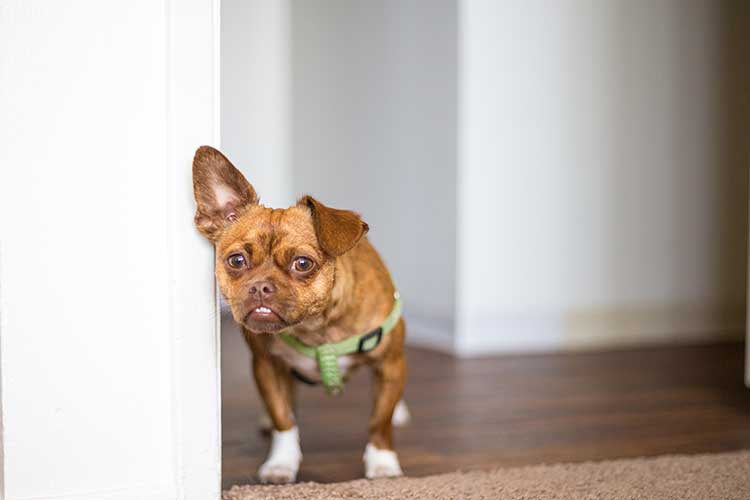
Dog Startles Easily
Kateryna/Adobe Stock

Being startled is a normal response when someone or something surprises you from around a corner, when someone suddenly walks through a doorway, or when you hear a scary sound. When most dogs are startled, they will jolt, bark or freeze, and then recover within a few minutes. However, there are some dogs that will panic and react by lunging forward, charging, barking and growling. These dogs have a difficult time recovering from being startled; it can take hours for them to recover. If your dog is aggressive when startled, it’s time to change her behavior.

Why Some Dogs Lunge or Charge When Startled

No one enjoys being startled; it’s scary and it can cause anxiety if it happens often. If a dog is severely startled, it can dramatically change the dog’s behavior around the thing that initially startled him.

As an example, if a strange dog startles your dog by running up to him during walks, your dog can easily become afraid of other dogs approaching. Think about it from a human perspective: If a scary clown suddenly appears in your living room, you’ll learn to dislike clowns and walk cautiously through your living room for a while.

Many anxious dogs, when startled, will charge forward, lunge, growl and even bite someone when startled. Anxiety is a key component. For some dogs, their anxiety triggers an excessive response when startled. Some dogs will react this way even when startled by their pet owners or family members. When this happens, it’s scary for everyone, including your dog. Think about it this way: Some humans react aggressively and start punching or kicking when startled while others just jump and recover quickly.

How to Change Reactive Startled Behavior

When practicing this behavior, the goal is not to startle your dog. Instead, pair something yummy with previous scary experiences slowly to change your dog’s perspective of this scary experience. Remember, when pairing good things with scary things, your dog learns that scary things make hot dogs appear.

Most dogs startle when someone walks into a room while they are sleeping. If your dog jumps up and lunges in this situation, then it’s time to change her behavior. Be prepared next time; stand sideways (face and front of body turned away from the dog) in the doorway, and softly say your dog’s name or “hello.” When your dog wakes up, toss chunks of cheese or hot dogs toward your dog. Practice this several times a week, and soon your dog will wag gently when you say “hello” or walk into a room.

When to Get Help

If your dog is anxious and has a difficult time settling down, or has hurt someone when startled, it’s time to get help. Locate a veterinary behaviorist in your area as well as a professional dog trainer who specializes in dog anxiety and only uses positive reinforcement training protocols. While your veterinarian can prescribe anxiety medication for dogs, it’s best to leave dog anxiety medication recommendations to a veterinary behaviorist.


Filed Under: Behavior Tagged With: dog aggression, dog aggressive when startled, dog aggressive when woken up, dog attacks when startled, dog becomes aggressive when startled, dog behavior, dog fear aggression, dog is mean when scared, dog startles easily, dog trainer, dog training, Dog Training Tips, fear aggression in dogs, how to teach a dog, how to train a dog, teaching a dog, training a dog

How to Deal With Fear Aggression in Dogs

October 15, 2015 by Fanna Easter

Dealing With Dog Fear Aggression

Fear Aggression in Dogs
wujekspeed/Deposit Photos

Is your dog showing signs of fear and aggressive behavior at the same time? This behavior can be categorized as fear aggression. Fear is not uncommon in dogs and most aggressive behaviors derive from it. This behavior could be caused by a multitude of things, such as genetics, possible mistreatment or lack of socialization during the impressionable stages of the dog’s life (fear imprint period). Sometimes you may be dealing with a combination of these things, depending on the dog and situation.

What Causes Your Dog’s Fear?

First, you want to identify the source of your dog’s fear whether it’s strangers, other dogs or specific objects. Once you can identify the cause of your dog’s fear, you can work on the behavioral threshold (the distance where the dog is not reacting). This will help your dog learn to overcome and deal with the cause of his fear.

As someone who has owned a dog that suffers from fear aggression, I recommend working with a professional dog trainer who is experienced with this type of behavior. Dealing with fear aggression can be complex and a little overwhelming for a dog owner to deal with, so coupling up with a dog trainer will help your dog tremendously.

What You Can Expect and When

You’ll see your dog’s fear aggressive behavior become more intense around six months of age or at the beginning of the dog’s adolescence. The sooner you begin modifying this behavior, the better. As stated above, you might see your dog show signs of fear toward strangers, other animals and even inanimate objects.

Flight or Fight Response

Some dogs will show the flight response (running away) to the things they’re fearful of. This is generally categorized as being fearful. On the other hand, you might have a dog that shows the fight response (trying to move toward the object), which is considered fear aggression. The dog that shows the fight response is trying to scare the thing she is fearful of away.

Your Dog’s Body Posture

A dog suffering from fear aggression may bark, growl, show teeth, lunge and hug the ground within seconds, or have his hackles raised from the tail all the way to the shoulder blades trying to appear bigger than he is. His body posture may make him come off as indecisive. One minute he’s lunging and growling and the next he’s cowering and running behind you.

RELATED: Dog Aggression

How to Train a Dog With Fear Aggression

First and foremost I want to state that using any correction on a fearful dog can be detrimental to dog training. This will only cause a bigger negative association to what the dog is fearful to. The dog is scared. You can’t tell him to stop being scared. Building a positive association and teaching redirection with the use of positive reinforcement techniques will be ideal in a situation like this.

Select a High Value Reward

Begin by finding the highest value reward for your dog, such as steak, chicken or liver. A head collar is also a great tool to use in this training program, as it gives you much more control. Our goal is to have the dog become aware of the triggers and not react to them.

Treat Your Dog Around Triggers

As soon as your dog sees the trigger, feed your dog a treat one after another. Do not give the dog a chance to redirect onto the stimulus. While the dog is focusing on you and the reward, start moving the dog away from the stimulus where you know he won’t act aggressively. You will begin doing this for several weeks in small increments.

Move Closer

Once your dog is successful at seven feet from the stimulus, begin moving closer. For the next couple of weeks, work with your dog at a distance of five feet. As your dog’s confidence builds, then work with him at a closer distance.

Involve Strangers

When your dog is comfortable around strangers, start using them in your dog training. A great way to begin is to have strangers toss high value food rewards near your dog, as they walk by. Do not have strangers approach quickly or look at your dog–have them just toss a treat and move on.

If your dog doesn’t react to this, then you know you’re making great progress and can move forward. If your dog does show reaction to the stranger, take a couple of steps back and continue to build her behavioral threshold without additional stimulation from strangers.

Take It Slow

Remember to take these exercises very slowly. By going at a slower pace, you’ll be much more successful. It’s normal to want to push a little more when you see progress, but I wouldn’t recommend doing this, as you can overwhelm the dog and jeopardize your training.

I know this can be a frustrating situation, but there is light at the end of the tunnel. My Boxer Chanel began showing signs of fear aggression at five to six months old, which escalated quickly. She is now seven years old and lives with cats, a three-year-old child and another Boxer. There was a lot of training and emotions involved over the years, but I wouldn’t change it. She is my success story!

Sources:
www.iaabc.org
www.apdt.com
www.aspca.org

Filed Under: Behavior, Dogs, Puppies, Training Tagged With: dog aggression, dog aggression training, dog fear aggression, dog training, Dog Training Tips, fear aggression in dogs, how to teach a dog, how to train a dog, teach a dog, train a dog

About

Dog Training Nation is a community of dog trainers, dog owners and dog lovers. Our mission is to provide trainers and owners valuable information to enrich dogs' lives. We cover a range of topics, from socializing puppies to dealing with aggressive dog behavior to selecting the best dog products. It is our hope you share our content to make the dog and owner world a better place.

​

Facebook

Video

Dog Training Nation is a dog training blog for pet owners and dog lovers. We cover a range of topics from puppy socialization tips to dog aggression to dog health. It is our hope you share our content to make the world a better place for dogs.

Dog Training Nation

Quick Links

Dog Training
Dog Behavior
Dog Training Videos
Become a Dog Trainer
About
Contact Us

Copyright © 2026 · Lifestyle Pro Theme on Genesis Framework · WordPress · Log in