Tips for Leaving Your Dog Alone
humonia/iStock
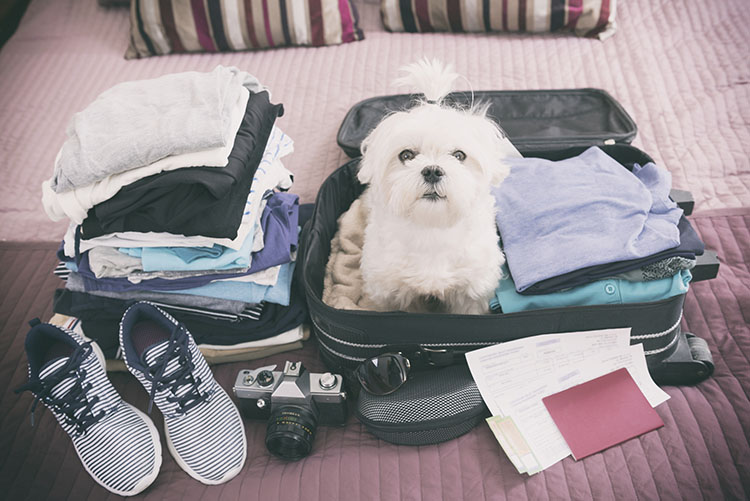
Oh oh, the suitcase is out. Now your dog knows you’re leaving.
It’s amazing how quickly dogs understand very subtle cues that indicate you’re leaving for vacation, work, errands or outdoors to check the mail. Next time your dog looks worried when you’re reaching for your car keys, try these dog training tips to positively change his behavior.
Pair Goods Things With Leaving
The first tip for leaving your dog alone for 8 hours is to pair good things with the action of you leaving. When we pair good things in certain situations, we teach dogs that good things happen during those situations. Think about it this way: if you’re waiting for a server to bring you a glass of wine at a restaurant, you become frustrated if it takes long. But if your server offers complimentary appetizers while you wait, it’s not so bad. Now, what if it rains $100 bills while you wait? That’s even better! You learn that waiting patiently is a good thing. 🙂
As pet owners, it’s our job to find what our dogs absolutely love! This is the first step to positively changing your dog’s behavior. Once we find it, it’s time to pair good things with leaving your dog home. Check out these examples of good things that can be paired with the action of you leaving:
- Kong filled with layers of baked chicken and peanut butter
- Canned food stuffed inside an interactive toy that’s been frozen overnight
- Fetch with your partner
- Sprinkled kibble along a huge area rug
But, How Does Your Dog Know You’re Leaving?
This next step takes a bit of detective work. While getting ready for work, watch your dog’s body language. It’s important to find which action cues your dog that you’re leaving him alone. While you assume grabbing your car keys is a cue, trust me, your dog knew way beforehand—just like getting out the suitcase is a dead giveaway.
To successfully change your dog’s behavior when you leave for work or vacation, it’s important to find the very first cue that tips your dog off. Does your dog’s face change when you’re taking a shower, running the water for your shower, combing your hair, putting out your work clothes or moving quickly around the house? My dog knows something is up the moment I touch my hair straightener. 🙂
Once you’ve figured out exactly what cues your dog that you’re leaving, it’s time to pair good things with that cue.
RELATED: Separation Anxiety in Dogs
Reiterate That Good Things Happen When You Leave
It’s important to pair something good with your “I’m leaving home” cue. As you touch your hair straightener, take a shower or put on cologne, give your dog a food stuffed toy to enjoy. If another person plans to stay home while you’re away, ask him or her to play ball with your dog outdoors. This keeps your dog happily distracted and busy with something they love.
Good things shouldn’t stop there though. Toss your dog another food stuffed toy as you’re heading out the door too. This further pairs good things with you leaving home. After a game of fetch, your family member can toss your dog a food stuffed toy to enjoy afterwards. This prevents your dog from wandering around the house looking for you. If this seems like a lot of food, split your dog’s daily meals into frozen food stuffed treats. Now, you can head off to work guilt-free. 🙂
Pair Goods Things 95% of the Time
To be effective, good things must happen often during stressful times. If it doesn’t happen often enough, it won’t work. Keep frozen food stuffed toys in the freezer for easy access. Give your dog a delicious bully stick to enjoy while you’re getting ready for work. When it’s time to head out the door and leave your dog alone, trade the bully stick for a food stuffed toy and voila! Aim to pair good things about 95% of the time.
Now, it’s time to change your behavior too. The moment you feel a tinge of guilt develop in the pit of your tummy, picture your dog happily playing or licking a yummy food toy. 🙂
