Dog Training Nation

In Dogs We Trust

  • Home
  • Training
    • Dogs
    • Puppies
    • Clients
  • Behavior
    • Breeds
  • Health
  • Safety
  • Resources
    • Equipment
    • Books
  • Dog Training Videos
  • About
You are here: Home / Archives for dog obedience tips

Dog Training Tips For Annoying Dog Behaviors

September 12, 2017 by Fanna Easter

How to Stop Annoying Dog Behaviors

Annoying Dog Behaviors
JaribFoto/Adobe Stock

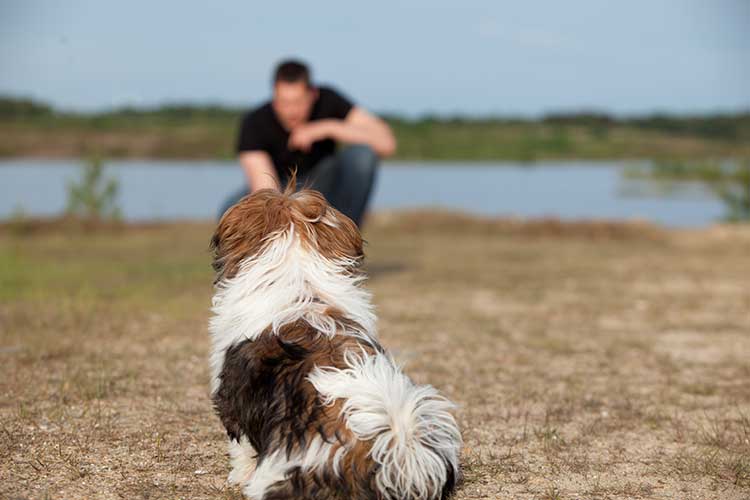
Dogs do certain things because they’re fun! However, fun dog behaviors are super annoying to people, and it becomes a vicious cycle. Before freaking out and screaming “stop” to your dog, take a deep breath. Now, take 5 minutes to an hour and think about what you’d like your dog to do instead of (fill in the blank). This is the key to changing your dog’s annoying behaviors fast!

What Dog Behavior is Driving You Crazy?

Identifying a specific issue helps solve an issue quickly. What is your dog doing that drives you nuts? It could be anything. Instead of assuming that everything your dog does drives you crazy, try to narrow down the most frustrating one. Once you know the frustrating behavior, you can address it. If you don’t, it’s like bringing your car into a mechanic shop because something is wrong, but you can’t identify the issue.

If your dog has several annoying behaviors, pinpoint one that needs to be addressed immediately and work on that one first. Once the main issue is addressed, then move on to additional annoying behaviors. Trying to address all of your dog’s frustrating issues at once is like packing 10 pounds of sugar in a 5-lb sack; it’s not going to happen.

RELATED: Does Your Dog Have an Attitude?

Once the most frustrating issue has been positively resolved, something interesting happens. All other minor behaviors seem to decrease because your dog has learned to do something else instead. Your dog is learning how to positively respond in situations, and both you and your dog are building a bond of trust and communication. Great job!

Here’s a list of common annoying dog behaviors that are fun for dogs, but annoying to pet owners:

  • Barking
  • Digging
  • Jumping
  • Running away
  • Spazzing out
  • Pulling away
  • Chewing
  • Nipping

What Should Your Dog Do Instead?

Now that you’ve narrowed down a specific annoying dog behavior, it’s time to teach your dog an incompatible behavior. An incompatible behavior is the opposite of the annoying behavior. Basically, you’re telling your dog to do this instead of that. Examples of incompatible behaviors for common annoying dog behaviors are:

  • Being quiet instead of barking.
  • Digging in a sandpit instead of your rose garden.
  • Sitting instead of jumping on people.
  • Coming when called instead of running away.
  • Sitting still instead of spazzing out.
  • Walking on a loose leash instead of pulling on it.
  • Chewing dog toys instead of table legs.
  • Not putting teeth on your skin instead of nipping.

How to Teach an Incompatible Behavior

While this may seem like sunshine and rainbow wishes, it’s actually very simple to teach incompatible behaviors. Grab a handful of super yummy treats, and reward your dog when he does an incompatible behavior instead of an annoying one. Dogs eventually have to stop barking to take a breath, so click and reward even a nano-second of silence.

Redirect dogs to chew on their chew toys instead of expensive table legs, and crate dogs when you’re not home. Reward a dog when all four feet are on the floor instead of jumping. Think about it this way: If $100 bills rained from the sky when you sat down instead of standing, you would learn that sitting is super rewarding.

Identify the annoying behavior, then reward the incompatible behavior and the annoying behavior will disappear. Never punish annoying behaviors or they’ll hang around longer—just reward incompatible behaviors every time!

Filed Under: Behavior, Training Tagged With: annoying dog behavior, dog chews, dog digs, dog frustration behavior, dog jumps, dog nips, dog obedience tips, dog training, Dog Training Tips, frustrated with my dog, how to change dog behavior, losing patience with my dog, losing temper with my dog, my dog won't stop, stop dog from jumping

Solutions To Common Dog Training Mistakes

May 24, 2017 by Fanna Easter

Don’t Make These Dog Training Mistakes Again

Dog Training
DNF-Style/Adobe Stock

Everyone makes dog training mistakes; it’s part of the learning process. When mistakes happen, it’s important to recognize and learn from them and leave frustration at the door. If you’re making these common mistakes in dog training, give these simple solutions a try!

Mistake #1: Ego Getting in the Way

Solution: Record Your Sessions

Human egos can quickly interfere a dog training session. When pet owners justify that their choices were right and their dogs were wrong, that’s ego creeping in. Justification rears its ugly head when pet owners blame their dogs for certain choices when actually their dogs didn’t know what else to do instead.

It’s hard to hear it, but the human ego is part of each dog training mistake made. As humans, we assume we’re right and our dogs are “just not getting it.” Instead of assuming, look at each dog training session from the perspective of a learner.

Still not convinced? Record your dog training sessions using a dog camera and review afterwards. Are your instructions clear to you? If you’re still not convinced, mute the video and ask a truthful friend what behavior you’re teaching in the video. If you nor someone else aren’t sure, then your dog certainly isn’t either.

Mistake #2: Touching Your Dog

Solution: Use a Clicker and Treats

Humans are very tactile, resulting in numerous mistakes during dog training sessions. When teaching new dog training behaviors, refrain from touching, pushing, pulling or forcing a dog into a behavior. Physically reaching out and touching dogs get in the way.

Use a hands off approach via clicker and treats instead. At first, it might be difficult using new dog training techniques because you’re learning something new, but it’s so worth it. (Remember, your dog is learning to adapt to this training technique as well!)

Hands off dog training means no physical or verbal corrections either. Remove your dog’s leash when practicing behaviors in your home. If your dog disengages, then you need better treats or your dog will become completely confused. For dog training sessions outdoors, attach your dog’s leash to a body harness instead of a collar. This prevents collar corrections.

Taking a hands off approach to training your dog will boost your dog’s success. Quickly reward any of your dog’s attempts toward the desired behavior. As a rule, you should be rewarding more than withholding treats.

If your dog makes a mistake—remember, it’s part of the learning process—just withhold a treat. Take a break and rethink your training plan, and keep your ego in check please.

Mistake #3: Using Low Value Treats

Solution: Use Treats Your Dog Loves

Dog training treats are your dog’s paycheck, so pay him or her extremely well. Using treats during training is not bribery; it’s far from it. Rewarding good behaviors with yummy treats works, and it works super fast. High value treats include chopped up hot dogs, baked chicken, cheese cubes or anything your dog absolutely adores. Using a high value treat will make training your dog so much easier because your dog wants to earn it.

Mistake #4: Using Huge Cheese Chunks

Solution: Break Treats Into Small Pieces

Break training treats into small pieces. Pea-sized treats work best for all dogs. Clicking and tossing pea-sized treats ensures excitement during training, and sessions move quickly with lots of success.

While it’s tempting to toss a huge cheese chunk every time, it’s actually slowing down the process. Dogs take forever to eat a cheese chunk (well, most do), and they’ll fill up on the treat fast. There’s nothing wrong with tossing a cheese chunk, but use it strategically.

Save large cheese chunks for breakthrough moments, such as your dog responding to a cue for the first time, ignoring another dog or coming when called.

Mistake #5: Making Assumptions

Solution: Practice the Behavior

Again, the human ego is the cause of this common dog training mistake. Pet owners assume things too quickly, and will justify why their dogs should know a cue. Do the following sound familiar?

  • “But he’s done this behavior before.”
  • “He knows how to do this.”
  • “She’s ignoring me.”
  • “She knows better.”
  • “He’s choosing not to listen to me.”
  • “This is the first time this has happened.”

This is justification. Instead of assuming and justifying, teach your dog the behavior. 🙂

Dogs ignore a cue for two reasons: 1) They’ve never practiced the behavior in a specific situation before (e.g. a squirrel runs in front of them) or 2) They’re confused. So many times, pet owners convince themselves that canine confusion doesn’t exist, and their dogs should know the behavior.

Yes, human ego rears its ugly head again. Practice a behavior in a myriad of situations, including an environment where a squirrel runs in front of your dog. Always remember, dogs are a living soul, not a robot, so understand they may not respond every time.

Happy Training!

Filed Under: Behavior, Clients, Training Tagged With: common dog training mistakes, dog obedience mistakes, dog obedience tips, dog trainer advice, dog trainer tips, dog training, dog training errors, dog training mistakes, Dog Training Tips, how to train a dog, my dog stopped listening to me, stubborn dog training

Leash Corrections & Leash Pops Don’t Work

November 16, 2016 by Fanna Easter

Dog Training: The Problem With Leash Corrections

Leash Corrections Don't Work
Smitt/iStock

Punishment is an extremely controversial subject, and highly debated between parents, grandparents and even dog trainers. Most pro or con debaters quickly take a position and fiercely argue why it’s the only option available. But I don’t think anyone really hears each other between the name-calling, finger-pointing, flaming social media posts and so on.

While I’m not a parenting expert, I’m certainly an expert in dog training. With that said, I’d like to explain why leash corrections are an issue. Leash corrections are when you pull on your dog’s leash to get him to do something. They’re also called leash pops.

Before firmly digging in and protesting, please take a moment to understand why leash corrections are bad. Seeing both sides makes for a well-rounded person. Allow me to explain why and show research proving leash pops do more harm than good.

Leash Corrections Don’t Teach Dogs Anything

When correcting your dog with a leash pop, you’re not really teaching your dog anything. Many years ago, I worked for a huge pet retailer where an older and very wise District Manager leader once said, “Anyone can tell someone what he or she did wrong, but a great leader teaches him or her what to do instead.”

That resonated with me on another level. I understood those principles from a dog training perspective, but to watch a proven leader teach his team how to excel in every situation using his motto was extremely powerful.

Physical or verbal corrections will destroy your relationship with your dog. I’ve personally witnessed how leash corrections ruined the bond between dog and owner many times. Pet owners swear their dogs “appreciate fair corrections because they’re done with love.” Yet, their dogs’ body language would say otherwise.

Punishing is more rewarding to the punisher than the punished. That statement probably stings, but it’s true—even Dr. Phil agrees.

It’s Not Your Dog’s Fault

Pet owners become frustrated with their dogs, and then take their frustrations out on their dogs. Anything and everything that goes wrong during the learning process is blamed on the dog. In my 20-plus-years of dog training, I’ve only witnessed one pet owner take responsibility. Another invaluable quote I learned the hard way will always stay with me is: “As a teacher, it’s our job to teach a learner. If the learner is confused, the teacher did something wrong.”

A Valuable Lesson From Training My Fish Dribble

While completing a 6-month-long national dog training certification program, I had to train a non-canine species to perform certain tasks. Teaching a fish to perform tasks was super exciting and really challenged my animal training skills. Here’s a tiny gilled animal floating around in water that couldn’t care less what I did or didn’t do. This quote stays near my heart because it’s true: When Dribble (my blue betta) became confused, it was my job to figure out a better way.

When dogs (fish or humans) become confused, they either stop moving, choose to do something else or leave. If your dog doesn’t respond to a cue, he’s either confused or wasn’t trained to do otherwise. The learner is right, my dear reader. 🙂 As a pet owner, it’s your job to teach your dog how to co-exist politely with humans.

As for Dribble, he learned quickly and so did I! Plus, he lived a long and happy life and performed his learned behaviors every day. 🙂

Why Punishment is a Slippery Slope

Now, back to leash corrections. Most pet owners justify their uses of leash pops, or punishment, with the following reasons:

  • “My dog stopped listening to me.”
  • “He knows better.”
  • “She knows what I’m asking her to do.”

All three reasons boil down to: “My dog embarrassed me, so I corrected him.” Or “I had to chase you for 10 minutes, and I’m going to punish you because I’m frustrated” or even “How dare you do that to me?”

These are also the same reasons why dog owners scream “no” at a dog. And if you disagree, you’re not being completely honest with yourself. Are you happy when giving your dog leash pops? 99.9% of pet owners punish their dogs when disappointed. Leash corrections are used to indicate “wrong choice,” but we all know the “no” command is meaningless.

Take Responsibility

I’m aware that life isn’t filled with rainbows, unicorns and sunshine all the time. Though, I do know how we react to life is most important. Yes, your dog will chew a hole straight through your mattress, hike his leg and pee on your leg during an important presentation, and knock you down so hard that both shoes fall off (all true stories), but how you react is key.

Next time you become frustrated during a dog training session or in any other scenario, take a moment to breathe deeply. Excuse yourself or hand your leash over to a friend, walk away, and compose yourself. Once you calm down, it’s your duty to figure out a better way to teach your dog that doesn’t involve punishment. That’s what all great teachers do.

If your dog misbehaves, use that opportunity to reteach a behavior and practice it in the situation that caused your dog to run off, ignore your cue, jump up on someone or dash through the door. Don’t punish. Teach your dog what is expected of him in that situation instead. 

This is More Than Just My Opinion

Many naysayers will claim this is just my opinion. While that’s true to a certain extent, I’ve based my opinion on scientific learning principles that have been proven time and time again. Shoot, these are the same principles Dr. Phil uses with children and adults. These learning principles work for humans, dogs, cats, tigers, dolphins and even snails. We all learn the same way, and saying punishment must be used with certain breeds of dogs is completely ridiculous. And dare I say, a bit disrespectful too. All humans are taught the same, so why are we breed discriminating?

Times have changed and research has finally caught up with dog training. It’s time to embrace dog training methods that work instead of listening to or reading outdated material. Your dog deserves it. 🙂

Filed Under: Behavior, Clients, Training Tagged With: best dog trainer tips, dog leash corrections, dog obedience tips, dog trainer tips, dog training, Dog Training Tips, how to correct a dog, how to correct a puppy, how to punish a dog for bad behavior, how to punish a puppy for bad behavior, how to teach a dog, how to train a dog, positive dog trainer tips, positive dog training tips, problem with punishing your dog, problem with punishing your puppy, punishment dog, puppy obedience tips, should you correct your dog, should you correct your puppy, teaching a dog, training a dog

About

Dog Training Nation is a community of dog trainers, dog owners and dog lovers. Our mission is to provide trainers and owners valuable information to enrich dogs' lives. We cover a range of topics, from socializing puppies to dealing with aggressive dog behavior to selecting the best dog products. It is our hope you share our content to make the dog and owner world a better place.

​

Facebook

Video

Dog Training Nation is a dog training blog for pet owners and dog lovers. We cover a range of topics from puppy socialization tips to dog aggression to dog health. It is our hope you share our content to make the world a better place for dogs.

Dog Training Nation

Quick Links

Dog Training
Dog Behavior
Dog Training Videos
Become a Dog Trainer
About
Contact Us

Copyright © 2026 · Lifestyle Pro Theme on Genesis Framework · WordPress · Log in
