Dog Training Nation

In Dogs We Trust

  • Home
  • Training
    • Dogs
    • Puppies
    • Clients
  • Behavior
    • Breeds
  • Health
  • Safety
  • Resources
    • Equipment
    • Books
  • Dog Training Videos
  • About
You are here: Home / Archives for dog safety

Who Should Walk Through The Door First?

November 20, 2017 by Fanna Easter

Walking Through Doors With Your Dog
Who Should Walk Through Door First
K. Thalhofer/Adobe Stock

As pet owners, it’s our job to keep our beloved dogs safe. One situation that can cause stress in dogs is walking through doors, especially if something scary is on the other side. Opening doors to strangers walking by or to a vet clinic can be scary. Before walking through a door, follow these steps to keep your dog safe and stress-free.

You Should Walk Through the Door First

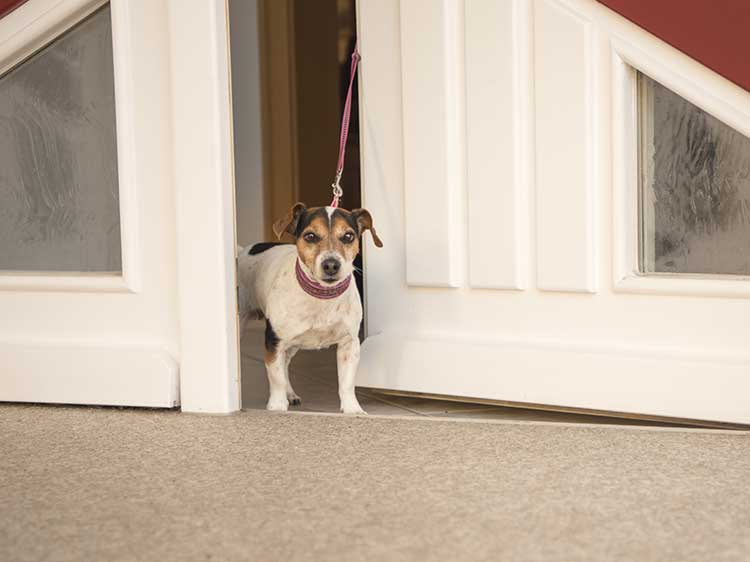
When something distracting or scary lurks on the other side of a door, it’s vital for you to walk through the door first. This provides plenty of time for you to assess the situation before bringing your dog along with you. When dogs walk through doorways first, especially in apartment complexes, they can easily become startled when encountering strangers, other dogs or children.

Open, Look & Listen

When bringing your dog out for a walk, grab yummy treats and leash your dog before opening the door. Then, crack open the door and peek outside for any close distractions that can scare your dog. If the coast is clear, open the door a bit wider and poke your head out for any distractions approaching or leaving the area. If it’s safe, open the door, so your dog can step out and toss a few treats on the ground. This gives your dog something fun to do while you scan the area for further distractions down the road.

If a distraction approaches that scares your dog, take a step back indoors. Close the door and give your dog several yummy treats. Pairing something good, such as treats, with a scary situation positively changes your dog’s behavior. Plus, it gets your dog back indoors quickly. Wait until the coast is clear again, then head out for a nice walk.

When walking into a veterinarian’s office, look through the glass door or poke your head through the doorway to ensure no dogs are standing nearby. If a dog or person is standing nearby, ask if they could move back, so your dog can enter. Once the doorway is clear, walk quickly to the exam room.

Dispelling Dominance

Walking through doors before your dog has nothing to do with dominance. This is a myth. Of course, dogs should learn polite manners around doorways to prevent them from running out of open doors, but again this has nothing to do with dominance. When someone mentions dominance between dogs and humans, understand they still believe in a myth that was dispelled more than a decade ago.

When pet owners walk through doors first, they’re making sure their dogs are safe.
Filed Under: Safety Tagged With: dog behavior, dog safety, dog safety tips, dog training, Dog Training Tips, doorway safety for dogs, how to teach a dog, how to train a dog, should you or your dog walk through a door first, teaching a dog, training a dog, walk through door before your dog, walking into vet office tips, walking through doorways with dogs, you should walk through door first

Why I Don’t Walk My Dogs In My Neighborhood

October 25, 2017 by Fanna Easter

Don’t Feel Bad If You Don’t Walk Your Dog

Rude Dogs
Halfpoint/Adobe Stock

This may surprise some pet owners, while others can completely understand, but I refuse to walk my dogs in my neighborhood anymore. As a professional dog trainer, I agree dogs need daily exercise. However, when daily walks become dangerous, it’s time to choose different forms of exercise.

Why I Don’t Do It Anymore

As temperatures cool down, our neighborhood sidewalks are filled with people enjoying the fresh air. Everyone hibernates through the brutal Texas summers, so naturally they will want to shed those extra pounds and exercise their dogs during the fall. The fact that more people are outside isn’t the reason why I don’t walk my dogs anymore. Instead, these are the two major reasons why I stopped bringing my dogs along for walks.

Rude Dogs

Cooler temperatures means more dogs are left outside in backyards unattended. As I walk by a house, these unattended dogs run along fence lines and start barking loudly. Some dogs even bang on windows barking fiercely indoors. These dog behaviors are super annoying and alarming for both my dogs and myself.

I’m forced to navigate sidewalks to avoid rude dog behavior. Plus, seeing rude dogs barking is extremely stressful for my dogs. Think about it this way: Dogs barking and lunging behind fences and windows is equivalent to them screaming, “I’m gonna beat you up fool,” to the passerby dog. Not only is this impolite behavior to other dogs, but it’s downright rude and preventable too. No dog should deal with this nasty dog behavior during a daily walk.

As humans, we understand these dogs are contained, but our dogs don’t understand that. Instead, they feel like they’re walking on eggshells, fearing for their safety. Also, constant exposure to a rude dog while on leash can lead to your dog becoming leash aggressive. Being continuously bombarded with threatening dogs that they can’t run away from may cause them to be threatening back. On the flip side, the dogs doing the barking and lunging from behind the fence learn that their aggressive behavior makes dogs leave, so they in turn become dog aggressive.

Loose Dogs

Today, I encountered two loose dogs within 20 feet of my home. Thankfully, I don’t bring my dogs walking with me any longer, but it still makes me extremely upset when inconsiderate dog owners leave their dogs loose outside. I have a few choice words with owners if they are around. Loose dogs are dangerous and can charge at your dog while walking, which teaches your dog dog aggression. By far, loose dogs make my hackles stand on end.

Neighbors, Contain Your Dogs!

Yes, I’ve screamed this very sentence at the top of my lungs numerous times. Pet owners must contain their dogs! Keep your dogs secured indoors or behind a fence, and never leave a dog unattended outdoors. Additionally, stop allowing dogs to bark and lunge at dogs (or anyone). Crate your window barking dog or keep him in an area with no access to windows. Trust me, while it seems like your dog is just “letting off steam,” your dog is becoming dog aggressive and you can be sued if your dog hurts someone or another dog.

How to Safely Exercise Your Dog

Of course, we all need exercise, including our dogs. Remember, mental stimulation is just as exhausting as physical exercise, so keep your dog’s brain busy. Here are a few options to keep your dog mentally and physically fit:

  • Play fetch daily.
  • Enroll in a weekly group class, such as nose work, agility or fly ball.
  • Provide all meals in food puzzles and stuff in toys.
  • Teach your dog to walk on a treadmill.
  • Toss kibble or treats into your backyard.
  • Play nose work games indoors.
  • Go hiking on private property—with permission, of course.
  • Bring your dog on car rides.

Rethink walking your dog around rude dogs. As pet owners, it’s our job to keep our dogs safe. 

Filed Under: Safety Tagged With: dog safety, dog training, Dog Training Tips, don't walk dog in neighborhood, how to teach a dog, how to train a dog, inconsiderate dog owners, loose dogs on walks, rude dog owners, rude dogs, rude dogs on walks, teach a dog, train a dog, walk your dog

5 Safety Tips For Dogs And Children

October 9, 2017 by Fanna Easter

How to Keep Children Safe Around Dogs

Dogs and Children
blessings/Adobe Stock

Many pet owners assume dogs and children get along like peanut butter and jelly—that they just blend seemingly well together. Well, that’s not always true, unfortunately. The Center of Disease Control (CDC) statistics show that children are bitten more often by dogs with young boys topping the charts.

Interestingly, it’s not random dogs that do the biting. It’s family dogs that bite children the most. Even though your dog has never bitten anyone, he has teeth and will defend himself if hurt or teased. With that, it’s important to understand a few safety tips to keep children safe around dogs.

1. Leave Sleeping Dogs Alone

Children should never disturb dogs that are sleeping. Many dogs will become startled and nip children as a result. Explain to your children that dogs should have plenty of space while taking naps, and that they should never wake up a sleeping dog.

2. Don’t Allow Children to Sit on Dogs

My skin crawls when viewing photos of children standing, sitting or lying across their dog’s back. While the child looks happy in the picture, the dog is not happy at all. Dogs are not little children and should be respected, so teach children to stand on the ground and not on your dog. Plus, having a 10- to 50-lb child sitting or standing on your dog is painful for him.

3. Stay Out of a Dog’s Food Bowl

When dogs are eating meals, chews or treats, children should provide their dog plenty of space. Children should stay away from their dog’s food bowl while their dog is eating, and never try to take away a chew or treat from the dog.

RELATED: 7 Tips on Being a Responsible Dog Owner

4. Keep Faces Apart

Humans love to give hugs, but dogs are not fans of them. Now, most dogs enjoy putting their face near a person’s face, but they don’t enjoy someone walking over and placing their human face near their face. There’s a big difference between the two because, with the latter, dogs feel like they can’t get away when held in a human embrace and may bite. Many dog bites happen to a child’s face, which is a telltale sign that the child’s face was too close to a dog’s face.

5. Make Like a Tree

When dogs get excited, they can topple over children quickly. Teach your child to make like a tree when your dog gets excited. Children should stand still like a tree, fold their arms around their bodies like branches and look at the ground (avoid eye contact). Most dogs will ignore a still child and find something else to do.

Filed Under: Safety Tagged With: children and dogs, dog growls at child, dog safety, dog training, Dog Training Tips, dogs and children, dogs and children tips, keep children safe around dogs, keeping children safe around dogs, safety tips to keep children safe around dogs, why my dog growls at our dog

Should Dogs Be Left Outdoors Unattended?

September 18, 2017 by Fanna Easter

Why Leaving Your Dog Outside is a Bad Idea

Leave Dog Outside Unattended
nickyuh/Adobe Stock

As a professional dog trainer, this is easily one of the most common questions that comes up during consultations. Many pet owners assume their dogs would prefer to play outdoors alone, but that’s not always true. The simple answer is no; you shouldn’t leave your dog outside unattended. Please allow me to explain why, and I think you’ll agree too.

Overprotective Pet Owner?

Keeping an eye on your dog in the backyard is preventative, and not overprotective, behavior. 🙂 Many pet owners assume hanging outside while their dogs play in the backyard is helicopter pet owner behavior. While it’s not necessary to hover over their dogs like a helicopter, they should be aware of what their dogs are doing outdoors. It’s best to hang out in your yard while your dog potties and plays. Of course, you can go indoors and grab a drink, but never leave your dog outside for longer than 5-10 minutes.

Best Way to Prevent Unwanted Behaviors

When dogs are left outdoors unattended, they can get into trouble quickly. Many dogs become lost because they’ve dug out from under their fence within seconds. Also, many accidentally walk through backyard gates unintentionally left open by service workers.

Incessantly barking dogs usually practice this behavior when left alone in the backyard, and it can quickly become a problem with neighbors. Fence fighting behavior can start abruptly and will continue until someone is hurt—and this dog behavior is tough to manage once it starts. Some dogs are teased behind fences, which can certainly cause human aggression.

Lots of unwanted dog behaviors can happen within minutes, so it’s best to hang out with your dog to prevent these behaviors from happening instead of trying to address them later. Prevention is key, and it takes much less time than changing behavior. 🙂

It’s Not Safe

Dogs can eat sticks, stones and so many other harmful objects within seconds. Surgery is often required to remove ingested acorns, pinecones, pine straw, mulch and so forth, which can cost thousands of dollars and even your dog’s life.

Backyards may contain poisonous mushrooms, frogs and stinging insects, which become fatal within hours. If you’re outdoors with your dog, you can prevent your dog from chewing or ingesting harmful objects. If your dog is stung, you’re aware of the insect that stung your dog, so your veterinarian will be able to quickly save your dog’s life.

Keep an Eye on Your Dog

When your dog is outdoors, sit outside and have a conversation with a friend on the phone or, even better, play a fun game with your dog. If it’s too hot or cold for you to sit outdoors, then the weather is too extreme for your dog to sit outdoors too. When your dog tries to chew on acorns, ask your dog to “leave it” and reward your dog with a yummy treat. Additionally, if your dog tries to engage in fence fighting, bring your dog indoors, so he doesn’t practice this behavior. Bored dogs will find something to do if kept outside during the day or while you’re at work, which is never a good thing. So hang out with your dog and prevent unwanted behavior.

An ounce of prevention prevents hours of changing behavior, so never leave your dog outside unattended.

Filed Under: Safety, Training Tagged With: backyard dog, do do like being left outside, dog left backyard, dog safety, dog training, Dog Training Tips, keeping dog in backyard, leave your dog outside unattended, leaving dog in backyard, leaving dog outside, leaving dog outside while at work, should dogs be left outdoors

Portable Dog Carriers Keep Your Dog Safe And Your Shoulders Pain-Free

September 14, 2017 by Fanna Easter

Portable Dog Carriers

Portable Dog Carriers
Monika Wisniewska/Adobe Stock

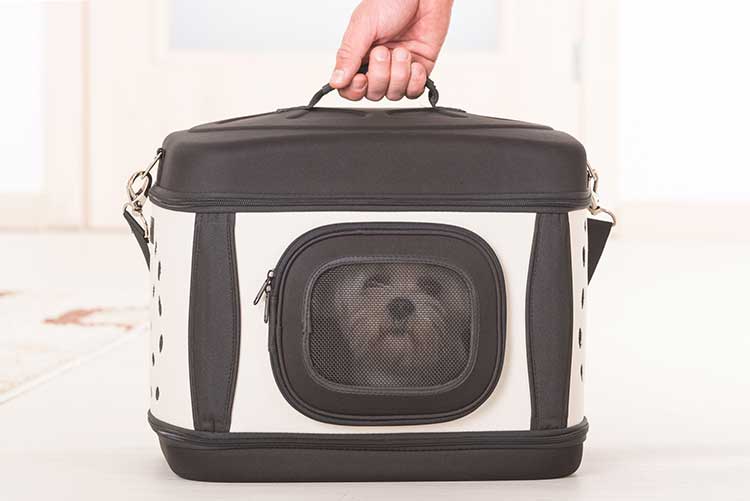
Sharing your home with small dogs offers many perks due to their pint size. Small dogs eat less, poop less and are completely portable, which saves money and your back! While it’s tempting to hold a small dog in your arms, it’s actually safer for small dogs to travel in portable dog carriers or crates. Additionally, if a small dog is fearful of encountering other dogs or visiting the vet’s office, a dog carrier will make your dog feel much safer.

Benefits of Using a Portable Dog Carrier

In a pinch, holding your dog works well, but it’s not the safest way to contain a small dog. Tiny dogs can jump down or accidentally fall, causing major injuries, such as broken bones. Also, when pet owners hold small dogs in their arms, these tiny dogs are exposed to other dogs, which can cause dog aggression.

A couple of months ago, a large man was holding a 10-lb dog in his arms while standing in the veterinary clinic waiting room. A large dog entered the clinic. The tiny dog freaked out and deeply scratched and bit the pet owner in the face and neck. This could’ve been prevented if the dog were in a pet carrier. Unfortunately, this happens often.

Portable Dog Carriers for Dogs 1-20 lbs

Options for portable dog carriers are endless for dogs under 20 lbs. Carrier style bags are extremely popular due to their convenience. They’re super easy to place and to carry a small dog next to your body. Plus, carrier style bags have zipper openings, adjustable carrying straps, vented fabric and plush lining. There are numerous options, colors and styles for you to choose from based on your individual style and your dog’s comfort needs.

SleepyPod Carriers are super stylish, offer different shapes, can be used as car crates and are one of the few dog carriers that have passed strict car crash safety standard testing.

Portable Dog Carriers for Dogs 21-30 lbs

Over the last few years, backpack style dog carriers have become the latest trend, especially for dogs over 20 lbs. Carrying a heavy carrier style bag with shoulder straps will damage a pet owner’s shoulders quickly. Manufacturers picked up on that and have created dog carrier backpacks that are extremely versatile.

Some backpack carriers feature wheels and handle attachments, similar to suitcases, for pet owners that have to carry their small dogs for a longer distance. My favorite dog carrier backpack for a Miniature Bull Terrier, that weights 28 pounds, is the Snoozer Backpack and Roller dog carrier. It’s not very stylish, but it’s a fanatic product to haul 25- to 30-lb dogs around while keeping your shoulders pain-free.

Dog Carrier Safety Tips

Small dogs should feel like their carrier is a comfortable and safe spot, especially during travel. When dogs are inside their carriers, they should be completely contained, meaning their heads should not poke out of any opening. If a dog’s head can peek out of an unzipped opening, that means your dog can jump out of the carrier. Also, it’s important to:

  • Hold your dog in her carrier close to your body to prevent other dogs from sniffing or someone bumping into the carrier.
  • For backpack or suitcase type carriers, place it against a wall to prevent it from tipping over.
  • If your small dog is fearful, toss a towel over visible areas to create a visual barrier. When dogs are unable to see other dogs or people, they feel much safer.
  • Give your small dog lots of yummy treats or food stuffed toys while she sits in her carrier.

With so many portable dog carrier options available, there’s no reason why small dogs should not ride in safety and comfort!

Filed Under: Equipment, Resources Tagged With: backpack dog carrier, dog carrier, dog carrier backpack, dog carrier bag, dog carrier for 20 pound dog, dog carrier for 25 pound dog, dog carrier for 30 pound dog, dog safety, dog training, Dog Training Tips, dog travel crate, dog traveld, large dog carrier backpack, large dog carrier with wheels, portable dog carrier

  • 1
  • 2
  • Next Page »

About

Dog Training Nation is a community of dog trainers, dog owners and dog lovers. Our mission is to provide trainers and owners valuable information to enrich dogs' lives. We cover a range of topics, from socializing puppies to dealing with aggressive dog behavior to selecting the best dog products. It is our hope you share our content to make the dog and owner world a better place.

​

Facebook

Video

Dog Training Nation is a dog training blog for pet owners and dog lovers. We cover a range of topics from puppy socialization tips to dog aggression to dog health. It is our hope you share our content to make the world a better place for dogs.

Dog Training Nation

Quick Links

Dog Training
Dog Behavior
Dog Training Videos
Become a Dog Trainer
About
Contact Us

Copyright © 2026 · Lifestyle Pro Theme on Genesis Framework · WordPress · Log in