Dog Training Nation

In Dogs We Trust

  • Home
  • Training
    • Dogs
    • Puppies
    • Clients
  • Behavior
    • Breeds
  • Health
  • Safety
  • Resources
    • Equipment
    • Books
  • Dog Training Videos
  • About
You are here: Home / Archives for dog trainer

Is Your Dog Aggressive When Startled?

December 29, 2017 by Fanna Easter

Help for Dogs That Become Aggressive When Startled
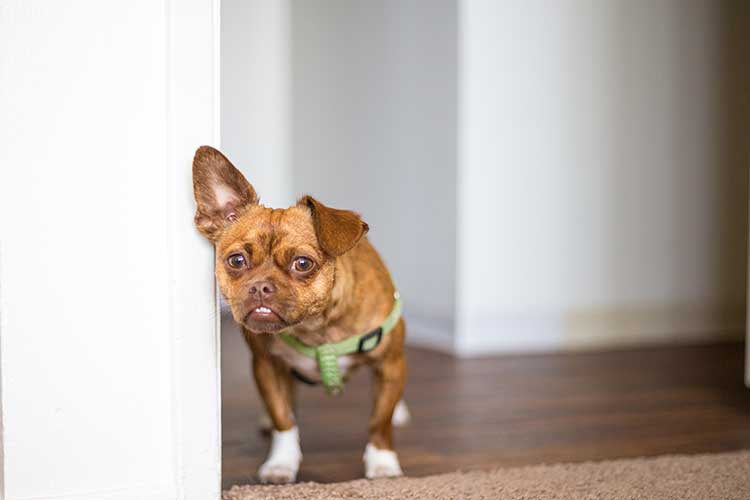
Dog Startles Easily
Kateryna/Adobe Stock

Being startled is a normal response when someone or something surprises you from around a corner, when someone suddenly walks through a doorway, or when you hear a scary sound. When most dogs are startled, they will jolt, bark or freeze, and then recover within a few minutes. However, there are some dogs that will panic and react by lunging forward, charging, barking and growling. These dogs have a difficult time recovering from being startled; it can take hours for them to recover. If your dog is aggressive when startled, it’s time to change her behavior.

Why Some Dogs Lunge or Charge When Startled

No one enjoys being startled; it’s scary and it can cause anxiety if it happens often. If a dog is severely startled, it can dramatically change the dog’s behavior around the thing that initially startled him.

As an example, if a strange dog startles your dog by running up to him during walks, your dog can easily become afraid of other dogs approaching. Think about it from a human perspective: If a scary clown suddenly appears in your living room, you’ll learn to dislike clowns and walk cautiously through your living room for a while.

Many anxious dogs, when startled, will charge forward, lunge, growl and even bite someone when startled. Anxiety is a key component. For some dogs, their anxiety triggers an excessive response when startled. Some dogs will react this way even when startled by their pet owners or family members. When this happens, it’s scary for everyone, including your dog. Think about it this way: Some humans react aggressively and start punching or kicking when startled while others just jump and recover quickly.

How to Change Reactive Startled Behavior

When practicing this behavior, the goal is not to startle your dog. Instead, pair something yummy with previous scary experiences slowly to change your dog’s perspective of this scary experience. Remember, when pairing good things with scary things, your dog learns that scary things make hot dogs appear.

Most dogs startle when someone walks into a room while they are sleeping. If your dog jumps up and lunges in this situation, then it’s time to change her behavior. Be prepared next time; stand sideways (face and front of body turned away from the dog) in the doorway, and softly say your dog’s name or “hello.” When your dog wakes up, toss chunks of cheese or hot dogs toward your dog. Practice this several times a week, and soon your dog will wag gently when you say “hello” or walk into a room.

When to Get Help

If your dog is anxious and has a difficult time settling down, or has hurt someone when startled, it’s time to get help. Locate a veterinary behaviorist in your area as well as a professional dog trainer who specializes in dog anxiety and only uses positive reinforcement training protocols. While your veterinarian can prescribe anxiety medication for dogs, it’s best to leave dog anxiety medication recommendations to a veterinary behaviorist.
Filed Under: Behavior Tagged With: dog aggression, dog aggressive when startled, dog aggressive when woken up, dog attacks when startled, dog becomes aggressive when startled, dog behavior, dog fear aggression, dog is mean when scared, dog startles easily, dog trainer, dog training, Dog Training Tips, fear aggression in dogs, how to teach a dog, how to train a dog, teaching a dog, training a dog

Children And Puppies: Keeping Everyone Safe And Happy

December 28, 2017 by Fanna Easter

6 Safety Tips for Children and Puppies

Children and Puppies
goce risteski/Adobe Stock

It’s that time of year where families are bringing new puppies home. One major concern most new pet owners have is introducing their new puppy to their children. Before your new puppy arrives, hold a family meeting and discuss each puppy safety tip in detail with your children. It’s vital to teach young children polite behaviors around puppies. While most of these safety tips pertain to dogs of all ages, there are a few specific to puppies only.

1. Crate Your Puppy in a Quiet Room

Place your puppy’s crate in a quiet place, such as your master bedroom. When puppies are crated, they need peace and quiet to rest and enjoy food filled toys. Refrain from placing your puppy’s crate in your children’s playroom, living room, kitchen or another busy area. Children should not harass your puppy, so close the bedroom door to ensure privacy.

2. Never Disturb Your Puppy While Eating

Puppies should be left alone during mealtime. When children approach a puppy’s food bowl, pet the puppy while eating or stick their fingers in the food bowl, this can cause a puppy to resource guard her food. It’s best to feed puppies in their crates with the crate door securely closed. Even better would be to feed your puppy her meals from food stuffed toys when crated. This applies to when your puppy is chewing on a bully stick or toy too.

3. Give Your Puppy Plenty of Space

Many children like to pick up and hold puppies like babies, but this can quickly annoy a puppy. It’s important for children to understand that puppies need plenty of space and that they should have the choice to be held or picked up.

Hugs and kisses are fine, if the puppy walks over and initiates this behavior. However, children should not walk over and hug or kiss a puppy first. Also, children should never sit, step on or lie down on a puppy. This hurts, and will cause the puppy to growl or bite.

4. Never Take Toys From Your Puppy

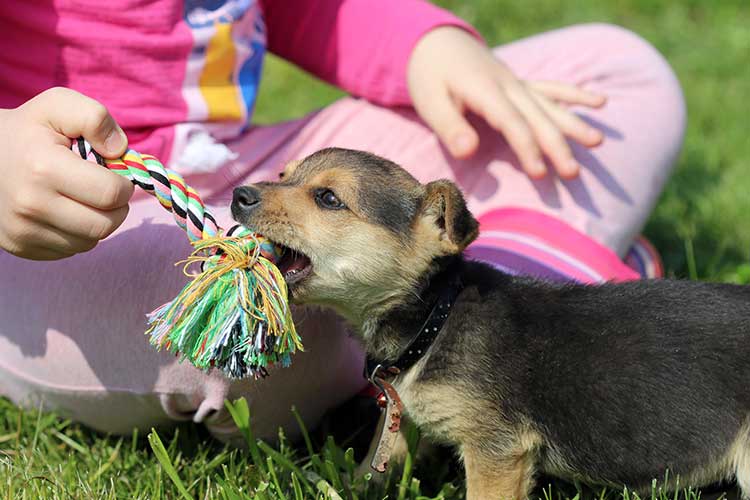
Puppies will chew anything and everything; it’s part of being a puppy. When a puppy grabs your child’s favorite toy, it’s important your child doesn’t pull the toy out of your puppy’s mouth. This will cause a tug-of-war game, and some puppies learn to resource guard toys from children. Instead, teach children 5 years and older to play the “trade” game. For children under 5 years of age, you should play the “trade” game.

5. Pet With Gentle Hands

Children should learn to gently pet puppies the moment a new puppy arrives in the home. Gentle petting involves slow strokes with light pressure along a puppy’s side. When children pet a puppy, they should use a flat palm and move slowly. Children should not pet puppies on top of the head, touch their faces, pull their tails, poke with fingers or throw items at the puppy. When children or adults pet puppies too quickly, it causes puppies to get excited.

6. Never Leave Children and Puppies Alone—Ever

Children and puppies (dogs too) should never be left alone together unsupervised ever. It can take less than a second for a young child to unintentionally hurt a puppy, and the puppy bites the child out of self-defense. When in doubt, place your puppy in her crate with lots of yummy treats if you need to answer the front door or cook dinner.

Filed Under: Puppies, Safety, Training Tagged With: children and puppies, dog trainer, how to teach a dog, how to train a dog, introducing puppy to child, introducing puppy to toddler, kids and puppy tips, puppy training, safety for kids and puppies, safety tips for children and puppies, teaching a dog, tips for puppies and children, training a dog, training puppies, what children should know before getting a puppy

2017 Christmas Gifts For Dog Lovers

December 8, 2017 by Fanna Easter

Christmas Gifts for the Dog Lover in Your Life

Gifts For Dog Lovers
Serenkonata/Adobe Stock

Dog people are passionate about dogs; they love dogs more than fancy shoes, cars and bedazzled clothing. If you have someone who’s passionate about dogs, you’ll want to check out these wonderful Christmas gifts for dog lovers. Each present is sure to be loved and cherished by its recipient. As an extremely passionate dog lover myself, I still love each dog-themed gift I’ve received over the years because it’s so personal.

Jewelry

Understated, yet deeply personal, jewelry is perfect for dog lovers who aren’t afraid to show off their favorite dog breed. By far, Siberian Art offers breathtaking jewelry that feature most dog breeds. Siberian Art captures each breed beautifully, which means dog lovers will see their dog in each cherished piece.

Choose from detailed pendants, earrings, rings, tie tacks and prints in either silver or gold. Sterling silver options are priced right under $100, and they’re worth every single penny. Stay away from knockoffs since those will turn your dog lover’s neck bright green. 🙂

Dog Portrait

Everyone loves a beautiful piece of artwork, and it’s even better when a furry family member is included. With many personalized options available, such as Zazzle, you could place a dog lover’s favorite dog portrait on pillows, pictures, mugs and so forth.

If you want to take a dog portrait gift idea up a notch, have an artist create a custom portrait. Before cringing at the word “custom,” remember that portraits are created digitally now, which keep costs down.

When choosing an artist, look through their online portfolio first. Each artist has a certain style, and remember to always ask questions. Order sooner rather than later, as artists take at least 3 weeks to complete artwork even if it’s digital. Costs vary depending on artist and size of the portrait.

Dog-Themed Socks

Dog-themed socks are an inexpensive gift every dog lover will wear with pride. If your dog lover’s favorite breed is not available, choose a colorful paw-printed pair of socks instead. Dog-themed socks make great stocking stuffers too. Most socks cost between $10-$12, depending on the brand. Check out this great dog sock website.

Donation to Favorite Rescue Group

As always, donating to your dog lover’s favorite rescue organization is always a great gift. Print out your donation and place inside a beautiful envelope, then place under the Christmas tree. Your dog loving friend, their chosen rescue and a dog in need will thank you!

Have a fabulous holiday season!

Filed Under: Clients, Equipment, Resources, Training Tagged With: 2017 christmas ideas for dog lovers, best gifts for dog people, christmas gifts for dog lovers, dog behavior, dog jewelry for humans, dog portraits, dog trainer, dog training, Dog Training Tips, gift ideas for pet owners, gifts for dog lovers, how to teach a dog, how to train a dog, presents for dog lovers, teaching a dog, training a dog, what to buy dog friends, what to buy for dog lovers, what to buy for dog people

Is Your Dog Trainer A Bully?

November 6, 2017 by Fanna Easter

Signs You Should Find a New Dog Trainer

Good Dog Trainer
michaelheim/Adobe Stock

Yes, you read that correctly. Some dog trainers are capable of bullying pet owners. Bullying behavior is common within all professions, and it happens within the dog training industry too. Some dog trainers can be downright mean to pet owners and dogs while others are sneakier about it. Is your dog trainer a bully?

Expectations of a Dog Trainer

Before discussing bullying behavior, it’s important to understand the expectations of a dog trainer. Dog trainers are hired to teach pet owners how to communicate with their dogs effectively. Of course, dog trainers can teach dogs polite manners quickly, but it’s pretty ineffective unless pet owners learn how to teach and reinforce polite behaviors themselves.

In essence, dog trainers teach people and not dogs. Since dog trainers teach people, they must have excellent communication skills. Professional dog trainers should treat pet owners and dogs with respect and kindness, set everyone up for success, use positive reinforcement training methods, and celebrate wins.

Belittles Pet Owners

When teaching pet owners how to communicate with their dogs, some dog trainers will belittle pet owners throughout the entire process. Dog trainers should not blame pet owners for their dogs’ behavior if pet owners are seeking professional help. Everyone makes mistakes; you do better when you know better. Dog trainers should acknowledge that, and then explain to pet owners what to do instead of focusing on negative behavior. Finger-wagging and blaming halts the learning process and teaches nothing.

Positive reinforcement dog trainers should treat clients with the same kindness and respect they would extend to their canine clients. Additionally, good dog trainers understand pet owners are learners, so they must adjust their communication style to ensure all learners understand the concepts. If your dog trainer is belittling you, then it’s time to find a new dog trainer.

Makes Questionable Choices

There’s no room for physical pain, force, fear or yelling in dog training. These methods do not work. Instead, punishment inhibits behavior and will cause anxiety and fear. Dog trainers should never recommend hurting dogs or putting dogs in a situation that makes their behavior worse. Additionally, dog trainers should not joke about a dog’s breed tendencies or assume all breeds of dogs learn the same because every dog is an individual. Dog trainers should never recommend physical corrections with collars, leashes, shock or force.

As an advocate for your dog, if something feels wrong, don’t do it and leave immediately.

Filed Under: Clients, Training Tagged With: am I making dog training mistakes, dog behavior, dog trainer, dog trainer is mean, dog trainer near me, dog training, dog training methods, Dog Training Tips, finding a dog trainer, how to find a good dog trainer, how to teach a dog, how to train a dog, questionable dog trainer, teaching a dog, tips for finding a dog trainer, training a dog

Is Your Dog’s Behavior Improving?

October 23, 2017 by Fanna Easter

Improve Your Dog’s Behavior in 3 Steps

Dog's Behavior
melounix/Adobe Stock

When teaching a dog one or several new behaviors, it can be tricky to gauge if a dog’s behavior has permanently changed. Dog behavior can fluctuate depending on the situation and your dog’s health (hey, he might not feel well that day). Before assuming your dog’s behavior has changed, it’s best to follow these steps to ensure your dog’s behavior improves. These steps will also help you identify where your dog’s behavior fell apart.

Step 1: Dog Readily Offers Learned Behavior

You’ll know when a dog has learned a new behavior when he readily offers it during dog training sessions. As an example, dogs learn how to “sit” pretty quickly, especially when they receive a treat for it. They will usually offer a “sit” behavior because it makes cheese appear. When teaching a new behavior, such as “down,” a dog should offer or can be easily lured into this behavior before you continue to step 2.

Step 2: Dog Responds to Cue

Once a dog offers or can be easily lured into a new behavior, it’s time to give it a “cue.” Putting a behavior on cue is extremely important because that’s how to ask a dog to perform a behavior (stimulus control).

If you would like your dog to “sit and stay” around guests, then these behaviors need a name, so your dog will know what to do when you say it around guests. Once a cue (sit) is paired with a behavior (sitting down), your dog should respond to the cue within a few seconds. Continue to practice until your dog responds within a second after hearing the cue. Rewarding generously will certainly speed up the process.

RELATED: Learn From Dog Training Mistakes

Step 3: Dog Performs Around Distractions

Most dogs can “sit,” “down,” “come” and “stay” at home, but can they perform these behaviors in the front yard or park? This is the most difficult part of improving a dog’s behavior. In fact, this is where most pet owners become frustrated and give up. As a general rule, when training your dog, 90% of teaching a new behavior is practiced around distractions. It’s great when dogs “sit” instantly on cue, but it’s even better when dogs can “sit” instantly when guests come over.

Moving from one step to the next certainly shows improvement, so keep practicing! 

Filed Under: Clients, Training Tagged With: dog behavior, dog behavior improving, dog obedience cues improving, dog trainer, dog training, dog training commands getting better, Dog Training Tips, dog's behavior, how to teach a dog, how to train a dog, is dog training working on my dog, is my dog's behavior improving, professional dog trainer, teach a dog, train a dog, training dogs

  • 1
  • 2
  • 3
  • 4
  • Next Page »

About

Dog Training Nation is a community of dog trainers, dog owners and dog lovers. Our mission is to provide trainers and owners valuable information to enrich dogs' lives. We cover a range of topics, from socializing puppies to dealing with aggressive dog behavior to selecting the best dog products. It is our hope you share our content to make the dog and owner world a better place.

​

Facebook

Video

Dog Training Nation is a dog training blog for pet owners and dog lovers. We cover a range of topics from puppy socialization tips to dog aggression to dog health. It is our hope you share our content to make the world a better place for dogs.

Dog Training Nation

Quick Links

Dog Training
Dog Behavior
Dog Training Videos
Become a Dog Trainer
About
Contact Us

Copyright © 2026 · Lifestyle Pro Theme on Genesis Framework · WordPress · Log in
