Dog Training Nation

In Dogs We Trust

  • Home
  • Training
    • Dogs
    • Puppies
    • Clients
  • Behavior
    • Breeds
  • Health
  • Safety
  • Resources
    • Equipment
    • Books
  • Dog Training Videos
  • About
You are here: Home / Archives for dog trainer tips

Capturing Dog Behavior

May 15, 2015 by Fanna Easter

Capturing a Dog Behavior: That’s It!
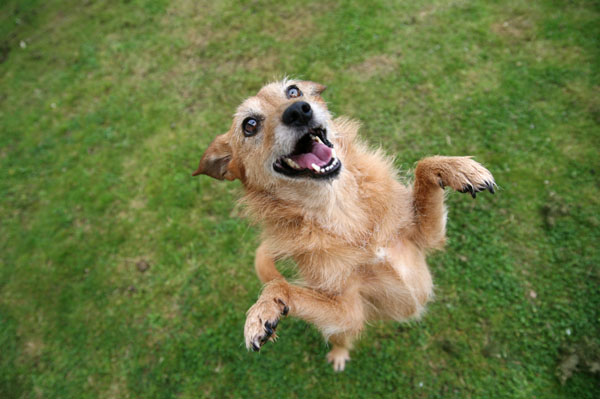
Dog Behavior
suemack/iStock

A teacher uses basic teaching fundamentals for humans, dogs, cats, fish and snails so let’s discuss capturing a behavior. This is a powerful way to teach your dog a new behavior.

What is Capturing?

Think about using a camera. When taking a picture, you’re capturing a moment in time. When capturing dog behavior, it’s the same process, except you’re using a clicker to capture a moment in time. And then giving your dog a treat so that moment in time continues.

Imagine you and I standing in a room. Then, after a few minutes of chatting, I move a chair in the middle of the room and you moved toward it to sit. As your behind touched the chair, I clicked and gave you $100. What did you just learn? Ha, that it pays to sit in that chair, right? This is capturing.


 Capturing works best for naturally occurring behaviors.


When encouraging participation during a business meeting, reward questions with small bits of chocolate or mints. At first, participants will giggle, but after 10-20 minutes, you’ll have an actively engaging meeting. For introverts, I reward with two pieces of candy. These folks are tough to engage.

If you find need to slow down participation, withhold rewards a bit and reward every third question. Capture and reward know-it-all attendees every third time because constant rewards will ensure their hand is always raised. At first, they’ll become a little perplexed, but they will learn to control their behavior and hand. 🙂

How to Capture Dog Behavior

When using a clicker to mark behaviors you like and then giving your dog a treat, you’re saying, “That’s what I want so keep doing it.”

Capturing is very powerful so be careful of what you capture. 🙂  When dogs bark at us, we look at them–you just captured that behavior. Your dog jumps up on you so you push them down. You just captured that behavior. That’s why, as dog trainers, we ask you to choose good behaviors to replace naughty ones. If your dog jumps up, wait for all four feet to touch the ground and click/treat. When your dog barks, click and treat when she’s quiet.

Naturally occurring examples are:

  • Sitting.
  • Lying down.
  • Calming down.
  • Loose leash walking.
  • Stretching.
  • Barking.
  • Not barking.
  • Picking up a paw.
  • Looking at you.
  • Whining.
  • Licking.
  • Standing.
  • Yawning.
  • Keeping four feet on the floor (not jumping up).

Capture Often

If you attend my group classes, you’ll hear this phrase often. The more you capture good behavior, the faster your dog will keep offering it. Even if you must click and treat 10 times in a row when your dog stops pulling on the leash, you’ve taught your dog that keeping the leash loose pays!

Check out these videos to watch capturing in action.

VIDEO: How to Teach a Dog to Sit

VIDEO: Teaching Your Dog to “Touch”

You really can’t give too many treats. Just make sure your dog has earned them for good behavior. 🙂

READ MORE: Shaping Dog Behavior
Filed Under: Behavior, Resources, Training Tagged With: capturing behavior, clicker training capturing behavior, dog trainer tips, dog trainer tips for puppies, Dog Training Tips, help for naughty dogs, how to reward good dog behavior, puppy training tips, rewarding good dog behavior

Shaping Dog Behavior

March 5, 2015 by Fanna Easter

Shaping Dog Training

You’re Getting Closer

Dog BehaviorShaping dog behavior is another extremely powerful way to teach polite manners. A teacher uses basic learning fundamentals for humans, dogs, cats, fish and snails so let’s discuss how dog owners can use shaping in dog training.

What is Shaping Dog Behavior?

Shaping means rewarding small approximations, or small steps, toward a goal behavior. When teaching complex behaviors that don’t occur naturally, shaping works wonderfully.

Think of shaping as the “hot and cold” game. When a learner is “warm,” you click and treat. When she is “cold,” the learner is ignored. In shaping dog training, reward “warm” behaviors often because we all know how discouraging it is after hearing “cold, cold, cold.” You want to quit, and it’s no longer fun.

Shaping Happens Everyday

If you want to increase the chances of your husband emptying the dishwasher, reward him with control of the remote afterwards. You don’t need to say anything. Just push the remote toward him when he enters the living room after tidying up in the kitchen. 🙂

Works at the Office Too

You can totally shape better behavior at the office. For grumpy co-workers, ignore or limit chit-chat when they’re complaining. Reward smiles and positive comments by engaging in conversations. If he should become grumpy again, disengage. Over time, you’ll notice a happier co-worker even if it’s only with you. 🙂

Bosses are different. We sometimes need to engage when they’re grumpy. Instead of grimacing or blankly staring back at your boss, try nodding often and offering direct eye contact. This will lighten the mood, as your boss is being acknowledged. When you notice the mood lighten even if slightly, smile. You may notice your boss smiling back even just a little toward the end of your conversation. 🙂

Shaping Dog Training Technique

When teaching a complex behavior, such as walking on a loose leash, spend some time figuring out what polite leash walking looks like.

Polite loose leash walking components:

  1. Leash is loose.
  2. Dog looks back at you (checks in regularly).
  3. Dog walks around within three to four feet of your legs/body.
  4. Your dog can easily ignore approaching dogs.
  5. Dog ignores approaching people.
  6. Now, she can ignore movement (bicycles, cars passing by, joggers passing you on walking trails, etc.).

That’s a lot of components, and learning all of these at the same time is like learning to ski or dance in an hour. It’s not going to happen. 🙂

Pick one component and practice during training sessions. Once your dog learns to keep a loose leash after three or four practice sessions, move onto the next component and practice. Now you’re clicking for when your dog looks back at you while keeping the leash loose.

Once your dog can do both at the same time, move to component three. If, at any time, your dog begins pulling on the leash, take a step back and work on “keeping leash loose.” It’s hard doing two things at once. Remember balancing and then squatting down on skis? If you lose your balance, take a step back and refresh.

Slowly add one component at a time until your dog walks politely on leash. Again, take one or two steps back, isolate the component your dog is struggling with, and refresh. Once she’s ready, try adding back the final behavior.

Don’t Get Overwhelmed

Shaping actually prevents that dreaded overwhelming feeling. Keep it simple, split tasks into smaller chunks and refresh often. When working on a complex project at work, you probably wrote high-level tasks in an outline, captured and categorized each task in an Excel sheet, and completed items by category–that’s shaping!

You may also like: Teach Your Dog How to Use a Ramp

Filed Under: Behavior, Clients, Training Tagged With: dog trainer tips, Dog Training Tips, how to shape a behavior, how to shape behavior, puppy training shaping, shaping dog behavior

Keep Dog Training Sessions Short

March 2, 2015 by Fanna Easter

Dog Training Practice Session Tips

Keep it Short and Reset

Dog Training Classes

When teaching your dog a new behavior, practice sessions are important. You can’t build muscle doing one repetition of an exercise, right? You need multiple reps to build and sculpt muscles, and this holds true when teaching a new behavior. Practice does make perfect!

Before beginning a dog training practice session, it’s important to follow a few tips to ensure success.

Let’s Get Busy

I gather my clicker and small, yet super yummy treats and head for our training area, which is usually my living room. For a training area, choose an area with non-skid flooring with plenty of space so your dog can move around freely. Personally, I inform my dog a training session is about to start. I say “let’s get busy,” which means “it’s time to punch in for a training session.”

RELATED: 3 Reasons Why You Need Non Slip Socks for Dogs

Is reaching for treats and/or the presence of the clicker a cue? Probably. Is walking to our training a cue too? Maybe. But I like to settle in our training area and give the green light by saying “let’s get busy.” It’s basically like saying “we’re up for business.”

Count Out Five Treats

Count out five treats and practice until they are gone. This is the easiest way to keep training sessions short. I’m as guilty as the next person. I used to time practice sessions for one minute. Oh, when we were on a roll, I would turn off the timer and keep going. My dog suffered the burn out from it too! He would miss a cue or offer “sit” because he was confused.

It’s hard concentrating for five full minutes. Most people tackle a problem for one or two minutes, take a tiny break to refill their coffee cups, take a deep breath or ask a fellow dog owner a question. So give your dog a break, count out five treats and practice until they gone. 🙂

Resetting

Resetting is the easiest way to move a dog during practice sessions. Many times, clients practice “sit” using five treats so how can you ask a sitting dog to “sit” again, right? Allow me to introduce you to resetting. It will make your dog’s life so much easier! Instead of pulling your dog out of a behavior, click and toss her a treat about three feet away. When tossing the treat, she must get up, find and eat it. Now you can ask her to “sit” again. Voila!

Tossing treats on the floor will not teach your dog to “vacuum” for food. This happens during controlled training sessions. If you’re worried about feeding your dog from the ground, place a paper plate about two feet away and toss treats into the plate. 🙂

VIDEO: Dog Training Tip: How to Reset Your Dog

All Done

Once all five treats are gone, say “all done,” which means your dog can take a break, and have a quick game of tug or lots of petting. Now, move away from your training area and catch up on emails or find another short task to complete. Most likely, your dog will take a deep breath, grab a few licks of water and lay down for a bit. After five minutes or so, it’s time for another practice session so “let’s get busy!”

Usually, I complete two or three training sessions per day and mostly in between my dog’s scheduled meals, as everyone needs a snack. 🙂

When to Move On

When you’re willing to bet $5 on your dog for performing the behavior, move onto the next step.

READ ALSO: The Right Way to Do Lure Reward Dog Training

Filed Under: Dogs, Training Tagged With: dog trainer tips, dog training, dog training homework, dog training practice sessions tips, how to add a cue to dog training, how to teach a dog, how to train a dog

Handling Difficult Dog Training Cases

October 23, 2014 by Fanna Easter

Resolve Your Client’s Problem

Handling Difficult Dog Training Cases
Why is this dog getting worse?!

Q:  Help! I’m frustrated and ready to tear my hair out!

I’m working with a difficult dog training case right now, and it seems the dog is not improving. The owner is upset and the dog continues to try to bite me! What should I do?

A: Every dog trainer has those moments so don’t get frustrated. 🙂

Sometimes, I’m too close to a client and her dog so I need to gather different perspectives from other dog trainers.

If I notice a dog is not improving during or after one session, it’s my job to stop and find what will work for this particular dog or puppy.

1. Videotape your training sessions.

Once home, play back in slow motion. You’ll be shocked at specific body language that you or the pet parents are using that triggers the dog. By watching this video, you’ll see what really happens, as dogs are fast. Plus, when you’re feeling stressed, as you want to show results quickly and the pet parents are frustrated, this can be a hot mess of confusion for all, especially the dog. I hate to say this, but this is all too common. You are not alone. 🙂

2. Once you arrive at your client’s home, take 5 slow deep breaths.

Yes, we hold tension. Shallow breathing, holding our breath, and tense shoulders become a cue to the dog that something bad is going to happen. Plus, you’ll let go of all that stress.

3. Refer the dog to a veterinary behaviorist.

These folks work with difficult cases everyday! Once the referral has been completed, the veterinary behaviorist will recommend protocols at home (this is a vital part of teaching new behaviors). This is where you come in: you will be this expert’s eyes and ears. If any questions, partner with him. I wish more dog trainers used this option as we could resolve difficult cases so much quicker.

Filed Under: Clients, Training Tagged With: dog aggression, dog trainer, dog trainer advise, dog trainer tips, dog trainer tips from a dog trainer, dog trainer's corner, dog trainer's guide, handling dog aggression, how to become a dog trainer. beginner dog trainers, professional dog trainer tips, tips for dog trainers

Should a Beginner Dog Trainer Take Aggression Cases?

October 20, 2014 by Fanna Easter

Aggressive Dog Training

Training Aggressive Dogs
Grrr.

I’m asked this question by novice dog trainers several times a week. My short answer is no. Shocking, I know, but not discouraging, trust me. Let me explain why I feel beginner dog trainers should not take aggression cases, just not yet.


 Beginner dog trainers must accomplish critical foundation skills first!


What Does Beginner Dog Trainer Mean?

To me, a beginner dog trainer means he’s recently graduated from a dog training school or university, or currently mentoring with an experienced dog trainer. He has learned foundation skills, such as learning theory and how to apply it to everyday circumstances. After graduating, he is now learning how to practice foundation exercises with many different dogs and people, as they are all different.

Focusing on Foundation Behaviors

Foundation behaviors focus on teaching people how to apply basic learning theory to shape polite canine behaviors. That sentence was a mouthful, but this is what beginner dog trainers must accomplish first before accepting aggression cases.  Let me drill down further.

The truth of the matter is clients enroll in classes or hire you because you will “fix” their dog issues. Take that in for a moment, that’s a lot of pressure. Now, ball that pressure up with different dog and human learning styles — yikes! Take all that pressure even further. Dog trainers must be able to offer another way of thinking or different solutions quickly for a particular behavior. That’s plenty of pressure without topping it off with dog aggression.

There’s Plenty of Time, Later, for Aggression Cases

For some reason, dealing with aggression cases is “sexy.” Dog trainers wear it as a badge of honor. Trust me, it’s not sexy when you’re over your head in a difficult situation.

There will be plenty of time later. Right now, focus on different types of adult learning styles, such as visual, auditory and kinesthetic learning, which are part of the larger picture. Then focus on the next layer, which is teaching adults to use logic and reasoning even if this means saying the same thing different ways. It’s also important to interpret human body language.

Does your client really understand what you just said? Interpret his body language:

  • Is he just looking at you or his feet?
  • Nodding or eyes are glazed over?
  • Is he stepping back from you or standing still?
  • Is he smiling or rolling his eyes?
  • Is he participating or shrinking back?

Most importantly, is he able to demo what you just explained to him? That is the true answer! If not, he didn’t understand so it’s vital to rephrase without sounding condescending. Yes, this takes skill and finesse so practice and practice some more. 🙂

Now learn to successfully identify, interpret body language and change thinking patterns for naysayers (“My dog CAN NOT do that”), cynical thinkers (“Treats don’t work”), non-participants (“It’s okay, we’ll just sit here”), chronic interrupters (Blurting out “But, what if…..”) and show offs (“I volunteer to demo again!”).

Then, you have the dogs. Each dog learns differently so learn how to demo different ways to shape, capture and lure a down behavior with different dogs (short, long, pulling, shut down, tall, scared). And if a demo dog moves away from you, it’s okay. Return the dog back to his owner. You’re not expected to have a magic wand so all dogs love you. 🙂 What about pulling dogs? What tips do you have for Larry the Labrador that insists on pulling Grandma around? But Grandma has tried all that, now what?

So now you’re exhausted just reading this. Trust me, there is plenty of time for aggression cases. And if you think all the above is hard, increase this difficulty by 10x and now you have a true taste of  an aggression case. With aggression cases,  you have emotion, frustration and denial. That’s just on the human side.  The poor dog is depending on you to help.

Take your time to learn and implement foundation exercises. It’s worth it!

Filed Under: Clients, Training Tagged With: become a certified dog trainer, continuing education for dog trainers, dog trainer, dog trainer advise, dog trainer tips, dog trainer's corner, dog trainers, dog training, how to become a dog trainer, novice dog trainers, service dog trainer, tips for dog trainers, what should all dog trainers know

  • « Previous Page
  • 1
  • 2
  • 3
  • Next Page »

About

Dog Training Nation is a community of dog trainers, dog owners and dog lovers. Our mission is to provide trainers and owners valuable information to enrich dogs' lives. We cover a range of topics, from socializing puppies to dealing with aggressive dog behavior to selecting the best dog products. It is our hope you share our content to make the dog and owner world a better place.

​

Facebook

Video

Dog Training Nation is a dog training blog for pet owners and dog lovers. We cover a range of topics from puppy socialization tips to dog aggression to dog health. It is our hope you share our content to make the world a better place for dogs.

Dog Training Nation

Quick Links

Dog Training
Dog Behavior
Dog Training Videos
Become a Dog Trainer
About
Contact Us

Copyright © 2026 · Lifestyle Pro Theme on Genesis Framework · WordPress · Log in