Dog Training Nation

In Dogs We Trust

  • Home
  • Training
    • Dogs
    • Puppies
    • Clients
  • Behavior
    • Breeds
  • Health
  • Safety
  • Resources
    • Equipment
    • Books
  • Dog Training Videos
  • About
You are here: Home / Archives for dog trainer

How to Teach Clients to Train Dogs

October 29, 2014 by Fanna Easter

Teaching Clients with Dogs

Teaching Pet Owners the Basics of Dog Training
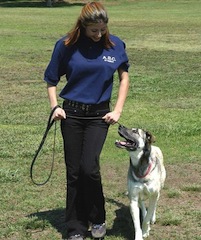
Use clear and simple directions when teaching pet owners the basics of dog training.

Dog trainers are expected to take a complex process, such as dog training, and break it into easy-to-understand terms–this is hard! The better you are at breaking complex behaviors into simple nuggets, the faster your clients will retain knowledge. Voila!

But can you effectively explain dog training easily?  Of course, with a few tips!

Before we begin:

In my opinion, dog trainers are expected to possess a higher understanding of learning theory, ABCs of learning (Antecedent, Behavior, Consequence), and so forth. Remember, clients are not expecting to become mini dog trainers. They just want their dogs to stop pulling on the leash and come back to them when called (this is why they enrolled in the class).

You’re not undermining the meaning or power of dog training. You’re actually doing the exact opposite. It takes great skill to understand a complex process and then turn around and explain it in easy terms.


 Three words: keep it simple.


Refrain From Using Learning Theory Jargon

Pet parents zone out when we use learning theory terms. If you don’t believe me, try saying this during your next class, “Let’s teach an incompatible behavior using negative punishment to prevent jumping. To begin, we choose an antecedent, which elicits a behavior for a desired consequence. Who wants to volunteer to go first?” Clients will shrink back and look at one another. They are totally confused. 🙂

Instead, give clear directions in terms pet parents can relate to and understand, such as:

  • “We are going to teach your dog to keep four feet on the floor instead of jumping up. When any of your dog’s feet leave the ground, you’ll walk away from him. Once all four feet are on the ground, you’ll click and toss him a treat.”
  • Clients are learning “feet leave ground, I leave (neg punishment).”  “Feet stay on ground, I stay and click/treat (positive reinforcement).” Voila. Simple problem-solving they can use to decrease a behavior, such as barking and so on. 🙂

Use Analogies Often

I’ll admit it: I’m an analogy queen. I use them for everything 🙂 Analogies are a comparison showing a similarity, which can help explain meaning and how it relates to real life. OK, I may have lost you in that sentence so let me bring you back by keeping it simple.

Politely greet dogs:

  • Refrain from petting dogs on top of the head. This is rude in doggie language.
  • Think about it this way: What if I petted you on top of the head instead of shaking your hand? You would think I was crazy right?
  • Same thing with dogs. Touch dogs under the chin instead.

Give Simple Instructions

Keep explanations and stories to a minimum. A person can only absorb so much knowledge in an hour. A few years ago, I completed a Tag Teaching seminar and it literally changed my life.

When explaining anything:

  • Explain using 5 or less words.
  • Demo using the same 5 or less words (demo with a dog and person).
  • Ask a student to demo using the same 5 or less words.
  • Ask each student to practice with his dog (5 reps).

Example:  Teaching “Touch”

  1. Explain: Dog touches nose left palm.
  2. If students become confused, break down the behavior even further. Nose left palm.
  3. For reps, I ask clients to count out 5 treats (this equals 5 reps).

What are your tips for effectively teaching clients about dog training? Please share!

Filed Under: Clients, Training Tagged With: best dog trainers, best tips for dog trainers, dog trainer, dog trainer's corner, dog training, how to become a dog trainer, how to become a dog trainer. beginner dog trainers, tips for dog trainers, top dog training tips

Dealing With Learned Helplessness In Dogs

October 29, 2014 by Fanna Easter

Learned Helplessness

Shut Down Dogs
crazybboy/Adobe Stock

Learned helplessness is the condition where a dog has been repeatedly exposed to a scary stimulus and has learned he no longer has control over the adverse situation. The dog shuts down and becomes helpless, knowing he can’t change the outcome.

Dogs can shut down during group dog training classes, private lessons and even puppy playtime. As your dog’s voice, you should learn what causes dogs to shut down and how to prevent it.

What is Learned Helplessness?

Dogs either fight or flight when they encounter a scary trigger. However, there’s a new response I’m seeing more and more of during my dog training sessions. It’s freeze or shut down. Dogs that have learned to become helpless basically giving up, flop over, and hope the scary trigger goes away and doesn’t hurt them.

[perfectpullquote align=”full” cite=”” link=”” color=”” class=”” size=””]People see the dog giving up and mistakenly assume the dog has learned to stay still or behave. Oh, but it’s far from it.[/perfectpullquote]

Can you imagine being so scared, your entire body shuts down, you go limp, you roll over and you wish with everything you have that the scary thing would leave you alone? Wow. That’s terrible right!?

Well, I’m seeing an increasing amount of learned helplessness in dogs introduced to scary triggers. Many times, dogs shut down at the vet’s office, on a groomer’s table, or during class because they’re so confused or scared that they simply give up. People see the dog giving up and mistakenly assume the dog has learned to stay still or behave. Oh, but it’s far from it. The dog was pushed way too far.

What Does a Shut Down Dog Look Like?

When dogs shut down, they usually become frustrated and display calming and appeasement signals. Dogs will usually begin with subtle versions of calming signals to indicate they’re confused and scared. If the scary stimulus continues, their calming signals become more apparent, such as an increase in panting, salivation and sometimes vocalization. You may also notice their:

  • Tails tucked between their legs
  • Ears pinned back against their head
  • Body weight shrinks backwards
  • Bodies flop on the floor and become very still

What Causes Learned Helplessness in Dogs?

Any number of triggers can cause a dog to shut down, including:

  • Loud echo
  • Sound of a clicker
  • Other dogs being too close
  • Strange smell (we may never discover this one)
  • Chronic anxiety caused from past experiences during dog training
  • Combination of triggers

Shutting Down vs. Learning a Incompatible Behavior

Let’s be crystal clear here. There’s a major difference between shutting down and learning an incompatible behavior—huge difference. Teaching an incompatible behavior means teaching a dog to sit instead of jump or target your hand instead of pulling on a leash.

The dog has a choice in this situation, and is a willing participant in the learning process. Shutting down means the dog is not a willing participant in the learning process, and is so confused he gives up and flops on the floor wishing you (or whatever the stimulus causing him to shut down) goes away.

How to Prevent Dogs From Shutting Down

Whether you’re a dog trainer or dog owner, it’s so important to become fluent in dog body language and notice the nuances before the dog becomes stressed. The moment you notice your dog is stressed by a trigger, look at your dog’s environment for the trigger. What is causing your dog to stress out? Once you identify it, remove it.

If a dog is stressed with another dog too close, ask the other dog to move away from the stressed dog. If the trigger is a loud sound, move the scared dog further away from the sound or use visual barriers to calm a stressed dog.

While some stress is a good thing and is actually needed during the learning process, we’re talking about beyond normal stress levels that border into anxiety here. When you’re stressed or anxious, you can’t learn. It’s impossible. Think about it: If you’re scared of spiders and I hold a tarantula about 3 feet from you while teaching you how to recite Shakespeare, would you remember a word I said? Bingo, that’s the feeling right before you shut down. 🙂

If Your Dog Doesn’t Recover

If a stressed dog becomes even more frantic when triggers are removed, take your dog outside for a walk or remove him from the situation. Then, try to identify exactly what caused him to shut down.

If you’re a dog trainer, ask the owner to step outside the session with her dog and come back to watch until the session ends. Afterwards, ask the owner to list out any known triggers that cause anxiety and begin a simple desensitization program for each trigger. Begin slowly and remember desensitization always works. If it’s not working, it’s not being done right, so take a deeper look at the process. When in doubt, split a behavior, which means make it even simpler.

If, at anytime, a dog becomes worse or does not improve, I recommend partnering with a qualified animal behaviorist.

How do you prevent a dog from shutting down? I want to hear from you. 🙂

Related Posts: How to Train Fearful Dogs

Filed Under: Behavior, Clients, Training Tagged With: best dog trainer tips, dog behavior, dog trainer, dog trainer's corner, fearful dogs, how to train a scared dog, my dog is scared, shut down dogs, top dog trainer tips, training a fearful dog, training scared dogs

3 Behaviors All Dog Trainers Should Know

October 27, 2014 by Fanna Easter

Make Sure Your Clients Know These BehaviorsThree Behaviors All Dogs Should Know

Do you want to spice up your Basic Family Manners Class? Are you bored teaching the same foundation exercises over and over again? Don’t you ever feel like you’re forgetting something? Are your dogs still pulling on a leash and jumping up on people? Here ya go! Learn three new behaviors all dogs should know!

Body Handling

While this is mostly covered in Puppy Class, we forget to cover in Basic Family Manners Class geared for dogs six months and older. Body handling means a dog learns to allow a person to touch, handle and restrain his body. Trust me, it’s not fun having a dog bucking around the room when you’re trying to apply eye medicine or brushing mats out of his coat. 🙂 Plus, your vet and vet tech will thank you profusely!

Body handling teaches a dog to stand still while being examined at the vet’s office, brushed at the groomers, having nails trimmed, having teeth brushed, having medicine and ointments applied to the eyes or ears and so on. Many dogs can learn to remain still for blood withdrawals and injections. We just need to teach the dog what is expected during these procedures.

How to teach:

  • As you touch your dog’s shoulder, click and treat (repeat 5 times in a row).
  • Touch his nose, click and treat (repeat 5 times in a row).
  • Touch his front foot, click and treat (repeat 5 times in a row).
  • Touch his tail, click and treat (repeat 5 times in a row).

Move forward until:

  • Touch your dog’s nose, foot, tail or shoulder for 1 second, then click/treat.
  • Continue until you can touch longer or look in his ear or mouth for longer, then click/treat.

Park Your Dog

During the first week of Basic Family Manners, I teach “Park Your Dog.” We all know that Week One is usually the loudest and rowdiest class by far so teach pet parents how to teach their dogs to calm themselves. I explain how to teach it, demo with the rowdiest dog in class, and then ask pet owners to practice for 5 minutes while I walk around providing feedback. Then I ask owners to “Park Your Dog” during lecture time and when they first arrive at class.

How to teach:

  • Step on your leash about halfway up to your dog (your dog should have 3 feet of extra leash).
  • Click and treat your dog the instant the leash becomes loose (Tip: Instead of watching your dog, feel when the leash tightens and loosens under your feet. The moment you feel slack in the leash, click/treat!).
  • That’s it! Bingo, you are rewarding calm and quiet behavior!

Additional troubleshooting:

  • Dog still jumps up on you, shorten the leash.
  • Dog continues to pull on leash, your timing is probably off a bit. Click and treat every time the leash is loose.
  • My dog is still pulling, call his name and click/treat five times in a row. Now you have his attention, so keep it by rewarding frequently.

View demo video and additional training tips here.

Collar Pressure

I love teaching this behavior, especially for big dogs and little pet parents. 🙂 Having a large dog is tough as he seems to always pull you forward even when teaching him polite leash manners. Well, problem solved, this behavior teaches a dog to follow collar pressure instead of pulling away from it.

Step 1: Touching your dog’s collar is a good thing!

  • Touch your dog’s collar, next click and treat.
  • Try this 10 times in a row.

Step 2: Following the pressure on the dog collar.

  • Apply pressure to the dog’s collar the opposite way he is standing. Use light pressure, such as holding a door open. You are not pulling hard per se, but more like restraining.
  • Immediately click and treat when your dog follows the direction of pressure (as the dog moves towards the pressure, so that you are no longer applying pressure to your dog’s collar).
  • Try this 10 times in a row, remember to click and treat each time.

Step 3: Your dog now follows you on the leash.

  • Touch your dog’s collar, as if you are moving him away from something, such as an open door.
  • Immediately click and treat when your dog follows the direction of pressure (he moves towards your hand instead of pulling opposite of you).
  • Try this 10 times in a row, remember to click and treat each time.

View demo video and additional training tips here.

Dog trainers, bark back! What behaviors would you like to teach in class?

Filed Under: Clients, Training Tagged With: beginner dog trainer recommended reading, blogs for dog trainers, clicker training, dog trainer, dog trainer corner, dog trainers, dog training, dog training advice, Dog Training Tips, for dog trainers, how to become a dog trainer, reading for dog trainer, top dog trainer articles, want to become a dog trainer

How to Park Your Dog

October 24, 2014 by Fanna Easter

Train Your Dog to Stay

Train Your Dog to Stay

As a professional dog trainer, if I had to narrow down the top behavior all dogs should know, I would say parking your dog would be the first one! Trust me, “Come When Called” is probably right up there with “Park Your Dog.” However, this behavior will teach your dog to stay with you.


 “Park Your Dog” is a great way to bring your dog’s arousal level down. It’s like taking a yoga breath for your dog.


Why Should I “Park My Dog”?

“Park Your Dog” is a great way to bring your dog’s arousal level down. It’s like taking a “yoga breath” for your dog. Use this dog behavior when your dog becomes overwhelmed by visitors or anything, really! When teaching hyperactive dogs to be calm, many folks ask them to sit still. This is tough, as they are learning how to manage their extra energy and excitement. So next time your dog tries to jump on guests, “park your dog.”

Just by teaching your dog this simple behavior, your dog will learn

  • Self control (teaching your hyper dog to relax)
  • Polite greetings of people (not to jump on people or you)
  • Polite leash manners (not pull on the leash)
  • Ignore other dogs
  • Stay with you
  • Prevent excessive barking

How do I teach “Park Your Dog”?

  1. Step on your leash (about half way up to your dog, your dog should have 3 feet of extra leash).
  2. Click and treat your dog the instant the leash becomes loose. Tip: instead of watching your dog, feel when the leash tightens and loosens under your feet. The moment you feel slack in the leash, Click and treat!
  3. That’s it! Bingo, you are rewarding calm and quiet behavior!

Additional Troubleshooting:

  • Dog still jumps up on you, shorten the leash.
  • Dog continues to pull on leash, your timing is probably off a bit.  Click/treat every time the leash is loose.
  • My dog is still pulling, then call their name and click/treat five times in a row.  Now you have their attention, so keep their attention by rewarding frequently.

VIDEO: How to Teach “Park Your Dog”

When can you park your dog?

  • While talking to someone at the park
  • Having guests over
  • Outdoor dining
  • Paying at the pet store or vet’s office
  • During group class lecture, we ask pet parents to “park their dog” while listening to instructions

I want to hear from you! When should you park your dog?

Filed Under: Dogs, Training Tagged With: clicker training, dog behavior, dog trainer, dog training, Dog Training Tips, how to train a dog, how to train a puppy, how to train your dog, how to train your puppy, information about dogs, obedience training, puppy tips, puppy training, puppy training tips, Rottweiler training

Handling Difficult Dog Training Cases

October 23, 2014 by Fanna Easter

Resolve Your Client’s Problem

Handling Difficult Dog Training Cases
Why is this dog getting worse?!

Q:  Help! I’m frustrated and ready to tear my hair out!

I’m working with a difficult dog training case right now, and it seems the dog is not improving. The owner is upset and the dog continues to try to bite me! What should I do?

A: Every dog trainer has those moments so don’t get frustrated. 🙂

Sometimes, I’m too close to a client and her dog so I need to gather different perspectives from other dog trainers.

If I notice a dog is not improving during or after one session, it’s my job to stop and find what will work for this particular dog or puppy.

1. Videotape your training sessions.

Once home, play back in slow motion. You’ll be shocked at specific body language that you or the pet parents are using that triggers the dog. By watching this video, you’ll see what really happens, as dogs are fast. Plus, when you’re feeling stressed, as you want to show results quickly and the pet parents are frustrated, this can be a hot mess of confusion for all, especially the dog. I hate to say this, but this is all too common. You are not alone. 🙂

2. Once you arrive at your client’s home, take 5 slow deep breaths.

Yes, we hold tension. Shallow breathing, holding our breath, and tense shoulders become a cue to the dog that something bad is going to happen. Plus, you’ll let go of all that stress.

3. Refer the dog to a veterinary behaviorist.

These folks work with difficult cases everyday! Once the referral has been completed, the veterinary behaviorist will recommend protocols at home (this is a vital part of teaching new behaviors). This is where you come in: you will be this expert’s eyes and ears. If any questions, partner with him. I wish more dog trainers used this option as we could resolve difficult cases so much quicker.

Filed Under: Clients, Training Tagged With: dog aggression, dog trainer, dog trainer advise, dog trainer tips, dog trainer tips from a dog trainer, dog trainer's corner, dog trainer's guide, handling dog aggression, how to become a dog trainer. beginner dog trainers, professional dog trainer tips, tips for dog trainers

  • « Previous Page
  • 1
  • 2
  • 3
  • 4
  • Next Page »

About

Dog Training Nation is a community of dog trainers, dog owners and dog lovers. Our mission is to provide trainers and owners valuable information to enrich dogs' lives. We cover a range of topics, from socializing puppies to dealing with aggressive dog behavior to selecting the best dog products. It is our hope you share our content to make the dog and owner world a better place.

​

Facebook

Video

Dog Training Nation is a dog training blog for pet owners and dog lovers. We cover a range of topics from puppy socialization tips to dog aggression to dog health. It is our hope you share our content to make the world a better place for dogs.

Dog Training Nation

Quick Links

Dog Training
Dog Behavior
Dog Training Videos
Become a Dog Trainer
About
Contact Us

Copyright © 2026 · Lifestyle Pro Theme on Genesis Framework · WordPress · Log in