Dog Training Nation

In Dogs We Trust

  • Home
  • Training
    • Dogs
    • Puppies
    • Clients
  • Behavior
    • Breeds
  • Health
  • Safety
  • Resources
    • Equipment
    • Books
  • Dog Training Videos
  • About
You are here: Home / Archives for dog trainers

3 Behaviors All Dog Trainers Should Know

October 27, 2014 by Fanna Easter

Make Sure Your Clients Know These BehaviorsThree Behaviors All Dogs Should Know
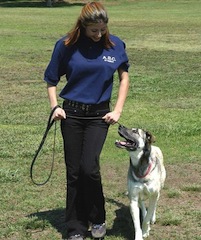
Do you want to spice up your Basic Family Manners Class? Are you bored teaching the same foundation exercises over and over again? Don’t you ever feel like you’re forgetting something? Are your dogs still pulling on a leash and jumping up on people? Here ya go! Learn three new behaviors all dogs should know!

Body Handling

While this is mostly covered in Puppy Class, we forget to cover in Basic Family Manners Class geared for dogs six months and older. Body handling means a dog learns to allow a person to touch, handle and restrain his body. Trust me, it’s not fun having a dog bucking around the room when you’re trying to apply eye medicine or brushing mats out of his coat. 🙂 Plus, your vet and vet tech will thank you profusely!

Body handling teaches a dog to stand still while being examined at the vet’s office, brushed at the groomers, having nails trimmed, having teeth brushed, having medicine and ointments applied to the eyes or ears and so on. Many dogs can learn to remain still for blood withdrawals and injections. We just need to teach the dog what is expected during these procedures.

How to teach:

  • As you touch your dog’s shoulder, click and treat (repeat 5 times in a row).
  • Touch his nose, click and treat (repeat 5 times in a row).
  • Touch his front foot, click and treat (repeat 5 times in a row).
  • Touch his tail, click and treat (repeat 5 times in a row).

Move forward until:

  • Touch your dog’s nose, foot, tail or shoulder for 1 second, then click/treat.
  • Continue until you can touch longer or look in his ear or mouth for longer, then click/treat.

Park Your Dog

During the first week of Basic Family Manners, I teach “Park Your Dog.” We all know that Week One is usually the loudest and rowdiest class by far so teach pet parents how to teach their dogs to calm themselves. I explain how to teach it, demo with the rowdiest dog in class, and then ask pet owners to practice for 5 minutes while I walk around providing feedback. Then I ask owners to “Park Your Dog” during lecture time and when they first arrive at class.

How to teach:

  • Step on your leash about halfway up to your dog (your dog should have 3 feet of extra leash).
  • Click and treat your dog the instant the leash becomes loose (Tip: Instead of watching your dog, feel when the leash tightens and loosens under your feet. The moment you feel slack in the leash, click/treat!).
  • That’s it! Bingo, you are rewarding calm and quiet behavior!

Additional troubleshooting:

  • Dog still jumps up on you, shorten the leash.
  • Dog continues to pull on leash, your timing is probably off a bit. Click and treat every time the leash is loose.
  • My dog is still pulling, call his name and click/treat five times in a row. Now you have his attention, so keep it by rewarding frequently.

View demo video and additional training tips here.

Collar Pressure

I love teaching this behavior, especially for big dogs and little pet parents. 🙂 Having a large dog is tough as he seems to always pull you forward even when teaching him polite leash manners. Well, problem solved, this behavior teaches a dog to follow collar pressure instead of pulling away from it.

Step 1: Touching your dog’s collar is a good thing!

  • Touch your dog’s collar, next click and treat.
  • Try this 10 times in a row.

Step 2: Following the pressure on the dog collar.

  • Apply pressure to the dog’s collar the opposite way he is standing. Use light pressure, such as holding a door open. You are not pulling hard per se, but more like restraining.
  • Immediately click and treat when your dog follows the direction of pressure (as the dog moves towards the pressure, so that you are no longer applying pressure to your dog’s collar).
  • Try this 10 times in a row, remember to click and treat each time.

Step 3: Your dog now follows you on the leash.

  • Touch your dog’s collar, as if you are moving him away from something, such as an open door.
  • Immediately click and treat when your dog follows the direction of pressure (he moves towards your hand instead of pulling opposite of you).
  • Try this 10 times in a row, remember to click and treat each time.

View demo video and additional training tips here.

Dog trainers, bark back! What behaviors would you like to teach in class?

Filed Under: Clients, Training Tagged With: beginner dog trainer recommended reading, blogs for dog trainers, clicker training, dog trainer, dog trainer corner, dog trainers, dog training, dog training advice, Dog Training Tips, for dog trainers, how to become a dog trainer, reading for dog trainer, top dog trainer articles, want to become a dog trainer

Should a Beginner Dog Trainer Take Aggression Cases?

October 20, 2014 by Fanna Easter

Aggressive Dog Training

Training Aggressive Dogs
Grrr.

I’m asked this question by novice dog trainers several times a week. My short answer is no. Shocking, I know, but not discouraging, trust me. Let me explain why I feel beginner dog trainers should not take aggression cases, just not yet.


 Beginner dog trainers must accomplish critical foundation skills first!


What Does Beginner Dog Trainer Mean?

To me, a beginner dog trainer means he’s recently graduated from a dog training school or university, or currently mentoring with an experienced dog trainer. He has learned foundation skills, such as learning theory and how to apply it to everyday circumstances. After graduating, he is now learning how to practice foundation exercises with many different dogs and people, as they are all different.

Focusing on Foundation Behaviors

Foundation behaviors focus on teaching people how to apply basic learning theory to shape polite canine behaviors. That sentence was a mouthful, but this is what beginner dog trainers must accomplish first before accepting aggression cases.  Let me drill down further.

The truth of the matter is clients enroll in classes or hire you because you will “fix” their dog issues. Take that in for a moment, that’s a lot of pressure. Now, ball that pressure up with different dog and human learning styles — yikes! Take all that pressure even further. Dog trainers must be able to offer another way of thinking or different solutions quickly for a particular behavior. That’s plenty of pressure without topping it off with dog aggression.

There’s Plenty of Time, Later, for Aggression Cases

For some reason, dealing with aggression cases is “sexy.” Dog trainers wear it as a badge of honor. Trust me, it’s not sexy when you’re over your head in a difficult situation.

There will be plenty of time later. Right now, focus on different types of adult learning styles, such as visual, auditory and kinesthetic learning, which are part of the larger picture. Then focus on the next layer, which is teaching adults to use logic and reasoning even if this means saying the same thing different ways. It’s also important to interpret human body language.

Does your client really understand what you just said? Interpret his body language:

  • Is he just looking at you or his feet?
  • Nodding or eyes are glazed over?
  • Is he stepping back from you or standing still?
  • Is he smiling or rolling his eyes?
  • Is he participating or shrinking back?

Most importantly, is he able to demo what you just explained to him? That is the true answer! If not, he didn’t understand so it’s vital to rephrase without sounding condescending. Yes, this takes skill and finesse so practice and practice some more. 🙂

Now learn to successfully identify, interpret body language and change thinking patterns for naysayers (“My dog CAN NOT do that”), cynical thinkers (“Treats don’t work”), non-participants (“It’s okay, we’ll just sit here”), chronic interrupters (Blurting out “But, what if…..”) and show offs (“I volunteer to demo again!”).

Then, you have the dogs. Each dog learns differently so learn how to demo different ways to shape, capture and lure a down behavior with different dogs (short, long, pulling, shut down, tall, scared). And if a demo dog moves away from you, it’s okay. Return the dog back to his owner. You’re not expected to have a magic wand so all dogs love you. 🙂 What about pulling dogs? What tips do you have for Larry the Labrador that insists on pulling Grandma around? But Grandma has tried all that, now what?

So now you’re exhausted just reading this. Trust me, there is plenty of time for aggression cases. And if you think all the above is hard, increase this difficulty by 10x and now you have a true taste of  an aggression case. With aggression cases,  you have emotion, frustration and denial. That’s just on the human side.  The poor dog is depending on you to help.

Take your time to learn and implement foundation exercises. It’s worth it!

Filed Under: Clients, Training Tagged With: become a certified dog trainer, continuing education for dog trainers, dog trainer, dog trainer advise, dog trainer tips, dog trainer's corner, dog trainers, dog training, how to become a dog trainer, novice dog trainers, service dog trainer, tips for dog trainers, what should all dog trainers know

3 Dog Obedience Training Styles

September 29, 2014 by Fanna Easter

Different Dog Trainers

Dog TrainersLet’s chat about three different dog trainers and their preferred dog obedience training styles. I will include my training style too and, I will admit, I feel a bit intimidated comparing my training style to both of these pioneers in dog training. So, here it goes!

Dog Trainer: Karen Pryor

Karen was instrumental in educating the dog obedience world about clicker training, as she was a dolphin trainer. Not only did Karen Pryor bring clicker training to the masses, she was also the driving force behind scientific research on training new behaviors. Clicker training means to mark a behavior with a click. The click means two things: I like what you did and you earned a treat. Karen does not use food to lure a dog into a behavior. She is more hands-off and will shape (reward small steps toward a final behavior like teaching a dog to walk politely on leash) and capture (click and treat when a finished behavior is offered like a dog laying down). The absence of a click means the dog did not perform the behavior correctly. Dogs quickly learn to work for the click.

Dog Trainer: Zak George

Zak George has taken social media by storm with his dog training videos on YouTube. Also, Zak has starred on SuperFetch, which airs on Animal Planet and CBBC’s “Who Let the Dogs Out.” He shows no signs of stopping, appearing on numerous prime time TV shows, getting the message out that positive reinforcement dog training methods work! His energy is fabulous, and his videos are on point so pop in and watch his YouTube channel at Zak George’s Dog Training Evolution!

Dog Trainer: Fanna Easter

About 90% of the time, while teaching classes, I recommend a clicker to mark behaviors, as dogs learn so fast using this method. I do use lures mostly when instructing pet parents how to teach their dogs to lie down as a first step to loose leash walking or when a dog becomes confused. When training my dogs, I use a clicker 99.9% of the time. When teaching people how to train their dogs, I find people will move and fiddle around when they become stressed so I recommend food lures to redirect their nervous energy. Having a dog follow a food lure will redirect the dog (decreasing the dog’s stress) while providing a moving outlet, decreasing the pet owner’s stress — a win-win! Once the fiddling around stress has successfully stopped, we go back to using the clicker.

Tell us about your dog obedience training style in the comment section below!

READ ALSO: Dog Obedience Training

Filed Under: Dogs, Training Tagged With: dog obedience training, dog trainers, dog training, fanna easter

About

Dog Training Nation is a community of dog trainers, dog owners and dog lovers. Our mission is to provide trainers and owners valuable information to enrich dogs' lives. We cover a range of topics, from socializing puppies to dealing with aggressive dog behavior to selecting the best dog products. It is our hope you share our content to make the dog and owner world a better place.

​

Facebook

Video

Dog Training Nation is a dog training blog for pet owners and dog lovers. We cover a range of topics from puppy socialization tips to dog aggression to dog health. It is our hope you share our content to make the world a better place for dogs.

Dog Training Nation

Quick Links

Dog Training
Dog Behavior
Dog Training Videos
Become a Dog Trainer
About
Contact Us

Copyright © 2026 · Lifestyle Pro Theme on Genesis Framework · WordPress · Log in