Dog Training Nation

In Dogs We Trust

  • Home
  • Training
    • Dogs
    • Puppies
    • Clients
  • Behavior
    • Breeds
  • Health
  • Safety
  • Resources
    • Equipment
    • Books
  • Dog Training Videos
  • About
You are here: Home / Archives for dog training

Help! My Dog Is Afraid Of Walking Through Doorways

August 30, 2017 by Fanna Easter

Dog Training Tips for Dogs Afraid of Doorways
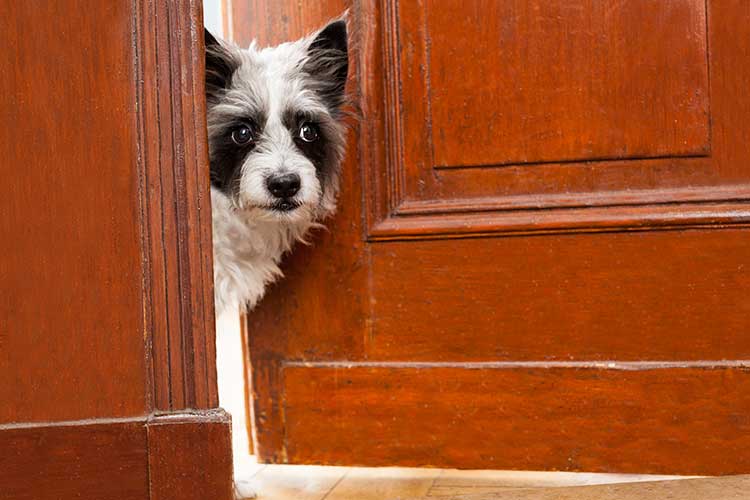
Dog Afraid of Thresholds
javier brosch/Adobe Stock

When approaching narrow spaces, some dogs will suddenly stop and refuse to walk forward while others will run through doorways quickly with their tails tucked and ears pinned back. Either way, both types of dogs are afraid to walk through doorways and it’s essential to positively change their behavior to increase their quality of life.

What Causes This Fear?

As humans, we assume hundreds of reasons why dogs behave a certain way, which is unfair to dogs. Let’s remove our anthropomorphic tendencies and try to understand the cause behind a dog’s fear of walking through thresholds.

Fearfulness is the main cause of your dog’s behavior. We can assume hallway echoes, loud noises, loudly slamming doors and many other reasons are the cause, but fearfulness is the real cause. When dogs are fearful, they may overreact to many things. When fearful dogs are exposed to scary doorways or entrance ways several times, they may develop anxiety. If a dog is punished when he’s scared of a scary situation, his anxiety deepens.

How to Teach Dogs to Love Walking Through Doorways

Regardless of why your dog became afraid of walking through doorways, it’s imperative to teach him to love walking through them. Grab super yummy treats, such as cheese cubes, deli lunch meat or hot dogs, and chop into pea-sized bites. Treats are a dog’s paycheck, so use the yummiest treats possible.

Start teaching your dog this behavior inside your home, using hall and doorways. Even though your dog may not be fearful of walking through indoor entrances, it’s a safe place to start changing your dog’s behavior.

Hold a treat in front of your dog’s nose, and lure him through the doorway. If your dog is too scared, click and treat your dog when he walks close to a doorway. Slowly shape this behavior until your dog will walk through the entrance.

Once your dog is comfortable walking through indoor entrances, leash your dog and practice outside. Walk out the back door and click as your dog walks through. Even if he slinks through the doorway, he’s being brave and choosing to walk through the doorway.

Pairing good things (yummy food) with scary things (entrances) will positively change your dog’s behavior. Think about it this way: If it rains $100 bills while you’re walking through a haunted house, you will learn that haunted houses are not scary. 🙂

What Doesn’t Work

Never force a dog through a doorway; your dog is scared. Back away from the door, regroup by grabbing treats and lure your dog inside. Ideally, you should practice this behavior before he has to walk through scary doorways, such as the vet clinic.

Take 1-2 minutes each day, and make doorways and entrances fun to walk through!

WATCH: Tips For Dogs Afraid To Walk Through Doorways

Filed Under: Behavior, Training Tagged With: anxiety in dogs, dog afraid of threshold, dog afraid to walk through doorways, dog anxiety, dog behavior, dog refuses to walk through threshold, dog scared of door, dog scared of entrances, dog training, dog who is afraid of doorways, dog won't walk through door, how to teach a dog, how to train a dog, how to train a dog to come, teach a dog, train a dog

Best Dog-Friendly Air Freshener: It Works Everywhere

August 28, 2017 by Fanna Easter

Indigo Wild Air Freshener Review

Wild Indigo Air Freshener Review
Carlos Die Banyuls/Adobe Stock

Sharing our homes and vehicles with dogs can get a bit smelly. While dogs should have minimal body odor, they can still emit noxious gas at times. Plus, a wet dog can smell musty for hours and that smell lingers for days. Instead of using chemical-filled plug-in air fresheners or spraying synthetic air fresheners frantically, give this natural option a try.

Zum-tastic Air Freshener

As a professional dog trainer, I’ve tried thousands of dog-friendly air fresheners. Most products mask odors instead of eliminating them, and they just don’t cut through stinky dog smells quickly and effectively enough.

When searching for the perfect dog-friendly air freshener, I researched natural options that eliminated odors and left a pleasant fragrance behind. Since dogs have an amazing sense of smell, I found chemical and synthetic air fresheners caused dogs to sniff, cough and generally avoid a previously sprayed area. This was a hint that something was wrong. I tried several natural air fresheners, but they all left a light scent that just didn’t cut through dog farts—sorry to be so candid.

After years of searching, I found my favorite natural air freshener ever! Look no further: You must try Indigo Wild YUM MIST doggie spritzer. This stuff smells amazing, and contains purified water, pure essential oils and vegetable glycerin; that’s it!

Indigo Wild’s air freshener is chemical- and alcohol-free, and it’s safe enough to spray on your dog too. While the essential oil ingredient list skips specific oil names, this blend smells like frankincense with hints of lemon, patchouli and lavender. Not only will this freshener knock out odors, this clean scent will also linger for hours. Honestly, the price is extremely reasonable too. An $11 bottle lasts at least six months with daily use.

How to Use

Spritz your home with this air freshener daily. It works really well inside vehicles too. Spray your vehicle’s interior liberally when your dog is not inside. During road trips, if your dog lets a fart rip, spray one pump and it’s gone—voila! This product works so well that we use it as a bathroom spray too.

Do know I don’t work for this company nor do I receive any type of compensation for reviews or recommendations. I just love this product and company! P.S. Their dog shampoo bar smells amazing too!

Filed Under: Equipment, Resources Tagged With: air freshener safe for dogs, best air freshener for dogs, best dog air freshener, best natural dog air freshener, dog resources, dog training, Dog Training Tips, indigo wild air freshener reviews, indigo wild zum mist, pet friendly air freshener, safe air fresheners for pets, yum mist doggie spritz review

How To Greet A Dog For The First Time

August 25, 2017 by Fanna Easter

Politely Greeting a Dog

Greet a Dog
innervisionpro/Adobe Stock

As a dog lover, it’s hard to resist a furry face. The moment I see a dog or puppy, I suddenly stop in my tracks and grin from ear to ear. As I adore the dog from afar, I fight the urge to run up and pet the darling. Yes, my dog trainer self steps in and immediately reminds my dog lover side that not all dogs like to greet people and other dogs. So, I smile and walk away. It’s the best thing for the dog.

Within the dog world, polite greetings have recently changed. Instead of approaching a dog, and holding out your closed fist for a sniff, there’s a safer way to greet a dog for the first time. Not only is this greeting safer for people, but it’s also much safer for and more respectful to dogs.

What’s the Big Deal About Petting Dogs?

Many dogs strongly dislike greeting strangers; it’s just their personality. When people greet dogs, they walk straight over and start petting them. While some dogs love greetings, many dogs find greetings uncomfortable due to unwanted physical contact.

Many fearful dogs try backing away, but their leash prevents them from moving, so dogs learn to bite to stop greetings. Think about it this way: Would you be comfortable having complete strangers walk over and pat your head? That’s exactly how some dogs feel, so respect their personal space.

RELATED: Should You Treat Dogs Like Humans?

When Greeting a Dog for the First Time

When you see a darling dog, stand still and don’t make eye contact with the dog. Look over at the pet owner and ask if you can pet her dog. Pet owners who listen to their dog’s choices will promptly let admirers know their dog is not comfortable with greetings.

The pet owner may say “My dog is not friendly” or “He will jump on you.” If that’s the case, respect the pet owner’s decision to not allow greetings. Trying to convince a pet owner that you’re a dog wizard will only make the situation awkward. Just say, “Your dog is gorgeous, and I admire you for standing by your dog’s choices.”

Let the Dog Choose to Greet

If a pet owner agrees to let her dog meet you, it’s important to ask the dog first. Let the dog make the first move while you stand still. If a dog moves toward you, let the dog walk toward you and sniff your legs and shoes. Don’t bend over and pet the dog; instead bend down and let the dog greet you first.

When petting a dog, rub his chest slowly and ask the pet owner if you can give her dog a treat. Slowly stand back up, while chatting with the pet owner, and let the dog continue to sniff you.

If the dog chooses to ignore or walk away from you, respect the dog’s decision. Just say, “It’s okay, I can adore you from over here.” Forcing close physical contact will only frighten the dog even more, and he will learn humans are unpredictable. Just stand still and make light of the situation, and know you taught a fearful dog that people can be trusted. 🙂

As dog lovers, it’s so important to make good impressions, especially to all dogs.

Filed Under: Clients, Safety, Training Tagged With: dog behavior, dog training, Dog Training Tips, greet a dog, how to greet a dog, how to greet a dog for the first time, how to greet a puppy, how to meet a dog, how to teach a dog, how to train a dog, safe way to meet a dog, teach a dog, train a dog

How And When To Use A Long Dog Leash

August 23, 2017 by Fanna Easter

Walking Your Dog on a Long Leash

Long Dog Leash
DoraZett/Adobe Stock

Most pet owners feel short dog leashes are restrictive, so they dream of walking their dogs off leash. While this thought process is understandable, it’s not a safe option. Leashes are used as safety lines because they prevent dogs from running away, accidentally walking into roadways, and running up to strange dogs and people. There’s a reason states are issuing mandatory leash laws and that’s because leashes save dogs’ lives. The solution? Use a long dog leash.

Walking a dog on a long leash will provide your dog a sense of freedom, yet keep him safely contained. Before teaching your dog to walk on a long leash, you should first understand how and when to use a long dog leash. Plus, you’ll need to teach your dog a certain skill set before wandering around.

Choosing a Long Dog Leash

Safe long leashes are between 8- to 15-feet long and are made of nylon. These leashes look like super long leashes with a soft hand loop on one end and a sturdy clip on the other end. Retractable leashes are not considered safe long leashes. They’re not user-friendly due to the fickle “stop” button and the weak leash attachments inside the handle. Safe long leashes are sold in most pet retailers and online.

Use Only With a Body Harness

To keep your dog safe, only attach a long leash to your dog’s body harness. Long leashes attached to collars are extremely harmful and can cause permanent damage to a dog’s neck. Attach a long leash to your dog’s harness back clip and not the front one (i.e. located on your dog’s chest) to prevent sudden injury.

Use a Long Line Once a Dog Has Learned Polite Behaviors

Long leashes provide dogs more freedom, but dogs must have a certain skill set before walking 15 feet ahead of pet owners. Once your dog will walk politely (won’t pull) on leash 90% of the time, then it’s time to practice these behaviors using a long line.

Your dog should also respond 90% of the time to the cues below to ensure you and your dog are safe during walks with a long leash.

  • Come when called
  • Leave it
  • Sit
  • Down
  • Stay

As an example, dogs walking on a longer leash are able to chase small vermin or gobble up discarded food before pet owners are able to see it. If you’re not sure if your dog will respond to these cues, it’s best to use a 6-foot nylon leash instead of a long line.

[perfectpullquote align=”full” cite=”” link=”” color=”” class=”” size=””]Think of holding a long leash like a fishing pole; pet owners must constantly adjust the line tension, depending on their dog’s location. [/perfectpullquote]

Start With a Shorter Leash First

Walking a dog on a long leash can be challenging for the pet owner because certain handling skills are needed. Before loading up your dog and going for a walk in the woods using a 15-foot leash, practice reeling in a long leash. Think of holding a long leash like a fishing pole; pet owners must constantly adjust the line tension, depending on their dog’s location. Start slow, let out 8 feet of leash at first, and then slowly increase 1-2 feet of leash based on your environment.

Long leashes should not touch the ground during walks. Keeping it above ground prevents the leash from tangling around a dog’s legs and trees. When your dog walks closer to you, gather up the extra leash in your hands. This may seem cumbersome, but with lots of practice, it becomes an automatic response as a dog moves back and forth.

WATCH: How and When to Use a Long Dog Leash

Filed Under: Equipment, Resources Tagged With: dog behavior, dog training, Dog Training Tips, how to teach a dog, how to train a dog, how to use a long leash during dog walks, long dog leash, long dog leash for outside, long leash, long line, long line dog training, teach a dog, train a dog, using a long leash dog

How To Teach Your Dog Polite Leash Manners

August 21, 2017 by Fanna Easter

Polite Leash Walking

Polite Leash Manners
Christin Lola/Adobe Stock

Dogs pull on leash because they haven’t been taught differently. It’s up to pet owners to positively teach dogs polite leash manners, and it’s actually much easier than most pet owners think. All you need are: a clicker (or marker word), 4-foot nylon leash, body harness, your dog and lots of super yummy treats. These tips will help your dog learn polite leash manners in no time!

What are Polite Leash Manners?

Polite leash manners are when dogs are able to walk on leash without pulling. This behavior is different than “heel” in that a dog is able to walk around his pet owner and sniff. Heel is very formal, which requires the dog to walk next to his pet owner’s right leg. Polite leash manners let dogs explore while staying close to their pet owners.

Choosing Dog Training Treats

Using super yummy treats will greatly increase your chances of success. Treats are your dog’s paycheck for a job well done, so reward generously. Use baked chicken, cheese cubes, hot dogs or deli meat as rewards. These treats won’t upset your dog’s tummy if given in pea-size bites during training sessions.

Also, giving your dog human food won’t teach dogs to beg. Dogs learn to beg when people give them food from their plates. 🙂

RELATED: 6 Ridiculous, Yet Common Dog Myths

My Dog Pulls Like a Freight Train

This is common, especially with larger dogs that have learned to pull on leash. Leash pulling is dangerous because strong pulling dogs can easily knock their pet owners over. If your dog pulls, try using a front clip harness. This piece of equipment will give you control during walks until your dog learns polite leash manners.

One Step at a Time

Teach your dog polite leash manners slowly until your dog understands that walking on a loose leash is rewarding. Practice indoors and start by taking one step forward and wait until your dog stops pulling on the leash. Many pet owners are so used to their dogs pulling on leash that they have a hard time understanding when to reward their dogs.

Zone in on the pressure of the leash in your hand instead of the dog’s position to you. When you feel any tension on the leash, stop and wait for your dog to release this pressure. The moment you feel this pressure release, say “yes” and give your dog a treat reward.

Pro tip: Hold your dog’s earned treat next to your leg, so he returns to you for his treat. Feeding your dog earned treats next to your leg teaches your dog that hanging around you is rewarding.

Practice taking one step forward at a time while waiting for a loose leash (i.e. no leash pressure) and always reward generously. It’s best to practice for 10 single steps forward (10 times to practice good behavior) each day. Soon, your dog will learn that a loose leash pays well!

Take 3 Steps Forward

Take 3 steps forward and wait. Usually, most dogs will pull at first, but wait for a loose leash.  Say “yes” the moment you feel leash pressure release and reward your dog. If your dog doesn’t pull on the leash during and after taking 3 steps forward, immediately click and reward good behavior. YAY!

Continue practicing for 1-2 more minutes, then end the training session. Once you’re able to walk around your home or backyard, with minimal leash pulling, it’s time to practice one step at a time in your neighborhood. Remember, neighborhoods are distracting, so take a step back to set your dog up for success. Practice daily for 1-2 minutes, then end your training session.

Reward Good Behavior Every 4 Steps

Once your dog learns to walk politely on leash, it’s important to continue rewarding good behavior or you’ll lose it. Pet owners get into a groove and forget to reward their dogs for good behavior, so set up a strategy for success.

Bring treats along during your walks, and reward your dog every 4 steps for a week. During walks, stopping and rewarding your dog after 4 steps forward provides a high rate of reinforcement and a reminder to pet owners to reward good behavior. In the following week, reward your dog every 5 steps and so on. When rewarding your dog, mark your dog’s good behavior and hold his earned treat next to your pant leg.

Give Dogs Plenty of Sniffing Time—With One Rule

Sniffing opportunities are a vital part of walks. They’re an excellent form of mental enrichment and a great reward for good behavior. Dogs have an amazing sense of smell, and they really enjoy sniffing where bunnies were playing or dogs posted “pee” social media mail. Dogs should have plenty of sniffing opportunities, but with one rule.

If your dog pulls you toward a certain spot, stop and wait for your dog’s leash to loosen. The moment you feel slack in your dog’s leash, start walking toward your dog’s sniffing spot. Once your dog is done sniffing, continue your walk.

Polite leash manners are a learned skill, so practice and reward often to maintain it!

WATCH: How to Teach Your Dog Polite Leash Manners

Filed Under: Dogs, Training Tagged With: dog pulls on leash, dog training, Dog Training Tips, how to teach a dog, how to train a dog, polite dog leash manners, polite leash manners, polite leash walking, puppy pulls on leash, stop dog pulling on leash, teaching your dog, training your dog, training your dog to give kisses

  • « Previous Page
  • 1
  • …
  • 9
  • 10
  • 11
  • 12
  • 13
  • …
  • 49
  • Next Page »

About

Dog Training Nation is a community of dog trainers, dog owners and dog lovers. Our mission is to provide trainers and owners valuable information to enrich dogs' lives. We cover a range of topics, from socializing puppies to dealing with aggressive dog behavior to selecting the best dog products. It is our hope you share our content to make the dog and owner world a better place.

​

Facebook

Video

Dog Training Nation is a dog training blog for pet owners and dog lovers. We cover a range of topics from puppy socialization tips to dog aggression to dog health. It is our hope you share our content to make the world a better place for dogs.

Dog Training Nation

Quick Links

Dog Training
Dog Behavior
Dog Training Videos
Become a Dog Trainer
About
Contact Us

Copyright © 2026 · Lifestyle Pro Theme on Genesis Framework · WordPress · Log in