Dog Training Nation

In Dogs We Trust

  • Home
  • Training
    • Dogs
    • Puppies
    • Clients
  • Behavior
    • Breeds
  • Health
  • Safety
  • Resources
    • Equipment
    • Books
  • Dog Training Videos
  • About
You are here: Home / Archives for dog training

Keeping You And Your Dog Safe During Nighttime Walks

December 30, 2016 by Fanna Easter

5 Tips for Walking Your Dog at Night

Walking Your Dog
GunjanGupta/iStock

With shorter daylight during winter, or hot 90-degree summer days, sometimes it’s best to walk your dog at night. Walking at night creates one huge obstacle though: it’s difficult to see in the dark. Many things can hide in darkness, so it’s best to take a few safety precautions before going on a nighttime walk with your dog.

1. Wear Reflective Collars & Harnesses

When it’s dark outside, it’s impossible to see moving objects in the distance. Visibility is key at night, and it’s important for drivers, cyclists, joggers and fellow walkers to see you and your dog ahead in the dark. Choose a reflective or glow-in-the-dark dog collar or harness. While white dogs reflect light better than dark-colored dogs, it’s important for all dogs to wear some type of light reflective material during nighttime walks.

These principles apply to pet owners too. Wear light-colored reflective clothes or shoes or carry a flashlight.

2. Walk on Lighted Paths

When walking your dog at night, choose lighted pathways for safety. You can find these in most parks and neighborhoods. Lighted pathways will allow drivers to see you when you’re walking near roadways, so they slow down.

Lights also provide you security. You’ll be able to see any approaching criminals, so you can react quickly. Additionally, lighted pathways will identify loose dogs, potholes, wild animals, broken glass and other harmful hazards that might be in your way.

RELATED: Walking Two Dogs at Once Tips

3. Use a Short Leash

During nighttime dog walks, it’s important to keep your dog close to you. Attach a 4-foot leash to your dog’s harness, or keep retractable leashes locked at 4 feet. Better yet, keep retractable leashes at home. They’re cumbersome during emergencies.

Dogs can navigate through darkness fairly easy, as their noses detect every scent and their ears hear every sound. Having a short leash on your dog’s harness will prevent your dog from stepping on broken glass, munching on discarded food or encountering wildlife. For you and your dog’s safety, keep your dog close to you during night walks.

4. Choose a Safe Path

Aside from choosing a lighted pathway, make sure it’s safe. Choose a path located in a safe and quiet neighborhood instead of a busy street. Safe paths should be free of loose dogs running around, barking dogs at fence lines, wildlife sightings (i.e. snakes, scorpions, raccoons, opossums) and criminal activity. Walking your dog at night may deter some criminals, but it certainly won’t stop all. Before heading out for a nightly walk, tell a friend or family member the path you’ll take and when you’ll be home.

5. Keep Your Phone in Your Pocket

Keep your phone in your pocket and ear buds at home. Unplug and enjoy this bonding time with your dog. Listening to music and talking on your phone are extremely distracting, which take your focus away from keeping you and your dog safe. Always be aware of your surroundings.

Be safe!
Filed Under: Clients, Safety, Training Tagged With: are you safe walking dog at night, dog training, Dog Training Tips, dog walk night, how to teach a dog, how to train a dog, night time walking dog safety, night time walking dogs, reflective collars dogs, reflective harness dog, should you walk dog at night, teaching a dog, tips for walking your dog at night, training a dog, walking at night tips, walking dog at night

6 Tips For Dining In Dog-Friendly Restaurants

December 28, 2016 by Fanna Easter

Dog-Friendly Restaurant Etiquette

Dog-Friendly Restaurants
IPGGutenbergUKLtd/iStock

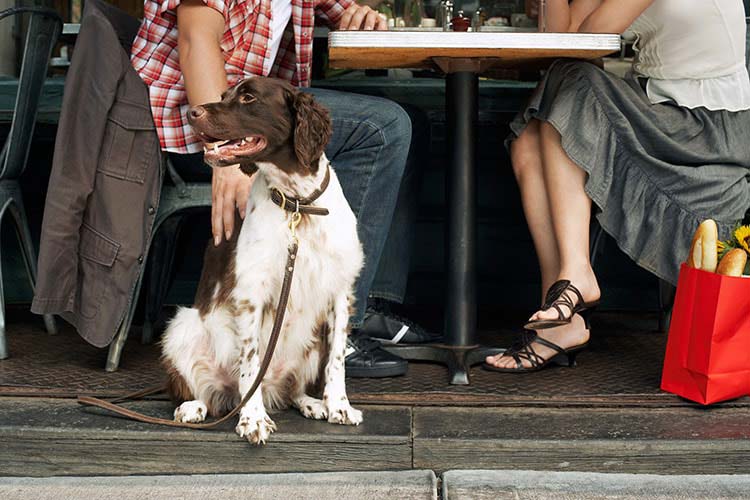
Dog-friendly restaurants are popping up everywhere, and many are now offering outdoor seating for pet owners and their dogs. Enjoying a scrumptious meal while relaxing at a restaurant with your dog is a privilege, so proper dog restaurant etiquette is a must.

1. Leashed Dogs Only

When dining at dog-friendly restaurants, keep your dog on a short leash that’s preferably 4 feet long. Short dog leashes prevent dogs from bugging nearby guests while they eat, snatching fallen food crumbs from nearby tables, or jumping on tables and servers. While it’s tempting to tie your dog’s leash to your chair or table, it’s best to attach it to yourself instead.

For smaller dogs, tie the handle around your belt loop or wrist. For larger dogs, I’d recommend attaching the handle of your dog’s leash to your belt. Unbuckle your belt and slide your belt through the leash handle, and then refasten your belt. If this is too complicated, try waist belts or simply hold your dog’s leash with one hand.

2. No Barking Please

Barking dogs will be asked to leave. If your dog barks at people or dogs, it’s best to keep him at home. Some dogs are uncomfortable in fast-paced environments even if they’re dog-friendly places. They end up hiding under chairs. Movement can scare some dogs too, especially when guests or servers walk toward your table. If, at any time, your dog becomes fearful, worried, stressed or vocal, ask your server to box your meal up to go. It’s the right thing to do for your dog. 🙂

3. Polite Manners are a Must

Dogs should sit quietly near their pet owners and relax while waiting at dog-friendly restaurants. This is tough for most dogs though because they easily get excited around people. Before going to a dog-friendly restaurant, make sure he’s able to “sit,” “down” and “stay” on cue in high distraction areas.

Additionally, your dog shouldn’t jump up on people or pull on leash. Teaching polite manners around myriad distractions may take years before a dog is comfortable enough to relax in a restaurant. Practice, practice and practice some more before expecting your dog to sit quietly for an hour. Start slow by popping into a dog-friendly cafe and practice “settle” while waiting for your order.

4. Bring a Portable Water Bowl

Dogs get thirsty, so bring along a collapsible water bowl. Ask your server for a glass of water, and pour it into your dog’s bowl. Place your dog’s bowl under your table to avoid guests’ feet or your dog from knocking it over. Replenish water as necessary, especially on warm days.

RELATED: Dogs Die in Hot Cars

5. Choose a Quiet Location

Most dog-friendly restaurants offer outdoor seating for pet owners and dogs, so choose a quiet location. Ask for a table off in a corner and away from high traffic areas. Remember, not all guests like dogs, and many may startle when seeing a dog in their path. Additionally, a quiet location prevents guests and servers from stepping on your dog, and provides a nice place for your dog to truly relax.

6. Keep Your Dog Busy

Expecting a dog to sit quietly for an hour around food, noise and fast-moving people in a strange location is impossible. Bring plenty of high-value chew toys or food stuffed toys for your dog to enjoy. Bully sticks are a great high value treat that will keep your dog busy for 10-20 minutes, depending on your dog’s chewing style. If your dog refuses to chew or lick high value treats, he may be nervous. When in doubt, ask the server to box your food up to go.

As pet owners, we represent all pet owners. Take your time and teach your dog how to politely react in a restaurant environment. It will make us all look good! 🙂

Filed Under: Clients, Resources, Training Tagged With: dog friendly restaurant etiquette, dog friendly restaurants, dog training, Dog Training Tips, how to teach a dog, how to train a dog, pets in restaurants, should you bring your dog to a restaurant, teaching a dog, tips for bringing dog to restaurants, training a dog

Seeking Free Dog Advice? Look No Further

December 16, 2016 by Fanna Easter

Top Dog Websites Every Pet Owner Should Visit

Dog Websites
ballero/iStock

Sharing your home with a dog or puppy is challenging, especially during the beginning stages. Plus, pet owners really want the very best for their dogs, and knowingly seek advice pertaining to dog training tips, latest health information, and cool new dog games and toys too. The Internet is jam-packed with information, making it difficult to find credible dog websites that provide advice based on facts and research instead of opinions and hearsay. If you’re looking for free advice about dogs, you’ll love these dog websites! Either sign up for their free newsletters or browse their websites. These experts are the real deal!

Dog Health & Nutrition Website

Health and nutrition topics are rapidly evolving within the pet industry. It’s the new trend lately. Dog nutrition is an important part of good health, so it makes sense to pair them together. When a topic becomes popular though, false statements and misinterpretations spread like wildfire. To find the latest health and nutrition information for your dog, subscribe to Monica Segal’s monthly newsletter. If managing your email inbox is a chore, you can visit Monica’s site and browse through several years of extremely important information.

Monica Segal is certified in animal health, which includes nutrition, and works with numerous veterinarian nutritionists on difficult cases. Many dog owners seek Monica’s help with nutrition when their dogs become sick either with cancer or a chronic disease. She’s had numerous success stories, and she’s an invaluable source for understanding and selecting the best supplements for your dog.

If you want to tweak your dog’s diet a bit, would like to feed your dog a raw or cooked diet, are looking for the best supplements, or just want to learn more about dog health and nutrition, then this dog website is for you!

Dog Training Website

Every dog should learn polite behaviors because they’re not born with an instruction guide. 🙂 With that in mind, it’s very common for pet owners to seek dog advice online. The Internet is packed with dog training opinions, but several can harm the relationship between pet owner and dog. Unfortunately, anyone can call himself a dog trainer and start a blog. There are no regulations within the dog training field.

When searching for dog training tips, it’s best to find sources written by professional dog trainers. How do you find them? Seek dog websites whose writers are certified. Those who actively seek out and earn national dog training certifications as well as complete yearly continuing education to maintain them are the ones you should trust.

One of the best dog websites for dog training tips is right here at Dog Training Nation (DTN). Fanna Easter has earned multiple, not just one, nationally recognized dog training and behavior certifications. Plus, Fanna started and runs her own dog training business in a large metroplex working with reactive dogs every day. DTN offers solid advice based on 20-plus years of experience and science. Our articles explain why certain dog behavior happens, how to positively change behavior and when to reach out to a certified dog trainer.

Dog Food Website

Whole Dog Journal (WDJ) is an amazing resource on just about everything pertaining to your dog, especially dog food. This grassroots magazine provides an infamous annual list of the best dog foods available within the US. WDJ folks are very particular and have strict expectations and standards when reviewing dog food. These experts review all types of dog food, such as dry kibble, canned food and treats.

An added bonus is this magazine is ad-free, meaning the editors aren’t swayed by money from large pet industry companies. All funds come from subscriptions. Honestly, this reason alone is worth subscribing to the magazine. If money is tight, subscribe to their free newsletter, which also offers monthly tips about products, nutrition and training advice.

Fun Dog Website

Daily mental stimulation is just as important as physical exercise. It keeps your dog’s brain busy and fulfilled. Food stuffed toys are an amazing mental stimulation tool. While it’s highly recommended to feed all meals using food puzzles and toys, stuffing daily snacks into these toys are a great idea too. Kong not only makes tough food puzzles and toys, but they also offer a free newsletter that provides different food stuffing recipes and tips on using their products.

Your dog will thank you for subscribing, reading and implementing advice from experts!

Filed Under: Clients, Resources, Training Tagged With: best place for dog training advice, best place for dog training tips, dog training, Dog Training Tips, free dog advice, free dog newsletter recommendations, how to teach a dog, how to train a dog, nutrition dog food advice, websites with free dog advice

Dog Breed Of The Week: Havanese

December 12, 2016 by Fanna Easter

Havanese Dog Breed Information

Havanese Dog Breed
Dorottya_Mathe/iStock

The Havanese originates from Cuba, and is known as the national dog. While it’s difficult to determine when and how Havanese dogs were exported from Cuba, we do know “Queen Victoria and Charles Dickens” shared their home with this darling breed (Havanese Club of America, 2016). It’s uncertain when the Havanese arrived in the US, but the American Kennel Club (AKC) accepted this dog breed into their club in 1996. Another interesting fact about this breed is the Havanese name serves as both the singular and plural form. 🙂

General Characteristics

For the most part, Havanese are between 8½–11½ inches tall at the shoulder and their weight varies by height. This dog breed’s coat color can come in red brindle, sable brindle, white, gold or any variation in between. Havanese have a longer coat with a bit of texture. It’s believed that Havanese are related to Bichon Frises. This long coat protects Havanese from heat and sunrays because their coats are “extremely light and soft, and insulating against the tropical rays” in Cuba (Havanese Club Of America, 2016).

It’s easy to confuse Havanese with Shih Tzus and Maltese, but if you look closely, you can certainly tell the differences right away. Havanese have a longer muzzle than Shih Tzus and have wider bone structure than Maltese. While Havanese’s coat colors may resemble other breeds, look closely at the texture and you can easily distinguish between the dog breeds.

Health

Havanese are a healthy dog breed, but they’re prone to inherited diseases like most other dogs. Common health issues with this breed include:

  • Eye abnormalities
  • Heart abnormalities
  • Hip dysplasia
  • Patellar luxation (moving kneecap)
  • Elbow dysplasia
  • Legg-Calve-Perthes (abnormal femur head)

Reputable dog breeders will test all dogs for inherited diseases before breeding them. If health screenings and tests show an adult Havanese is afflicted with any of these inherited issues, they will be spayed and neutered immediately. If someone claims their dogs have no inherited health issues, they’re lying.

Grooming Havanese

As with all long-coated dogs, Havanese need daily brushings and weekly baths. If you choose to keep your Havanese coat’s clipped short, you should maintain it every 6-7 weeks. Of course, you should also keep your dog’s nails trimmed to an acceptable length (i.e. nails shouldn’t touch the floor) and brush his or her teeth daily.

Exercise & Dog Training Needs

Even though they’re small dogs, they do need daily exercise. Plan to walk your Havanese at least 30 minutes per day, and provide mental stimulation games and puzzles during mealtime. Havanese puppies should be enrolled in a Puppy group class between 10-16 weeks of age and a Basic Manners group class between 4-6 months of age. As with all dogs, Havanese do best with positive reinforcement dog training methods.

Where to Find Havanese

Of course, adopting a Havanese from a rescue is always best because you’re saving a life. If you decide to purchase a puppy or dog, please choose a reputable Havanese breeder. It’s important to note that reputable breeders charge the same amount or less for a puppy unlike unethical breeders. Plus, responsible breeders will guarantee your dog’s health for his or her entire life and will take your puppy or adult dog. To find out more about this dog breed, please visit the Havanese Club of America. This website is packed with invaluable information about this happy little breed.

Filed Under: Behavior, Breeds Tagged With: dog breeds, dog training, Dog Training Tips, havanese breed information, havanese dog, havanese dog training, havanese puppy

Leash Corrections & Leash Pops Don’t Work

November 16, 2016 by Fanna Easter

Dog Training: The Problem With Leash Corrections

Leash Corrections Don't Work
Smitt/iStock

Punishment is an extremely controversial subject, and highly debated between parents, grandparents and even dog trainers. Most pro or con debaters quickly take a position and fiercely argue why it’s the only option available. But I don’t think anyone really hears each other between the name-calling, finger-pointing, flaming social media posts and so on.

While I’m not a parenting expert, I’m certainly an expert in dog training. With that said, I’d like to explain why leash corrections are an issue. Leash corrections are when you pull on your dog’s leash to get him to do something. They’re also called leash pops.

Before firmly digging in and protesting, please take a moment to understand why leash corrections are bad. Seeing both sides makes for a well-rounded person. Allow me to explain why and show research proving leash pops do more harm than good.

Leash Corrections Don’t Teach Dogs Anything

When correcting your dog with a leash pop, you’re not really teaching your dog anything. Many years ago, I worked for a huge pet retailer where an older and very wise District Manager leader once said, “Anyone can tell someone what he or she did wrong, but a great leader teaches him or her what to do instead.”

That resonated with me on another level. I understood those principles from a dog training perspective, but to watch a proven leader teach his team how to excel in every situation using his motto was extremely powerful.

Physical or verbal corrections will destroy your relationship with your dog. I’ve personally witnessed how leash corrections ruined the bond between dog and owner many times. Pet owners swear their dogs “appreciate fair corrections because they’re done with love.” Yet, their dogs’ body language would say otherwise.

Punishing is more rewarding to the punisher than the punished. That statement probably stings, but it’s true—even Dr. Phil agrees.

It’s Not Your Dog’s Fault

Pet owners become frustrated with their dogs, and then take their frustrations out on their dogs. Anything and everything that goes wrong during the learning process is blamed on the dog. In my 20-plus-years of dog training, I’ve only witnessed one pet owner take responsibility. Another invaluable quote I learned the hard way will always stay with me is: “As a teacher, it’s our job to teach a learner. If the learner is confused, the teacher did something wrong.”

A Valuable Lesson From Training My Fish Dribble

While completing a 6-month-long national dog training certification program, I had to train a non-canine species to perform certain tasks. Teaching a fish to perform tasks was super exciting and really challenged my animal training skills. Here’s a tiny gilled animal floating around in water that couldn’t care less what I did or didn’t do. This quote stays near my heart because it’s true: When Dribble (my blue betta) became confused, it was my job to figure out a better way.

When dogs (fish or humans) become confused, they either stop moving, choose to do something else or leave. If your dog doesn’t respond to a cue, he’s either confused or wasn’t trained to do otherwise. The learner is right, my dear reader. 🙂 As a pet owner, it’s your job to teach your dog how to co-exist politely with humans.

As for Dribble, he learned quickly and so did I! Plus, he lived a long and happy life and performed his learned behaviors every day. 🙂

Why Punishment is a Slippery Slope

Now, back to leash corrections. Most pet owners justify their uses of leash pops, or punishment, with the following reasons:

  • “My dog stopped listening to me.”
  • “He knows better.”
  • “She knows what I’m asking her to do.”

All three reasons boil down to: “My dog embarrassed me, so I corrected him.” Or “I had to chase you for 10 minutes, and I’m going to punish you because I’m frustrated” or even “How dare you do that to me?”

These are also the same reasons why dog owners scream “no” at a dog. And if you disagree, you’re not being completely honest with yourself. Are you happy when giving your dog leash pops? 99.9% of pet owners punish their dogs when disappointed. Leash corrections are used to indicate “wrong choice,” but we all know the “no” command is meaningless.

Take Responsibility

I’m aware that life isn’t filled with rainbows, unicorns and sunshine all the time. Though, I do know how we react to life is most important. Yes, your dog will chew a hole straight through your mattress, hike his leg and pee on your leg during an important presentation, and knock you down so hard that both shoes fall off (all true stories), but how you react is key.

Next time you become frustrated during a dog training session or in any other scenario, take a moment to breathe deeply. Excuse yourself or hand your leash over to a friend, walk away, and compose yourself. Once you calm down, it’s your duty to figure out a better way to teach your dog that doesn’t involve punishment. That’s what all great teachers do.

If your dog misbehaves, use that opportunity to reteach a behavior and practice it in the situation that caused your dog to run off, ignore your cue, jump up on someone or dash through the door. Don’t punish. Teach your dog what is expected of him in that situation instead. 

This is More Than Just My Opinion

Many naysayers will claim this is just my opinion. While that’s true to a certain extent, I’ve based my opinion on scientific learning principles that have been proven time and time again. Shoot, these are the same principles Dr. Phil uses with children and adults. These learning principles work for humans, dogs, cats, tigers, dolphins and even snails. We all learn the same way, and saying punishment must be used with certain breeds of dogs is completely ridiculous. And dare I say, a bit disrespectful too. All humans are taught the same, so why are we breed discriminating?

Times have changed and research has finally caught up with dog training. It’s time to embrace dog training methods that work instead of listening to or reading outdated material. Your dog deserves it. 🙂

Filed Under: Behavior, Clients, Training Tagged With: best dog trainer tips, dog leash corrections, dog obedience tips, dog trainer tips, dog training, Dog Training Tips, how to correct a dog, how to correct a puppy, how to punish a dog for bad behavior, how to punish a puppy for bad behavior, how to teach a dog, how to train a dog, positive dog trainer tips, positive dog training tips, problem with punishing your dog, problem with punishing your puppy, punishment dog, puppy obedience tips, should you correct your dog, should you correct your puppy, teaching a dog, training a dog

  • « Previous Page
  • 1
  • …
  • 21
  • 22
  • 23
  • 24
  • 25
  • …
  • 49
  • Next Page »

About

Dog Training Nation is a community of dog trainers, dog owners and dog lovers. Our mission is to provide trainers and owners valuable information to enrich dogs' lives. We cover a range of topics, from socializing puppies to dealing with aggressive dog behavior to selecting the best dog products. It is our hope you share our content to make the dog and owner world a better place.

​

Facebook

Video

Dog Training Nation is a dog training blog for pet owners and dog lovers. We cover a range of topics from puppy socialization tips to dog aggression to dog health. It is our hope you share our content to make the world a better place for dogs.

Dog Training Nation

Quick Links

Dog Training
Dog Behavior
Dog Training Videos
Become a Dog Trainer
About
Contact Us

Copyright © 2026 · Lifestyle Pro Theme on Genesis Framework · WordPress · Log in