Dog Training Nation

In Dogs We Trust

  • Home
  • Training
    • Dogs
    • Puppies
    • Clients
  • Behavior
    • Breeds
  • Health
  • Safety
  • Resources
    • Equipment
    • Books
  • Dog Training Videos
  • About
You are here: Home / Archives for dog training

How to Get Your Puppy Used to a Collar

August 22, 2016 by Fanna Easter

Training a Puppy to Wear a Collar in One Week

Puppy Doesn't Like His Collar
ChrisLeRoy/iStock

Puppies aren’t born wearing collars, so when a collar is first fastened around a puppy’s little neck, it can feel strange for her. Most puppies will bite, scratch, turn circles or refuse to walk while wearing a collar. This is totally normal behavior. As pet owners, it’s our job to train a puppy to wear a collar.

How to Teach Your Puppy to Wear a Collar

Once your puppy is home, it’s time to teach her that wearing a puppy training collar makes good things happen. Move slowly and reward your puppy often while she’s wearing a collar.

Choose the Right Puppy Collar

Puppies should wear an expandable flat buckle collar without tags at first. ID tags can be a bit distracting, as most puppies will mouth or paw at the dangling bits of metal clanging under their chins. They’re simply too distracting for an inquisitive puppy. After a week of your puppy successfully wearing her collar, then you can add ID tags.

Puppies, or all dogs really, shouldn’t wear choke chains, cloth slip collars or prong collars. They need a flat buckle collar. Harnesses are OK too, but make sure the straps don’t rub against your puppy’s skin, apply pressure to your puppy’s neck or restrict her movement.

Give Her a Food Stuffed Toy

Before introducing a collar or harness to your puppy, fill a toy with food and freeze overnight. Now, fasten your puppy’s collar in place and immediately give her the food stuffed toy to enjoy while she’s wearing her collar.

Once she’s emptied all the food from the toy, remove her collar and toy and place both up high, so she can’t reach it. Practice this several times a day. Feel free to stuff your puppy’s regular meals inside of a food toy for additional practice sessions. By pairing good things with the sensation of wearing a collar, your puppy learns that collars are harmless and pretty darn fun.

Puppy Doesn’t Like Her Collar?

If your puppy starts pawing or scratching her collar, distract her by playing a 1-2 minute game of “touch.” Distracting her without saying “stop” or “no” gives your puppy something else to do instead of worrying about the collar on her neck.

Learn how to teach the “touch” behavior in the video below. This dog training game is easy to teach and extremely useful in many different situations. The “touch” behavior is vital—so much so that it’s the first behavior I teach during dog training classes or private lessons.

WATCH: Teach Your Puppy the “Touch” Cue

https://youtu.be/d-spTywRXEo

Teach Collar Pressure = Treats

Once your puppy is completely comfortable with the sensation of a collar, it’s time to teach her that collar pressure makes treats happen. Collar pressure can cause a puppy to freak out because she may not be used to feeling pressure against her neck, which limits her movement.

Collars can scare puppies so much that they will usually hop, buck, or “pancake” on the ground and refuse to move forward. If this happens, immediately stop the pressure by walking over to your puppy or letting go of her collar, and practice the collar pressure game.

When teaching collar pressure, you’re not pulling against your puppy. Instead, you’re holding your puppy’s collar in place while your puppy pulls against it. The moment your puppy stops pulling against the collar, you click and reward your puppy.

Pulling against pressure is a natural reaction to restraint; it’s called opposition reflex. Your goal is to teach your puppy to move with pressure. This is the first step when teaching loose leashing walking and teaching your dog to walk with you while touching her collar. Plus, every time your puppy pulls against her collar, it increases her chances of injury in her neck area.

Practice this dog training behavior several times a day with super yummy treats. If your puppy balks when you reach for her collar, take a step back and teach her that collar touches are a good thing.

WATCH: Dog Training Tip: Teach Collar Pressure

https://youtu.be/I39BE4xOnLY

Attach a Leash

Always teach your puppy how to wear a collar first, then master the collar pressure game before attaching a leash to her collar. On average, it takes about a week for a puppy to feel comfortable wearing a collar and respond well to collar pressure. Attaching a leash to your puppy’s collar is a completely different lesson.  Check out this article on teaching a puppy to walk on leash for additional details.

Puppies are tiny little sponges. Take advantage and teach them that the world is full of fun!
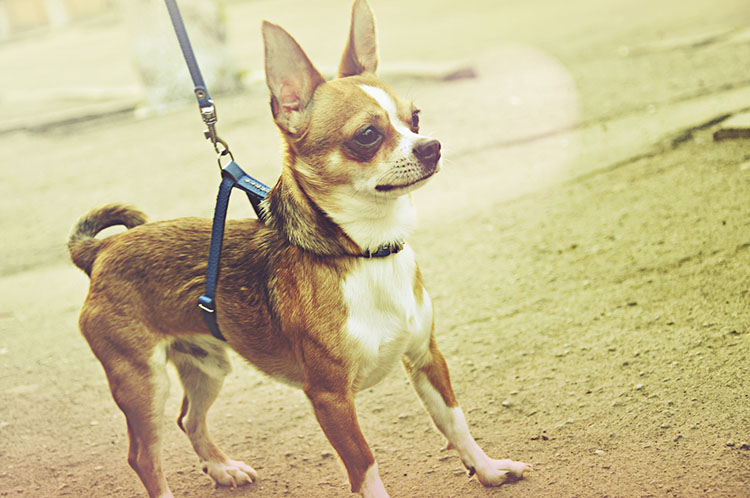
Filed Under: Behavior, Equipment, Puppies, Resources, Training Tagged With: best collar for puppy, choosing a collar for a puppy, dog training, Dog Training Tips, how to teach a dog, how to teach a puppy to wear a collar, how to train a dog, opposition reflex dogs, puppy collar, puppy collar tips, puppy dislike collars, puppy hates wearing a collar, puppy scared of collar, puppy scratches at collar, puppy training, puppy won't walk with collar, teach a dog, teach puppy how to wear a collar, teaching collar pressure dog, teaching collar pressure puppies, train a dog

What to Do When Your Puppy Won’t Walk on Leash

August 15, 2016 by Fanna Easter

How to Teach a Puppy to Walk on Leash

Leash Training a Puppy
Ollleke/iStock

Puppies refusing to walk on leash is an extremely common behavior. Walking with restricted movement due to a leash is unnatural for dogs, so we as pet owners should positively teach puppies and dogs that walking on leash is a good thing.

So many times, we snap a leash onto a puppy’s collar and take off walking, but the puppy becomes confused and tries running the opposite direction or refuses to walk. They flatten themselves onto the ground like a pancake. When we continue to pull on the leash, it causes the dog to panic. If you combine this scary scenario with a highly distracting environment, such as the park, neighborhood or vet’s office, or continue to pull on your confused puppy’s leash, you’ll teach your puppy that leashes make scary things happen.

Now, let’s start on the right paw and discuss how to teach a puppy to walk on leash. 🙂 Dog leashes are basically a safety line that keeps pets safe. They should never be used for jerking, yanking or any other type of punishment.

Leash Training a Puppy Tips

Teaching a puppy to walk on leash is pretty easy. You’ll need lots of super yummy treats, a body harness, and a six-foot nylon or cotton leash.

There are a few steps on teaching this dog behavior, so take your time and teach your puppy each step thoroughly before moving on. If your puppy or dog becomes confused, take a step or two back until your puppy is comfortable again. Understand, it’s completely normal to take a few steps backwards before moving forward again; it’s part of the learning process. I’m sure you painfully remember learning a foreign language or algebra at one point. 🙂

Also, it’s important to teach this behavior before attaching a leash to your puppy. Plan ahead and teach this puppy training skill before vet visits or walks around the neighborhood.

Step One: Introduce the Leash

Goal: Teach your puppy that leashes are positive things and leashes make treats happen.

With your dog indoors, sit on the floor and put your puppy’s leash on the floor in front of you. Whenever your puppy looks at the leash, click and give your dog a treat. If your puppy stays next to the leash (that’s a good thing), toss a treat in the opposite direction of the leash (e.g. toss treat across the room). That way your puppy must approach the leash for another click and treat. Play this game for a minute or two, then pick up the leash and put it in a location where your puppy can’t see it.

Practice this step 2-3 times per day for 3 days. By then, your puppy will run toward the leash whenever you bring it out.

Step Two: Fun Happens While Wearing a Leash

Goal: Puppy is comfortable with a leash attached to his harness or collar.

For this step, I’ll assume your puppy is already comfortable wearing a harness or flat collar. If not, take a moment and teach your dog that wearing a harness/collar is a good thing before completing this step.

Fill an interactive toy with food and freeze overnight. Now, attach a leash to your dog’s harness and let your dog drag it around the house for a bit. To make this experience positive and to keep a puppy from chewing on the leash, give your dog a frozen food stuffed toy to enjoy while wearing and dragging his leash around the house.

Once your dog has finished his food stuffed toy, remove the leash and put it away. Practice this game several times a day. You can certainly fill interactive toys with your dog’s daily meals for more leashes-make-fun-things-happen moments.

Remember, you’re not holding the other end of the leash. Your dog is learning that attached leashes are harmless and make good things appear like food stuffed toys. Practice for 3-4 days before moving onto the next step.

Step Three: Hold Other End of Leash

Goal: Puppy learns that leash pressure is fun.

By now, your dog has learned that fun things happen when a leash is present, so it’s time to hold the other end of the leash. This is the part that usually freaks some puppies out. They’re not used to limited mobility caused by leash restraint, so they pull, buck or lie flat on the ground. Teach your puppy or dog that collar pressure is a good thing by watching the video below.

WATCH: Teaching Collar Pressure

https://youtu.be/I39BE4xOnLY

Treats = Leash Pressure

You’ll need a handful of super yummy treats and a clicker. Attach the leash to your puppy’s harness and hold the leash handle in one hand. Lure your puppy around with a treat while holding the leash, and give him the treat. You’ll notice your puppy pulling ahead or lagging behind. Call your puppy to you and reward with many dog treats. Practice for 1-2 minutes and end the dog training session.

If your puppy freaks out when he feels leash tension, don’t pull the leash toward you. Instead, move toward your dog to release the pressure. Once your puppy is completely comfortable walking on a leash, you can then teach him how to walk politely on leash. Remember, crawl before walking. 🙂

Practice this step for 3-4 days and make a game out of it. Reward your puppy often like every 10-20 seconds.

Step Four: Walk on Leash Outdoors

Goal: Puppy learns how to walk on leash outdoors.

By now, your puppy should be completely comfortable walking on leash indoors, so it’s time to take leash walking outside. Practice luring and holding the other end of the leash in your backyard for several days—you’re not ready for walks in the neighborhood just yet.

You’ll notice your puppy becoming a bit more distracted, so he’ll probably feel more leash resistance while in the backyard due to him lunging toward squirrels or watching neighbors walk by. When your dog pulls, stand still and reward your dog the moment you feel less pressure on the leash. I recommend tossing a few treats in front of your feet, so your dog returns to you for rewards.

Once your puppy will walk around your backyard on leash comfortably, then you can try walking in your neighborhood.

Make walking on leash fun for your puppy, so he learns that fun things happen when leashes are present no matter where you are.

Filed Under: Behavior, Puppies, Training Tagged With: dog afraid collar, dog afraid of leash, dog freaks out on leash, dog hates leash, dog refuses to walk on leash, dog training, Dog Training Tips, dog will not walk on leash, how to teach a dog, how to train a dog, leash aversion, puppy afraid leash, puppy freaks out on leash, puppy refuses to walk on leash, puppy training, puppy will not walk on leash, teach a dog, train a dog

The Ultimate Dog Training Reward For Your Dog

August 8, 2016 by Fanna Easter

Dog Training Rewards Don’t Always Have to Be Food

Dog Training Reward
Josh Solar/iStock

Rewards are a vital part of dog training; they’re basically your dog’s paycheck for a job well done. Dogs must be rewarded whenever they choose to perform a desired behavior. Giving your dog a reward tells your dog he’s on the right track and to keep doing the rewarded behavior.

Dogs must choose their own rewards. Since each dog is different, he will find certain foods, toys and games more rewarding than others. Finding a dog’s ultimate reward isn’t always easy, but once discovered it makes learning new dog behaviors quick and fun. Finding a dog’s ultimate reward is so important that I ask pet owners this question during our first dog training session. So here it goes: what does your dog love more than anything?

Dog Training Rewards

Food Rewards

All dogs love food—even picky ones. It’s our job to experiment and find food rewards that will cause our dogs to drool, dance, offer a sit behavior or climb countertops to get to their favorite food rewards.

Dogs like fresh food. The more moisture a dog training treat contains, the better. High percentages of moisture make the treat smell stronger, and you can never go wrong with meat foods. When looking for your dog’s ultimate reward, don’t limit yourself to certain types of food. Try a variety of moist foods, such as:

  • Baked chicken (if you’re in a hurry, try store-bought rotisserie chicken)
  • Canned sausages (Vienna sausages)
  • Roast beef lunch meat
  • Cheese chunks
  • Tuna fish (tuna fish pouches work best)
  • Hot dogs

RELATED: Raw Dog Food: Not All Dogs Can Eat It

Toy Rewards

Many years ago, I remember watching a dog working for food treats during a dog training session, but he was missing that “Oh my gosh, I got it right!” excitement. Hmm, I asked the pet owner what his dog loved most in the world and he said, “Catching a tennis ball.”

I asked him to bring a tennis ball to class next week and keep it in his bait bag. The following week, whenever his dog chose to sit, down, heel, leave it or whatever, he would take out the tennis ball and play a game of “toss and catch the tennis ball” for a few seconds. Wow! A tennis ball was this dog’s ultimate reward and, from that moment on, this darling dog learned quickly.

If your dog enjoys toys more so than food rewards, try using a toy as a reward. Some dogs love to chase a ball, bite a squeaky toy or pull on a tug toy, so experiment with different toys and games. When my Rottweiler was introduced to an underwater treadmill for physical rehabilitation after having his ACL repaired, he worked for food, but still disliked the treadmill.

One day, our physical therapist brought out a yellow tennis ball and Sobek smiled with glee. He totally enjoyed mouthing and holding a tennis ball in his mouth while walking in a tank filled with water. I was left scratching my head, but it didn’t matter. We finally found Sobek’s ultimate reward for this situation. Oh, and it helped tremendously that tennis balls float in water. 🙂

A Bit About Praise

Back in the dark ages (or the ’80s), dogs were only rewarded with praise. It was thought that food was bribery back then. Now that we know better, food rewards are an important part of a dog’s learning process. Eventually, praise fizzled out as a reward.

Honestly, I cringe when someone still says his dog only works for praise. I don’t completely buy it. I’ve worked with dog training clients who swear their dogs work for praise as a reward and it seemed effective in the beginning, but fizzled out when making the decision to perform the desired behavior became harder. If you believe your dog works for only praise, you should try other dog training rewards. You might be shocked at your dog’s decision.

Praise is good as a reward, but it shouldn’t be the only reward. Think of praise as the icing on a cake—it works best when paired with food or toy rewards. We all love praise. It’s nice being verbally recognized by your boss, but you still need your paycheck, right? It’s the same for your dog.

Use praise as a maximizer for food or toy rewards, and use praise during breakthrough or difficult decision-making moments. Oh, and praise shouldn’t be limited to pats and “atta boy.” You need to have a party! Clap, jump, sing, make smoochie sounds, say “puppy, puppy, puppy,” pat your dog quickly and smile! Dogs love high-pitched, rapidly repeating sounds. Make praise count.

RELATED: What Is Your Dog Saying: Interpreting Dog Sounds

Ultimate Rewards Can Change

This is totally true! Your dog may love spoonfuls of peanut butter, but suddenly a floating tennis ball becomes an object of desire during a certain moment. It happens. Don’t assume you’ve chosen the wrong dog training reward. Embrace your dog’s newfound love and use it as a reward.

Reward your dog often, and reward yourself too!

Filed Under: Clients, Resources, Training Tagged With: best dog treats, dog training, dog training treats, how to find a dog's ultimate reward, how to find treats your dog loves, how to teach a dog, how to train a dog, puppy training, should I use treats dog training, teach a dog, train a dog, treat training tips dogs, treat training tips puppies, using toys in dog training, using treats in dog trainer

Reasons for Sudden Aggression in Dogs & How to Fix It

July 29, 2016 by Fanna Easter

Sudden Aggression in Dogs

Sudden Aggression in Dogs
sae1010/iStock

When your friendly and easy-going dog suddenly attacks another dog, child or you, it’s an extremely terrifying and confusing moment. Many pet owners wonder what exactly caused their dog to growl, snap or bite. The answer isn’t always clear. One thing’s for sure is if you witness sudden aggression in your dog, you need to address it immediately.

Why is My Dog Suddenly Aggressive?

We all want to understand why our dogs suddenly become aggressive because if we can identify the cause, we can fix it. Sometimes, the cause of aggression in dogs is pretty obvious and other times we have to dig deep to find the real reason our dogs acted out. Below are a few reasons on why a dog may suddenly growl, snap, lunge or bite. If you’re still unsure of the cause, partner with a dog trainer and veterinary behaviorist to resolve this bad dog behavior.


Please remember: Never allow children (or anyone, really) to sit on, ride, tease, pinch, pull, poke at any part of a dog’s body, roughly pet, throw something at, run toward, hit, scream, kick or step on a dog. Doing this will certainly cause pain or scare a dog, which will cause aggression.


Pain

Dogs are stoic creatures. It’s unbelievable how dogs can mask excruciating pain. When dogs are in pain, they’ll growl, snap or bite if you touch a painful area; it hurts! On the other hand, if your dog hides, constantly pants, drools, limps, licks a specific area, whines when moving or remains still, he’s likely in pain as well. If you suspect your dog is suffering, bring your dog to a veterinarian immediately. Then, conduct a family meeting to explain that physical petting and cuddling your dog is painful for him now, so give your dog space until he feels better.

Scared

Dogs get scared more than their pet owners know. Many dogs are frightened when a new person touches them, visits their home, yells at them, physically hurts or punishes them (i.e. hitting, collar correcting, pushing) and so forth.

For professional dog trainers, it’s pretty easy to know when dogs are scared. You’ll notice a dog is scared when his body language changes quickly, ears flatten back, tail tucks, eyes widen, and body stops moving and freezes or leans away from whatever is scaring him.

Some dogs will even growl, which may translate to “please leave me alone,” “stop doing that,” “this is freaking me out,” “if you don’t stop, I will run away or hurt you,” or “I’m scared.” Always listen and respect your dog’s growl. If you punish or ignore a dog for growling, your dog will escalate his warning to an air snap or bite. When your dog growls, he’s begging you to stop scaring him.

Resource Guarding

Dogs love their resources. They love toys, food in their bowl, chewies, treats, cozy spaces and even their pet owners. Some dogs will guard their resources fiercely. You can see this in action when you walk next to or touch your dog’s beloved resources. You’ll notice your dog will either hover over the item, freeze, growl, snap or bite.

In the dog training world, we call this resource guarding. Do know, resource guarding is a completely normal dog behavior. Those that guard their resources survive. Although it can be scary if resource guarding occurs in your home, especially around other dogs and small children.

RELATED: My Dog Steals Food From Children

Never punish your dog for resource guarding. You’ll make the situation much worse. Instead, teach your dog or puppy that trading his favorite items for super yummy treats is rewarding. Check out additional details on eliminating resource guarding behavior.

Personality

This one is usually a shocker. Many pet owners either refuse to accept their dogs aren’t friendly or completely misread their dog’s behavior. Once, many years ago, a pet owner insisted I hold her growling small dog during a behavior consult. This 8-lb dog was firmly nestled in his pet owner’s arms and as the owner approached me, her dog growled, flashed his teeth and sneezed/snorted. Of course, I backed away, but the pet owner insisted her dog was only “smiling” at me.

Long story short, we had a discussion on interpreting her dog’s body language, which completely stopped all of her dog aggression issues. If only all consults were that easy. 🙂

Here’s the truth: many dogs just don’t like meeting new people or dogs, and that’s OK. If your dog doesn’t like it, then please stop introducing him to strangers (i.e. other dogs, children) and accept it’s part of your dog’s personality. If you’re not sure whether or not your dog is friendly, please seek advice from a professional and experienced dog trainer.

What Should You Do Next?

Remember, it’s very important to find the reason for your dog’s sudden aggression because then it can be addressed.

Steer Clear of Triggers

Keep your dog away from whatever caused his sudden burst of aggression until your dog is seen by a veterinarian. Use sturdy baby gates and crates to keep your dog safely confined when guests come over or when children are playing. If your dog is aggressive toward another dog, keep all household dogs separated and stop allowing your dog to visit other dogs.

RELATED: Multiple Dog Household Tips

See Your Veterinarian

Always start with ruling out any and all medical issues. If your dog is in pain, a complete veterinary exam, blood work, X-rays and additional diagnostics should discover the cause of your dog’s pain and sudden aggression.

If pain isn’t causing your dog’s aggression, then ruling out illness is extremely important. Seizures, low or high thyroid levels, anxiety, and chronic illnesses can cause sudden aggression in dogs to happen, so always see a veterinarian first.

Find a Professional Dog Trainer

Once medical issues have been completely ruled out by your veterinarian, it’s time to find a professional dog trainer. If your dog has bitten someone or another dog, you need help from a veterinary behaviorist first and then follow up with a dog trainer. Check out these tips on finding an experienced dog trainer who specializes in dog aggression as well as locating a veterinary behaviorist. These articles will help you narrow your search quickly.

Sometimes, it’s difficult figuring out the exact cause for sudden aggression in dogs, but keep digging and work with a positive reinforcement dog trainer.

Filed Under: Behavior, Dogs, Safety, Training Tagged With: causes of dog aggression, causes of sudden dog aggression, dog aggression, dog suddenly aggressive to people, dog training, Dog Training Tips, how to teach a dog, how to train a dog, my dog bite my child, my dog suddenly bite my dog, sudden dogs aggression, teach a dog, train a dog

Dog Shock Collars are Cruel and Unnecessary

July 20, 2016 by Fanna Easter

Dog Shock Collars: They Hurt and They Don’t Work

Dog Shock Collars
GalpinPhotos/iStock

A few days ago, I stumbled upon a news article in which a mother was accused of shocking her toddler with one of these dog shock collars. What? Is this article for real?

Unfortunately, it’s very real and the mother is being prosecuted for child abuse. She had witnessed a pet owner using a shock collar on his dog to change the dog’s behavior. She thought the collar would change her toddler’s behavior too, so she shocked her child whenever he wouldn’t swallow food or didn’t potty in the toilet. I’ll spare all the gory details because it’s truly disturbing. However, if you want to read the full article, click here.

The world and I were disgusted that a mother would shock her child, but don’t we use shock collars to train dogs every day? Is there a difference?

Why It’s Upsetting

As a positive reinforcement dog trainer, I don’t use shock collars for dogs and stay clear from people who use them. I guess it’s my way of ignoring the problem. However, when I read this news article pertaining to a mother shocking her child, my heart dropped and that angry fire started burning inside me again. I asked myself, “Why are we still using dog shock collars?”

Everyone has a right to do as he pleases unless he’s harming someone else. For the most part, adults have a voice and can defend themselves if someone hurts them. They’ll fight back or press charges, or even do both. I don’t pick sides and I try to stay out of other people’s business, but when a voiceless and defenseless child or animal is hurt, I get really angry.

Dog Shock Collars Cause Pain

There is no reason to shock an animal. I’ll never be convinced that shocking or physically hurting an animal will teach it quicker, faster, more efficiently or more humanely. I’ll never believe any and all other buzzwords that further defend the use of pain during training.


Dr. Karen Overall, MA, VMD, PhD, DACVB, believes everyone should understand that:
“The use of shock is not treatment for pets with behavioral concerns;
the use of shock is not a way forward;
the use of shock does not bring dogs back from the brink of euthanasia; instead, it may send them there, and;
such adversarial techniques have negative consequences that those promoting these techniques either dismiss or ignore.”


I Used to Train Dogs With Shock Collars

You’re probably thinking I’m that dog trainer with limited dog training experience who has only used positive reinforcement methods. That’s not true. More than 25 years ago, I trained dogs with electronic collars (or e-collars), pinch collars and choke chains because that’s all I had known.

As I became more experienced, I knew something was wrong. I felt icky shocking a dog if he made the wrong choice. The look in his eyes would say everything. After a decade of training this way, I learned that rewarding good behavior instead of correcting bad behavior was the best way to train dogs (or any living creature for that matter).

Not only did my dog training skills improve, but my group classes were much happier too. We celebrated wins instead of waiting for bad things to happen, so we could correct them.

Oh yes, I’m on my soap box! If everyone clasps their pearls when they hear a mother shocking a defenseless child, why don’t they react the same way when a pet owner shocks a defenseless dog? Dog shock collars hurt. I’ve tried them on my leg, arm and neck at the lowest settings possible. Even knowing the shock was coming, it would still hurt. Shock collars don’t deliver a tickle, vibration or a buzzing sound. They stinking hurt.

Research Proves Shock Collars for Dogs Hurt

If you don’t find dog shock collars painful, you’re fooling yourself. Research has finally caught up and proven that shock collars do cause dogs harm. If you’re interested, you can find the latest research here and here. There’s more than a dozen research findings by real experts in this article too. The results all point to the same painful conclusion.

You may also be interested in: The Real Reason Why Dog Trainers Dislike Cesar Milan

Shock Collars Aren’t the Last Resort

Dog shock collars aren’t the last resort for saving a troubled dog’s life. I highly doubt you would consciously choose shock therapy to save your life. However, you have a choice whereas a child or dog doesn’t. Positive reinforcement dog training works better and quicker and changes dog behavior.

All creatures should be treated humanely because it’s the right thing to do regardless of your beliefs. I’m stepping off my soap box now and I strongly hope this article will stop at least one pet owner or dog trainer from purchasing or using a shock collar on a dog. As for new dog trainers entering the pet industry, you don’t have to use these painful collars. You can find much better ways to train dogs.

Choose to be kind. It’s the right thing to do.

Filed Under: Dogs, Equipment, Resources, Safety, Training Tagged With: ask a dog trainer, dog behavior, dog trainer advice, dog trainer tips, dog training, Dog Training Tips, electronic collar dog, how to teach a dog, how to train a dog, how to train a puppy, shock collar dogs, should I use a shock collar on my dog, should I use a shock collar on my puppy, stop barking behavior, stop dog barking

  • « Previous Page
  • 1
  • …
  • 25
  • 26
  • 27
  • 28
  • 29
  • …
  • 49
  • Next Page »

About

Dog Training Nation is a community of dog trainers, dog owners and dog lovers. Our mission is to provide trainers and owners valuable information to enrich dogs' lives. We cover a range of topics, from socializing puppies to dealing with aggressive dog behavior to selecting the best dog products. It is our hope you share our content to make the dog and owner world a better place.

​

Facebook

Video

Dog Training Nation is a dog training blog for pet owners and dog lovers. We cover a range of topics from puppy socialization tips to dog aggression to dog health. It is our hope you share our content to make the world a better place for dogs.

Dog Training Nation

Quick Links

Dog Training
Dog Behavior
Dog Training Videos
Become a Dog Trainer
About
Contact Us

Copyright © 2026 · Lifestyle Pro Theme on Genesis Framework · WordPress · Log in