Dog Training Nation

In Dogs We Trust

  • Home
  • Training
    • Dogs
    • Puppies
    • Clients
  • Behavior
    • Breeds
  • Health
  • Safety
  • Resources
    • Equipment
    • Books
  • Dog Training Videos
  • About
You are here: Home / Archives for dog training

How to Help a Dog Cope After Divorce

July 24, 2015 by Fanna Easter

Divorce Dog Anxiety

It’s a Sad Time For Dogs Too
Dogs and Divorce
bit245/Deposit Photos

Divorces are brutal. They’re emotionally charged and cause massive disruptions within a family unit, including the family dog. Recently, a friend of mine went through a long divorce and was forced to move out and find a new home. The only things she had left were her clothes, some furniture and her beloved dog. So the process began for both of them, and even though my friend held her poker face firmly in place, her heart broke for her dog’s mourning.

Expect Your Dog to Mourn

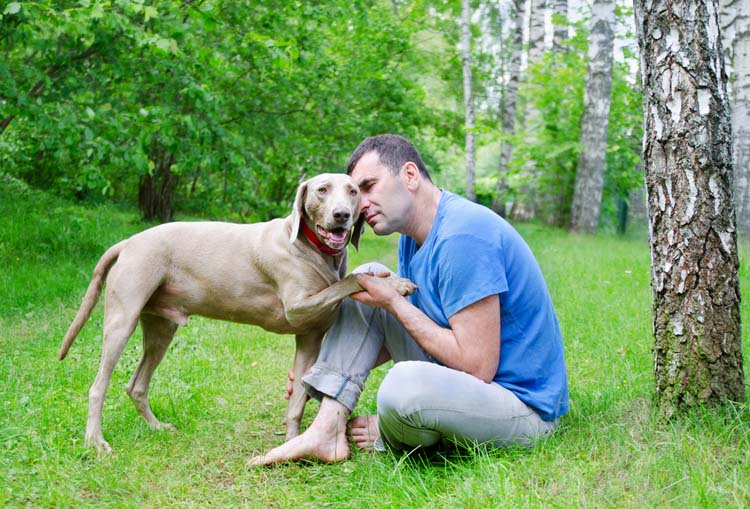
Trust me, dogs know when disturbances ripple through a family. If a family member and her dog are forced to move, expect her dog to mourn. Similar to you, dogs have lost loved ones, such as other house pets, so this is their first time truly left alone.

As with humans, dogs enjoy predictability of daily routines and living within a familiar surrounding, so they need time to adjust. During the first week, your dog will become clingy. He wants to sit or sleep very close to you–you’re the one constant during this unfamiliar time. Indulge your dog’s needs and, honestly, you probably need your dog’s unconditional love right now too.

Huddle together, and you will weather the storm.

It Will Get Better

Keep Up the Normal Routine

Try to keep your dog’s daily routine as normal as possible and spend a bit of time playing and exploring the new yard and going for long walks daily. Take this time to enjoy your dog’s company with games of fetch or tug. This will keep you both occupied as time heals wounds.

Provide Your Dog With Food Toys

Start with leaving your dog home alone for short periods of time, such as leaving him to take a shower with the door closed while he chews on a bully stick. After a day or two, leave your dog inside, chewing on food stuffed toys while you mow the yard or work on a project in another room. You’re still there, but your dog is not velcroed to you. Plus, he’s learning that alone time is kind of fun with peanut butter stuffed toys.

RELATED: 4 Tips for Moving With Your Dog

Leave the House for an Hour

After a few days, run errands for an hour or so. It’s time your dog learns to enjoy being along while you are truly away from home. Don’t forget to give your dog something to do while you’re gone, so he’s not panicking. A nice long walk before you leave always helps too.

To drown out unfamiliar noise, play soft classical music in the background. Check out these tips for separation anxiety, which can promote confidence during this difficult time.

Postpone Bringing a New Dog Home

Many dog owners think it’s a good idea to adopt another dog, so your mourning dog has a friend. Before bringing home a new dog, it’s important to consider if you have enough time to care for two dogs.  About 50 percent of the time, mourning dogs react negatively to a new dog in the household–they’ve already had enough disruption for now. Also, it’s not fair to the new dog since he’ll need adjustment time too and walking into an emotional situation can be scary. Wait until your dog has grieved, and then consider adding another dog when you’re both ready.

Within a couple of weeks, you’ll notice the twinkle return to your dog’s eye. This means you’re almost over the hurdle. There may be a few hiccups along the way, but you now have solutions to address them.

If It Doesn’t Get Better

Sometimes, it doesn’t get better. If your dog panics when left alone and tries to harm himself, seek guidance from a veterinary animal behaviorist. While your local veterinarian may offer some guidance, vet behaviorists are the experts in the field and can certainly help quickly.

If progress is moving slowly, but your dog is not panicking, there are a few calming supplements that can help along the journey. Always consult your veterinarian first, especially if your dog takes other medication.

We are cheering for both of you! There is light at the end of the tunnel!
Filed Under: Behavior, Clients, Training Tagged With: divorce with dogs, does divorce affect dogs, dog divorce, dog divorce anxiety, dog issues after divorce, dog training, Dog Training Tips, how to teach a dog, how to train a dog, teach a dog, train a dog

Confessions of a Dog Owner: I’m Not Getting the Most Out of Class

July 22, 2015 by Fanna Easter

How to Get the Most Out of Your Dog Training Class

Dog Training Classes
amadeys/Deposit Photos

Committing to weekly group class sessions can be challenging, but it’s worth it. Make each class session count. It’s all about time management sprinkled with preparation and a dash of understanding your environment.

Arrive Early

Plan on arriving early, meaning you’re parking at the dog training center 10 minutes before class begins. This extra time cushion provides time for gathering treats, finding your clicker or giving your dog a quick potty break. Five minutes before class, find a corner spot inside and set all your stuff down so you are both ready for class to start.

If your dog is nervous about classes, arriving early provides extra adjustment time before other excited dogs begin filing in. For easily excited dogs, arriving early keeps your dog calm because you’re not rushing or piling in with the masses.

Bring Plenty of High Value Treats

Yes! The night before class, select and chop up high value treats into pea-sized portions. Plan on bringing 50-100 tiny treats per class session. It seems like too many treats, but usually it amounts to one cheese stick or hotdog if portioned correctly. If there’s extra treats after class, let your dog race the treat bag on the drive home or freeze large amounts of leftovers for next week’s class.

Running out of treats during class will halt your progress. Either you stand still and watch others practice or you’re running into the retail area purchasing more treats. Either way, you’ve wasted at least five to 10 minutes. This usually happens during demonstration time (i.e. the dog trainer provides feedback while you practice), which is a crucial part of the learning process for you and your dog.

If you’re busy, try this time-saving tip: Place cut-up treats in a plastic bag and keep refrigerated. When running home to pick up your dog, grab the plastic bag and shove in your bait bag or purse. Keep an extra clicker in the car along with extra poop bags, as clickers always go missing it seems (maybe they’re hiding with all those missing socks). Voila, you’re all set!

RELATED: Choosing Dog Training Treats

Keep Your Distance

By arriving early, you can choose your spot before others arrive. Usually, corner spots work best for easily distracted or nervous dogs. Corner spots allow more wiggle room, so you’re able to control distance between other dogs and handlers. Distance is important, especially during the learning process, because it ensures your dog focuses on you until he learns polite behaviors. When in doubt, take a few steps back from other teams, and keep and maintain a three- to five-feet bubble from others.

Ask Questions If Confused

The worst thing you could do is leave class confused and frustrated. Usually, this happens during lecture time when the dog trainer is explaining how to teach your dog a new behavior. If you’re confused, raise your hand and say so politely. More than likely, you’re not the only one.

If you’re confused, the dog trainer didn’t explain correctly. Yes, it’s true. A dog trainer’s (teacher) job is to explain how to teach dog behaviors effectively so all dog owners (students) understand how to teach their dogs. Remember this when your dog (student) becomes confused because you (teacher) may need to explain it differently too. 🙂

RELATED: Is Your Dog Confused?

As a dog trainer, I’m constantly interpreting your body language and checking in, so I can usually tell if you’re confused. There are moments when I’ve misread the group and everyone is doing their own things. That’s my fault.  If I spot several confused expressions or someone staring into space, it’s my job as a dog trainer to stop and figure out how to explain it better. When new behaviors go seamlessly, I pat myself on the back.

Stay After With Questions

If you’re still confused, stay after class and ask more questions. Usually a third of the dog training class stays afterwards with questions pertaining to the session or behaviors at home, so be prepared to wait. Sometimes, a few seconds of one-on-one with a dog trainer answers your questions immediately.

If you’re pressed for time, plan to email your questions within 24 hours. Quickly emailing questions ensures you remember valuable details, which is important to understand the situation. Email is hard to interpret sometimes, but hopefully your dog trainer is able to send links to answer your questions and provide further research on specific topics.

Practice at Home

Practicing at home is very important! Ninety percent of behavior issues happen at home, so practicing within your environment is vital. Post homework sheets in a visible area, such as the refrigerator, and read thoroughly.

Set aside five minutes per day for practicing. Keep dog training sessions short (one to two minutes) and practice throughout the day. Another good thing about practicing at home is you can control distractions, which is not the case at the dog training center. 🙂

The secret to teaching foolproof behaviors is teaching and practicing at home, so you can polish them during group class!

Happy training!

Filed Under: Dogs, Puppies, Training Tagged With: confused at dog training class, dog is scared of dog class, dog trainer tips, dog training, dog training class tips, Dog Training Tips, getting the most out of dog training class, homework after dog training class, how many treats to bring dog training class, how to teach a dog, how to train a dog, my dog is hyper at class, teach a dog, train a dog, what kind of treats for dog class, what to bring to class, what to expect during dog training class

Dog Breed of the Week: Great Dane

July 21, 2015 by Fanna Easter

Meet the Great Dane

Great Dane
RalfWeigel/iStock

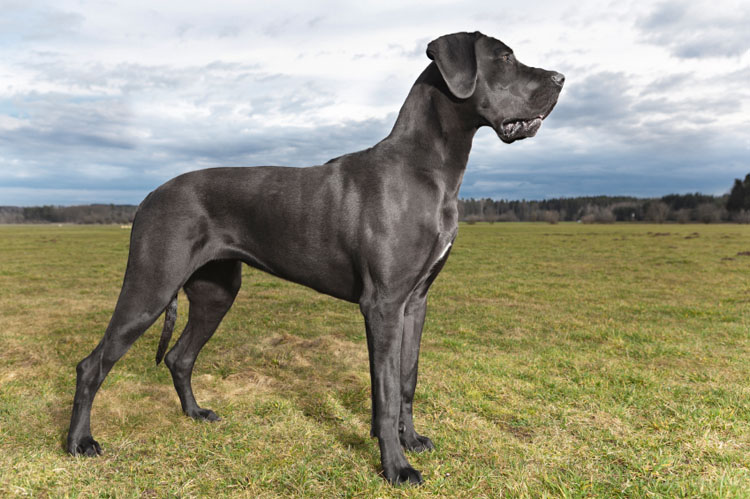
The Great Dane is elegantly compiled of great size and power. So much so, they are known  as the “Apollo” of dogs. Great Danes descend from Mastiffs like most breeds of dogs, which is not surprising due to their large size and short coat. They were bred for boar hunting in Germany and are known as “Deutsche Dogge” in their native country, which loosely translates to “german mastiff.” Great Danes are a member of the Working Group through the American Kennel Club (AKC). Instead of hunting, the Great Dane’s function is mainly serving as a companion.

General Characteristics and Temperament

This powerful dog usually stands at least 30” tall. Males typically stand at 32” or more while females stand at least 30” or more. Males weigh in at 130-180 lbs and females at about 110-150 lbs. They’re by no means a small dog.

Great Danes range within three color families: fawn and brindle; harlequin and mantle; and black and blue. An interesting tidbit of information: each color family tends to have different characteristics and even specific health issues.

Great Danes tend to be spunky, confident, friendly and easily trained dogs that are generally good with children and other pets in your home. However, with any giant dog, they should be supervised. Their size and spunkiness can be a bit overwhelming to children and smaller animals. In addition, their long wagging tail can clear a coffee table within minutes. Training will greatly benefit Great Danes and allow them to be well-mannered family companions.

Health and Dietary Needs

As with any giant breed, their lifespan is a bit short, so expect seven to 10 years of enjoyment. In terms of health problems, your major concerns will be: gastric torsion (stomach flips over), cardiomyopathy (heart disease) and osteosarcoma (bone cancer) while your minor concerns being hip dysplasia, CVI (Wobbler’s syndrome), obsessive compulsive disorder (OCD), HOD (skeletal disorder) and hypothyroidism.

Choosing a reputable breeder can drastically reduce heath issues. Parents and grandparents that have been health tested before breeding can reduce the chances of passing on their crippling diseases to your dog. If adopting, ask your veterinarian to complete health testing as well to rule out any lurking health issues.

Diet

Most likely, your Great Dane will thrive on dog foods blended for large breed dogs, meaning higher protein levels and reduced minerals to ensure they grow slowly, which is a good thing. Some Great Danes do very well eating balanced raw diets, but be prepared to order meat in large quantities. With Great Danes being so tall, it’s recommended you provide them with an elevated eating and drinking station to prevent bloat.

Dog Grooming Needs

Great Danes have a short, thick and sleek coat that requires weekly brushing with a rubber curry comb. While their coat is short, they still shed. Never use a deshedding tool, as it can cause brush burn (blisters and bleeding skin) in unskilled hands. To keep dander to a minimum, weekly or bi-weekly baths with a gentle shampoo is important. Remember to rinse completely.

Ears

Great Danes have medium-sized ears that are naturally floppy, but usually cropped (personal preference). Either way, checking their ears regularly for buildup is a good idea. Most of the time, a quick wipe down with an ear cloth will do just fine.

Nails

Oh, they have strong and thick nails, so keeping your Great Dane’s nails trimmed weekly is important. Using clippers or a nail grinder will prevent overgrowth and splitting, which is very painful.

RELATED: Dog Nail Trimming Tips: Teaching Nail Drags Across the Board

Exercise and Dog Training Needs

You may think that this large dog needs a lot of exercise, but this is not exactly the case with Great Danes. They tend to have pretty low energy, so regular walks or even a daily game of fetch will suffice. Although, they do need enough room to move around and stretch those long legs. If you don’t have a yard for them to play in, I suggest taking them to a park or a safe fenced area.

The good news is Great Danes are easily trainable and learn fastest when using positive reinforcement. Due to their size, they can easily pull you around during walks or vet visits, so I would recommend a head halter. Personally, I’ve had great success with reward based training and the right tools, such as the head collar with the Great Danes I have trained.

Conclusion

If you are considering bringing a Great Dane into your family, I invite you to locate a reputable breeder or rescue organization from the Great Dane of America Club.

Filed Under: Breeds, Dogs, Training Tagged With: dog training, Dog Training Tips, find a great dane breeder, great dane, great dane pictures, great dane puppies, great dane rescue, great dane temperament, great dane training, how to teach a dog, how to train a dog, learn about great danes, teach a dog, train a dog

Ask the Dog Trainer: How to Find an Excellent Dog Training Blog

May 5, 2015 by Fanna Easter

Finding a Dog Training Blog

Dog Blog

Blogs are a great thing. Who doesn’t enjoy the convenience of Googling an answer to your question? I don’t know how we lived without this option, honestly. But finding an excellent dog training blog can be challenging so follow these simple tips to keep you and your dog safe. 

Everyone Thinks She’s a Dog Trainer–Yikes!

Before diving knee-deep into a dog training blog, take a moment and research blog contributors. Are they dog trainers? If so, have they taught? Do they still teach group classes? Have they earned advanced dog training certifications? Earning advanced certifications is vital. This is the only way to differentiate between beginners/dabblers and dog trainers with proven knowledge of training all different types of dogs. Be careful about titles. Anyone can call herself a dog trainer or animal behaviorist, but unless it’s earned through testing councils, I would be very leery.

Take it a step further. Now, search the Internet to find more information about a dog trainer blog contributor. While doing a search, her advanced dog training certification should pop up along with any professional dog training memberships and maybe other blogs or videos.

RELATED: Dog Trainer Fanna Easter

Never Follow Harmful Training Methods

The most important tip is blog contributors should never recommend harmful training methods. I can’t say this enough. It’s much easier missing a “click and treat” opportunity than punishing your dog. If you’re not sure what you’re doing, you can certainly cause further frustration and possibly damage your relationship with your dog. Reading and watching videos are helpful, but nothing takes the place of having an expert watch and provide feedback while practicing.

Lastly, follow blogs with current and updated training methods, such as training principles founded by science. If someone recommends alpha or dominance training, run. This myth was dispelled over a decade ago. Check out my reasoning on why these methods don’t work.

Trust Your Gut

If something, or someone, sounds too good to be true, it probably is. Dogs aren’t like cars. You can’t fix them or guarantee results so ignore those promising too much. Trust your gut and do no harm. 🙂  When in doubt, find a professional and certified dog trainer in your area for best results.

You may also like: Ask the Dog Trainer: Resources for Dealing With Reactive Dogs

Filed Under: Clients, Resources, Training Tagged With: dog behavior, dog training, dog training articles, dog training blog, dog training bloggers, dog training wiki, how to teach a dog, how to train dogs, natural dog training blog, obedience training articles, obedience training blogs, professional dog trainer, puppy training blog, teach a dog, train a dog

Keep Dog Training Sessions Short

March 2, 2015 by Fanna Easter

Dog Training Practice Session Tips

Keep it Short and Reset

Dog Training Classes

When teaching your dog a new behavior, practice sessions are important. You can’t build muscle doing one repetition of an exercise, right? You need multiple reps to build and sculpt muscles, and this holds true when teaching a new behavior. Practice does make perfect!

Before beginning a dog training practice session, it’s important to follow a few tips to ensure success.

Let’s Get Busy

I gather my clicker and small, yet super yummy treats and head for our training area, which is usually my living room. For a training area, choose an area with non-skid flooring with plenty of space so your dog can move around freely. Personally, I inform my dog a training session is about to start. I say “let’s get busy,” which means “it’s time to punch in for a training session.”

RELATED: 3 Reasons Why You Need Non Slip Socks for Dogs

Is reaching for treats and/or the presence of the clicker a cue? Probably. Is walking to our training a cue too? Maybe. But I like to settle in our training area and give the green light by saying “let’s get busy.” It’s basically like saying “we’re up for business.”

Count Out Five Treats

Count out five treats and practice until they are gone. This is the easiest way to keep training sessions short. I’m as guilty as the next person. I used to time practice sessions for one minute. Oh, when we were on a roll, I would turn off the timer and keep going. My dog suffered the burn out from it too! He would miss a cue or offer “sit” because he was confused.

It’s hard concentrating for five full minutes. Most people tackle a problem for one or two minutes, take a tiny break to refill their coffee cups, take a deep breath or ask a fellow dog owner a question. So give your dog a break, count out five treats and practice until they gone. 🙂

Resetting

Resetting is the easiest way to move a dog during practice sessions. Many times, clients practice “sit” using five treats so how can you ask a sitting dog to “sit” again, right? Allow me to introduce you to resetting. It will make your dog’s life so much easier! Instead of pulling your dog out of a behavior, click and toss her a treat about three feet away. When tossing the treat, she must get up, find and eat it. Now you can ask her to “sit” again. Voila!

Tossing treats on the floor will not teach your dog to “vacuum” for food. This happens during controlled training sessions. If you’re worried about feeding your dog from the ground, place a paper plate about two feet away and toss treats into the plate. 🙂

VIDEO: Dog Training Tip: How to Reset Your Dog

All Done

Once all five treats are gone, say “all done,” which means your dog can take a break, and have a quick game of tug or lots of petting. Now, move away from your training area and catch up on emails or find another short task to complete. Most likely, your dog will take a deep breath, grab a few licks of water and lay down for a bit. After five minutes or so, it’s time for another practice session so “let’s get busy!”

Usually, I complete two or three training sessions per day and mostly in between my dog’s scheduled meals, as everyone needs a snack. 🙂

When to Move On

When you’re willing to bet $5 on your dog for performing the behavior, move onto the next step.

READ ALSO: The Right Way to Do Lure Reward Dog Training

Filed Under: Dogs, Training Tagged With: dog trainer tips, dog training, dog training homework, dog training practice sessions tips, how to add a cue to dog training, how to teach a dog, how to train a dog

  • « Previous Page
  • 1
  • …
  • 39
  • 40
  • 41
  • 42
  • 43
  • …
  • 49
  • Next Page »

About

Dog Training Nation is a community of dog trainers, dog owners and dog lovers. Our mission is to provide trainers and owners valuable information to enrich dogs' lives. We cover a range of topics, from socializing puppies to dealing with aggressive dog behavior to selecting the best dog products. It is our hope you share our content to make the dog and owner world a better place.

​

Facebook

Video

Dog Training Nation is a dog training blog for pet owners and dog lovers. We cover a range of topics from puppy socialization tips to dog aggression to dog health. It is our hope you share our content to make the world a better place for dogs.

Dog Training Nation

Quick Links

Dog Training
Dog Behavior
Dog Training Videos
Become a Dog Trainer
About
Contact Us

Copyright © 2026 · Lifestyle Pro Theme on Genesis Framework · WordPress · Log in