Dog Training Nation

In Dogs We Trust

  • Home
  • Training
    • Dogs
    • Puppies
    • Clients
  • Behavior
    • Breeds
  • Health
  • Safety
  • Resources
    • Equipment
    • Books
  • Dog Training Videos
  • About
You are here: Home / Archives for Dog Training Tips

Best Store Bought Dog Training Treats: Dog Trainer Recommendations

April 22, 2016 by Fanna Easter

Best Store Bought Dog Treats

Best Store Bought Dog Training Treats
BettinaSampl/iStock

As a professional dog trainer, super yummy treats are a must-have during dog training sessions. Dog treats are your dog’s paycheck for choosing a polite behavior, and we all work for paychecks. The better the paycheck, the faster good behavior will happen. Fresh soft dog treats are easily the best option for training dogs. Check out why and which dog treat brands are best.

Soft or Hard Store Bought Dog Training Treats?

Oh, there’s a huge difference between soft dog treats and hard dog treats! When teaching new behaviors, you want fun and exciting sessions with lots of yummy treat rewards, but some treats will hold back the process.

I don’t recommend adding low value (dry pieces of kibble or biscuits) with high value treats. When teaching a new dog behavior or changing a dog’s perspective on something, always use high value dog treats every time. When weaning a dog from treats, using a variable schedule of reinforcement (i.e. rewarding the best “sits, downs or whatever” instead of every attempt) works much better once a dog understands a cue in all situations.

Soft Fresh Training Treats

From my experience training thousands of dogs, fresh training treats work best! When selecting dog treats, “fresh” means treats that contain higher moisture content that enhances aroma (smells strongly) and heightens taste. Additionally, fresh dog treats can be easily broken into pea-sized portions, quickly chewed and safely swallowed whole. Most fresh dog treats contain high percentages of meat, which means meat is usually the number one ingredient with a small percentage of vegetables or grains sprinkled in.

RELATED: Pros, Cons & Myths of Canned Dog Food

Dry Training Treats

Dry training treats can become a nuisance during training. They have little smell. If you don’t believe me, take a whiff of freeze-dried cow liver; it smells like nothing. No one enjoys eating scentless food because there’s a pretty good chance it will be tasteless too (hence rice cakes, yuck). Plus, store bought dry dog treats crumble easily, especially when breaking them into small portions for dog training sessions. There’s nothing worse than asking your dog to “down” and he’s busy hunting each and every dropped crumb instead of focusing on you.

If you’ve ever used dry training treats with an easily excited dog, you’ve probably witnessed your dog coughing or hacking after he swallows a dry treat whole. For smaller dogs, they will take their sweet time chewing a dry treat, which quickly deflates a high-energy training session.

Lastly, some pet owners swear their dogs love dry treats, but when I offer a fresh treat instead of a dry treat to their dog, the fresh treat is always gobbled up quickly. Plus, dogs tend to focus on other pet owners carrying fresh treats instead of their owners holding dry treats in their bait bag. Still don’t believe me? Place dry kibble or biscuit next to a chunk of tuna fish–case closed. 🙂

Recommended Dog Training Treats

As promised, check out a couple of brand names I highly recommend. All recommendations can be purchased at your local pet retailer and even large chain versions.

Freshpet

By far, Freshpet is my favorite! Due to an upsurge interest in cooked and raw food, Freshpet hit the pet and grocery store markets several years ago with a bang. Basically, this is a refrigerated cooked dog food with chicken as it’s first ingredient and a bit of vegetables and brown rice mixed in. Also, there’s a grain-free option for dogs watching their carbs. 🙂 Fresh Pet is a balanced dog food, which means it meets a dog’s daily needs if fed as a meal. It’s also made in the U.S.

Personally, I like the resealable bag option of Fresh Pet because it’s super convenient. No chopping needed. Just dump in your bait bag and go! If chopping is your thing, then choose from grain-free or regular rolls options. Now, Fresh Pet needs refrigeration, so I recommend freezing it a bit (1-2 hours max) during warmer months before heading out to group dog training class. As you arrive at the dog training facility, you’ll notice these treats will thaw a bit, but still remain cool during training sessions. Discard any remaining treats. I dump my bait bag contents on the floor for my dog to enjoy as class wraps up. Always wash your hands thoroughly afterwards, and don’t forget to wash your bait bag too.

Natural Balance Rolls

These rolls have been around for a long time, and I still use them during training. Meat is the number one ingredient in each role variety. Natural Balance rolls are nutritionally balanced, meaning these rolls can be fed as your dog’s regular meal (it would get expensive really quick though!).

Unfortunately, Natural Balance tweaked their roll recipe recently, which causes treats to crumble a bit when chopping. A tip: when chopping pea-sized treats, make sure the roll is nice and cold before cutting. This will keep crumbling to a minimum. I must say, dogs love this stuff–crumbs and all! Plus, there’s many protein options if your dog is unable to tolerate chicken or beef.

Natural Balance rolls must be refrigerated too. Freeze chopped treats (about 1-2 hours max) before heading out for training during warmer months. After training, discard any leftover treats. I usually dump my bait bag contents on the floor for my dog to enjoy at the end of class. Always wash your hands thoroughly and your bait bag too.

Regardless of which brand you choose, make sure your dog absolutely adores his or her treats. Fabulous dog treats make training dogs much easier!
Filed Under: Dogs, Equipment, Puppies, Resources, Training Tagged With: best dog training treats, best store bought dog training treats, dog trainer recommended training treats, dog training, Dog Training Tips, dog training treats store, fresh pet dog training treats, how to teach a dog, how to train a dog, natural balance roll dog training treats, teach a dog, train a dog

Help! My Dog Barks Relentlessly At My Neighbor’s Dog

April 20, 2016 by Fanna Easter

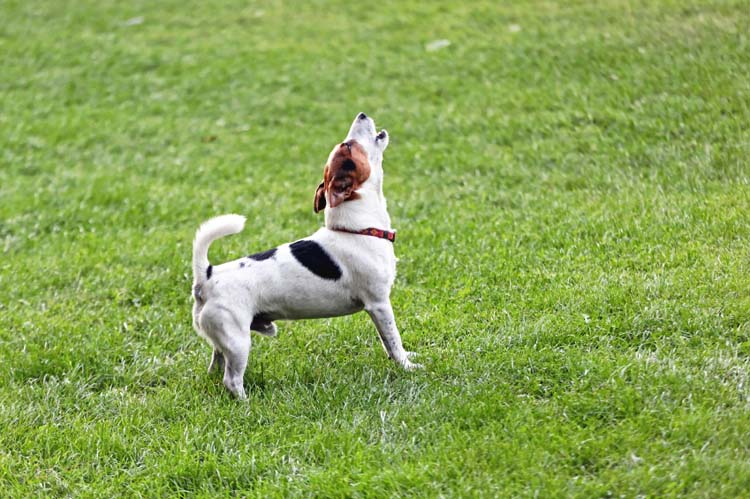
How to Stop Your Dog From Barking at Your Neighbor’s Dog

Stop Your Dog From Barking
Baloncici/iStock

When your neighbor’s dog barks relentlessly at your dog, she will probably respond back. It’s like having someone yelling at you through a fence; eventually, you’ll become frustrated and yell back.

However, it doesn’t always have to be this way. Instead, teach your dog to ignore the rude neighbor dog’s barking. I know, you’re probably thinking you’ll have a better chance at seeing a unicorn grazing in your backyard than this working for your dog, but it works quickly and reliably! The only thing you need is a leash, super yummy treats and lots of patience.

Don’t Let Dog Barking Become a Habit

We assume barking is natural dog behavior; dogs should be allowed to speak when they want to. Well, that’s all fun and games until your dog becomes the neighborhood yapper. If dog barking behavior is practiced over and over, it becomes tougher to change.

If your dog has practiced this behavior so much that she immediately runs out and barks at anything and everything, it will take a couple of weeks to change this behavior. While this seems like a long time, think about habits for a moment. When trying to lose weight, it takes time to lose it effectively and permanently. Quick fixes never work in the long run, and weight sneaks back on.

Like all habits, it takes time and due diligence to change a behavior reliably, so it’s always best to prevent. Although I have a few dog training tips that work really well to change behavior too if it has already become a habit.

Prevention

Let’s look at prevention. This is the easiest way to keep unwanted behavior from sneaking up. First, let’s review barking a bit. Barking is a slippery slope. It’s very self-reinforcing, meaning dogs will learn to bark when bored, scared or frustrated. Interestingly, barking becomes a way for a dog to self-soothe herself like humans yelling when stuck in traffic, biting their nails or eating during stressful times.

Prevention means you’re rewarding your dog whenever she ignores your neighbor’s barking behavior. Reward with treats. Usually, I’ll toss super yummy treats away from the fence of the barking dog. This not only rewards my dog, but also teaches her she can move away from the stressful situation.

How to Stop a Dog From Barking

We recently experienced our dog barking at our neighbor’s dog when moving back into the suburbs. During the day, many dogs are left in the backyard while pet owners are at work, which teaches dogs to relentlessly bark at neighbors, dogs or the air just to hear themselves bark. Privacy fences prevent dogs from seeing each other, but dogs can still learn to fence fight, which is a horrible habit. Check out this article for tips on creating a visual barrier.

Bring Your Dog Out on Leash

As an example, I’ll share my story. Our backyard fence is made of cinder block, so dogs were unable to see each other. Stella, my little Bull Terrier is a typical Terrier; she will bark back at other dogs whenever she has a chance. The moment we moved into our new home, our neighbor’s little dog welcomed us with rapid non-stop barking whenever anyone was out in the backyard. The second Stella heard her rude doggie neighbor yelling at her, hackles went up and growling started.

For two weeks, we brought Stella out into the backyard on a retractable leash (the only place retractable leashes should ever be used) and I was armed with lots of yummy treats. Having Stella on leash prevents her from running away, engaging in barking behavior and going over threshold. Once a dog goes over threshold, she is oblivious to treats, yelling and anything else. Basically, never allow your dog to “go there” during dog training. If it happens, you’ve just taken 10 steps backwards. While it’s tempting to give quick leash corrections, it will only make it worse as your dog learns that pain happens whenever that dog barks, so your dog’s behavior will become much worse.

Ask Your Dog to “Touch”

The second I heard our neighbor’s dog start barking, I asked Stella to “touch” my hand and rewarded her generously (3-5 treats in a row). Understand, it’s hard for Stella to ignore a rude dog so close to her, but after a couple of “touches,” her hackles went down and her tail started wagging loosely.

Keeping Stella next to me sets us both up for success. It keeps her under threshold and allows change to happen. By asking Stella to do another behavior (touch) instead of letting her bark, it gives her something else to focus on rather than the barking dog next door. Additionally, it teaches her another way to react to a barking dog instead of barking back.

Our Success

Now, when our neighbor’s dog comes running out barking, Stella either ignores it completely or walks over and touches my hand. Do know, I never take her good behavior for granted, so I randomly reward her good behavior. Many pet owners set themselves and their dogs up for failure the moment they forget to reward good behavior. Always let your dog know she made the right choice.

You can use these same protocols to prevent your dog from barking at your human neighbors too!

Talk To Your Neighbor

This is easily the most difficult part. Start by keeping the conversation light and explain you want to keep the peace between both dogs. With our neighbor, she admitted she didn’t hear her dog bark anymore. She became used to it. I provided a few suggestions, and now she brings her dog indoors the moment she starts barking. You don’t have to be a dog trainer to provide suggestions. Just print these barking tips for your neighbor. Our neighbor was actually grateful.

If Habits Sneak Back In

Habits are tough to break, so expect some slip ups between both barking dogs. Take a few steps back and grab your leash and yummy treats to practice a bit more. Don’t forget to reward good behavior–that’s the key to success when tackling strong habits.

Good luck!

Filed Under: Behavior, Training Tagged With: dog barks, dog barks at neighbor, dog barks at neighbor dog, dog barks at neighbor dog how to stop, dog barks at neighbor dog through fence, dog barks at other dogs, dog behavior, dog training, Dog Training Tips, how to teach a dog, how to train a dog, my dog barks at my neighbors, neighbors dog barks, stop dog barking a neighbor, stop dog from barking at neighbor dog, teach a dog, train a dog

Why Group Dog Training Classes are Worth It

March 25, 2016 by Fanna Easter

Cost of Group Dog Training Classes: Worth the Tiny Investment

Group Dog Training Classes
Pamela Marks/iStock

I’m often asked if the cost of group dog training classes is really worth it. As a dog trainer, and pet owner, it’s worth every penny and actually a tiny investment that provides a huge impact. Allow me to explain a bit further.

What are Group Dog Training Classes?

Group dog training classes are structured for pet owners and their dogs. They’re usually held once a week on a specific day and designated time. Most group classes range between 6-8 weeks; however, many group classes are now 4 weeks with a condensed curriculum. Personally, I teach 4-week classes because most pet owners have a difficult time committing to 6-8 week courses. Keep in mind that just because a group class is shorter, it doesn’t mean you’ll learn less. It’s actually the opposite. Since it’s condensed, you can expect more homework.

Cost of Group Dog Training Classes

With that said, group dog training classes can range between $85-$200, depending on how many weeks are included. Generally, 4-week classes are less expensive because they’re shorter while longer group classes can cost more. Additionally, special focus classes may cost a bit more due to an increased dog trainer skill level, different location or limit on participants.

Now, let’s do a bit of math. If a 4-week class costs $85, that’s $21 per class. That’s pretty cheap considering pet owners and their dogs learn 3-4 new polite behaviors per class. Also, if your dog chews the sofa or a pair of your shoes, it will likely cost way more than $85 to replace or repair it. For 6-8 week classes that cost more, each class averages around  $25 per session.

What You and Your Dog Will Learn

For the popular Adult Manners group classes (for dogs 6 months and older), expect to learn at least 10-12 new polite behaviors, such as sit, down, walking on a loose leash, stay, heel, sit-stay, down-stay, touch, leave it and come when called. Also, pet owners learn how to manage digging, chewing, barking and jumping up behavior plus answers to any questions they’ll likely have at home.

Puppy and Adult Manners group classes provide many distractions (i.e. other dogs, people, sounds, smells and movement) with a skilled dog trainer to navigate you both successfully, which is worth every penny. Remember, dog trainers are teaching pet owners how to teach their dogs polite behaviors, so they’re able to continue progress at home. Additionally, many skills take several weeks to perfect, so pet owners will have plenty of time to practice with the guidance of the dog trainer.

When pet owners claim their dogs already know how to sit, down and walk on a loose leash, can their dogs do all of that around distractions? That’s a huge benefit of signing up for group dog training classes.

Where to Find Group Dog Training Classes

Now you understand the importance of group dog training classes. Find a professional dog trainer in your area by using these resources and websites. Tell your dog trainer I sent you!

Filed Under: Clients, Resources, Training Tagged With: cost of dog training, dog training, dog training class prices, Dog Training Tips, how much does dog training class cost, how much for group dog training classes, how much for puppy classes, how to teach a dog, how to train a dog, is the cost worth it for dog training, teach a dog, train a dog, why take a dog training class

The Real Reason Dog Trainers Dislike Cesar Millan

March 24, 2016 by Fanna Easter

Honest Truth Why Some Dog Trainers Dislike Cesar Millan

Why Dog Trainers Dislike Cesar Millan
purple_queue/iStock

With social media outcries against Cesar Millan’s latest Nat GEO TV show at an all-time high, as a dog trainer, I need to address it. This backlash was due to Cesar allowing a dog that has killed pigs in the past go off leash to attack a live pig. Please dear readers, understand this is an example of how not to train an aggressive dog ever! No press release, fan comments or justifications can make this right. Cesar made a poor choice. Now, let’s discuss why dog trainers dislike Cesar.

Why Do Dog Trainers Dislike Cesar Millan?

As a dog trainer, I’ve personally witnessed and changed numerous dogs’ behaviors without using punishment or force-based methods. I’ve also discovered that positive reinforcement methods work much quicker. Also, as much as pet lovers hope with everything they have, aggression cannot be cured. It will always linger until a trigger appears and the dog (or person) is unable to control his actions. Let’s dive into Cesar’s dog training methods.

Alpha and Pack Theory

This alpha and pack theory has been dispelled many years ago. Dogs do view us as dogs or wolves. While dogs and wolves share similar DNA, they are totally different in behavior and appearance. Plus, the original author who cited these “alpha” behavior findings with wolf packs dispelled the theory as well, which says a lot.

Do Dogs Need to Be Dominated?

Dogs do not need to be dominated to teach them polite manners. They just need to be taught polite behaviors. Dogs are not pre-programmed to understand that pulling on a leash or barking at neighbors is rude. It’s your job to train your dog to walk politely on leash and to keep his feet on the floor. Just like teaching children and zoo animals, providing your dogs choices is key to teaching polite behaviors. As an example, if a dog is jumping up on someone, remove treats or the exciting person when the dog jumps up. This way, the dog learns that good things go away when he jumps up. When all four feet are on the ground, treats and the exciting person come back.

Red Zoned Dogs

Cesar uses the term “red zoned dogs” when referring to aggressive dogs. His claim to fame is putting an end to aggression in un-savable dogs, or basically saving extremely aggressive dogs from being euthanized. What people don’t know is this is not just a Cesar thing. Dog trainers every day work with aggressive dogs and their pet owners, and have tremendous success. However, we do things much differently than Cesar. We teach dogs that scary things are good and/or safe by pairing good things with scary things to change their perspective rather than resort to punishment.

Example From a Human Perspective

Let’s look at an example from a human perspective. If you are afraid of spiders, and I pushed you toward a spider while correcting you with a leash correction or rolling you over whenever you tried to squish or run away from a spider, do you think your behavior would improve? It’s highly unlikely.

Eventually, you will push me back (equivalent to a dog growl), punch me due to frustration and fear (like a dog bite) or shut down (become helpless). And if the spider gets really close, all you’re thinking about is running away; you don’t hear a word I’m saying. Now, if I gave you a $100 bill every time you were around spiders, you would soon learn that spiders equal good things (money, if that’s what you find rewarding). Understand, rewards are not bribery; they change behavior and then fade out.

Shut Down Behavior

From a dog trainer’s perspective, the video of the pig-biting dog shows a dog completely shut down. When dogs become so confused or scared, they either fight, flee or shut down. That dog on Cesar’s show is a perfect example of a shut down dog around pigs.

What Does It Mean When a Dog Shuts Down?

Shutting down is totally different from normal behavior. Dogs will move slowly, blink excessively, lay their ears backwards, crouch away from the trigger (the object that worries them), pull corners of their mouth backwards, sniff the ground excessively and try to avoid what scares them at all costs. If they can’t get away, most will flop down (shut down) and hope they are not harmed. This is not submissiveness; this is sheer terror.

Shutting Down From a Human Perspective

Let’s look at this from a human example, using spiders again. If I tie you to me with a leash, then pull you toward spiders or encourage spiders to walk next to you, you’ll likely do a couple of things (like the last example). Once you realize you can’t get away (I’m holding you firmly next to the spiders), you’ll likely shut down and become helpless. This basically means you’re giving up, covering your eyes and hoping with everything in your body that spiders will not hurt you. No one deserves to be so scared that they shut down; it’s like a silent panic attack.

Many novice pet owners and dog trainers assume shutting down means a dog has changed his behavior around a trigger or is just stubborn, but this is not true. When a dog encounters that trigger again, he may either shut down again or become aggressive–it all depends on the dog. This is not changing behavior. Also, assuming a dog is stubborn is a rookie mistake, and can most definitely cause irreparable harm.

Changing Dog Behavior With Psychology Tools

You can most certainly change a dog’s behavior using common psychology tools. As a psychology major, I’m shocked Cesar focuses on punishment-only tools despite numerous options that are documented to be effective. Human psychologists understand that punishment causes many fallouts, meaning it has nasty side effects. That’s why dog trainers focus on positive reinforcement instead.

Experienced dog trainers (and trained psychologists) focus on changing behavior with proven behavior modification techniques, such as counter conditioning and desensitization. By teaching a dog that triggers cannot hurt them, they also learn to walk away or ignore triggers instead of attacking them. Choices are a huge reinforcer for dogs–sometimes more reinforcing than yummy treats.

Be Your Dog’s Voice

So that’s the honest truth on why some dog trainers strongly dislike Cesar Millan. I know changing everyone’s opinion about Cesar is difficult, but I hope you know that Cesar’s “way” is not the only way and we need to be the voice for our dogs. There are much kinder and effective dog training methods out there. I invite you to research more before jumping back on Cesar’s bandwagon.

Filed Under: Behavior, Dogs, Training Tagged With: cedar's way dog training, Cesar Millan, cesar millan dog trainer, cesar's way, dog training, dog training techniques, Dog Training Tips, how to teach a dog, how to train a dog

Stop Sharing Outdated Posts About Rescue and Foster Dogs

March 21, 2016 by Fanna Easter

Social Media Etiquette: Sharing is Caring Only If It’s Updated

Social Media Etiquette
DGLimages/iStock

We are flooded with pitiful images of dogs needing to be rescued on social media every day, which can quickly become depressing. With that said, social media has certainly brought awareness to dog rescue and helped many abandoned dogs find their forever homes, but there is a secret social media etiquette on sharing these posts. Check out these social media tips that will make it much easier to narrow down dogs in need while minimizing posts.

Verify a Post is Current Before Sharing

As we’re scrolling through our social media feed, most of us are overcome with sadness when stumbling across a picture of a defenseless dog staring back at us. Immediately, our fingers migrate to the share button, but don’t share yet!

Always verify a post first. Outdated dog rescue and foster dog posts are shared way too often. As an example, at least half of the posts on my social media page are outdated. Before forwarding the post, click on the picture and scan the feedback. Make sure the dog is still available for adoption and the post is current. Too many posts are recycled over and over again for years due to a horrific photo.

Maybe it’s a pet peeve of mine, but sharing outdated posts clogs ups social media feeds and desensitizes people to the faces of dogs truly in need. When someone continuously sees the same tragic photo pop up over a period of time, she eventually learns to ignore it. Then, only the most horrific photos are given attention.

Make sure a post is current and the dog is still up for adoption before sharing with your friends and family.

Add Context Before Sharing

Most people notice the photo, but most will ignore it if details are not readily provided. When sharing posts, add the dog’s location (especially state) and why he or she needs help. Also, note the post is up-to-date and ask others to pass it along.

Please Forward It

So many people choose not to forward posts of dogs in need, which is completely baffling! As an example, my social media page is filled with dog-loving people, yet 1 out of 10 people will share a post of a dog currently in need. This blows my mind!

Please take two seconds of your time to verify a post is updated, add a bit of text and share (even if the dog’s not in your state). You never know who will see it. Every time a rescue dog is shared or tweeted, you’re giving that dog a voice.

YOU MAY ALSO LIKE: Proper Pet Store Etiquette for Dogs

Filed Under: Clients, Resources, Training Tagged With: dog rescue social media, dog training, Dog Training Tips, Facebook dog rescue, helping rescue dogs social media, how to teach a dog, how to train a dog, teach a dog, train a dog, twitter dog rescue

  • « Previous Page
  • 1
  • …
  • 24
  • 25
  • 26
  • 27
  • 28
  • …
  • 43
  • Next Page »

About

Dog Training Nation is a community of dog trainers, dog owners and dog lovers. Our mission is to provide trainers and owners valuable information to enrich dogs' lives. We cover a range of topics, from socializing puppies to dealing with aggressive dog behavior to selecting the best dog products. It is our hope you share our content to make the dog and owner world a better place.

​

Facebook

Video

Dog Training Nation is a dog training blog for pet owners and dog lovers. We cover a range of topics from puppy socialization tips to dog aggression to dog health. It is our hope you share our content to make the world a better place for dogs.

Dog Training Nation

Quick Links

Dog Training
Dog Behavior
Dog Training Videos
Become a Dog Trainer
About
Contact Us

Copyright © 2026 · Lifestyle Pro Theme on Genesis Framework · WordPress · Log in