Dog Training Nation

In Dogs We Trust

  • Home
  • Training
    • Dogs
    • Puppies
    • Clients
  • Behavior
    • Breeds
  • Health
  • Safety
  • Resources
    • Equipment
    • Books
  • Dog Training Videos
  • About
You are here: Home / Archives for Dog Training Tips

3 Behaviors All Dog Trainers Should Know

October 27, 2014 by Fanna Easter

Make Sure Your Clients Know These BehaviorsThree Behaviors All Dogs Should Know
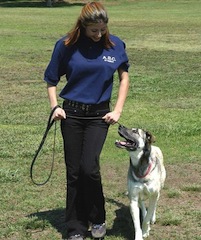
Do you want to spice up your Basic Family Manners Class? Are you bored teaching the same foundation exercises over and over again? Don’t you ever feel like you’re forgetting something? Are your dogs still pulling on a leash and jumping up on people? Here ya go! Learn three new behaviors all dogs should know!

Body Handling

While this is mostly covered in Puppy Class, we forget to cover in Basic Family Manners Class geared for dogs six months and older. Body handling means a dog learns to allow a person to touch, handle and restrain his body. Trust me, it’s not fun having a dog bucking around the room when you’re trying to apply eye medicine or brushing mats out of his coat. 🙂 Plus, your vet and vet tech will thank you profusely!

Body handling teaches a dog to stand still while being examined at the vet’s office, brushed at the groomers, having nails trimmed, having teeth brushed, having medicine and ointments applied to the eyes or ears and so on. Many dogs can learn to remain still for blood withdrawals and injections. We just need to teach the dog what is expected during these procedures.

How to teach:

  • As you touch your dog’s shoulder, click and treat (repeat 5 times in a row).
  • Touch his nose, click and treat (repeat 5 times in a row).
  • Touch his front foot, click and treat (repeat 5 times in a row).
  • Touch his tail, click and treat (repeat 5 times in a row).

Move forward until:

  • Touch your dog’s nose, foot, tail or shoulder for 1 second, then click/treat.
  • Continue until you can touch longer or look in his ear or mouth for longer, then click/treat.

Park Your Dog

During the first week of Basic Family Manners, I teach “Park Your Dog.” We all know that Week One is usually the loudest and rowdiest class by far so teach pet parents how to teach their dogs to calm themselves. I explain how to teach it, demo with the rowdiest dog in class, and then ask pet owners to practice for 5 minutes while I walk around providing feedback. Then I ask owners to “Park Your Dog” during lecture time and when they first arrive at class.

How to teach:

  • Step on your leash about halfway up to your dog (your dog should have 3 feet of extra leash).
  • Click and treat your dog the instant the leash becomes loose (Tip: Instead of watching your dog, feel when the leash tightens and loosens under your feet. The moment you feel slack in the leash, click/treat!).
  • That’s it! Bingo, you are rewarding calm and quiet behavior!

Additional troubleshooting:

  • Dog still jumps up on you, shorten the leash.
  • Dog continues to pull on leash, your timing is probably off a bit. Click and treat every time the leash is loose.
  • My dog is still pulling, call his name and click/treat five times in a row. Now you have his attention, so keep it by rewarding frequently.

View demo video and additional training tips here.

Collar Pressure

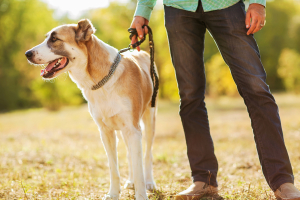
I love teaching this behavior, especially for big dogs and little pet parents. 🙂 Having a large dog is tough as he seems to always pull you forward even when teaching him polite leash manners. Well, problem solved, this behavior teaches a dog to follow collar pressure instead of pulling away from it.

Step 1: Touching your dog’s collar is a good thing!

  • Touch your dog’s collar, next click and treat.
  • Try this 10 times in a row.

Step 2: Following the pressure on the dog collar.

  • Apply pressure to the dog’s collar the opposite way he is standing. Use light pressure, such as holding a door open. You are not pulling hard per se, but more like restraining.
  • Immediately click and treat when your dog follows the direction of pressure (as the dog moves towards the pressure, so that you are no longer applying pressure to your dog’s collar).
  • Try this 10 times in a row, remember to click and treat each time.

Step 3: Your dog now follows you on the leash.

  • Touch your dog’s collar, as if you are moving him away from something, such as an open door.
  • Immediately click and treat when your dog follows the direction of pressure (he moves towards your hand instead of pulling opposite of you).
  • Try this 10 times in a row, remember to click and treat each time.

View demo video and additional training tips here.

Dog trainers, bark back! What behaviors would you like to teach in class?
Filed Under: Clients, Training Tagged With: beginner dog trainer recommended reading, blogs for dog trainers, clicker training, dog trainer, dog trainer corner, dog trainers, dog training, dog training advice, Dog Training Tips, for dog trainers, how to become a dog trainer, reading for dog trainer, top dog trainer articles, want to become a dog trainer

How to Park Your Dog

October 24, 2014 by Fanna Easter

Train Your Dog to Stay

Train Your Dog to Stay

As a professional dog trainer, if I had to narrow down the top behavior all dogs should know, I would say parking your dog would be the first one! Trust me, “Come When Called” is probably right up there with “Park Your Dog.” However, this behavior will teach your dog to stay with you.


 “Park Your Dog” is a great way to bring your dog’s arousal level down. It’s like taking a yoga breath for your dog.


Why Should I “Park My Dog”?

“Park Your Dog” is a great way to bring your dog’s arousal level down. It’s like taking a “yoga breath” for your dog. Use this dog behavior when your dog becomes overwhelmed by visitors or anything, really! When teaching hyperactive dogs to be calm, many folks ask them to sit still. This is tough, as they are learning how to manage their extra energy and excitement. So next time your dog tries to jump on guests, “park your dog.”

Just by teaching your dog this simple behavior, your dog will learn

  • Self control (teaching your hyper dog to relax)
  • Polite greetings of people (not to jump on people or you)
  • Polite leash manners (not pull on the leash)
  • Ignore other dogs
  • Stay with you
  • Prevent excessive barking

How do I teach “Park Your Dog”?

  1. Step on your leash (about half way up to your dog, your dog should have 3 feet of extra leash).
  2. Click and treat your dog the instant the leash becomes loose. Tip: instead of watching your dog, feel when the leash tightens and loosens under your feet. The moment you feel slack in the leash, Click and treat!
  3. That’s it! Bingo, you are rewarding calm and quiet behavior!

Additional Troubleshooting:

  • Dog still jumps up on you, shorten the leash.
  • Dog continues to pull on leash, your timing is probably off a bit.  Click/treat every time the leash is loose.
  • My dog is still pulling, then call their name and click/treat five times in a row.  Now you have their attention, so keep their attention by rewarding frequently.

VIDEO: How to Teach “Park Your Dog”

When can you park your dog?

  • While talking to someone at the park
  • Having guests over
  • Outdoor dining
  • Paying at the pet store or vet’s office
  • During group class lecture, we ask pet parents to “park their dog” while listening to instructions

I want to hear from you! When should you park your dog?

Filed Under: Dogs, Training Tagged With: clicker training, dog behavior, dog trainer, dog training, Dog Training Tips, how to train a dog, how to train a puppy, how to train your dog, how to train your puppy, information about dogs, obedience training, puppy tips, puppy training, puppy training tips, Rottweiler training

Calming A Hyper Dog With A Thundershirt

October 6, 2014 by Fanna Easter

Thundershirt for Hyper Dogs
I need a Thundershirt!

Thundershirt for Dogs

Does your dog have tons of energy? You know what I mean: he bounces off the walls and sometimes off you too! Well, we recommend a product that can calm your hyper dog. Meet the Thundershirt.

Thundershirts for Excited Dogs, Really?

Yes! While Thundershirts for dogs do a great job at calming dogs afraid of storms, they’re fabulous for easily excited or hyper dogs as well. When wrapped correctly, Thundershirts press on acupressure points, which promotes calmness and soothes excited dogs. Think of a swaddled baby when crying. If you swaddle him correctly, it’s very soothing and he usually stops crying and falls asleep.

Of course, Thundershirts for dogs shouldn’t replace daily walks, food puzzles and family interactions. They’re simply a tool that teaches your dog how to calm himself down. It’s fun when adrenaline is pushing through your body, so it’s pretty important to teach our dogs how to bring themselves down and self-soothe.

WATCH: Thundershirt for Dogs

Teaching Your Dog to Wear a Thundershirt

  • Give your dog yummy treats as he sniffs the Thundershirt.
  • As you’re putting on the shirt, give him a finger full of peanut butter, as you know it takes awhile for dogs to remove peanut butter from the roof of their mouths.
  • Give your dog a yummy food stuffed toy when he’s wearing his Thundershirt, so he learns Thundershirt equals yummy food toy.
  • Follow the fitting instructions correctly. You don’t want it too loose or too tight.

If You’re New to Thundershirts

There seems to be many opinions about the effectiveness of Thundershirts for dogs. As a professional dog trainer of 22 years, they work. As with anything, they must:

  • Be introduced to the dog positively, so he enjoys wearing them
  • Fit properly

Now, nothing works 100% for all dogs, but in my classes, we have an 80% success rate with Thundershirts. Once your dog understands the process, you can keep the Thundershirt around for stressful events, such as traveling, visiting the vet, guests visiting or moving to a new home.

Lastly, I wish they made Thundershirts for people. I’d buy one!

What are your thoughts on Thundershirts for dogs? Comment in the section below!

Filed Under: Dogs, Equipment, Resources, Training Tagged With: does thundershirts work, dog behavior, dog training, dog training advice, Dog Training Tips, excited dogs, how to train a dog, how to train a puppy, hyper dog training, hyper dogs, my thundershirt experience, puppy training tips, stressed dogs, thundershirt, thundershirt for anxiety, thundershirt for dogs, thundershirt reviews, thundershirt video

Kong Wobbler

October 2, 2014 by Fanna Easter

Games for Dogs

Games for Dogs
Sobek loves his large Kong Wobbler!

Does your dog or puppy have a ton of energy? First, this is totally normal. Second, learn how to burn some of that extra energy using games for dogs. I highly recommend a Kong Wobbler!

How does it work?

Kong Wobbler has a weighted bottom and it moves similar to a Weeble Wobble. When pushed, it bounces back forward. Your dog pushes, nudges and paws at the Wobbler and rewarded when food is dispensed!

Which game should I choose for my dog?

There are a ton of games and food puzzles, and I’ve tried 90% of them. After all the setting up and testing, my dogs really like the Kong Wobbler. It’s super easy to use. I like the ease of refilling and cleaning. 🙂

Before starting, set your dog up for success and make it easy for him to earn the kibble.

  1. Fill the Wobbler.
  2. Drop a few kibble pieces next to the Wobbler.
  3. Move the Wobbler around so your dog watches kibble or treats fall out the opening.

Always supervise your dog when he’s playing with the Wobbler. As you can see in the video, my Rottie has tried to chew the top. I recommend feeding your dog’s morning and evening meals using the Wobbler. Also, the plastic does not scratch wooden floors nor is it excessively noisy, which is a huge plus.

Which size Kong Wobbler should you choose?

I recommend the larger Kong Wobbler for dogs over 30 pounds, and the smaller version for dogs under 30 pounds. When in doubt, choose a larger size, as small dogs are powerful chewers (hint hint, terriers!). Now, a tiny Chihuahua or Yorkie will not have the strength to push a large Wobbler around. They are pretty heavy and we certainly don’t want to accidentally squish a tiny dog. 🙂

VIDEO: Kong Wobbler

It’s your turn. Does your dog love his Kong Wobbler? Comment in the section below. I want to hear from you. 🙂

Filed Under: Games, Resources Tagged With: best dog puzzle, best dog toy, dog trainer tips, dog training, Dog Training Tips, game for dogs at home, games for dogs, games for dogs and owners, games for dogs recovering, how to train a dog, how to train a puppy, how to use a Kong Wobbler, kong dog toy review, kong dog toy video, Kong dog toys, Kong Wobbler, kong wobbler large, kong wobbler reviews, kong wobbler small, Kong Wobbler Video, which size Kong Wobbler

Top 5 Tips for Training Rescue Dogs

October 1, 2014 by Fanna Easter

Training a Rescue DogFive Things You Need to Know About Rescuing a Dog

These five professional dog trainer tips are important when you bring home a rescue dog as you’ll need to incorporate them into your daily routine quickly. This way your rescue dog learns polite behaviors immediately. Plus, spending time with your new dog will build a strong bond of trust so start training now.

Enroll in a Dog Training Class

    • Completing a dog training class within two weeks of adoption will build a bond between you and your rescue dog. Your new pooch will learn polite manners while earning luscious treats, which means they will love you even more!
    • Choose a dog trainer that uses positive reinforcement. This means no yelling, pushing, yanking or pulling your puppy around. During classes, choose treats your dog loves!

Reward Good Behavior

    • When your rescue dog behaves as expected reward him with treats. Positive rewards are a great way to reinforce the desired behavior of your dog. Rewards can include a game of tug or snuggle time. It’s a great idea to keep a bowl of treats nearby for quick rewards. You can reward your rescue dog for things, such as: going potty outside, laying quietly at your feet, not barking, sitting when putting on his leash and coming when called.

Crate Training

    • This is your rescue dog’s sanctuary. He is safe and can relax so make it fun and rewarding to be in his crate. Feed your dog meals in his crate and provide special food stuffed toys for him to enjoy while he relaxes in his crate.

Come When Called

    • Teach your rescue dog that it’s fun to come back to you! While a rescue dog may have learned this behavior, it’s vital he learns to come back to you specifically. He’s still adjusting to his new home.
    • Use the ER Recall: Stand still, squat down and say “Puppy Puppy Puppy” using a high-pitched sound. Dogs really respond to high-pitched rapid repeating sounds. Have a party when your dog returns to you. Give him 5 treats and do the Happy Dance (always make it a big deal). You need to be much more interesting than the squirrel outside.

Engage in Daily Mental Stimulation

This is just as important as physical exercise.

    • Walk your rescue dog on leash for 30 minutes per day. Allow him plenty of sniffing opportunities. This is equivalent to reading his Facebook page. By sniffing, he is reading “posts” and may answer “posts” back. The more often you take your dog for a walk, the less likely he is to have an accident in the house.
    • Feed your dog meals using interactive toys. Pour his kibble into a food dispensing toy so that he needs to push or paw the toy to dispense his food — it’s like solving puzzles. Meals times are 20 minutes long instead of 30 seconds, and your dog will be tired afterwards.

Bark back. I want to hear back from you! How have these tips helped your rescue dog acclimate to your household?

READ ALSO: Adopting a Rescue Dog

Filed Under: Dogs, Training Tagged With: clicker training, dog training, dog training advice, Dog Training Tips, how to train a dog, how to train a puppy, obedience training, rescue dog, rescue dog tips, rescue puppy, rescue puppy tips

  • « Previous Page
  • 1
  • …
  • 37
  • 38
  • 39
  • 40
  • 41
  • …
  • 43
  • Next Page »

About

Dog Training Nation is a community of dog trainers, dog owners and dog lovers. Our mission is to provide trainers and owners valuable information to enrich dogs' lives. We cover a range of topics, from socializing puppies to dealing with aggressive dog behavior to selecting the best dog products. It is our hope you share our content to make the dog and owner world a better place.

​

Facebook

Video

Dog Training Nation is a dog training blog for pet owners and dog lovers. We cover a range of topics from puppy socialization tips to dog aggression to dog health. It is our hope you share our content to make the world a better place for dogs.

Dog Training Nation

Quick Links

Dog Training
Dog Behavior
Dog Training Videos
Become a Dog Trainer
About
Contact Us

Copyright © 2026 · Lifestyle Pro Theme on Genesis Framework · WordPress · Log in