Dog Training Nation

In Dogs We Trust

  • Home
  • Training
    • Dogs
    • Puppies
    • Clients
  • Behavior
    • Breeds
  • Health
  • Safety
  • Resources
    • Equipment
    • Books
  • Dog Training Videos
  • About
You are here: Home / Archives for Dog Training Tips

Discolored Dog Teeth: What Should You Do?

October 16, 2017 by Fanna Easter

Treating Discolored Teeth in Dogs

Discolored Dog Teeth
Janet Wall/Adobe Stock

Dogs can develop periodontal disease and injure their teeth just like humans. Damaged dog teeth hurts! Despite being stoic creatures that can easily hide their tooth pain, dogs are definitely hurting.

One dog dental problem you may encounter is discolored teeth in dogs. Discolored dog teeth could be a sign of a more serious health problem and should not be ignored. If your dog’s teeth are discolored, it’s time to take a peek inside her mouth and jump into action.

Monthly Mouth Exam

The first step to preventing painful tooth issues is taking a good look into a dog’s mouth. Once a month, look into your dog’s mouth and examine each tooth carefully. While dog teeth are stronger than human teeth, they are still susceptible to injury, which is why it’s so important to take a look into your dog’s mouth often.

When looking at your dog’s teeth, keep an eye for:

  • Tooth discoloration
  • Brown or black streaks running horizontally or vertically along a tooth
  • Bleeding or receding gums
  • Lacerated gums
  • Misaligned teeth
  • Lesions
  • Foul odor

If your dog is uncomfortable having her mouth open for a dental exam, teach your dog to say “ah.”

Ask An Expert

If any issues are noted, take a picture of the tooth and show your veterinarian. Usually, a vet will complete a thorough examination and recommend a dental cleaning or refer you to a veterinary dentist.

Sometimes, veterinarians recommend a “wait and see” protocol. Remember, damaged dog teeth are painful for your dog, so ask for a referral to a veterinary dentist for a second opinion. Be persistent because damaged teeth won’t improve without medical treatment.

Veterinary Dentist

Veterinary dentists are veterinarians that are board certified in animal dentistry. These experts are trained to successfully repair dog teeth using the latest dentistry practices available. Plus, they’re able to identify a damaged tooth quickly and offer options, such as root canals, crowns and removal, if needed. Many pet owners notice an increase in friskiness in their dogs after damaged teeth are addressed because their source of throbbing pain has been removed. It never hurts to ask for a second opinion from an expert. Be your dog’s advocate.

Never ignore discolored dog teeth and always consult an expert.

Filed Under: Health Tagged With: black dog tooth, chipped dog tooth, discolored dog teeth, discolored dog teeth tips, discolored teeth in dogs, dog dental issue pain, dog dental problems, dog health, dog teeth broken, dog teeth look dirty, dog teeth problems, dog training, Dog Training Tips, root canal dog

Is Your Dog’s Black Coat Turning Red?

October 13, 2017 by Fanna Easter

5 Reasons Why Your Dog’s Black Coat Turns Red

Dog Coat Turns Red
bwolski/Adobe Stock

There’s nothing more beautiful than a healthy dog’s deep black coat—it glows from within. Depending on a dog’s breed, a black coat should have a blue-black hue when viewed in bright light. Of course, soft undercoat is usually a bit lighter than a dog’s regular coat, but overall a black coat should be glossy with minimal odor. Sometimes, a dog’s black coat (and dark gray coats too) can develop a red tinge over time, which can happen for numerous reasons.

1. Sun Exposure

By far, sun exposure is the most common reason why a black coat turns red. Sun exposure bleaches hair, including human hair. As a licensed cosmetologist, I’m very familiar with hair color. When dark-colored hair is exposed to sun (or chemical bleach), it turns red before turning yellow. Dark hair is packed with pigment, so it takes a long time for dark hair to turn yellow (unless lots of chemical bleach is used :)).

Since the sun shines downward, most dark-colored dogs develop red tinges on their backs, ears and tail. Longer hair is more porous because it’s older, turning red quicker even when it’s not in the sun. During winter months, most dogs’ coats will darken again due to limited sun exposure.

Many professional dog grooming products offer detanglers that also contain sunscreen for fur, which will protect fur from damaging sunrays. Follow the product’s instructions carefully and apply often.

2. Saliva

When dogs continually lick a specific spot, pet owners will notice a dark rusty color develop. Saliva is especially noticeable on white dog coats, but it happens to dark dog coats too. If your dog is licking a specific spot often, schedule an examination with your veterinarian. Licking is not always allergy related; some dogs lick due to pain caused by tummy or back issues.

3. Blowing Coat

Twice a year, dogs will blow out their coats. All dogs shed, regardless of their coat length, and will lose their soft undercoat. Medium- and long-coated dogs’ undercoats are usually lighter in color and can appear red-tinged during dog shedding season. As soon as you start brushing your dog daily, your dog’s dark coat will usually darken up nicely because all of the red-colored undercoat will have been removed.

4. Diet

Sometimes, a dog’s diet can play a part in turning his black coat red. All dogs should eat a high quality diet, but certain diets don’t work for all dogs. If your dog is not shedding, is not ill or has limited sun exposure, then consider changing your dog’s diet to cooked or raw food. Also, try different high quality kibble to find what works best for your dog.

5. Illness

When older dogs develop a red-tinged coat, it’s time for a thorough veterinary visit. Senior dogs should have blood work and a physical exam completed every six months to catch potential issues before they become a major issue. Ask your veterinarian about adding fish or hemp oil to your dog’s diet to help his coat if no health issues are identified. It’s possible your dog may be in need of additional supplements to boost his immune system. I recommend Standard Process, as it offers the best nutritional supplements out there.

Filed Under: Health Tagged With: black dog coat turns red, black dog looks red, black dog turning red, black dor gur turning brown, dog fur turning rust color, dog grooming, dog hair changing colors, dog has red hint in fur, dog health, dog training, Dog Training Tips, how to keep a dog's coat black, my dog's coat is changing colors, red tinge to black dog coat, red tinge to dog's coat

5 Safety Tips For Dogs And Children

October 9, 2017 by Fanna Easter

How to Keep Children Safe Around Dogs

Dogs and Children
blessings/Adobe Stock

Many pet owners assume dogs and children get along like peanut butter and jelly—that they just blend seemingly well together. Well, that’s not always true, unfortunately. The Center of Disease Control (CDC) statistics show that children are bitten more often by dogs with young boys topping the charts.

Interestingly, it’s not random dogs that do the biting. It’s family dogs that bite children the most. Even though your dog has never bitten anyone, he has teeth and will defend himself if hurt or teased. With that, it’s important to understand a few safety tips to keep children safe around dogs.

1. Leave Sleeping Dogs Alone

Children should never disturb dogs that are sleeping. Many dogs will become startled and nip children as a result. Explain to your children that dogs should have plenty of space while taking naps, and that they should never wake up a sleeping dog.

2. Don’t Allow Children to Sit on Dogs

My skin crawls when viewing photos of children standing, sitting or lying across their dog’s back. While the child looks happy in the picture, the dog is not happy at all. Dogs are not little children and should be respected, so teach children to stand on the ground and not on your dog. Plus, having a 10- to 50-lb child sitting or standing on your dog is painful for him.

3. Stay Out of a Dog’s Food Bowl

When dogs are eating meals, chews or treats, children should provide their dog plenty of space. Children should stay away from their dog’s food bowl while their dog is eating, and never try to take away a chew or treat from the dog.

RELATED: 7 Tips on Being a Responsible Dog Owner

4. Keep Faces Apart

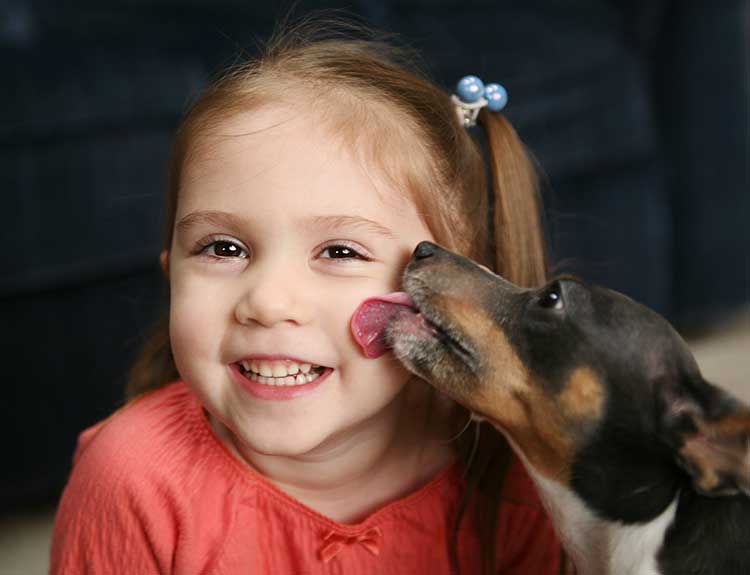
Humans love to give hugs, but dogs are not fans of them. Now, most dogs enjoy putting their face near a person’s face, but they don’t enjoy someone walking over and placing their human face near their face. There’s a big difference between the two because, with the latter, dogs feel like they can’t get away when held in a human embrace and may bite. Many dog bites happen to a child’s face, which is a telltale sign that the child’s face was too close to a dog’s face.

5. Make Like a Tree

When dogs get excited, they can topple over children quickly. Teach your child to make like a tree when your dog gets excited. Children should stand still like a tree, fold their arms around their bodies like branches and look at the ground (avoid eye contact). Most dogs will ignore a still child and find something else to do.

Filed Under: Safety Tagged With: children and dogs, dog growls at child, dog safety, dog training, Dog Training Tips, dogs and children, dogs and children tips, keep children safe around dogs, keeping children safe around dogs, safety tips to keep children safe around dogs, why my dog growls at our dog

How To Save Your Back When Training Small Dogs

October 6, 2017 by Fanna Easter

Training Small Dogs: Reward Without Back Pain

Training Small Dogs
Christian Müller/Adobe Stock

All dogs deserve lots of super yummy treats during dog training practice sessions. However, when training small dogs, a pet owner can certainly strain his back from repeatedly bending down to give his dog a treat. If you share your home with a small dog, give these treat tossing tips a try and give your back a rest.

Feed the Floor

When rewarding your small dog for a good job, try tossing treats on the floor instead of bending over and popping treats into your tiny dog’s mouth. Tossing treats on the floor is an extremely effective reward system, and you’re able to move your small dog around to reset for the next behavior.

If tossing treats on the floor is bothersome, place a plastic container on the floor and toss treats into that. Your small dog can perform a behavior, then walk over to her “treat bucket” to eat her earned treat.

Lightly toss treats about 2-3 feet away from your dog. Tiny bits of cheese work extremely well because there’s minimal bounce factor plus low fat cheese won’t leave a greasy residue behind.

RELATED: How to Clean Food Stuffed Toys

Use a Wooden Spoon

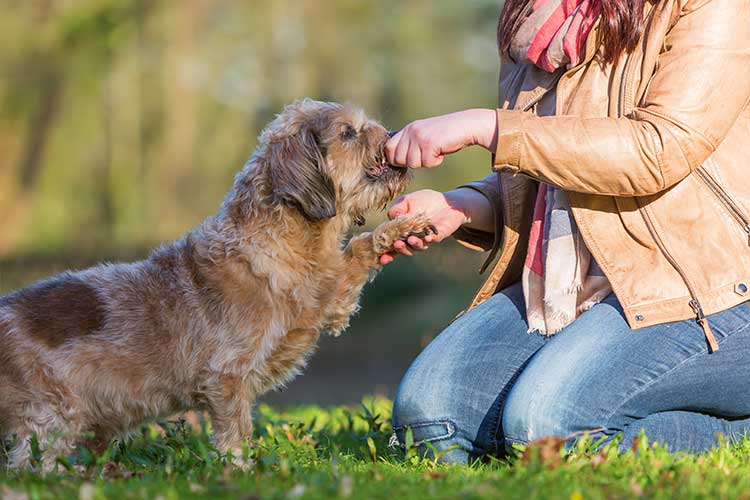
When training your small dog to walk on a loose leash, it’s vital to reward her often. Bending over and popping a treat into a dog’s mouth every few seconds can certainly put unneeded strain on your lower back. Instead of bending over, place a large dollop of peanut butter on a wooden spoon or rubber spatula. Hold the spoon behind your back to prevent your small dog from jumping up and trying to mug you for treats.

When rewarding the right behavior, lower the spoon down, so your dog can take a lick or two of peanut butter, then pick it back up. Some dogs will grab the entire dollop of food off the spoon (smart dog), so smear peanut butter across the spoon or spatula surface to prevent this from happening.

Between both tips, see which one works best for you. Using a peanut butter spoon works best when teaching small dogs polite leash manners, and the feeding the floor method is ideal for everything else.

Filed Under: Dogs, Training Tagged With: dog training, Dog Training Tips, dog training tips for small dogs, giving treats to small dogs, small dog training, train a small dog, training small dogs, training tips for small dogs, treat training tips for small dogs

Dog On Dog Aggression In The Home

October 4, 2017 by Fanna Easter

Dog Training: Dog Aggression Between Housemates

Dog On Dog Aggression In The Home
Jne Valokuvaus/Adobe Stock

When two dogs in the same home start fighting, it’s a frightening and extremely urgent situation. The tension between both dogs is pliable, and pet owners are often frustrated, yet hopeful. If your dogs are fighting, follow these steps today. Don’t hesitate because this situation will not get better on its own.

Why Are Your Dogs Fighting?

Many pet owners dwell on the exact cause for the fighting between their dogs. As a professional dog trainer, it’s extremely hard to pinpoint the exact cause for the dog on dog aggression in the home, but it’s evident that tension has been present long before their fighting began.

Dogs protect resources, such as food, toys, treats, beds, space and humans. Additionally, overly anxious dogs will redirect their frustration onto their housemate. Regardless of the reason, it’s important to understand this situation will only get worse until it’s addressed with a professional dog trainer or veterinary behaviorist.

[perfectpullquote align=”full” cite=”” link=”” color=”” class=”” size=””]Allowing dogs to fight only makes the situation much worse and is considered torture for both dogs.[/perfectpullquote]

What Should You Do First?

Prevent your dogs from meeting or seeing each other. Never allow dogs to fight it out or work it out for their spot in the pack because this never works. Allowing dogs to fight only makes the situation much worse and is considered torture for both dogs. Plus, it’s not fair to the dog being attacked over and over; his or her life is a living hell.

Separate both dogs to opposite sides of the house. Keep doors firmly closed and place gates to prevent fighting. Bring one dog out to potty at a time, and ensure each dog is securely confined in his or her area before letting the other dog out to potty. Preventing fights stops your dogs from practicing the behavior while keeping each dog safe.

Get Professional Help

Pet owners with squabbling dogs need professional help. It’s impossible to prevent housemates from fighting, even with management, without intense dog behavior modification. Contact a professional dog trainer or veterinary behaviorist immediately, and keep all dogs separated until a professional can help you implement behavior protocols.

While it’s tempting to seek advice online, it’ll be difficult to find specific answers for your case unless a professional has met each fighting dog and the environment. If someone does offer advice without meeting your dogs, that person is doing a disservice to your household.

Find a local professional immediately for best results. Plus, make sure the professional has extensive knowledge with dog aggression and uses positive reinforcement training only. Punishment will only make the problem worse.

Filed Under: Behavior, Training Tagged With: dog behavior, dog obedience, dog on dog aggression, dog on dog aggression in the home, dog to dog aggression, dog training, Dog Training Tips, dogs in same house fight, fighting dogs in same house, help for dogs fighting in same household, how to stop dogs from fighting, how to teach a dog, how to train your dog, stop dog fighting, stop dogs from fighting

  • « Previous Page
  • 1
  • …
  • 5
  • 6
  • 7
  • 8
  • 9
  • …
  • 43
  • Next Page »

About

Dog Training Nation is a community of dog trainers, dog owners and dog lovers. Our mission is to provide trainers and owners valuable information to enrich dogs' lives. We cover a range of topics, from socializing puppies to dealing with aggressive dog behavior to selecting the best dog products. It is our hope you share our content to make the dog and owner world a better place.

​

Facebook

Video

Dog Training Nation is a dog training blog for pet owners and dog lovers. We cover a range of topics from puppy socialization tips to dog aggression to dog health. It is our hope you share our content to make the world a better place for dogs.

Dog Training Nation

Quick Links

Dog Training
Dog Behavior
Dog Training Videos
Become a Dog Trainer
About
Contact Us

Copyright © 2026 · Lifestyle Pro Theme on Genesis Framework · WordPress · Log in