Dog Training Nation

In Dogs We Trust

  • Home
  • Training
    • Dogs
    • Puppies
    • Clients
  • Behavior
    • Breeds
  • Health
  • Safety
  • Resources
    • Equipment
    • Books
  • Dog Training Videos
  • About
You are here: Home / Archives for fearful dogs

Help! My Dog Refuses to Walk

February 4, 2015 by Fanna Easter

What to Do When Your Dog Refuses to Walk

Dog Refuses to Walk
Learn tips to un-pancake your dog!

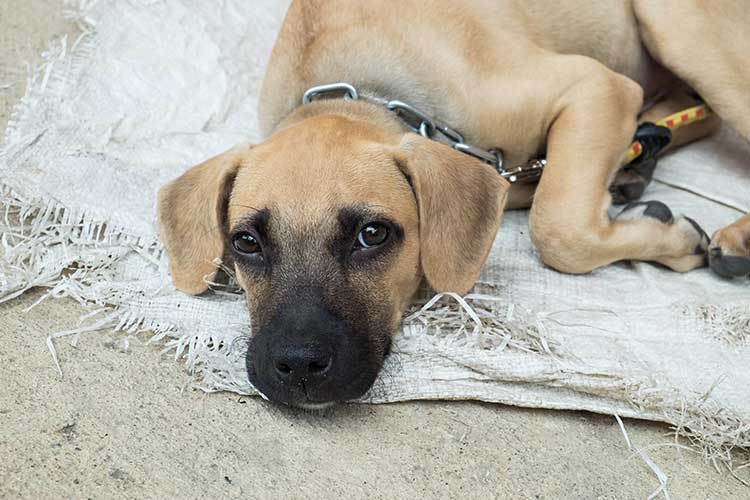
Most likely, you’ve had this happen during walks. When you’re heading home after a fun walk in the park, your healthy dog flattens himself to the ground, refusing to walk any farther. I call this “pancake dog,” meaning a dog will splat himself against the ground and refuse to walk.

Now, if your dog is limping, ill or injured, this doesn’t apply. Bring your dog to the vet ASAP.

Why Dogs Refuse to Walk

Below are a few reasons why a dog refuses to walk and flatten himself onto the ground.

Fearful

About 50% of the time, I notice puppies and dogs refuse to move forward due to fear. Usually, their bodies are lying backwards away from whatever is frightening them. This happens because a puppy or dog is scared of whatever he is approaching at the time. This could be another dog, person, narrow space, barrier or she has not learned how to walk on a leash. Honestly, it could be anything.

Never force or drag a dog past a scary object. Instead, stop to give your dog some time to process the situation. If she’s still scared, use the Hansel and Gretel technique described below. For smaller dogs, it may be easier to pick them up and walk past the scary thing. At home, practice confidence building games, such as Touch the Goblin.

RELATED: How to Train Fearful Dogs

Don’t Let the Fun End

Dog Training Tips
Learn tips to get your dog happily moving forward!

And this is the other 50%. 🙂 Puppies and dogs are smart. They’ve learned that splatting against the ground and holding firm keeps them in their favorite environment longer. Dogs will refuse to move usually once you turn to head home. I’ve had puppies splat after class. They don’t want to leave. 🙂

The Hansel and Gretel technique will get them moving. Also, practice randomly walking away from the park and then rewarding good behavior (non-splatting) by walking back to the park for another game of fetch. No one wants the fun to end, but by making the act of going home fun, you don’t have to worry about pancaking along the way.

Un-Pancaking Your Dog

The goal of this dog training exercise is to get your dog up and willingly move forward, which builds confidence. Studies have shown giving dogs choices and allowing them to choose is just as reinforcing as treats—something to ponder!

Hansel and Gretel

Unlike the children’s fable, you’re moving your dog away from the monster not toward it. Sprinkle yummy treats in a trail past the scary thing. Using super yummy treats will really help. Your dog (or puppy) will eat the treats while keeping an eye on the monster. But he’s moved himself, which is a big step forward!

Plus, pairing yummy treats with something scary, well, makes things less scary. If you were stuck in an elevator, you would probably freak out. But what if you were stuck in an elevator with a dozen delicious cupcakes or a six-pack of your favorite beer? Not so bad, huh? You’ll indulge while waiting for someone to rescue you. 🙂

Touch the Goblin

During this game, you’ll need a clicker and lots of yummy treats. Introduce something odd in your home, such as the vacuum or folding step stool (both usually freak dogs out). Practice each step 10 times and then move onto the next one. If your dog becomes frightened, take 1 to 2 steps back.

Never move, wiggle or touch the scary thing during training sessions. This just makes the scary thing even more terrifying to your dog.

  1. Click and treat when your dog looks at the scary object.
  2. Now, click and treat when your dog walks over to the scary thing.
  3. Usually, after a few sessions, dogs will try to touch the scary thing with craned necks, wide eyes and splayed out back legs. Click and treat this behavior. They are being pretty darn brave right now.
  4. Say “touch the goblin” as they lean forward, trying to touch it with their muzzle.
  5. After a few touches, your dog will exude confidence. He successfully slayed the dragon so be proud! We call this building confidence. 🙂

After a few “touch the goblin” sessions with different scary things, you’ll notice your dog will likely march right up and touch the next scary thing. He’s learning that scary things will not harm him.

WATCH: How to Get a Dog Moving When He Refuses to Walk

You may also like: Humping Dogs
Filed Under: Behavior, Dogs, Puppies, Training Tagged With: dog refused to move, dog refuses to get out of water, dog refuses to go outside, dog refuses to leave, dog refuses to leave dog park, dog refuses to walk during walks, dog training, Dog Training Tips, dog training videos, fearful dogs, how to train a puppy, my dog refuses to walk on leash, my dogs stops moving on leash, positive reinforcement dog videos, professional dog training tips, puppy is scared of moving cars, puppy training tips

Dealing With Learned Helplessness In Dogs

October 29, 2014 by Fanna Easter

Learned Helplessness

Shut Down Dogs
crazybboy/Adobe Stock

Learned helplessness is the condition where a dog has been repeatedly exposed to a scary stimulus and has learned he no longer has control over the adverse situation. The dog shuts down and becomes helpless, knowing he can’t change the outcome.

Dogs can shut down during group dog training classes, private lessons and even puppy playtime. As your dog’s voice, you should learn what causes dogs to shut down and how to prevent it.

What is Learned Helplessness?

Dogs either fight or flight when they encounter a scary trigger. However, there’s a new response I’m seeing more and more of during my dog training sessions. It’s freeze or shut down. Dogs that have learned to become helpless basically giving up, flop over, and hope the scary trigger goes away and doesn’t hurt them.

[perfectpullquote align=”full” cite=”” link=”” color=”” class=”” size=””]People see the dog giving up and mistakenly assume the dog has learned to stay still or behave. Oh, but it’s far from it.[/perfectpullquote]

Can you imagine being so scared, your entire body shuts down, you go limp, you roll over and you wish with everything you have that the scary thing would leave you alone? Wow. That’s terrible right!?

Well, I’m seeing an increasing amount of learned helplessness in dogs introduced to scary triggers. Many times, dogs shut down at the vet’s office, on a groomer’s table, or during class because they’re so confused or scared that they simply give up. People see the dog giving up and mistakenly assume the dog has learned to stay still or behave. Oh, but it’s far from it. The dog was pushed way too far.

What Does a Shut Down Dog Look Like?

When dogs shut down, they usually become frustrated and display calming and appeasement signals. Dogs will usually begin with subtle versions of calming signals to indicate they’re confused and scared. If the scary stimulus continues, their calming signals become more apparent, such as an increase in panting, salivation and sometimes vocalization. You may also notice their:

  • Tails tucked between their legs
  • Ears pinned back against their head
  • Body weight shrinks backwards
  • Bodies flop on the floor and become very still

What Causes Learned Helplessness in Dogs?

Any number of triggers can cause a dog to shut down, including:

  • Loud echo
  • Sound of a clicker
  • Other dogs being too close
  • Strange smell (we may never discover this one)
  • Chronic anxiety caused from past experiences during dog training
  • Combination of triggers

Shutting Down vs. Learning a Incompatible Behavior

Let’s be crystal clear here. There’s a major difference between shutting down and learning an incompatible behavior—huge difference. Teaching an incompatible behavior means teaching a dog to sit instead of jump or target your hand instead of pulling on a leash.

The dog has a choice in this situation, and is a willing participant in the learning process. Shutting down means the dog is not a willing participant in the learning process, and is so confused he gives up and flops on the floor wishing you (or whatever the stimulus causing him to shut down) goes away.

How to Prevent Dogs From Shutting Down

Whether you’re a dog trainer or dog owner, it’s so important to become fluent in dog body language and notice the nuances before the dog becomes stressed. The moment you notice your dog is stressed by a trigger, look at your dog’s environment for the trigger. What is causing your dog to stress out? Once you identify it, remove it.

If a dog is stressed with another dog too close, ask the other dog to move away from the stressed dog. If the trigger is a loud sound, move the scared dog further away from the sound or use visual barriers to calm a stressed dog.

While some stress is a good thing and is actually needed during the learning process, we’re talking about beyond normal stress levels that border into anxiety here. When you’re stressed or anxious, you can’t learn. It’s impossible. Think about it: If you’re scared of spiders and I hold a tarantula about 3 feet from you while teaching you how to recite Shakespeare, would you remember a word I said? Bingo, that’s the feeling right before you shut down. 🙂

If Your Dog Doesn’t Recover

If a stressed dog becomes even more frantic when triggers are removed, take your dog outside for a walk or remove him from the situation. Then, try to identify exactly what caused him to shut down.

If you’re a dog trainer, ask the owner to step outside the session with her dog and come back to watch until the session ends. Afterwards, ask the owner to list out any known triggers that cause anxiety and begin a simple desensitization program for each trigger. Begin slowly and remember desensitization always works. If it’s not working, it’s not being done right, so take a deeper look at the process. When in doubt, split a behavior, which means make it even simpler.

If, at anytime, a dog becomes worse or does not improve, I recommend partnering with a qualified animal behaviorist.

How do you prevent a dog from shutting down? I want to hear from you. 🙂

Related Posts: How to Train Fearful Dogs

Filed Under: Behavior, Clients, Training Tagged With: best dog trainer tips, dog behavior, dog trainer, dog trainer's corner, fearful dogs, how to train a scared dog, my dog is scared, shut down dogs, top dog trainer tips, training a fearful dog, training scared dogs

About

Dog Training Nation is a community of dog trainers, dog owners and dog lovers. Our mission is to provide trainers and owners valuable information to enrich dogs' lives. We cover a range of topics, from socializing puppies to dealing with aggressive dog behavior to selecting the best dog products. It is our hope you share our content to make the dog and owner world a better place.

​

Facebook

Video

Dog Training Nation is a dog training blog for pet owners and dog lovers. We cover a range of topics from puppy socialization tips to dog aggression to dog health. It is our hope you share our content to make the world a better place for dogs.

Dog Training Nation

Quick Links

Dog Training
Dog Behavior
Dog Training Videos
Become a Dog Trainer
About
Contact Us

Copyright © 2026 · Lifestyle Pro Theme on Genesis Framework · WordPress · Log in
