Dog Training Nation

In Dogs We Trust

  • Home
  • Training
    • Dogs
    • Puppies
    • Clients
  • Behavior
    • Breeds
  • Health
  • Safety
  • Resources
    • Equipment
    • Books
  • Dog Training Videos
  • About
You are here: Home / Archives for house breaking a dog

House Training An Adult Dog

March 15, 2017 by Fanna Easter

How to House Train an Adult Dog

House Training Adult Dog
nenetus/Adobe Stock

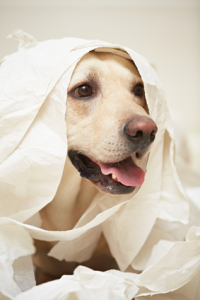
Potty accidents, caused by adult dogs, is much more common than you think. Most adult dogs will potty outside in the backyard, but will also potty inside when the right opportunity arises (e.g. when it’s raining outside :)). Regardless of the reason, some adult dogs may need a house training refresher course. If your dog potties inside your home, follow these simple steps to house train an adult dog.

Dog House Training 101

When teaching an adult dog potty training skills, you should follow the same steps you’d take for potty training a puppy. Remember, it’s up to you to teach a dog house training skills. Dogs aren’t pre-programmed to understand pottying indoors is considered rude. 🙂

Crate Your Dog

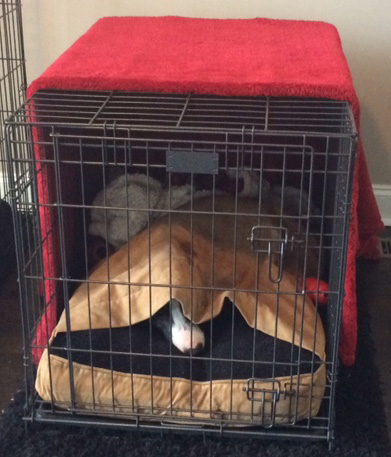
Confining a dog to a small area is an important step for house training an adult dog. Usually, dogs won’t potty where they sleep, so confining them in a crate teaches dogs to “hold it.” Crate training can be extremely helpful when used properly. However, you shouldn’t leave your adult dog or puppy in a crate for more than 4 hours. If you’re unable to keep an eye on your dog, toss a food filled toy into the dog crate and close your dog inside. This will prevent her from wandering into the formal dining room and pottying. When in doubt, crate your dog before chatting on the phone or reading through text messages.

Leash Your Dog During Potty Walks

When asked if their dogs potty in the backyard, pet owners swear their dogs do, yet their dogs come right back indoors and urinate on the carpet. While this raises a red flag from a dog trainer’s perspective, it’s important to rule out any health issues with a veterinarian first. Once health issues are cleared, it’s time for leashed potty breaks in the yard.

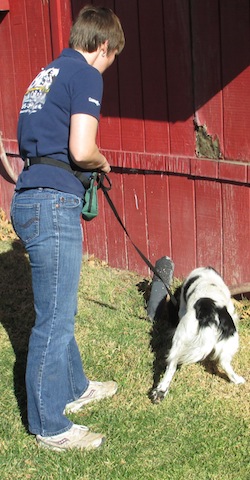
Bring your dog outside on leash in the most boring part of your backyard. Now wait for “it” to happen, and reward when your adult dog potties. Once she’s done, give her a treat and unsnap the leash. Leash walks aren’t forever. It’s a dog training tool to verify a dog is actually pottying outside, and it provides plenty of opportunities to reward good behavior.

If a dog doesn’t potty outside, bring her indoors and place her inside the crate with a food stuffed toy. After 20 minutes, take her outside again. Continue until she potties outside and reward her, so she learns that pottying outside makes treats happen.

Set a Schedule

Life gets busy, and dogs are usually forgotten. Creating a set potty schedule is key. Following a set schedule will certainly jump-start a house training protocol. Set your dog’s potty training schedule in a highly visible area, such as a refrigerator. Even better, set a reminder on your smartphone. Check out an example of a house training schedule.

There is One Big Difference Though

When house training a dog, the core principles and skills are the same regardless of a dog’s age. But there’s one big difference that most pet owners seem to forget, and it’s a challenging one. When dogs practice a behavior for a long time, they get really good at it. Behaviors become patterns and habits, which are challenging to fix. It will take longer to house train an adult dog than a new puppy.

This applies to humans as well. Don’t believe me? Try shaking hands with your left hand next time. It feels weird, and most people quickly return to what they know, which is shaking hands with their right hand. You’ve shook hands with someone’s right hand for years, so it feels weird doing anything else. Remember this when your adult dog has a potty accident; they’re relearning new habits and skills.

It Can Be Done

Patience and consistency is key. When your adult dog has an accident, it’s usually because she was allowed too much freedom too soon. Take a step back, and follow the three steps for house training an adult dog. Never punish your dog for potty accidents, as she’ll learn to potty in far away areas, which is counterproductive. Reward often and keep an eye on your dog until she’s had 30 potty accident free days.
UP NEXT: 5 Tips for Sharing a Home With an Incontinent Dog

Filed Under: Dogs, Training Tagged With: adult dog potty training, can't house train a dog, dog training, Dog Training Tips, house breaking a dog, house breaking adult dog, house breaking old dog, house train a rescue dog, house training adult dog, house training an adopted dog, house training older dog, how to potty train a 2 year old dog, how to teach a dog, how to teach an old dog potty training, how to train a dog, potty train a rescue dog, potty training an adopted dog

How to Potty Train a Puppy

July 16, 2014 by Fanna Easter

Potty Training a Puppy

Potty Training a Puppy
Learn the three steps of potty training your puppy.

Still struggling with potty training your puppy? I have potty training tips for you! These work for a new puppy, an older puppy, a newly adopted dog and even a dog that suddenly begins pottying in the house.

Step 1: Create a Set Schedule

This is a huge step. Consistency is key for potty training success. Create a daily schedule for your puppy, such as:

  •  7 a.m.: Wake up and potty.
  • 7:15 a.m.: Feed.
  • 7:30 a.m.: Potty (puppies and dogs will usually poop after they eat).
  • 7:40 a.m.: Supervised playtime.
  • 8 a.m.: Crate time with a food stuffed toy.
  • 10 a.m.: Potty.
  • 10:15 a.m.: 30-min walk in neighborhood.
  • 10:45 a.m.: Water break.
  • 11 a.m.: Crate time. Repeat the above example throughout the day.
Stella Mae's Spa
Stella Mae’s Spa

Step 2: Confine Your Dog When Unsupervised

Keeping your puppy in a crate (or behind a gate in a small room) teaches your puppy to hold it. This is new for many puppies, but we need to teach them this valuable skill. Crate training should be fun. Your dog should love his crate, as this is his private spot where scrumptious food stuffed toys hide. As a general rule, your puppy should be crated for a maximum of 4 hours at a time. This rule applies for older dogs too. For young puppies, calculate 1 hour per 1 month of age (2 months old, 2 hours; 3 months old, 3 hours and so forth). Keep your puppy in his crate when you are unable to watch him closely even if for a few minutes when cooking dinner or taking a shower. Many pet owners worry their puppies are crated too much during potty training. However, it’s vital your puppy learns potty training skills. Once your puppy has been accident-free for two days, he earns more time outside of his crate. Also, make sure your puppy has plenty of playtime outdoors, regular walks and lots of food stuffed toys to keep him mentally and physically entertained.

Step 3: Bring Your Puppy or Dog to a Designated Potty Area on Leash

Potty Training on Leash
Potty training on leash.

Many times, I’ve heard: “I let my dog out in the yard to potty, but she came back in the house and peed on the rug!” Oops! Your dog was having way too much fun outside and forgot to potty. 🙂 We need to teach puppies to potty first, then they can play. Bring your puppy on leash to the most boring part of your yard and wait. He will sniff around, pull on the leash (keep your feet planted in one spot like a tree), and it will happen. If your dog has not pottied within 15 minutes, then bring him indoors and put him in his crate (he is learning to hold it). Wait about 20 minutes, bring him back outside to the boring spot and wait. Repeat this process if nothing happens. When your dog does potty in his designated potty area, do the potty dance! The potty dance looks like: high-pitched praise while jumping up and down. You’re cheering for your fur baby! I promise, your neighbors are not watching. 🙂  Now, unclip the leash from his  collar, as he has earned playtime in the yard.

RELATED: Housebreaking a Puppy

Measuring Success

It’s our job to teach dogs where they can potty. When your dog potties in the right spot, you have taken one step forward. When your dog potties in the wrong spot, you’ve taken two steps back. Think about it from your dog’s point of view: who would not want to potty inside? It’s climate controlled with plenty of thick carpet to absorb everything. Our dogs are smart! Teach your dog to signal you when he needs to potty. Some pet owners attach bells that hang from the backdoor knob, and your puppy pushes the bell to signal he needs to potty. Personally, I recommend watching your puppy’s body language and choosing a specific signal, which means, “Oh, you need to potty? Let me grab the leash!” This signal can be puppy pacing in front of you, puppy standing by the backdoor, puppy touching your foot or arm with his nose or paw. Choose the signal and stay consistent. The moment your puppy performs the potty signal, bring him outside. Many times, our puppies become confused when they begin to potty in the house, as they know this will get your attention and you’ll bring them outside. Many owners worry their dogs will potty signal, meaning they want to go outside and play instead of pottying outside. I would not worry about this too much, as your puppy is leashed and potties in the most boring part of your yard (for right now). This may happen when they become adults. However, it can easily be fixed. 🙂

A Few Side Notes

  • If an older dog, whom was previously potty trained, suddenly begins to have accidents in the house, always consult with your veterinarian first. Always rule out a UTI or other ailments.
  • For folks living in the city and want to teach your puppy or dog to potty on puppy training pads (or litter train), click on the blue link for specifics. You will use the three-step potty training process. However, I’ve included a few extra tips for you!
  • Remember, your crate is not punishing your dog. The crate is teaching him to hold it. If you bring him indoors and he has free roam of your home, he will sneak off and potty in another room (usually the formal dining room since no one really uses that room anyways).
  • If you are following the steps and your puppy or dog is pottying on his crate bedding, remove it for one week. Sometimes, dogs will potty on their bedding as it absorbs their urine (the mess is gone!). You can certainly add crate bedding in later. However, we are teaching the puppy to hold it in the crate so let’s set them up for success. 🙂
  • Accidents will happen so don’t worry. Clean the area with pet enzyme-based spot cleaners and vow to watch your puppy closer.
  • Lastly, punishment is useless for potty training. It’s the truth. If you punish for accidents, you’ve confused the dog. Trust me, it does not work. Accidents mean to keep a closer eye on your dog while loose and it’s that simple!

Potty training takes time, consistency and learning your dog’s signal and  sticking to the plan. Please note your questions in the comments section below!

READ ALSO: How to Stop a Puppy From Biting

Filed Under: Puppies, Training Tagged With: house breaking a dog, house training an older dog, potty training a puppy, potty training a puppy at night, potty training tips, puppy training a puppy schedule

About

Dog Training Nation is a community of dog trainers, dog owners and dog lovers. Our mission is to provide trainers and owners valuable information to enrich dogs' lives. We cover a range of topics, from socializing puppies to dealing with aggressive dog behavior to selecting the best dog products. It is our hope you share our content to make the dog and owner world a better place.

​

Facebook

Video

Dog Training Nation is a dog training blog for pet owners and dog lovers. We cover a range of topics from puppy socialization tips to dog aggression to dog health. It is our hope you share our content to make the world a better place for dogs.

Dog Training Nation

Quick Links

Dog Training
Dog Behavior
Dog Training Videos
Become a Dog Trainer
About
Contact Us

Copyright © 2026 · Lifestyle Pro Theme on Genesis Framework · WordPress · Log in