Dog Training Nation

In Dogs We Trust

  • Home
  • Training
    • Dogs
    • Puppies
    • Clients
  • Behavior
    • Breeds
  • Health
  • Safety
  • Resources
    • Equipment
    • Books
  • Dog Training Videos
  • About
You are here: Home / Archives for how to become a dog trainer

How to Teach Clients to Train Dogs

October 29, 2014 by Fanna Easter

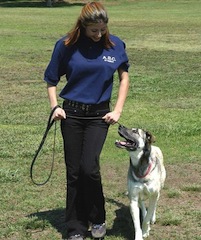
Teaching Clients with Dogs

Teaching Pet Owners the Basics of Dog Training
Use clear and simple directions when teaching pet owners the basics of dog training.

Dog trainers are expected to take a complex process, such as dog training, and break it into easy-to-understand terms–this is hard! The better you are at breaking complex behaviors into simple nuggets, the faster your clients will retain knowledge. Voila!

But can you effectively explain dog training easily?  Of course, with a few tips!

Before we begin:

In my opinion, dog trainers are expected to possess a higher understanding of learning theory, ABCs of learning (Antecedent, Behavior, Consequence), and so forth. Remember, clients are not expecting to become mini dog trainers. They just want their dogs to stop pulling on the leash and come back to them when called (this is why they enrolled in the class).

You’re not undermining the meaning or power of dog training. You’re actually doing the exact opposite. It takes great skill to understand a complex process and then turn around and explain it in easy terms.


 Three words: keep it simple.


Refrain From Using Learning Theory Jargon

Pet parents zone out when we use learning theory terms. If you don’t believe me, try saying this during your next class, “Let’s teach an incompatible behavior using negative punishment to prevent jumping. To begin, we choose an antecedent, which elicits a behavior for a desired consequence. Who wants to volunteer to go first?” Clients will shrink back and look at one another. They are totally confused. 🙂

Instead, give clear directions in terms pet parents can relate to and understand, such as:

  • “We are going to teach your dog to keep four feet on the floor instead of jumping up. When any of your dog’s feet leave the ground, you’ll walk away from him. Once all four feet are on the ground, you’ll click and toss him a treat.”
  • Clients are learning “feet leave ground, I leave (neg punishment).”  “Feet stay on ground, I stay and click/treat (positive reinforcement).” Voila. Simple problem-solving they can use to decrease a behavior, such as barking and so on. 🙂

Use Analogies Often

I’ll admit it: I’m an analogy queen. I use them for everything 🙂 Analogies are a comparison showing a similarity, which can help explain meaning and how it relates to real life. OK, I may have lost you in that sentence so let me bring you back by keeping it simple.

Politely greet dogs:

  • Refrain from petting dogs on top of the head. This is rude in doggie language.
  • Think about it this way: What if I petted you on top of the head instead of shaking your hand? You would think I was crazy right?
  • Same thing with dogs. Touch dogs under the chin instead.

Give Simple Instructions

Keep explanations and stories to a minimum. A person can only absorb so much knowledge in an hour. A few years ago, I completed a Tag Teaching seminar and it literally changed my life.

When explaining anything:

  • Explain using 5 or less words.
  • Demo using the same 5 or less words (demo with a dog and person).
  • Ask a student to demo using the same 5 or less words.
  • Ask each student to practice with his dog (5 reps).

Example:  Teaching “Touch”

  1. Explain: Dog touches nose left palm.
  2. If students become confused, break down the behavior even further. Nose left palm.
  3. For reps, I ask clients to count out 5 treats (this equals 5 reps).

What are your tips for effectively teaching clients about dog training? Please share!
Filed Under: Clients, Training Tagged With: best dog trainers, best tips for dog trainers, dog trainer, dog trainer's corner, dog training, how to become a dog trainer, how to become a dog trainer. beginner dog trainers, tips for dog trainers, top dog training tips

3 Behaviors All Dog Trainers Should Know

October 27, 2014 by Fanna Easter

Make Sure Your Clients Know These BehaviorsThree Behaviors All Dogs Should Know

Do you want to spice up your Basic Family Manners Class? Are you bored teaching the same foundation exercises over and over again? Don’t you ever feel like you’re forgetting something? Are your dogs still pulling on a leash and jumping up on people? Here ya go! Learn three new behaviors all dogs should know!

Body Handling

While this is mostly covered in Puppy Class, we forget to cover in Basic Family Manners Class geared for dogs six months and older. Body handling means a dog learns to allow a person to touch, handle and restrain his body. Trust me, it’s not fun having a dog bucking around the room when you’re trying to apply eye medicine or brushing mats out of his coat. 🙂 Plus, your vet and vet tech will thank you profusely!

Body handling teaches a dog to stand still while being examined at the vet’s office, brushed at the groomers, having nails trimmed, having teeth brushed, having medicine and ointments applied to the eyes or ears and so on. Many dogs can learn to remain still for blood withdrawals and injections. We just need to teach the dog what is expected during these procedures.

How to teach:

  • As you touch your dog’s shoulder, click and treat (repeat 5 times in a row).
  • Touch his nose, click and treat (repeat 5 times in a row).
  • Touch his front foot, click and treat (repeat 5 times in a row).
  • Touch his tail, click and treat (repeat 5 times in a row).

Move forward until:

  • Touch your dog’s nose, foot, tail or shoulder for 1 second, then click/treat.
  • Continue until you can touch longer or look in his ear or mouth for longer, then click/treat.

Park Your Dog

During the first week of Basic Family Manners, I teach “Park Your Dog.” We all know that Week One is usually the loudest and rowdiest class by far so teach pet parents how to teach their dogs to calm themselves. I explain how to teach it, demo with the rowdiest dog in class, and then ask pet owners to practice for 5 minutes while I walk around providing feedback. Then I ask owners to “Park Your Dog” during lecture time and when they first arrive at class.

How to teach:

  • Step on your leash about halfway up to your dog (your dog should have 3 feet of extra leash).
  • Click and treat your dog the instant the leash becomes loose (Tip: Instead of watching your dog, feel when the leash tightens and loosens under your feet. The moment you feel slack in the leash, click/treat!).
  • That’s it! Bingo, you are rewarding calm and quiet behavior!

Additional troubleshooting:

  • Dog still jumps up on you, shorten the leash.
  • Dog continues to pull on leash, your timing is probably off a bit. Click and treat every time the leash is loose.
  • My dog is still pulling, call his name and click/treat five times in a row. Now you have his attention, so keep it by rewarding frequently.

View demo video and additional training tips here.

Collar Pressure

I love teaching this behavior, especially for big dogs and little pet parents. 🙂 Having a large dog is tough as he seems to always pull you forward even when teaching him polite leash manners. Well, problem solved, this behavior teaches a dog to follow collar pressure instead of pulling away from it.

Step 1: Touching your dog’s collar is a good thing!

  • Touch your dog’s collar, next click and treat.
  • Try this 10 times in a row.

Step 2: Following the pressure on the dog collar.

  • Apply pressure to the dog’s collar the opposite way he is standing. Use light pressure, such as holding a door open. You are not pulling hard per se, but more like restraining.
  • Immediately click and treat when your dog follows the direction of pressure (as the dog moves towards the pressure, so that you are no longer applying pressure to your dog’s collar).
  • Try this 10 times in a row, remember to click and treat each time.

Step 3: Your dog now follows you on the leash.

  • Touch your dog’s collar, as if you are moving him away from something, such as an open door.
  • Immediately click and treat when your dog follows the direction of pressure (he moves towards your hand instead of pulling opposite of you).
  • Try this 10 times in a row, remember to click and treat each time.

View demo video and additional training tips here.

Dog trainers, bark back! What behaviors would you like to teach in class?

Filed Under: Clients, Training Tagged With: beginner dog trainer recommended reading, blogs for dog trainers, clicker training, dog trainer, dog trainer corner, dog trainers, dog training, dog training advice, Dog Training Tips, for dog trainers, how to become a dog trainer, reading for dog trainer, top dog trainer articles, want to become a dog trainer

Best Dog Training Books For Beginners

October 22, 2014 by Fanna Easter

Dog Training Books

Dog Training Books
Continue to learn by reading the best dog training books in the industry. dtatiana/Adobe Stock

Written for dog trainers with less than 2 years of experience.

If you’re a dog trainer, regardless of experience level, it’s so important to continue learning. While attending conferences and seminars are a huge plus, reading dog training books provides an in-depth look into specific topics as well as references when you encounter obstacles. As a dog trainer, I highly recommend this reading list with the assumption that beginner dog trainers have an understanding of basic classroom setup, management and curriculum.

Best Puppy Training Book

“Puppy Start Right – Foundation Training for the Companion Dog”
by Kenneth Martin and Debbie Martin

If you’re looking for the ultimate puppy training book, then you must read this book! Dr. Kenneth Martin and Debbie Martin provide information left out of most books about teaching body handling and muzzle training. Plus, they include a good refresher on clicker training and step-by-step information on shaping behaviors, which is a challenging skill for beginner dog trainers. Reading and referencing this book will certainly prepare you to offer the most current information in puppy classes!

Best Learning Theory Book

“Don’t Shoot the Dog” and “Reaching the Animal Mind”
by  Karen Pryor

If you have not read these books yet, then run and purchase them right away! Karen explains a beautiful dog learning theory, variable schedules of reinforcement and how animals learn. A tip: highlight and bookmark your “ah ha moments” so when you’re feeling burned out, take a peek and understand why you fell in love with dog training in the first place! 🙂

Best Canine Body Language Book

“Canine Behavior: A Photo Illustrated Handbook”
by Barbara Handelman

An important skill to learn, as a dog trainer, is how to read and interpret canine body language. Barbara’s book not only explains body language, but the reference pictures are also amazing! This book is HUGE and packed full of pictures with detailed explanations. Tip: when viewing each picture, think through solutions to prevent this behavior from happening. This will teach you to react quickly, especially to an “agnostic pucker”!

Best Teaching Pet Parents Book

“Ebook: The Human Half of Dog Training – Collaborating with Clients to Get Results”
by Risë VanFleet
&
“It’s Not the Dogs, It’s the People!”
by Nicole Wilde

Oh, but teaching dogs are only half of it and it’s so important to understand how to interact, teach and provide feedback to pet parents. In my opinion, this is the hard part! Not only do you need to interpret human body language, you need to also understand how to tactfully explain instructions, several times if needed, to ensure the pet parent understands specific concepts. Well, here ya go — the two best books out there! Don’t skimp by purchasing only one book (it’s so important to read several points of view).

So you’ve noticed, a few topics are missing, such as dog aggression, anxiety and fearfulness. Beginner dog trainers must have a full understanding of the above topics before diving into the deep end, meaning aggression. For my full thought process on this topic, check out these dog behavior articles.

What is your favorite dog training book?

Filed Under: Books, Clients, Large, Resources, Small, Training Tagged With: animal behaivorist, beginner dog trainer recommended reading, best books for dog trainers, best dog training book review, best dog training book reviews, best dog training books, best dog training books 2014, best rated dog training books, book dog trainer, dog trainer, dog trainer's corner, how to become a dog trainer, so you want to be a dog trainer, top books for dog trainers

Should a Beginner Dog Trainer Take Aggression Cases?

October 20, 2014 by Fanna Easter

Aggressive Dog Training

Training Aggressive Dogs
Grrr.

I’m asked this question by novice dog trainers several times a week. My short answer is no. Shocking, I know, but not discouraging, trust me. Let me explain why I feel beginner dog trainers should not take aggression cases, just not yet.


 Beginner dog trainers must accomplish critical foundation skills first!


What Does Beginner Dog Trainer Mean?

To me, a beginner dog trainer means he’s recently graduated from a dog training school or university, or currently mentoring with an experienced dog trainer. He has learned foundation skills, such as learning theory and how to apply it to everyday circumstances. After graduating, he is now learning how to practice foundation exercises with many different dogs and people, as they are all different.

Focusing on Foundation Behaviors

Foundation behaviors focus on teaching people how to apply basic learning theory to shape polite canine behaviors. That sentence was a mouthful, but this is what beginner dog trainers must accomplish first before accepting aggression cases.  Let me drill down further.

The truth of the matter is clients enroll in classes or hire you because you will “fix” their dog issues. Take that in for a moment, that’s a lot of pressure. Now, ball that pressure up with different dog and human learning styles — yikes! Take all that pressure even further. Dog trainers must be able to offer another way of thinking or different solutions quickly for a particular behavior. That’s plenty of pressure without topping it off with dog aggression.

There’s Plenty of Time, Later, for Aggression Cases

For some reason, dealing with aggression cases is “sexy.” Dog trainers wear it as a badge of honor. Trust me, it’s not sexy when you’re over your head in a difficult situation.

There will be plenty of time later. Right now, focus on different types of adult learning styles, such as visual, auditory and kinesthetic learning, which are part of the larger picture. Then focus on the next layer, which is teaching adults to use logic and reasoning even if this means saying the same thing different ways. It’s also important to interpret human body language.

Does your client really understand what you just said? Interpret his body language:

  • Is he just looking at you or his feet?
  • Nodding or eyes are glazed over?
  • Is he stepping back from you or standing still?
  • Is he smiling or rolling his eyes?
  • Is he participating or shrinking back?

Most importantly, is he able to demo what you just explained to him? That is the true answer! If not, he didn’t understand so it’s vital to rephrase without sounding condescending. Yes, this takes skill and finesse so practice and practice some more. 🙂

Now learn to successfully identify, interpret body language and change thinking patterns for naysayers (“My dog CAN NOT do that”), cynical thinkers (“Treats don’t work”), non-participants (“It’s okay, we’ll just sit here”), chronic interrupters (Blurting out “But, what if…..”) and show offs (“I volunteer to demo again!”).

Then, you have the dogs. Each dog learns differently so learn how to demo different ways to shape, capture and lure a down behavior with different dogs (short, long, pulling, shut down, tall, scared). And if a demo dog moves away from you, it’s okay. Return the dog back to his owner. You’re not expected to have a magic wand so all dogs love you. 🙂 What about pulling dogs? What tips do you have for Larry the Labrador that insists on pulling Grandma around? But Grandma has tried all that, now what?

So now you’re exhausted just reading this. Trust me, there is plenty of time for aggression cases. And if you think all the above is hard, increase this difficulty by 10x and now you have a true taste of  an aggression case. With aggression cases,  you have emotion, frustration and denial. That’s just on the human side.  The poor dog is depending on you to help.

Take your time to learn and implement foundation exercises. It’s worth it!

Filed Under: Clients, Training Tagged With: become a certified dog trainer, continuing education for dog trainers, dog trainer, dog trainer advise, dog trainer tips, dog trainer's corner, dog trainers, dog training, how to become a dog trainer, novice dog trainers, service dog trainer, tips for dog trainers, what should all dog trainers know

About

Dog Training Nation is a community of dog trainers, dog owners and dog lovers. Our mission is to provide trainers and owners valuable information to enrich dogs' lives. We cover a range of topics, from socializing puppies to dealing with aggressive dog behavior to selecting the best dog products. It is our hope you share our content to make the dog and owner world a better place.

​

Facebook

Video

Dog Training Nation is a dog training blog for pet owners and dog lovers. We cover a range of topics from puppy socialization tips to dog aggression to dog health. It is our hope you share our content to make the world a better place for dogs.

Dog Training Nation

Quick Links

Dog Training
Dog Behavior
Dog Training Videos
Become a Dog Trainer
About
Contact Us

Copyright © 2026 · Lifestyle Pro Theme on Genesis Framework · WordPress · Log in