Dog Training Nation

In Dogs We Trust

  • Home
  • Training
    • Dogs
    • Puppies
    • Clients
  • Behavior
    • Breeds
  • Health
  • Safety
  • Resources
    • Equipment
    • Books
  • Dog Training Videos
  • About
You are here: Home / Archives for how to teach a dog

How To Start Volunteering For Dog Rescue Groups

January 18, 2018 by Fanna Easter

Becoming a Dog Rescue Volunteer
Dog Rescue Volunteer
Okssi/Adobe Stock

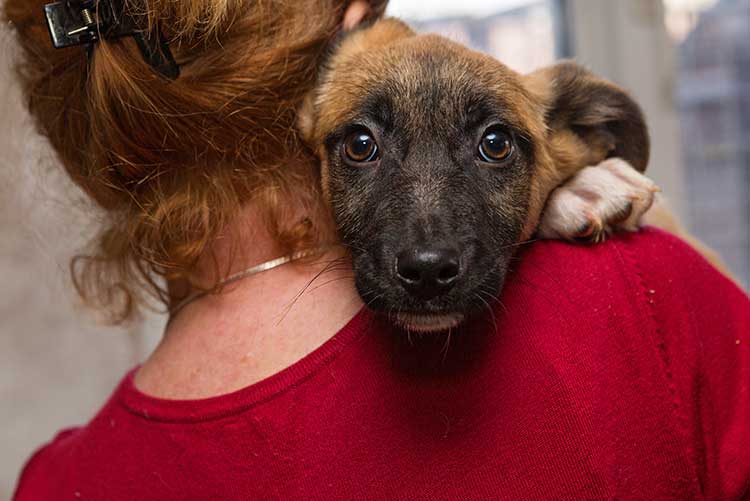
Everyone wants to help a dog in need, but many are not sure of how to get involved or even where to start. Take it from a fellow dog lover and dog rescue volunteer: All dog rescue groups need manpower. Yes, donations to rescue groups are wonderful, but rescue groups need boots on the ground to assist in transporting dogs, fostering and interviewing potential adopters. It’s a new year, so get involved with dog rescue. Here are a few tips to becoming a dog rescue volunteer.

Find a Dog Rescue Group Near You

With the Internet, it’s much easier to locate a local dog rescue organization within seconds. On Google, search for a dog rescue in your area and type in “dog rescue (your city and state).” Most reputable dog rescues will pop up on the first page. You could also use the Petfinder’s website, as that is a well-known and trusted organization.

If you have a favorite breed of dog, you can find a local breed rescue by searching “(name of breed) rescue (your city and state).” Most links, including Petfinder, will redirect you to a rescue’s webpage or offer a contact email. Trust me, rescue organizations follow up quickly with emails sent to them, especially those offering help. If you don’t hear anything back within a week, send another reminder email with “volunteer” in the email subject line. Persistence is key, and much appreciated by overworked rescue folks.

Complete and Submit Online Volunteer Forms

Once a rescue group reaches out to you, they will send you a dog rescue volunteer form. Thoroughly complete the form and send it back within a week. Every volunteer must complete some type of paperwork before volunteering. Some rescue organizations have volunteer form links on their website. If so, complete the form online and send an email to their contact person informing them of your desire to volunteer.

On a rare occasion, if you don’t hear back from your chosen rescue, send a reminder email. If you still don’t receive a response, contact another local rescue in your area. Rescues are non-profit and run by volunteers that are probably overloaded with surrenders.

Change Your Schedule to Accommodate

When rescue groups need a foster home or transportation, it happens quickly. As an example, within a 24-hour notice, I drove 3 hours one way to pick up a mama dog and her 8 newborn puppies. Each transport volunteer had to change her schedule immediately since a young mother was in the process of having puppies in 15-degree weather outside. Think about it this way: Carving out 2-3 hours to help a dog in need means a new life for this dog. Be flexible. 🙂

Please volunteer for a dog rescue group. They certainly need your assistance and donations.
Filed Under: Clients, Resources, Training Tagged With: animal rescue volunteer, become a dog rescue volunteer, dog behavior, dog rescue volunteer, dog training, Dog Training Tips, dog volunteer work, find dog rescue volunteer, how do you become a dog rescuer, how to teach a dog, how to train a dog, how to volunteer for dog rescue, rescue dogs, teaching a dog, training a dog, volunteer for dog rescue

Help! My Dog Hates Riding In The Car

January 9, 2018 by Fanna Easter

Why Dogs Hate Riding in Cars & What to Do About It

Dog Hates Car Rides
Csák István/Adobe Stock

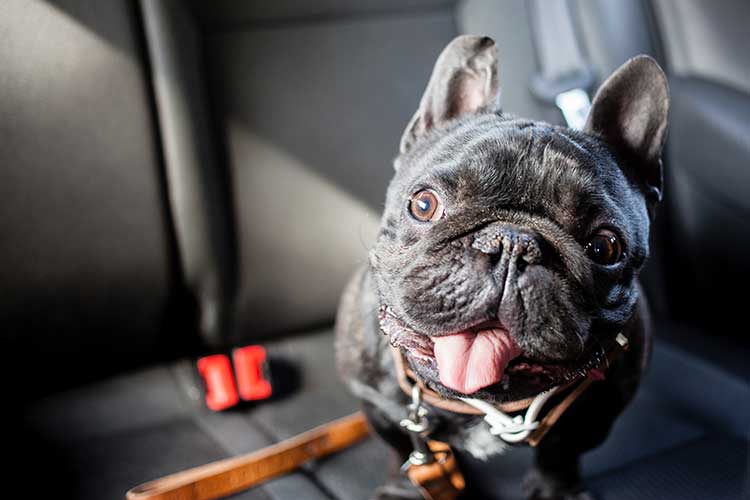
Many dogs hate riding in cars for numerous reasons. Some dogs will bark, howl, lunge at the window, drool and even throw up. These dogs are clearly uncomfortable, so they learn to hate riding in cars. Before addressing car riding woes, it’s important to understand exactly what is causing your dog’s discomfort first.

Motion Sickness

Nausea is the worst, especially when you’re unable to get away from the cause. Motion sickness is extremely common in dogs. It’s best handled with over-the-counter medication, such as Dramamine and Bonine. For correct dosage, depending on your dog’s age and weight, partner with your veterinarian. Additionally, keep your car’s temperature on the cool side and ensure an AC vent is near your dog. Once motion sickness is prevented, it’s time to take short car rides with lots of treats, so your dog looks forward to riding in a car.

Restlessness

This is a common behavior when dogs are uncomfortable, nauseous or unfamiliar with riding in cars. It’s safest for dogs to ride inside plastic crates or secured with a crash-tested harness. Make sure your dog is comfortable first. Ensure your dog has plenty of space to lie down, stand up and turn around inside your car.

Place a soft bed or thick blankets in your dog’s crate or car seat, and provide plenty of cool water. Play soft music, such as Through A Dog’s Ear, to keep your dog relaxed. If your dog has motion sickness, address it immediately. Take short car rides, while your dog licks away at a super yummy food stuffed toy, and soon your dog will love car rides.

Scared

If your dog is scared to ride in a car, it’s vital to teach your dog that car rides are fun. Not all dogs enjoy car rides since it’s not natural for dogs to ride in cars. Start slow and reward your dog for jumping into the car first. Once loaded inside his crate, give your dog a food stuffed toy to lick, close car doors and turn on the engine while you’re sitting in the driver’s seat.

In the beginning stages, don’t drive anywhere—just let your dog learn that cars make peanut butter stuffed toys appear. After a few minutes, turn the car off and unload your dog. Practice several times a week. Once your dog will happily relax and lick at his toys, then it’s time to take a spin around the block. Continue to add a bit more distance and time while driving, and always bring food stuffed toys along for the ride. This teaches your dog that good things happen during car rides.

Dislikes Seeing Dogs or People

By far, this is the toughest car ride challenge. When dogs are afraid of other dogs and people, they will bark and lunge when these scary things become visible. Teach your dog to ride inside of a crate, and cover the crate with large towels or sheets to block your dog’s view. Additionally, play soft music to drown out dogs barking or people talking while driving. If visual barriers and soft music don’t work, it’s time to reach out for professional help.

When to Get Help

Motion sickness and restlessness due to unfamiliarity with car rides can be easily addressed with medication and dog training. Scared dogs or dogs that dislike people, that panic when riding in cars, may need additional help from a professional dog trainer and veterinary behaviorist.

When in doubt, seek help sooner rather than later.

Filed Under: Dogs, Puppies, Training Tagged With: dog aggressive car rides, dog barks at people during car rides, dog barks during car rides, dog behavior, dog car anxiety, dog car travel, dog hates car rides, dog hates riding in car, dog hates riding in the car, dog scared of car rides, dog training, how to teach a dog, how to train a dog, puppy hates car rides, puppy throws up during car rides, teaching a dog, training a dog, training dogs

Is My Dog Protecting Me Or Is He Scared?

January 3, 2018 by Fanna Easter

Dangers of Protective Dog Behavior

Protective Dog Behavior
agneskantaruk/Adobe Stock

This is a difficult question to answer because human feelings are being used to describe a dog’s reaction. Many pet owners feel their dogs are protecting them from threats. It’s a comforting feeling for humans, but dogs feel frustrated. When dogs growl at people approaching, while sitting in their pet owner’s lap, this is called resource guarding. Yes, your growling dog is protecting his resource, which is you, but protective dog behavior is dangerous that will get worse, if not addressed quickly.

Why Dogs Resource Guard Owners

Guarding valuable resources is a natural dog behavior, but it can cause issues within human homes. Dogs will guard beds, food bowls, high value toys, treats, space and people. Every dog has a different personality, but most will resource guard whatever they find valuable to a degree. Humans are certainly valuable because they put food in dog bowls, provide treats and toys, keep them safe, and can open doors.

Some dogs can bond so deeply with a specific person that they will start to resource guard her from other dogs, people and even children. Sometimes, resource guarding goes undetected until another person or dog enters the home, and then the chaos ensues. Resource guarding should certainly be addressed as soon as possible, as it can result in biting behavior. Plus, no one wants to live with a bully.

How to Change Protective Dog Behavior

While many pet owners feel flattered when their dog resource guards them, it’s important to know this behavior will only escalate, if not addressed immediately. When a dog is protecting a person, he’s reacting to a dog or person approaching the pet owner and himself. Protective dog behavior manifests differently for different dogs. Dogs will either freeze, glare at the approaching person, snarl, show teeth, snap or even bite. It’s important to change a dog’s perspective of people approaching while he’s next to his pet owner.

Make It Rain Cheese

Find treats your protective dog absolutely loves, and then chop them into pea-sized treats. Cheese, hot dogs, baked chicken or diced lunchmeat are excellent examples of high value dog treats.

Have a seat on the sofa (or wherever your dog usually resource guards you), and ask your dog to join you. Then, ask a friend to slowly walk into the room and stop at the entrance. As your friend approaches, ask her to toss a steady stream of treats toward your dog’s mouth. After a few seconds, ask your friend to leave the room. Pairing good things with scary situations will change your dog’s perspective, and soon he’ll learn that an approaching person makes cheese rain from the sky.

Oops, He Barked

If your dog barks at the approaching person, ignore him until he stops. Once your dog stops barking, say “yes” and reward with treats while your friend walks out of the room. Next time, practice with your friend standing a bit farther than last time, and continue having her toss treats to your dog. Dog training sessions should last 2-3 minutes maximum.

When to Get Help

Resource guarding can be tricky to address, so it’s always important to partner with a professional dog trainer who only uses positive reinforcement. If a dog lunges, bites, muzzle punches (hits person with muzzle) and/or snaps at someone, then it’s time to bring in a professional. Timing of treats and distance are critical components of resource guarding, and a professional dog trainer can address issues quickly and effectively.

Filed Under: Behavior Tagged With: dog behavior, dog guards owner, dog is protective of me, dog is protective of pregnant owner, dog protective behavior, dog resource guards owner, dog training, Dog Training Tips, how to teach a dog, how to train a dog, is my dog protecting me, is my dog protecting me or scared, is my dog protective or scared, puppy guards kids, puppy guards owner, resource guarding dog, signs your dog is protective of you, teaching a dog, training a dog, what is resource guarding

Is Your Dog Aggressive When Startled?

December 29, 2017 by Fanna Easter

Help for Dogs That Become Aggressive When Startled

Dog Startles Easily
Kateryna/Adobe Stock

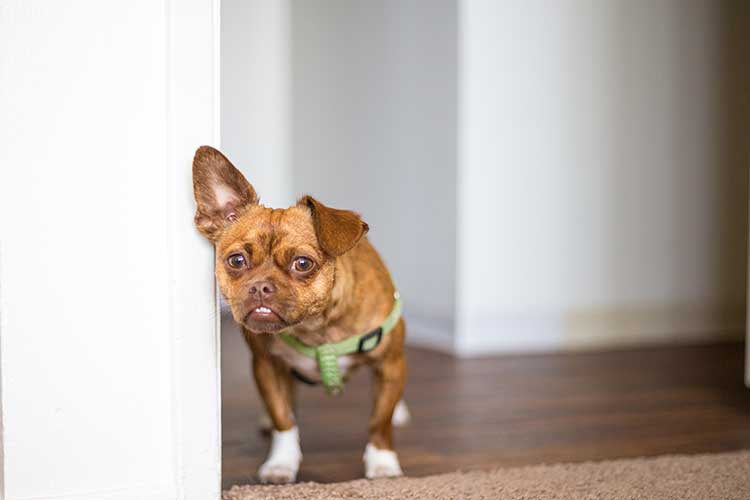
Being startled is a normal response when someone or something surprises you from around a corner, when someone suddenly walks through a doorway, or when you hear a scary sound. When most dogs are startled, they will jolt, bark or freeze, and then recover within a few minutes. However, there are some dogs that will panic and react by lunging forward, charging, barking and growling. These dogs have a difficult time recovering from being startled; it can take hours for them to recover. If your dog is aggressive when startled, it’s time to change her behavior.

Why Some Dogs Lunge or Charge When Startled

No one enjoys being startled; it’s scary and it can cause anxiety if it happens often. If a dog is severely startled, it can dramatically change the dog’s behavior around the thing that initially startled him.

As an example, if a strange dog startles your dog by running up to him during walks, your dog can easily become afraid of other dogs approaching. Think about it from a human perspective: If a scary clown suddenly appears in your living room, you’ll learn to dislike clowns and walk cautiously through your living room for a while.

Many anxious dogs, when startled, will charge forward, lunge, growl and even bite someone when startled. Anxiety is a key component. For some dogs, their anxiety triggers an excessive response when startled. Some dogs will react this way even when startled by their pet owners or family members. When this happens, it’s scary for everyone, including your dog. Think about it this way: Some humans react aggressively and start punching or kicking when startled while others just jump and recover quickly.

How to Change Reactive Startled Behavior

When practicing this behavior, the goal is not to startle your dog. Instead, pair something yummy with previous scary experiences slowly to change your dog’s perspective of this scary experience. Remember, when pairing good things with scary things, your dog learns that scary things make hot dogs appear.

Most dogs startle when someone walks into a room while they are sleeping. If your dog jumps up and lunges in this situation, then it’s time to change her behavior. Be prepared next time; stand sideways (face and front of body turned away from the dog) in the doorway, and softly say your dog’s name or “hello.” When your dog wakes up, toss chunks of cheese or hot dogs toward your dog. Practice this several times a week, and soon your dog will wag gently when you say “hello” or walk into a room.

When to Get Help

If your dog is anxious and has a difficult time settling down, or has hurt someone when startled, it’s time to get help. Locate a veterinary behaviorist in your area as well as a professional dog trainer who specializes in dog anxiety and only uses positive reinforcement training protocols. While your veterinarian can prescribe anxiety medication for dogs, it’s best to leave dog anxiety medication recommendations to a veterinary behaviorist.

Filed Under: Behavior Tagged With: dog aggression, dog aggressive when startled, dog aggressive when woken up, dog attacks when startled, dog becomes aggressive when startled, dog behavior, dog fear aggression, dog is mean when scared, dog startles easily, dog trainer, dog training, Dog Training Tips, fear aggression in dogs, how to teach a dog, how to train a dog, teaching a dog, training a dog

Children And Puppies: Keeping Everyone Safe And Happy

December 28, 2017 by Fanna Easter

6 Safety Tips for Children and Puppies

Children and Puppies
goce risteski/Adobe Stock

It’s that time of year where families are bringing new puppies home. One major concern most new pet owners have is introducing their new puppy to their children. Before your new puppy arrives, hold a family meeting and discuss each puppy safety tip in detail with your children. It’s vital to teach young children polite behaviors around puppies. While most of these safety tips pertain to dogs of all ages, there are a few specific to puppies only.

1. Crate Your Puppy in a Quiet Room

Place your puppy’s crate in a quiet place, such as your master bedroom. When puppies are crated, they need peace and quiet to rest and enjoy food filled toys. Refrain from placing your puppy’s crate in your children’s playroom, living room, kitchen or another busy area. Children should not harass your puppy, so close the bedroom door to ensure privacy.

2. Never Disturb Your Puppy While Eating

Puppies should be left alone during mealtime. When children approach a puppy’s food bowl, pet the puppy while eating or stick their fingers in the food bowl, this can cause a puppy to resource guard her food. It’s best to feed puppies in their crates with the crate door securely closed. Even better would be to feed your puppy her meals from food stuffed toys when crated. This applies to when your puppy is chewing on a bully stick or toy too.

3. Give Your Puppy Plenty of Space

Many children like to pick up and hold puppies like babies, but this can quickly annoy a puppy. It’s important for children to understand that puppies need plenty of space and that they should have the choice to be held or picked up.

Hugs and kisses are fine, if the puppy walks over and initiates this behavior. However, children should not walk over and hug or kiss a puppy first. Also, children should never sit, step on or lie down on a puppy. This hurts, and will cause the puppy to growl or bite.

4. Never Take Toys From Your Puppy

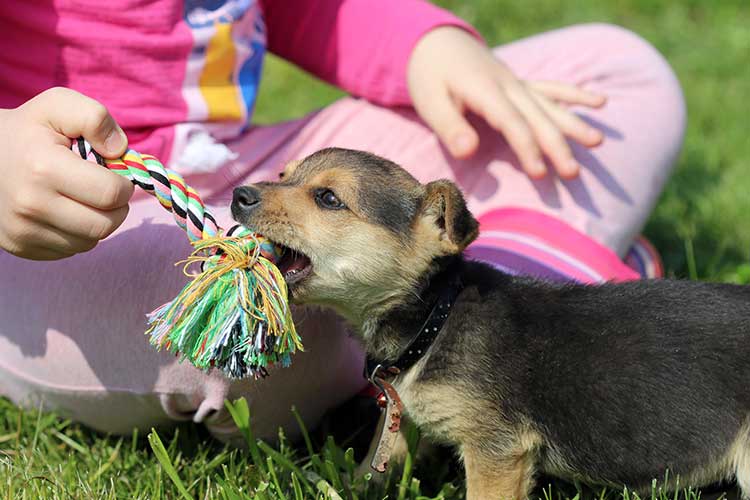
Puppies will chew anything and everything; it’s part of being a puppy. When a puppy grabs your child’s favorite toy, it’s important your child doesn’t pull the toy out of your puppy’s mouth. This will cause a tug-of-war game, and some puppies learn to resource guard toys from children. Instead, teach children 5 years and older to play the “trade” game. For children under 5 years of age, you should play the “trade” game.

5. Pet With Gentle Hands

Children should learn to gently pet puppies the moment a new puppy arrives in the home. Gentle petting involves slow strokes with light pressure along a puppy’s side. When children pet a puppy, they should use a flat palm and move slowly. Children should not pet puppies on top of the head, touch their faces, pull their tails, poke with fingers or throw items at the puppy. When children or adults pet puppies too quickly, it causes puppies to get excited.

6. Never Leave Children and Puppies Alone—Ever

Children and puppies (dogs too) should never be left alone together unsupervised ever. It can take less than a second for a young child to unintentionally hurt a puppy, and the puppy bites the child out of self-defense. When in doubt, place your puppy in her crate with lots of yummy treats if you need to answer the front door or cook dinner.

Filed Under: Puppies, Safety, Training Tagged With: children and puppies, dog trainer, how to teach a dog, how to train a dog, introducing puppy to child, introducing puppy to toddler, kids and puppy tips, puppy training, safety for kids and puppies, safety tips for children and puppies, teaching a dog, tips for puppies and children, training a dog, training puppies, what children should know before getting a puppy

  • 1
  • 2
  • 3
  • …
  • 30
  • Next Page »

About

Dog Training Nation is a community of dog trainers, dog owners and dog lovers. Our mission is to provide trainers and owners valuable information to enrich dogs' lives. We cover a range of topics, from socializing puppies to dealing with aggressive dog behavior to selecting the best dog products. It is our hope you share our content to make the dog and owner world a better place.

​

Facebook

Video

Dog Training Nation is a dog training blog for pet owners and dog lovers. We cover a range of topics from puppy socialization tips to dog aggression to dog health. It is our hope you share our content to make the world a better place for dogs.

Dog Training Nation

Quick Links

Dog Training
Dog Behavior
Dog Training Videos
Become a Dog Trainer
About
Contact Us

Copyright © 2026 · Lifestyle Pro Theme on Genesis Framework · WordPress · Log in