Dog Training Nation

In Dogs We Trust

  • Home
  • Training
    • Dogs
    • Puppies
    • Clients
  • Behavior
    • Breeds
  • Health
  • Safety
  • Resources
    • Equipment
    • Books
  • Dog Training Videos
  • About
You are here: Home / Archives for how to teach a dog

Overcoming Thunderstorm Phobia in Dogs

August 21, 2015 by Fanna Easter

How to Help Your Dog Overcome His Thunderstorm Phobia

Dogs Scared of Thunder
klagyivik/iStock

Does your dog show signs of nervousness and anxiety during thunderstorms? If your dog is hitting the hills or shaking like a leaf when the storm rolls in, this article will help you put him at ease.

Thunderstorm phobias are more common than you think. However, just because your dog has a thunderstorm phobia that doesn’t mean he’s fearful or submissive. Lightning and rain usually accompany thunderstorms, which causes more static electricity to run through things like carpet and couches, so it’s not only the noise that bothers your dog. Imagine having all that fur and it being full of static plus loud crashing noises–doesn’t sound very calm and tranquil, does it?

Signs of Stress and Anxiety

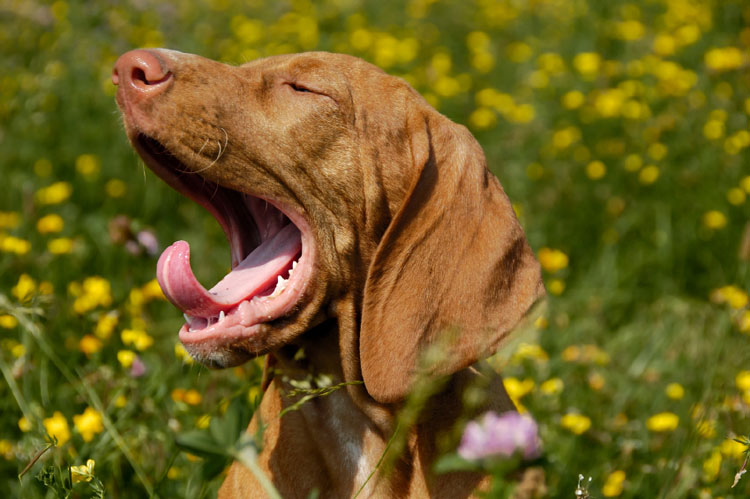
There are some tell-tale signs your dog might be experiencing stress or anxiety during thunderstorms. These signs include: hiding under furniture, shaking, whining, howling and even running around the house. However, there are some other, sometimes subtle, signs that can be easily overlooked, including heavy panting, excessive yawning, licking, pulling ears back, tucking tail in, eyes darting back and forth, and widening of eyes (whale eye or moon eye). Whether your dog is showing some of the more prominent signs of stress or more of the subtle signs, helping him cope with the situation will create a happier, calmer dog during stormy weather.

Positive Reinforcement of Alternate Behavior

There are several ways to help your dog overcome his phobia of thunderstorms. The best thing to do is create a treatment plan to modify his behavior. This sounds much more intimidating than it really is. I suggest writing it out, so that it’s easy to follow.

First, choose an alternate, desired behavior you would like to see your dog perform during this time of stress, such as a calm down-stay. You want to begin working on this behavior (if your dog does not already know it) prior to a thunderstorm. I suggest getting a rubber mat for this dog training session, as it helps minimize the static caused during lightning, and putting it in a comfortable spot away from the window where your dog can relax.

Once you have this all picked out, you can begin rewarding your dog when he’s lying quietly on his mat. At first, you may need to place food or a special toy on the mat to get him oriented. I like to call this the “safe zone” where there are nothing but good things. Always, always, always reward calm desired behavior on the mat.

Management and Setting Your Dog Up to Succeed

This is really the biggest, meatiest part of the treatment plan where you do most of your prevention work. Managing the situation and setting your dog up for success is so important. Who doesn’t want to succeed and be praised for a correct behavior? I know I do!

Okay, so how do we do this? Well, there is a lot of desensitizing that goes into the process, which you can do in small increments to fit into your daily life. Now that you have your mat, give your dog something really special to chew on and put a recording of thunder on very low.

If your dog shows no sign of stress, allow this process to go on for about 10 to 15 minutes. Do this on and off for the next couple of weeks, slowly increasing the volume. Don’t hesitate to give additional verbal praise and petting to let your dog know he’s doing a great job.

RELATED: Calming Music for Dogs

A tool available to pet owners and dog trainers for this specific instance is the Thundershirt. The Thundershirt is a shirt with a Velcro opening that wraps around the dog in multiple places. You put the shirt over your dog’s back and attach the Velcro strap under his stomach. To keep the shirt on, there’s another Velcro strap that goes across your dog’s chest.

The material is cotton and has no chemicals or vibrations. The Thundershirt acts like a hug for your dog in a scary situation. Most dogs will become very calm and relaxed when wearing this shirt. You always want to remember to reward your dog when he’s wearing the Thundershirt and showing calm behaviors in stressful situations.

Consequences for Inappropriate Behavior

Consequences are very minimal when it comes to dealing with something your dog is scared of. Using any surprise or corrective technique could cause more harm than good. However, if your dog becomes so frightened that there is no learning taking place, you may want to remove him from the situation. Put him in a dark place with calming music to help drown out the thunderstorm. You can bring him back once he has calmed down enough to re-enter the common area.

Consistency

This is the most important part of the treatment plan and usually the most overlooked. It is very important to follow through with all the exercises mentioned above until your dog is exhibiting calm, relaxed behaviors during thunderstorms. Dogs need to think it is an ordinary day with just another thing happening where good things happen to him!

Anytime you have to watch one of your family members deal with a stressful situation, it probably stresses you out as well. Hopefully, these dog training tips will help your dog with his thunderstorm phobia. If, after you try these dog training techniques and are still having difficulties, I suggest looking for a local dog trainer who can assist you and your companion.
Filed Under: Dogs, Safety, Training Tagged With: dog fears thunderstorms, dog scared of thunder, dog thunderstorm phobia, dog training, Dog Training Tips, how to teach a dog, how to train a dog, teach a dog, thunderstorm phobia in dogs, train a dog

Dogs Die in Hot Cars

August 20, 2015 by Fanna Easter

Dogs Left in Hot Cars: We’re Everywhere & Watching You!

Dogs Die in Hot Cars
rezkrr/Deposit Photos

There’s an angry movement popping up in your neighborhood. It’s happening right this moment and you need to be very concerned. Don’t look away. You need to understand the consequences of leaving your dog in a hot car. Be prepared for a broken car window and confrontation with a concerned pet owner. You’ve been warned.

Why You Need to Stop Leaving Dogs in Hot Cars

It’s Cruel and Illegal

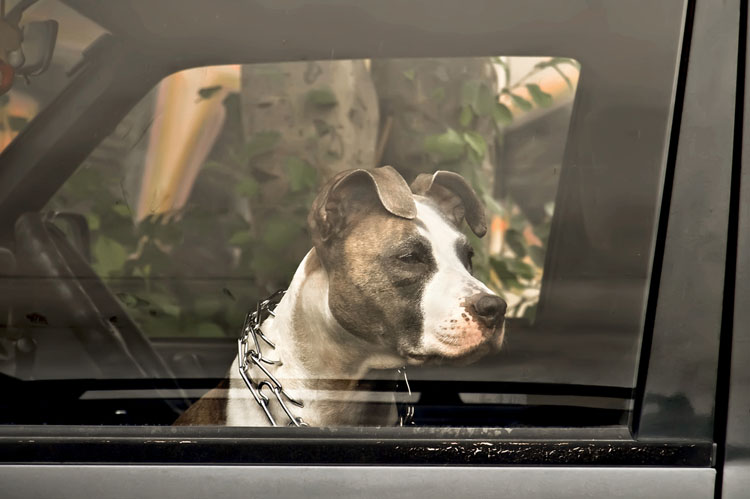
When the thought of leaving your dog in a warm or hot car pops in your brain, don’t do it. Don’t convince yourself you’ll only be a few minutes. We both know this is not true. Besides, cars can heat up within seconds. If you do decide to leave your pet, concerned pet owners will be standing right there dialing 911 because what you’ve committed is cruelty and illegal in 17 states and counting.

Never leave your dog in a hot car–not even for a second. Take an extra few minutes to drive your dog home or have a friend sit inside the car with your dog while the car is turned on and the AC is blowing.

Don’t Be Surprised If Your Car Window Breaks

Leaving any living being in a hot car while you run to fill-in-the-blank is cruelty. There’s no excuse that will rectify the situation. If your car window is broken because a concerned pet owner wanted to save your distressed pet from dying in your hot car, it’s your fault. You should’ve never caused this situation. This is not the concerned pet owner’s fault who simply noticed your panting dog locked in a warm car while you were walking toward the grocery store.

Trust me, we as pet lovers don’t relish in stumbling across a distressed dog. It’s gut-wrenching to see a dog suffer. So, when we see dogs in hot cars, we take a stand against this horrible act. Leaving dogs in hot cars needs to stop now.

What Caused This Movement?

Concerned pet owners have had enough. Countless dogs die every day due to foolish decisions made by humans. Concerned pet lovers are tired of it and finally taking a stand. Yes, we shop at your grocery store, eat at your restaurants and visit your local malls, and we will make a scene if your dog is locked in your car.

You can’t say you didn’t know about dogs dying in hot cars. Social media and daily news programs beg you to keep dogs at home during extreme temperatures. Celebrities have locked themselves in hot cars and documented their tortuous experience to raise awareness. Millions of pamphlets are distributed on car windshields and PSAs flood Facebook and Twitter feeds every day, and yet it still happens.

If you do this, don’t be surprised when you’re paged in the grocery store or return back to a mob of concerned pet lovers trying to free your dog. Don’t put the blame on anyone else. This happened because of the choice you as the suffering dog’s owner made. Save the victim act for the police. It’s your fault and you were caught.

Why Am I Angry?

I’m infuriated because people still choose to leave their dogs in hot cars at an alarming rate. Just this weekend, three dog-loving friends made a stand at their local shopping centers where they found dogs sitting in hot cars. In each instance, these concerned pet-loving citizens were met with hostility from returning dog owners who mumbled ridiculous excuses.

I’m dumbfounded that the dog owners who made these horrible decisions lash out verbally and sometimes physically toward citizens taking a stand. Is it because you’re embarrassed? You should be. Trust me, concerned pet owners will stand there and watch you make a total fool of yourself while dialing 911. We’re not scared. We’re taking a stand.

As for dog owners throwing out phrases like “Everyone is offended nowadays,” it’s not that. Concerned dog owners are not offended when we see dogs left in hot cars; we’re beyond even angry. Offended and angry are two different worlds. We’re way past insulted. We’re downright furious, which means we will take a stand. So save that excuse for the police because they are on the way.

You may also like: 11 Common Questions Dog Trainers Are Asked

Filed Under: Clients, Safety, Training Tagged With: car gets hot, dog left in car on hot day, dog left in hot car dies, dog left in hot car law, dog training, Dog Training Tips, dogs in hot cars, how to teach a dog, how to train a dog, leaving dog in hot car, never leave dog in hot car, teach a dog, train a dog

11 Common Questions Dog Trainers are Asked

August 19, 2015 by Fanna Easter

From Your Dog’s Perspective: 11 Common Questions

Dog Obedience Class
HighwayStarz/Deposit Photos

As a dog trainer, I’m frequently asked the same questions over and over again during my dog training classes. Hey, it’s OK to ask since you’d never know the answer if you didn’t! Interestingly enough, many of the same questions are usually asked during the first or second class. This is because dog behavior is totally different than human behavior. So check out 11 of the most frequently asked questions below and understand what’s really going on from your dog’s point of view.

1. Why do dogs pull on leash?

Because you follow them. 🙂

2. Do dogs feel guilt?

Nope, they don’t. Instead, they react to your stern body language–basically, you’re scaring them. Please stop all the shaming photos. It sends the general public the wrong message.

3. Why do dogs bark at doorbells?

Someone (or thing) is on the other side and they are alerting you. Teach your dogs to do something else, such as lying on their bed, rather than bark.

RELATED: Training Dogs Polite Greeting Behavior

4. Why does my dog pee in the formal dining room?

Dogs are smart. Thick carpet and rugs adsorb pee quickly, so they prefer to potty in rooms with that surface. Never punish your dog for peeing. Train your dog to potty in another room or outdoors.

5. Why does my dog walk in front of me and stop?

Dogs have never been taught to not walk in front of you and stop. Dogs are like toddlers. They do the same thing until they’re taught differently. Train your dog to step back or come around by luring a treat into place.

6. Is treat training considered bribery?

Not at all. Lure reward training is a very effective way to teach new behaviors.

7. If my dog doesn’t learn, is he stupid?

Far from it. Dogs are super smart, and it’s our job to figure out how to teach polite behaviors effectively. Take a breather and look at it from your dog’s perspective. He’s probably confused and unsure of what you’re asking. If you’re frustrated, find a positive reinforcement dog trainer.

8. Should I train my dog to protect me?

Oh my gosh, no. Dogs should alert humans about situations, but not attack. Please don’t ever teach your dog to protect you, children or family. This is a dangerous game.

9. Why is my dog hyper?

Because he has never been taught to self-settle. This is a common issue with children too.

10. Will giving my dog people food cause begging?

Nope. The act of giving any type of food from your plate or dinner table causes begging behavior.

11. Should I act as alpha?

This is a myth. Forcing, staring, pushing, pulling and physically correcting dogs is extremely confusing to them. Picture yourself in a foreign country where no one speaks your native language. Now, imagine people trying to communicate with you–yikes! Throw the “alpha status” stuff out the window. It’s old and useless.

Do you have a question? Leave them in the comments section below!

UP NEXT: Confessions of a Dog Owner: I’m Not Getting the Most Out of Class

Filed Under: Clients, Dogs, Puppies, Training Tagged With: alpha dog, being alpha with dogs, common dog training questions, do dogs feel guilt, dog training, Dog Training Tips, how to teach a dog, how to teach dog to protect, how to train a dog, is my dog guility, my dogs my dog pull, people food begging, teach a dog, teach dog to protect me, train a dog, train protective dogs, why does my dog bark, why does my dog pee in the house, why does my dog pull on leash, why is my dog hyper

Dog Alert Wallet Cards and Stickers are a Must

August 17, 2015 by Fanna Easter

Why You Need Dog Alert Wallet Cards and Dog Rescue Stickers

Dog Emergency Cards
Mustang_79/iStock

Yes, emergencies happen and they’re scary. Personally, it’s my worst nightmare. Take a moment and ensure your pets are taken care of if something should happen to you or your home. By alerting officials with pet alert wallet cards and stickers, you’re ensuring family members and friends are contacted quickly.

ICE (In Case of Emergency): “My Dog Is Home Alone” Wallet Cards

While cruising through Facebook, a fellow dog trainer shared this wonderful idea: it’s a wallet-sized card asking emergency officials to contact family members and friends listed on the back of the card. What a great idea!

You can certainly purchase these cards online, which fit perfectly behind your driver’s license. Also, pre-made options offer laminated bright-colored key tags that alert officials to contact someone to check on your pets.

How to Create a Dog Alert Wallet Card

If you’re crafty and have access to a high quality printer, you can easily create your own. Definitely use bright primary colors to instantly make it clear it’s some type of medical alert card.

Front of Card

Across the front, clearly label “My Dog is Home Alone” in large font and add “If I’m Ill or Injured, Please Contact Someone on Back of Card to Care for My Dog.”

Back of Card

Neatly type at least two to three full names and cell phone numbers of local family and friends who live near your home. This way, it increases the chance of emergency officials speaking to someone. Also, laminating cards and key holders ensure they hold up to everyday life.

RELATED: Leaving Your Dog Home Alone Tips

Dog Inside Home Stickers

This dog rescue sticker informs emergency responders dogs are in your home and need to be rescued. List the number of dogs you have, so officials can safely rescue them all. It’s best to post these stickers near common entrances (front and back) and on doors and windows. There are many different versions of pet rescue stickers available online.

Make sure you remove the sticker when you move out. If you bring home a new dog or lose one, note that on the sticker immediately. It also doesn’t hurt to replace it often with a current date noted, so first responders are aware the sticker is up-to-date.

How to Create Dog Rescue Stickers

Red and yellow colors are most commonly used to alert officials about immediate medical needs, so I recommend using these easily recognizable colors in your design. Laminating will protect DIY rescue signs from harsh elements and can easily be taped near entrances.

Ounce of Prevention

During fall and spring, it’s best to replace all batteries in smoke detectors. Partner with neighbors to rally for your dogs and insist they’re rescued. Don’t forget to also keep your will updated with plans for your dogs.

Regardless if you create or purchase these dog emergency cards and rescue stickers, take a moment and ensure your pets are safe when you’re not home. With that, I most certainly hope these items are never needed. 🙂

READ NEXT: Pet First Aid Phone App Reviews

Filed Under: Clients, Resources, Safety, Training Tagged With: dog home alone wallet card, dog training, Dog Training Tips, how to teach a dog, how to train a dog, pet alert cards, pet alert key cards, pet alert stickers, pets inside sticker, rescue my pet sticker, save my pet card, save my pet sign, save my pet sticker, teach a dog, train a dog

How to Talk to Your Dog Through Calming Signals

August 13, 2015 by Fanna Easter

Using Calming Signals to Talk to Your Dog

Dog Calming Signals
Jolka100/iStock

Do you ever wonder what your dog is trying to say to you?

Well, dogs have a universal language that allows them to communicate with each other as well as humans. Some parts of this language have been understood by people for a long time, such as a dog growling or the positions of their tails and ears.

Other aspects of this canine language are so subtle they’re still being discovered and interpreted today. Some of these subtle body gestures were given the name “calming signals” by Turid Rugaas, a noted author and lecturer on the subject of canine body language. Ms. Rugaas identifies these body gestures in her book “On Talking Terms with Dogs: Calming Signals.” In her book, she identifies specific body gestures and behaviors that dogs use to communicate with one another.

Understanding Your Dog’s Calming Signals

Being able to recognize what your dog is trying to communicate to you will create a better relationship between you and your dog. You can do this by learning how to read the signals your dog offers. These calming signals are often given from a dog to calm nervousness and fear when he feels threatened by dogs and/or people, which can easily be overlooked or misinterpreted by humans.

Dogs, by nature, are conflict-solving animals and will usually attempt to defuse conflicts before they become serious. Sometimes, this is facilitated by offering calming signals. For example, when a dog turns his head away from you, it could mean he feels stressed due to the tone of your voice. By looking away, the dog tries to avoid conflict.

Many humans may misinterpret this calming signal and believe the dog is ignoring them, which could actually escalate the situation. If you, the owner, recognize this calming signal and removed the conflict (i.e. changed the tone of your voice), you’ll find your dog looks back.

Some dogs will soften their eyes when a person or another dog tries to engage in a direct stare. This is to let the person, or other dog, know they’re not trying to be offensive or cause a conflict. Some calming signals are much more subtle, such as licking their nose, flicking their tongue, yawning and walking, or moving slowly. You’ll notice that sometimes your dog will walk or move very slowly when you holler at him to come to you. This is to encourage you to calm down unlike the common misconception that the dog is being intentionally disobedient “because he knows he’s in trouble.”

Common dog calming signals include:

• Head turning
• Softening of the eyes
• Licking the nose
• Flicking of the tongue
• Freezing
• Walking or moving slowly
• Yawning
• Sniffing
• Curving when walking
• Lying down

RELATED: Dog Socialization Tips

Guidelines When Using Calming Signals

You, as the owner, can use these signals to communicate to your dog just as he is using them to communicate with you. For instance, if your dog makes direct eye contact with you in a not-so-happy fashion, you can turn your head away to show your dog no immediate threat, as we don’t want to escalate the situation.

When your dog jumps on you, simply turn your back to let him know this behavior is not welcomed. If you’re dealing with a fearful dog, walk and move slowly to let the dog know you mean no harm. You’re really just talking to your dog with body language, which speaks louder than most words to him.

Conclusion

To become more fluent with calming signals, I invite you to read the book mentioned above written by Turid Rugaas as well as begin observing your dog as he interacts with other dogs and in different situations.

READ NEXT: How to Trim Dog Nails With a Dremel

Filed Under: Behavior, Clients, Training Tagged With: dog training, Dog Training Tips, dog understands human, how to teach a dog, how to train a dog, talk to your dog, teach a dog, train a dog

  • « Previous Page
  • 1
  • …
  • 25
  • 26
  • 27
  • 28
  • 29
  • 30
  • Next Page »

About

Dog Training Nation is a community of dog trainers, dog owners and dog lovers. Our mission is to provide trainers and owners valuable information to enrich dogs' lives. We cover a range of topics, from socializing puppies to dealing with aggressive dog behavior to selecting the best dog products. It is our hope you share our content to make the dog and owner world a better place.

​

Facebook

Video

Dog Training Nation is a dog training blog for pet owners and dog lovers. We cover a range of topics from puppy socialization tips to dog aggression to dog health. It is our hope you share our content to make the world a better place for dogs.

Dog Training Nation

Quick Links

Dog Training
Dog Behavior
Dog Training Videos
Become a Dog Trainer
About
Contact Us

Copyright © 2026 · Lifestyle Pro Theme on Genesis Framework · WordPress · Log in