Dog Training Nation

In Dogs We Trust

  • Home
  • Training
    • Dogs
    • Puppies
    • Clients
  • Behavior
    • Breeds
  • Health
  • Safety
  • Resources
    • Equipment
    • Books
  • Dog Training Videos
  • About
You are here: Home / Archives for how to train a dog

Solutions To Common Dog Training Mistakes

May 24, 2017 by Fanna Easter

Don’t Make These Dog Training Mistakes Again
Dog Training
DNF-Style/Adobe Stock

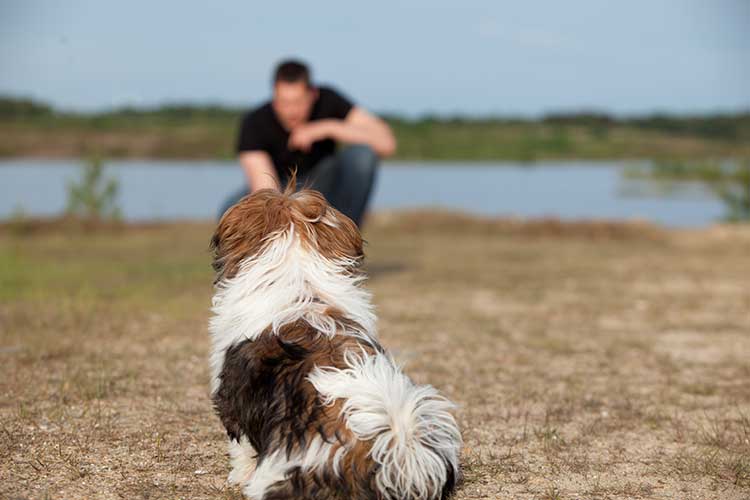
Everyone makes dog training mistakes; it’s part of the learning process. When mistakes happen, it’s important to recognize and learn from them and leave frustration at the door. If you’re making these common mistakes in dog training, give these simple solutions a try!

Mistake #1: Ego Getting in the Way

Solution: Record Your Sessions

Human egos can quickly interfere a dog training session. When pet owners justify that their choices were right and their dogs were wrong, that’s ego creeping in. Justification rears its ugly head when pet owners blame their dogs for certain choices when actually their dogs didn’t know what else to do instead.

It’s hard to hear it, but the human ego is part of each dog training mistake made. As humans, we assume we’re right and our dogs are “just not getting it.” Instead of assuming, look at each dog training session from the perspective of a learner.

Still not convinced? Record your dog training sessions using a dog camera and review afterwards. Are your instructions clear to you? If you’re still not convinced, mute the video and ask a truthful friend what behavior you’re teaching in the video. If you nor someone else aren’t sure, then your dog certainly isn’t either.

Mistake #2: Touching Your Dog

Solution: Use a Clicker and Treats

Humans are very tactile, resulting in numerous mistakes during dog training sessions. When teaching new dog training behaviors, refrain from touching, pushing, pulling or forcing a dog into a behavior. Physically reaching out and touching dogs get in the way.

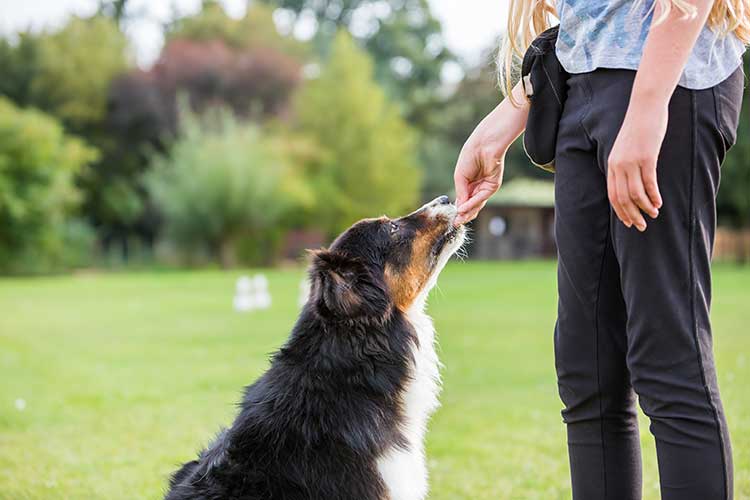
Use a hands off approach via clicker and treats instead. At first, it might be difficult using new dog training techniques because you’re learning something new, but it’s so worth it. (Remember, your dog is learning to adapt to this training technique as well!)

Hands off dog training means no physical or verbal corrections either. Remove your dog’s leash when practicing behaviors in your home. If your dog disengages, then you need better treats or your dog will become completely confused. For dog training sessions outdoors, attach your dog’s leash to a body harness instead of a collar. This prevents collar corrections.

Taking a hands off approach to training your dog will boost your dog’s success. Quickly reward any of your dog’s attempts toward the desired behavior. As a rule, you should be rewarding more than withholding treats.

If your dog makes a mistake—remember, it’s part of the learning process—just withhold a treat. Take a break and rethink your training plan, and keep your ego in check please.

Mistake #3: Using Low Value Treats

Solution: Use Treats Your Dog Loves

Dog training treats are your dog’s paycheck, so pay him or her extremely well. Using treats during training is not bribery; it’s far from it. Rewarding good behaviors with yummy treats works, and it works super fast. High value treats include chopped up hot dogs, baked chicken, cheese cubes or anything your dog absolutely adores. Using a high value treat will make training your dog so much easier because your dog wants to earn it.

Mistake #4: Using Huge Cheese Chunks

Solution: Break Treats Into Small Pieces

Break training treats into small pieces. Pea-sized treats work best for all dogs. Clicking and tossing pea-sized treats ensures excitement during training, and sessions move quickly with lots of success.

While it’s tempting to toss a huge cheese chunk every time, it’s actually slowing down the process. Dogs take forever to eat a cheese chunk (well, most do), and they’ll fill up on the treat fast. There’s nothing wrong with tossing a cheese chunk, but use it strategically.

Save large cheese chunks for breakthrough moments, such as your dog responding to a cue for the first time, ignoring another dog or coming when called.

Mistake #5: Making Assumptions

Solution: Practice the Behavior

Again, the human ego is the cause of this common dog training mistake. Pet owners assume things too quickly, and will justify why their dogs should know a cue. Do the following sound familiar?

  • “But he’s done this behavior before.”
  • “He knows how to do this.”
  • “She’s ignoring me.”
  • “She knows better.”
  • “He’s choosing not to listen to me.”
  • “This is the first time this has happened.”

This is justification. Instead of assuming and justifying, teach your dog the behavior. 🙂

Dogs ignore a cue for two reasons: 1) They’ve never practiced the behavior in a specific situation before (e.g. a squirrel runs in front of them) or 2) They’re confused. So many times, pet owners convince themselves that canine confusion doesn’t exist, and their dogs should know the behavior.

Yes, human ego rears its ugly head again. Practice a behavior in a myriad of situations, including an environment where a squirrel runs in front of your dog. Always remember, dogs are a living soul, not a robot, so understand they may not respond every time.

Happy Training!

Filed Under: Behavior, Clients, Training Tagged With: common dog training mistakes, dog obedience mistakes, dog obedience tips, dog trainer advice, dog trainer tips, dog training, dog training errors, dog training mistakes, Dog Training Tips, how to train a dog, my dog stopped listening to me, stubborn dog training

Does Positive Reinforcement Really Work?

May 23, 2017 by Fanna Easter

Yes, Positive Reinforcement Dog Training Does Work

Positive Reinforcement Dog Training
Christian Müller/Adobe Stock

Every single day, I’m asked whether or not positive reinforcement dog training works. While many pet owners purposely pursue a positive dog trainer, there are still doubts written across their face. This is very evident when working with reactive dogs; many pet owners just don’t trust the dog training technique.

As with anything, there are pros and cons, but you’ll notice very few cons with positive reinforcement dog training. When doubt creeps in, tell yourself to trust the process because positive dog training really works.

What is Positive Reinforcement Dog Training?

Positive reinforcement dog training is when you reward your dog for a specific behavior, so the behavior will happen more often. When a dog sits, and he gets a treat, he learns to sit more often. Positive reinforcement works even when pet owners don’t suspect it.

Positive Reinforcement Examples

If you open a crate door, while your dog is barking inside it, your dog learns barking means you’ll open the crate door. Begging is a good positive reinforcement example too. If you feed your dog while he sits next to your plate, he learns that sitting close to your plate makes food happen. Yup, this is positive reinforcement too!

Positive reinforcement works in the human world too. We work for paychecks—that’s our reward for working hard. Pats on the back, bonuses and hugs are human rewards too. Super yummy treats are easily great dog rewards because everyone loves food. Praise, pats, fun games, tidbits from your dinner plate, escaping a boring crate or moving away from a scary dog are great positive reinforcement examples for dogs too.

Pros and Cons of Positive Reinforcement Training

Pros

  • Easy to do: You can’t make mistakes.; just reward behaviors you want to see more often.
  • Fun for dog and pet owner: Positive reinforcement is fun because earning rewards is fun! Celebrating wins are much more fun than digesting mistakes.
  • Extremely effective: Hands down, positive reinforcement works much faster than punishment-based dog training methods. Don’t believe me? Check out the latest research on teaching children. 🙂
  • Can be done anywhere: Dog training sessions can happen anywhere; just grab food treats and go!
  • You don’t need fancy equipment: Throw out choke chains, pinch collars and electronic collars. All you need are a handful of treats, a clicker and your dog! If you’re training your dog outside, attach a leash to your dog’s body harness.

RELATED: Clicker Training Game for Beginners

Cons (And Solutions)

  • Treat dependency: Dog will only work for treats.
    • This is an easy fix; just fade training treats once a dog understands a cue.
  • Withholding treats is frustrating: In the beginning, this can happen.
    • Again, this is a quick fix. Set a dog up for success and reward every single step toward a goal.
    • If needed, take a few steps back and build until the desired behavior happens.
  • What if you don’t have treats? Simple. Use praise, games and the happy dance to reward your dog for good behaviors.

Filed Under: Dogs, Puppies, Training Tagged With: best dog training methods, dog behavior, dog training, Dog Training Tips, how to train a dog, how to train a puppy, positive dog trainer, positive dog training, positive reinforcement, positive reinforcement dog training, positive reinforcement examples, positive reinforcement works, treat training dogs, treat training puppy

Does Permission-Based Dog Training Work?

April 26, 2017 by Fanna Easter

A Look Into Permission-Based Dog Training

Permission-Based Dog Training
adogslifephoto/Adobe Stock

While researching scientific data to support another article, somehow I bumped into a dog trainer claiming that permission-based dog training works. As a professional dog trainer, I base my dog training methods on scientific research, which promotes force-free training methods.

Do know, I’ve been around the dog training block for two decades, and I’ve seen dog training fads and concepts come and go. In other words, I certainly have an opinion on this type of dog training. 🙂 Let’s explore the concept of permission-based dog training together.

What is Permission-Based Dog Training?

Permission-based dog training is marketing verbiage for promoting dominance-based dog training. Training a dog based on dominance involves verbal and physical corrections that promote permissive dog behavior. In a nutshell, a dog must ask for permission to eat, walk through a door, go outside, take a treat, bark, climb onto furniture or even urinate. That sounds like ego dog training to me.

Permission basically means a dog must be verbally released and perform a behavior (e.g. sit) or look at the pet owner before doing anything. This concept takes self-control exercises to an entirely different level. It creates dependence on humans. Teaching dogs self-control is important, but adding a layer of strong human dependence is wrong.

Does Permission-Based Dog Training Work?

No, permission-based dog training doesn’t work. Teaching dogs to rely on humans for “important” decisions molds a living being into a robot. Don’t get me wrong, dogs should learn polite manners, but training a dog to focus on his or her pet owner only is overkill.

Dogs are completely capable of learning how to behave politely in situations, and don’t need pet owners telling them what to do next. Teach a dog how to react, and then reinforce it when he or she chooses to respond politely. This is learning.

Take this example. A pet owner has a human aggressive dog. Permission-based dog training would entail the pet owner teaching his dog an “ignore” cue, which would signal to the dog to stop growling, barking or lunging at a person.

While it’s empowering to “call off a dog,” teaching this cue won’t benefit the dog. A better solution would be to teach the dog to ignore humans regardless of whoever is standing by. Even better would be to teach a dog that humans make treats appear and then the dog learns that good things happen around humans. (If you’re thinking this is bribery, it’s not. It’s counter conditioning and based on scientific data.)

[perfectpullquote align=”full” cite=”” link=”” color=”” class=”” size=””]Teaching human dependence is a disservice to dogs. [/perfectpullquote]

Does It Teach Self-Control?

Permission-based dog training probably started off with self-control exercises in mind, but then took a slight detour. Dogs (and humans) must learn self-control; they should learn how to politely behave within their environment.

Teaching a dog to rely on humans for permission or answers is when teaching dogs self-control took a detour. Dogs are fully able to make good choices, especially when they’re rewarded for them. Teaching human dependence is a disservice to dogs. Instead, train your dog how to react politely regardless of the situation. In human terms, it’s like teaching a teenager to say no to drugs in all situations. Empower your dog to make good decisions in all situations and not just when you’re present.

Training a dog how to react politely in a situation, without human reliance, is powerful. 

Filed Under: Behavior, Dogs, Training Tagged With: dog training, Dog Training Tips, how to teach a dog, how to train a dog, permission based dog training, teaching a dog, training a dog

6 Benefits Of Adopting An Older Dog

April 14, 2017 by Fanna Easter

Adopting an Older Dog Has Its Benefits

Adopting An Older Dog
lpictures/Adobe Stock

Sad photos of older dogs needing homes have been surfacing social media lately. How someone could drop off his beloved senior dog at Animal Control is something I’ll never understand. Thankfully, adopting senior dogs have become a huge trend lately! Let’s discuss the benefits of adopting an older dog because there are many.

[perfectpullquote align=”full” cite=”” link=”” color=”” class=”” size=””]Remember, bringing a dog into your home is for life. [/perfectpullquote]

1. Already Potty Trained

Older dogs are much easier than new puppies. On average, it takes a full month of potty training before a puppy learns to potty outdoors. When you adopt an older dog, they’re potty trained already! Plus, senior dogs are crate trained and know how to relax in your home with no accidents. They will also let you know when they need to potty, relieve themselves quickly and head right back inside to lounge on the sofa. How easy is that?

2. Have Polite Manners

Looking for a calm and polite dog? Older dogs have learned and practiced polite manners in a myriad of situations already. They know how to sit, down, come when called and walk politely on leash.

Puppies and adolescent dogs are full of energy while senior dogs prefer to relax quietly. Before assuming older dogs are solely couch potatoes, do know they still enjoy chasing a thrown ball, happily greeting their pet owners and walking in the park.

3. Make for the Perfect Cuddle Buddy

Oh, older dogs make create snugglers. They’re happiest snoring away while you’re binge watching Netflix episodes, chatting on the phone or revealing your darkest secrets. Senior dogs will comfort you when you’re sad, and lick away your tears. There’s nothing better than a gray muzzle kissing your face. 

4. Have Minimal Health and Temperament Issues

For some reason, potential pet owners assume older dogs are riddled with health issues, but that’s simply not true. Time and time again, senior dogs are passed up for a new puppy. Pet owners assume a new puppy will be a blank slate and senior dogs carry baggage. Allow me to set that record straight now: This is a complete myth.

Puppies aren’t blank slates. They carry their own genetic baggage, of which most potential pet owners are unaware. With older dogs, what you see is what you get—and that’s a fabulous and friendly dog. As for medical issues, most older dogs are healthy with minimal health issues.

5. Can Learn New Tricks

Older dogs are always learning, and adapt to new situations quickly. Bringing your newly adopted older dog to a group dog training class provides mental stimulation and bonding time for both you and your dog. You’ll both sharpen your skills, and soon your senior dog will show the youngsters how it’s done in class. 🙂

6. You Saved a Life

Even if it’s a few years or a month, adopting an older dog in need and bringing her into your home will provide her a warm, soft and safe place. All dogs deserve to live out their golden years in comfort, and providing a senior dog these comforts is well worth it. Revel in the fact that you saved a life while enjoying the perfect addition to your family. 🙂

Filed Under: Clients, Training Tagged With: adopt old dog, adopt senior dog, adopting a 5 year old dog, adopting a 6 year old dog, adopting a dog from a previous owner, adopting an older dog from a breeder, adopting an older dog vs a puppy, benefits of adopting older dog, dog training, how to teach a dog, how to train a dog, reasons to adopt a senior dogs, reasons to adopt an older dog, should I adopt an older dog

Introducing Your New Puppy To Your Older Dog: Date Walks

March 31, 2017 by Fanna Easter

Doggy Date Walks for Your New Puppy and Older Dog

Dog Dates
evafesenuk/Adobe Stock

New puppies and older dogs can live together happily and peacefully so long as pet owners introduce them to each other slowly. Many pet owners assume a new puppy will improve their senior dog’s quality of life, but that’s not always the case. When bringing home a new puppy, you may find him bouncing around, biting and harassing your older dog.

Remember, your senior dog didn’t get to choose his new roommate, so it’s best to introduce your new puppy to your older dog slowly—and a great way to do that is with daily doggy date walks.

What’s a Doggy Date Walk?

Taking two dogs on a walk together is considered a “date walk.” Daily date walks provide each dog with an opportunity to get to know one another with minimal tension. Think about it this way: It’s much easier to meet a new person during a leisurely walk around the park than a formal sit-down dinner in your home.

Walking provides your puppy and older dog opportunities to meet without the added pressure of being face-to-face. Plus, doggy date walks provide needed space when meeting someone new. If a dog becomes a bit overwhelmed, he or she can increase the distance between them to feel comfortable. Date walks take the pressure off until both dogs get to know each other.

Going on Doggy Date Walks

Attach a 6-foot leash (no retractable leashes) to each dog. Ask a friend to join you, so she can hold one dog’s leash.

Provide Space

During the walk, you should keep a distance of between 3-6 feet between you and your friend. This allows your puppy and older dog the opportunity to move away, fall back or pull ahead from the other dog. Giving your dogs plenty of space is critical.

On that same note, don’t expect both dogs to walk side-by-side, especially in the early stages. Sometimes, an older dog will hang back a bit and sniff independently, so respect his request. Puppies are usually more eager and pull forward, which makes for a great dog training opportunity to reward polite leash manners.

While both your new puppy and older dog are aware they’re walking together, they also know they have some distance between them, which is a good thing.

RELATED: What to Do When Your Puppy Won’t Walk on Leash

Prevent and Redirect

If your new puppy harasses your older dog during date walks, it’s best to redirect the puppy with treats. An older dog will surely growl, snap or bite if a young puppy chases, bites his ears or jumps on him. To prevent fights, intervene quickly and redirect.

When redirecting a puppy, you should call your puppy. When the puppy looks away from the older dog, say “yes” and toss a food reward in the opposite direction of the other dog. Don’t forget to reward the older dog for remaining calm too. If your puppy insists on harassing your older dog, walk over and pick the puppy up immediately and walk ahead to prevent further harassing behavior.

Prevent Resource Guarding

During sniffing opportunities, some eager puppies will run over and investigate something that a senior dog is sniffing. When this happens, you should stop walking forward and call the puppy over for a reward. When two dogs push against each other during sniffing opportunities, this can cause resource guarding. When in doubt, don’t let it happen.

When Date Walks Don’t Work

If, at anytime, one dog tries to attack the other dog during walks, it’s best to stop all doggy date walks immediately. While doggy date walks work, they may not work in this situation. It’s unfair for the attackee to be forced to walk next to the attacker; it’s actually cruel. If this happens, discontinue walks and keep both dogs separated at all times. Contact a positive reinforcement dog trainer and veterinary behaviorist ASAP.

Daily date walks provide easy exercise, mental stimulation, and bonding time between dogs and pet owners. 🙂

Filed Under: Puppies, Training Tagged With: bringing home new puppy, dog training, Dog Training Tips, how to train a dog, introducing new puppy, introducing puppy to resident dog, new puppy and older dog, older dog hates new puppy, teaching a dog

  • « Previous Page
  • 1
  • …
  • 8
  • 9
  • 10
  • 11
  • 12
  • …
  • 37
  • Next Page »

About

Dog Training Nation is a community of dog trainers, dog owners and dog lovers. Our mission is to provide trainers and owners valuable information to enrich dogs' lives. We cover a range of topics, from socializing puppies to dealing with aggressive dog behavior to selecting the best dog products. It is our hope you share our content to make the dog and owner world a better place.

​

Facebook

Video

Dog Training Nation is a dog training blog for pet owners and dog lovers. We cover a range of topics from puppy socialization tips to dog aggression to dog health. It is our hope you share our content to make the world a better place for dogs.

Dog Training Nation

Quick Links

Dog Training
Dog Behavior
Dog Training Videos
Become a Dog Trainer
About
Contact Us

Copyright © 2026 · Lifestyle Pro Theme on Genesis Framework · WordPress · Log in