Dog Training Nation

In Dogs We Trust

  • Home
  • Training
    • Dogs
    • Puppies
    • Clients
  • Behavior
    • Breeds
  • Health
  • Safety
  • Resources
    • Equipment
    • Books
  • Dog Training Videos
  • About
You are here: Home / Archives for how to train a dog

How to Deal With Fear Aggression in Dogs

October 15, 2015 by Fanna Easter

Dealing With Dog Fear Aggression

Fear Aggression in Dogs
wujekspeed/Deposit Photos

Is your dog showing signs of fear and aggressive behavior at the same time? This behavior can be categorized as fear aggression. Fear is not uncommon in dogs and most aggressive behaviors derive from it. This behavior could be caused by a multitude of things, such as genetics, possible mistreatment or lack of socialization during the impressionable stages of the dog’s life (fear imprint period). Sometimes you may be dealing with a combination of these things, depending on the dog and situation.

What Causes Your Dog’s Fear?

First, you want to identify the source of your dog’s fear whether it’s strangers, other dogs or specific objects. Once you can identify the cause of your dog’s fear, you can work on the behavioral threshold (the distance where the dog is not reacting). This will help your dog learn to overcome and deal with the cause of his fear.

As someone who has owned a dog that suffers from fear aggression, I recommend working with a professional dog trainer who is experienced with this type of behavior. Dealing with fear aggression can be complex and a little overwhelming for a dog owner to deal with, so coupling up with a dog trainer will help your dog tremendously.

What You Can Expect and When

You’ll see your dog’s fear aggressive behavior become more intense around six months of age or at the beginning of the dog’s adolescence. The sooner you begin modifying this behavior, the better. As stated above, you might see your dog show signs of fear toward strangers, other animals and even inanimate objects.

Flight or Fight Response

Some dogs will show the flight response (running away) to the things they’re fearful of. This is generally categorized as being fearful. On the other hand, you might have a dog that shows the fight response (trying to move toward the object), which is considered fear aggression. The dog that shows the fight response is trying to scare the thing she is fearful of away.

Your Dog’s Body Posture

A dog suffering from fear aggression may bark, growl, show teeth, lunge and hug the ground within seconds, or have his hackles raised from the tail all the way to the shoulder blades trying to appear bigger than he is. His body posture may make him come off as indecisive. One minute he’s lunging and growling and the next he’s cowering and running behind you.

RELATED: Dog Aggression

How to Train a Dog With Fear Aggression

First and foremost I want to state that using any correction on a fearful dog can be detrimental to dog training. This will only cause a bigger negative association to what the dog is fearful to. The dog is scared. You can’t tell him to stop being scared. Building a positive association and teaching redirection with the use of positive reinforcement techniques will be ideal in a situation like this.

Select a High Value Reward

Begin by finding the highest value reward for your dog, such as steak, chicken or liver. A head collar is also a great tool to use in this training program, as it gives you much more control. Our goal is to have the dog become aware of the triggers and not react to them.

Treat Your Dog Around Triggers

As soon as your dog sees the trigger, feed your dog a treat one after another. Do not give the dog a chance to redirect onto the stimulus. While the dog is focusing on you and the reward, start moving the dog away from the stimulus where you know he won’t act aggressively. You will begin doing this for several weeks in small increments.

Move Closer

Once your dog is successful at seven feet from the stimulus, begin moving closer. For the next couple of weeks, work with your dog at a distance of five feet. As your dog’s confidence builds, then work with him at a closer distance.

Involve Strangers

When your dog is comfortable around strangers, start using them in your dog training. A great way to begin is to have strangers toss high value food rewards near your dog, as they walk by. Do not have strangers approach quickly or look at your dog–have them just toss a treat and move on.

If your dog doesn’t react to this, then you know you’re making great progress and can move forward. If your dog does show reaction to the stranger, take a couple of steps back and continue to build her behavioral threshold without additional stimulation from strangers.

Take It Slow

Remember to take these exercises very slowly. By going at a slower pace, you’ll be much more successful. It’s normal to want to push a little more when you see progress, but I wouldn’t recommend doing this, as you can overwhelm the dog and jeopardize your training.

I know this can be a frustrating situation, but there is light at the end of the tunnel. My Boxer Chanel began showing signs of fear aggression at five to six months old, which escalated quickly. She is now seven years old and lives with cats, a three-year-old child and another Boxer. There was a lot of training and emotions involved over the years, but I wouldn’t change it. She is my success story!

Sources:
www.iaabc.org
www.apdt.com
www.aspca.org

Filed Under: Behavior, Dogs, Puppies, Training Tagged With: dog aggression, dog aggression training, dog fear aggression, dog training, Dog Training Tips, fear aggression in dogs, how to teach a dog, how to train a dog, teach a dog, train a dog

Dog Breed of the Week: Weimaraner

October 8, 2015 by Fanna Easter

Meet the Weimaraner

Weimaraner
VKarlov/iStock

The regal looking Weimaraner originated in Germany, as an all-around gun dog that could hunt a wide variety of game. Back in the day, Germany had very strict breed standards for the Weimaraner, which were overseen by the German Weimaraner Club. The breed was finally brought to the U.S. in 1929, excelling in obedience competitions and gaining exposure and interest in the breed. The AKC began recognizing this breed in 1943 as a gun dog in the sporting group.

General Characteristics and Temperament

The bold and outgoing Weimaraner stands anywhere between 23″-25’’ at the shoulder. Males are slightly larger than females. Their weight ranges between 55-90 lbs. You will find these dogs to be full of energy and playful, which may require you to come up with creative ways to expel all that energy. In addition to their playfulness, they will alert you if something seems off and protect you when needed.

Health and Nutrition

Weimaraners tend to be pretty healthy and have a lifespan of 10 to 13 years with the only major health concern being gastric torsion (bloat). However, you can help prevent bloat by feeding small meals throughout the day. There’s still a lot of speculation about bloat, but several veterinary universities are in the process of researching causes and links.

RELATED: Should You Let Your Dog on the Couch?

Weimaraner Grooming

If you have chosen a Weimaraner as your pet, you definitely get off easy in the dog grooming department. With these dogs having short smooth coats, you can get away with regular baths. Of course, you want to make sure their nails are kept trimmed and their ears cleaned to prevent buildup or overgrowth.

These dogs are best as indoor dogs with access to the outdoors on a regular basis. They can’t tolerate the cold weather, but they can tolerate heat.

Dog Training and Exercise

Last, but definitely not least, Weimaraners are best matched with very active families, as they require a lot of physical and mental stimulation. This dog breed is not meant for apartment living because they require a good amount of time outside to stretch their legs and run.

Exercise plays a big part in dog training and behavior for all dogs. The Weimaraner takes training well and learns quickly, but can be a little stubborn at times, especially if he doesn’t have the proper amount of exercise. Providing the Weimaraner with the right amount of exercise ensures a clear mind for training. By using positive reinforcement-based techniques, you facilitate a rewarding and productive experience for your dog.

Not every dog is right for every person. When choosing a dog, you want to make sure you find one that best fits with your dynamic.

For more information, please visit Weimaraner Club of America.

You may also like: Boxer

Filed Under: Breeds, Dogs, Large, Training Tagged With: dog training, Dog Training Tips, how to teach a dog, how to train a dog, teach a dog, train a dog, weimaraner, weimaraner dog breed, weimaraner dog training

Sharing a Bed With Your Dog

September 22, 2015 by Fanna Easter

How to Share a Bed With Your Dog

Sharing Bed With Dog
WebSubstance/iStock

“Should I share my bed with my dog?” is a common question. I truly giggle when dog owners bashfully ask if it’s OK to invite their dogs into their beds. It’s almost like they’re asking me for permission. Dogs can most certainly sleep in our beds. Both my dogs do and it’s a huge reason why we bought a king-sized bed. 🙂  Remember, all that dominance, alpha and pack leadership is pure nonsense. Don’t buy into that outdated information.

Now, there are other options if your dog causes sleepless nights either because she pushes you off your pillow or insists on sleeping right on top of your head. Just make a few changes, so you both sleep peacefully while keeping your dog close to you at night.

Designate a Spot

Both our dogs have their own spot on the bed. We taught them to toss, turn and sprawl out in their designated locations. Stella (Miniature Bull Terrier) sleeps in the space between mine and my hubby’s pillow. Sobek (Rottweiler) sleeps at the foot of the bed on my side because I’m short, so there’s extra room. 🙂

We started by clicking and treating our dogs for staying in their spot on the bed–almost like teaching “stay.” If one of our dogs migrates upwards during the night, we’ll ask him or her to wiggle back to his or her spot. Also, you can teach your dog to lie on a specific blanket or quilt first, then add his or her blanket on the bed.

Build a Bed

The first time I saw an adjoining dog bed, I was a little girl and my Grandmother had one made for her beloved T-Boy (Rat Terrier). Pop (my grandfather) not only made a platform next to my grandmother’s side of the bed, but he also built stairs so T-Boy could climb up at night. Plus, Mom Mom (my grandmother) bought him a small mattress and sewed a comforter that matched her bedding, so everything looked neat and tidy. Yes, he even had tiny throw pillows to match!

If your bed is tiny, think about adding an adjoining bed. Sobek is a massive Rottie and had cruciate ligament repair about 10 months ago, so jumping onto our bed is a bit tough now. For his birthday this year, we bought him a single bed that connects to the front of our bed. We intentionally shopped for a lower single bed frame (about 12 inches high), so he could slide right on (no jumping up). If he wanted to sleep with us, he could use it as a step stool. I must say though, he loves his new bed and snores like a freight train.

Dog Doesn’t Like Sharing Your Bed?

Some dog owners become concerned when their dogs decide to sleep on the floor rather than their bed. If your dog likes sleeping on the floor, that’s fine. It’s where she’s most comfortable. For years, we had Bouviers (big hairy dogs) that weren’t comfortable sleeping in the bed with us. They were just too hot or uncomfortable for other reasons. They would usually snore in their orthopedic beds, which were nestled in a corner of our bedroom. During warm months, they sprawled out on the cool tile in our bathroom.

Snuggle with your dogs. It lowers your blood pressure and it’s just heartwarming!

You may also like: Teach Your Dog How to Use a Ramp

Filed Under: Clients, Training Tagged With: dog sleep bed, dog sleeping in bed dominance, dog sleeping in bed unhealthy, dog sleeps with you, dog training, dog training sleeping bed, Dog Training Tips, how to teach a dog, how to train a dog, is it okay for dogs to sleep in bed, puppy sleep bed, sharing bed with dog, should you allow your dog in bed, should your dog sleep in bed with you, teach a dog, teaching your dog to sleep in your bed, train a dog

How to Teach Your Dog Chin Rests

September 14, 2015 by Fanna Easter

Chin Rests Make Grooming and Medicating Your Dog’s Face Easier

How to Teach Your Dog Chin Rests
NevaF/iStock

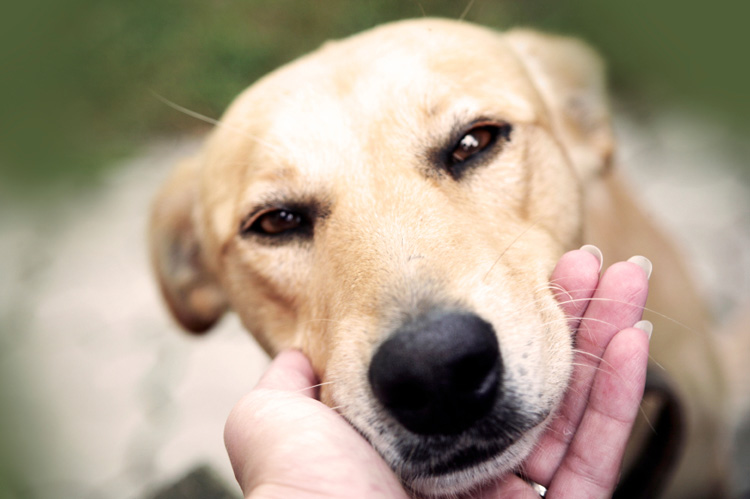
While chin rests are a fun trick to teach your dog, you can use this behavior for so many different things. If your dog is fearful of human contact, teaching your dog to rest her chin in your hand teaches her body handling and close human contact is a good thing.

When to Use Chin Rests

Anytime you need to examine, brush, bathe, trim or medicate your dog’s head or neck area, chin rests will make it much easier for both you and your dog. Also, an awesome side effect is it builds confidence while teaching dogs that body handing is fun and very rewarding.

Visiting the Veterinarian

Annual dog exams always consist of two things: ear and eye exams. These exams are a struggle for most dogs. When you think about it, it’s kind of weird having someone look into your eyes with a funny gadget and stick a hard plastic cone down your ear canal.

Teach your dog to calmly rest his head in your head, so the veterinarian can get a good look into those peepers and ears. No more wrestling and forcing your dog to the ground. You’ll be shocked how easy it is to teach too.

Applying Medication

Some time in your dog’s life,  he’ll need medication applied to his eyes and ears. Here’s where chin rests will make putting medication on his face much easier. It’s also a great way to clean your dog’s ears.

RELATED: Best Probiotic for Dogs

Grooming

Ninety-nine percent of dogs need to be brushed, but it seems most will duck their heads down as a brush moves toward their face. Instead of chasing your dog around the house with a brush, train your dog to rest his chin in your hand. Once he learns chin rests, slowly introduce a brush. Don’t touch him with it yet. Instead say “yes” and treat him when he sees the brush. Only then do you slowly move the brush closer, touch his head and brush once. If your dog backs away, you’ve gone too far too soon, so take a step back.

By teaching your dog to calmly rest his chin in a stranger’s hands, your groomer will most definitely find it useful. The dog groomer can quickly trim around your dogs’ eyes, muzzle and ears without holding his head still.

Building Confidence

Teaching your dog human hands and close body contact is fun and rewarding is empowering for dogs, especially fearful ones. If your dog ducks or moves away anytime you reach or move toward him, I highly recommend teaching chin rests.

How to Teach Your Dog Chin Rests

You’ll need lots of super yummy treats cut into pea-sized bites. I recommend using hot dogs and cheese, as they’re super yummy and your dog is willing to work hard to earn them. Another important factor: don’t stare into your dog’s eyes or face while teaching this behavior. It’s extremely freaky looking to dogs and humans alike. Rest your gaze on your open hand instead.

Step 1: Just Reach

Before reaching and grabbing your dog’s chin, we need to teach him to stand still while you reach for his face (don’t touch his face yet). Most dogs back away and, if you watch really closely, so do people. 🙂

  • Reach toward your dog, leaving three feet in between your hand and dog. As you’re reaching, mark the behavior by saying “yes” and then give your dog a treat.
  • If your dog backs away, increase the distance between your hand and dog. Or make your hand movement smaller (less swinging, slower movement).
  • Practice four to five more times and end the session.

WATCH: Teaching Your Dog Chin Rest Part 1

https://youtu.be/9e2P-UQRws4

Step 2: Touch Under Chin

As with anything, there are a couple of ways to teach your dog to allow touching of his face. You can shape and capture behavior or lure–it’s up to you, your skill level and dog’s personality. Here, I’ll teach you how to lure the behavior.

  • Slowly place your palm under your dog’s face and feed him five or six tiny treats one after the other.
  • Once five or six treats are given, remove your hand.
  • Now, try again. You’ll probably notice your dog standing very still, as your hand moves toward his chin (a good thing!). Lure and feed five or six treats again.
  • Practice three to four more times and end training session.

If your dog steps back while you feed or approach him, go back to step one and practice some more.

WATCH: Teaching Your Dog Chin Rest Part 2

https://youtu.be/petL_MI7MS8

Step 3: Rest Chin

Now, we’ll teach your dog to lower his chin in your hand.

  • Place your hand about ½ inch under your dog’s chin (you’re not touching it) and use a treat to lure his muzzle into your hand.
  • Once you feel his muzzle drop into your open hand, say “yes” and give him a treat.
  • Practice a few times and end training session.

WATCH: Teaching Your Dog Chin Rest Part 3

Step 4: Rest Longer

Now that your dog has learned to drop his chin into your open hand, we’ll teach him to hold it there longer and relax.

  • Hold your open hand out and click (or say “yes”) once your dog holds his chin in place for a second.
  • Now, click (or say “yes”) when you notice any type of relaxation.
  • You can certainly teach your dog to look at you too during chin rests. This is excellent for eyes exams. Say “yes” when he looks at you.
  • Practice a few more times and end training session.
  • Slowly increase duration of chin rests by adding an additional second during each training session.

On average, a 10-second chin rest is sufficient. If your dog needs his head groomed, then one minute is plenty. After a quick break, hold your hand out for another chin rest and groom for another minute.

Step 5: Pass It On

When guests come over, ask if they can help you and your dog work on a few things before sitting down and chatting. Bring your dog into the room–on leash is easier, so your dog doesn’t jump on them. Practice all five steps with them and you’ll notice the training session moves much faster since your dog already knows the behavior.

Chin rests are super cool to show off to friends!

Filed Under: Dogs, Training Tagged With: brush dog face, brush puppy face, brushing dog, chin rest dog, cleaning your dog's face, dog training, Dog Training Tips, grooming tips dog, how to brush your dog's face, how to teach a dog, how to train a dog, teach a dog, train a dog, vet exam tip dog

Why Do Dogs Freak Out When You Touch Their Collar?

September 11, 2015 by Fanna Easter

Stop Touching My Collar: Why Collar Touches Freak Dogs Out

Touching Dog Collar
tamifreed/Deposit Photos

Does your dog slink away or dodge your hand as you’re reaching for her collar? This is quite common among dogs. Rather than letting your dog freak out when you touch her collar,teach your dog that touching her collar is fun. Sound crazy? It’s not. I can help you fix this issue within 10 to 15 minutes.

Collar Dodging: It’s an Epidemic!

It’s embarrassing. No one wants to be that person chasing his dog and when he finally touches her collar, she takes off again. Some dogs will come right back to you when called, but once you put your hands on her collar, she’s gone again! So why does this happen? Allow me to explain it from your dog’s point of view. I’m sure you’ll have some light bulb moments. 🙂

Ninety percent of the time when someone reaches for a dog’s collar, he’s ending a play session. The person is attaching his dog to a leash to return home or walk him to his crate. Yup, dogs have learned that collar touches mean fun ends or they’re in trouble. No wonder they run away! Think of it as the “last call” announcement you’ve learned at the nightclub when fun has come to an end. Fortunately, we can change your dog’s reaction to collar touches. 🙂

How to Train Your Dog to Enjoy Collar Touches

You can certainly teach dogs no matter their age that collar touches mean yummy treats or, better yet, fun hasn’t ended. Dogs are never too old to learn.

You’ll need super yummy treats, such as hot dogs, cut into pea size bites. You’ll need a clicker to mark good behavior and, of course, your dog’s collar.

Step One: Touching Collar Brings Out Treats

  1. Put your dog’s collar on and sit on the floor. Usually, your dog will walk toward you when sitting on the floor.
  2. Reach out and touch your dog’s collar. As your fingers touch her collar, say “yes” and give your dog a treat.
  3. Move your hand away. After you say “yes,” practice again.
  4. Practice four to five more times and end the session.

WATCH: Touching Your Dog’s Collar Part 1

Step Two: Hand Slides Under/Over Collar

  1. Now, reach your hand under your dog’s collar. As your hand slides under the collar, say “yes” and give your dog a treat.
  2. Remove your hand immediately after saying “yes” and try again.
  3. Practice a few more times and end the session.

If your dog backs away or ducks, go back to step one and practice some more. Once your dog stands still when you touch her collar, then move onto step two.

WATCH: Touching Your Dog’s Collar Part 2

Step Three: Hold Collar

Hold your dog’s collar with your hand either slipped under or over her collar.

  1. Slide your palm under your dog’s collar or hold the collar with your palm facing upwards.
  2. Once your hand is in place, hold for one second. Say “yes” and give your dog a treat.
  3. Practice four to five more times and end the training session.

WATCH: Touching Your Dog’s Collar Part 3

Step Four: Walking While Holding Collar

Usually, this one causes a bit of conflict for most dogs, especially fearful dogs. This is made worse when dog owners use way too much force while holding their dog’s collar.

Goal: Your dog follows along while you’re holding her collar.

  1. Stand up and hold your dog’s collar.
  2. Feed your dog, as you’re walking forward and feed often. Every time you step forward, your dog gets a treat.
  3. Practice walking one to two steps and end the behavior.
  4. Over the course of two to three days, increase your steps. Continue giving your dog lots of treats.

WATCH: Holding Your Dog’s Collar While Walking

Step Five: Practice Outdoors

It’s time to practice in the real world. You can certainly incorporate this new behavior in everything.

  • Playing fetch: Collar touch and throw the ball as a reward.
  • Play session: Collar touch and release dog to continue playing.
  • Meat time: Touch collar and place filled dog food bowl down.

Now, your dog should happily wait for you to grab her collar. Collar touches are fun now! As for last call, you’re still on your own. 🙂

Filed Under: Behavior, Dogs, Puppies, Training Tagged With: dog collar sensitivity, dog hates collar, dog likes collar grabs, dog training, Dog Training Tips, dog won't let me touch collar, how to teach a dog, how to train a dog, teach a dog, teach puppy like collar, teach your dog to like collar touches, train a dog

  • « Previous Page
  • 1
  • …
  • 24
  • 25
  • 26
  • 27
  • 28
  • …
  • 37
  • Next Page »

About

Dog Training Nation is a community of dog trainers, dog owners and dog lovers. Our mission is to provide trainers and owners valuable information to enrich dogs' lives. We cover a range of topics, from socializing puppies to dealing with aggressive dog behavior to selecting the best dog products. It is our hope you share our content to make the dog and owner world a better place.

​

Facebook

Video

Dog Training Nation is a dog training blog for pet owners and dog lovers. We cover a range of topics from puppy socialization tips to dog aggression to dog health. It is our hope you share our content to make the world a better place for dogs.

Dog Training Nation

Quick Links

Dog Training
Dog Behavior
Dog Training Videos
Become a Dog Trainer
About
Contact Us

Copyright © 2026 · Lifestyle Pro Theme on Genesis Framework · WordPress · Log in