Dog Training Nation

In Dogs We Trust

  • Home
  • Training
    • Dogs
    • Puppies
    • Clients
  • Behavior
    • Breeds
  • Health
  • Safety
  • Resources
    • Equipment
    • Books
  • Dog Training Videos
  • About
You are here: Home / Archives for how to train a scared dog

Dealing With Learned Helplessness In Dogs

October 29, 2014 by Fanna Easter

Learned Helplessness
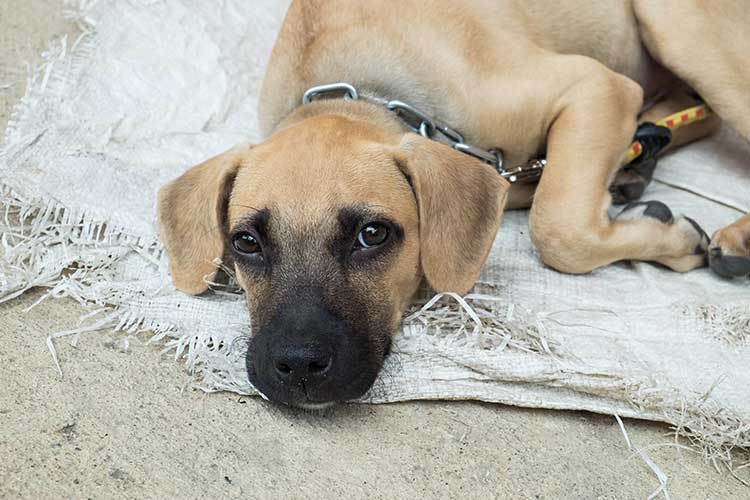
Shut Down Dogs
crazybboy/Adobe Stock

Learned helplessness is the condition where a dog has been repeatedly exposed to a scary stimulus and has learned he no longer has control over the adverse situation. The dog shuts down and becomes helpless, knowing he can’t change the outcome.

Dogs can shut down during group dog training classes, private lessons and even puppy playtime. As your dog’s voice, you should learn what causes dogs to shut down and how to prevent it.

What is Learned Helplessness?

Dogs either fight or flight when they encounter a scary trigger. However, there’s a new response I’m seeing more and more of during my dog training sessions. It’s freeze or shut down. Dogs that have learned to become helpless basically giving up, flop over, and hope the scary trigger goes away and doesn’t hurt them.

[perfectpullquote align=”full” cite=”” link=”” color=”” class=”” size=””]People see the dog giving up and mistakenly assume the dog has learned to stay still or behave. Oh, but it’s far from it.[/perfectpullquote]

Can you imagine being so scared, your entire body shuts down, you go limp, you roll over and you wish with everything you have that the scary thing would leave you alone? Wow. That’s terrible right!?

Well, I’m seeing an increasing amount of learned helplessness in dogs introduced to scary triggers. Many times, dogs shut down at the vet’s office, on a groomer’s table, or during class because they’re so confused or scared that they simply give up. People see the dog giving up and mistakenly assume the dog has learned to stay still or behave. Oh, but it’s far from it. The dog was pushed way too far.

What Does a Shut Down Dog Look Like?

When dogs shut down, they usually become frustrated and display calming and appeasement signals. Dogs will usually begin with subtle versions of calming signals to indicate they’re confused and scared. If the scary stimulus continues, their calming signals become more apparent, such as an increase in panting, salivation and sometimes vocalization. You may also notice their:

  • Tails tucked between their legs
  • Ears pinned back against their head
  • Body weight shrinks backwards
  • Bodies flop on the floor and become very still

What Causes Learned Helplessness in Dogs?

Any number of triggers can cause a dog to shut down, including:

  • Loud echo
  • Sound of a clicker
  • Other dogs being too close
  • Strange smell (we may never discover this one)
  • Chronic anxiety caused from past experiences during dog training
  • Combination of triggers

Shutting Down vs. Learning a Incompatible Behavior

Let’s be crystal clear here. There’s a major difference between shutting down and learning an incompatible behavior—huge difference. Teaching an incompatible behavior means teaching a dog to sit instead of jump or target your hand instead of pulling on a leash.

The dog has a choice in this situation, and is a willing participant in the learning process. Shutting down means the dog is not a willing participant in the learning process, and is so confused he gives up and flops on the floor wishing you (or whatever the stimulus causing him to shut down) goes away.

How to Prevent Dogs From Shutting Down

Whether you’re a dog trainer or dog owner, it’s so important to become fluent in dog body language and notice the nuances before the dog becomes stressed. The moment you notice your dog is stressed by a trigger, look at your dog’s environment for the trigger. What is causing your dog to stress out? Once you identify it, remove it.

If a dog is stressed with another dog too close, ask the other dog to move away from the stressed dog. If the trigger is a loud sound, move the scared dog further away from the sound or use visual barriers to calm a stressed dog.

While some stress is a good thing and is actually needed during the learning process, we’re talking about beyond normal stress levels that border into anxiety here. When you’re stressed or anxious, you can’t learn. It’s impossible. Think about it: If you’re scared of spiders and I hold a tarantula about 3 feet from you while teaching you how to recite Shakespeare, would you remember a word I said? Bingo, that’s the feeling right before you shut down. 🙂

If Your Dog Doesn’t Recover

If a stressed dog becomes even more frantic when triggers are removed, take your dog outside for a walk or remove him from the situation. Then, try to identify exactly what caused him to shut down.

If you’re a dog trainer, ask the owner to step outside the session with her dog and come back to watch until the session ends. Afterwards, ask the owner to list out any known triggers that cause anxiety and begin a simple desensitization program for each trigger. Begin slowly and remember desensitization always works. If it’s not working, it’s not being done right, so take a deeper look at the process. When in doubt, split a behavior, which means make it even simpler.

If, at anytime, a dog becomes worse or does not improve, I recommend partnering with a qualified animal behaviorist.

How do you prevent a dog from shutting down? I want to hear from you. 🙂

Related Posts: How to Train Fearful Dogs

Filed Under: Behavior, Clients, Training Tagged With: best dog trainer tips, dog behavior, dog trainer, dog trainer's corner, fearful dogs, how to train a scared dog, my dog is scared, shut down dogs, top dog trainer tips, training a fearful dog, training scared dogs

How to Train Fearful Dogs

August 8, 2014 by Fanna Easter

Fearful Dog Training Tips

Fearful Dog
ArenaCreative/Deposit Photos

Fearful dogs break my heart. It’s not their fault they’re scared. They are either born this way and/or learned through scary encounters.

When training or living with a fearful dog, you’re using the same basic learning principles, but doing a few things differently. Always remember: fear causes aggression. We are all equipped with “fight or flight” mode. It’s a defensive mechanism. In fearful dogs, this mode is turned up a few notches.

Never use punishment-based training methods. Never punish a dog for being fearful, you will make it much worse. Punishment means yelling, screaming, pushing, pulling, correcting with a collar or verbally, and hitting a dog. It’s not their fault. Would you punish a child for being scared? I think not.

First, enroll in a Relaxed Rover class. Relaxed Rover classes are designed for fearful dogs and incorporate the below fearful dog tips. Class size is smaller than regular group classes and provides plenty of opportunities for practicing while offering guidance from a professional dog trainer.

Use the Very Best Treats

This is so important. I’m shocked how many dog owners disregard dog training treats. This is your dog’s currency, so use treats your dog loves!

Control His Environment

If your fearful dog refuses to eat his treats and you’re using hot dogs and string cheese (i.e. high value treats), stop and assess the situation. Is your dog distracted by:

Another dog standing too close?

o Move your dog away, at least 10 feet, if possible and try again.
o Provide visual barriers, such as bushes, fences and distance.

A person standing too close?

o Move your dog away, at least 10 feet, if possible and try again.
o Provide visual barriers, such as bushes, fences and distance.

Loud noise?

o Move away from loud noises and refrain from teaching your dog around loud noises. This could mean walking your dog in a park instead of alongside a busy road.

Quick movement?

o This startles many fearful dogs, as they believe quick movement means they are coming to get me.
o Provide visual barriers.

Teach Redirection

Redirection means to reward your dog for doing something else. If your dog jumps up, reward him for sitting instead. When redirecting, always continue to manage your environment.

If another dog is standing too close,

o Teach your dog the “look at that” cue.
o When your dog looks at another dog, click and treat. Your dog learns dogs equal food.

If a person is standing too close,

o Teach your dog the “look at that” cue.
o When your dog looks at a person, click and treat. Your dog learns strangers equal food.

If there is loud noise,

o Feed your dog as a loud noise is happening.
o Trust me, you’re not rewarding your dog’s scared behavior. You are pairing yummy food with something scary, such as a noise. This works wonderfully!

If there is quick movement,

o Teach your dog the “look at that” cue.
o When your dog looks at whatever is causing quick movement, click and treat. Your dog learns quick movement equals food and quick movement does not mean you are coming to get him.

Build Confidence

By teaching a fearful dog the “look at that” cue, he’s learning the world is not scary, which is very empowering. The more your fearful dog learns, the more confidence he will build!

I highly recommend enrolling in controlled dog sports, such as agility and nosework. By controlled, I mean one dog and handler are allowed in the ring at a time. This means low distractions and lots of one-on-one attention from the dog trainer.

Nosework is awesome for fearful dogs! Nervous dogs usually blossom after just one session. They learn to do something else instead of worry, and every dog has a good nose–even baby Pugs. 🙂

Preventing Shut Down Dogs

When a dog shuts down, he has given up to the extent he becomes frustrated. This condition is called learned helplessness, which can be treated. We cover learned helplessness in more detail in this article.

Bark back! What tips have worked for your fearful dog?

Filed Under: Behavior, Dogs, Training Tagged With: dog aggression, dog bite, dog trainer advice, dog training, dog training advice, Dog Training Tips, fearful dog, how to train a dog, how to train a scared dog, my dog is scared, puppy aggression, puppy bite, scared puppy

About

Dog Training Nation is a community of dog trainers, dog owners and dog lovers. Our mission is to provide trainers and owners valuable information to enrich dogs' lives. We cover a range of topics, from socializing puppies to dealing with aggressive dog behavior to selecting the best dog products. It is our hope you share our content to make the dog and owner world a better place.

​

Facebook

Video

Dog Training Nation is a dog training blog for pet owners and dog lovers. We cover a range of topics from puppy socialization tips to dog aggression to dog health. It is our hope you share our content to make the world a better place for dogs.

Dog Training Nation

Quick Links

Dog Training
Dog Behavior
Dog Training Videos
Become a Dog Trainer
About
Contact Us

Copyright © 2026 · Lifestyle Pro Theme on Genesis Framework · WordPress · Log in