Dog Training Nation

In Dogs We Trust

  • Home
  • Training
    • Dogs
    • Puppies
    • Clients
  • Behavior
    • Breeds
  • Health
  • Safety
  • Resources
    • Equipment
    • Books
  • Dog Training Videos
  • About
You are here: Home / Archives for how to train your dog

Learn From Dog Training Mistakes

October 20, 2017 by Fanna Easter

Dog Training Mistakes Provide Valuable Information

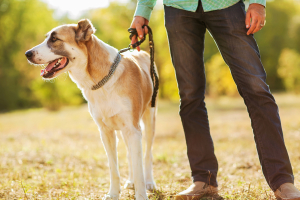
Dog Training Mistakes
Kzenon/Adobe Stock

When teaching dogs new behaviors, mistakes will happen. It’s part of the learning process. During a dog training session, either the pet owner (teacher) or dog (learner) will make a mistake. While identifying and overcoming mistakes seems complicated, it really is super easy with a few tips. When mistakes happen, remind yourself that they provide valuable information you can learn from.

Human Mistakes

It’s important to remember the dog is always right. Teaching is challenging, so reward your dog, especially when she picks up on a behavior quickly and easily. As the pet owner, it’s important to set your dog up for success by following these few easy steps.

  1. Always choose a distraction-free environment to begin training your dog a new behavior.
  2. Split the behavior into easy-to-understand sections.
  3. Encourage your dog by generously rewarding steps forward.
  4. Keep dog training sessions short (1 minute long).
  5. If progress stops, identify the issue and stop the training session immediately, then resume with an updated plan.

Here’s an example of setting a dog up for success when teaching her to lie down on the floor.

  1. Practice in your home with minimal distractions.
  2. Teach your dog to sit first. Once she sits reliably, lure her front half down with a treat. Click when elbows touch the ground and reward generously.
  3. Reward each step forward.
  4. Stop the session after 1 minute.
  5. If your dog won’t lie down, step back and figure out why. Maybe try teaching your dog with a mat under her elbows or slowing down your luring hand.

Dog Mistakes

When pet owners teach their dogs new behaviors, they are building a bond of trust between them as well as learning how to communicate effectively. Remember, dogs are considered learners during training sessions, so they can’t make mistakes. Dogs (learners) are always right even when they’re confused.

Pet owners (teachers) should remember that dogs are not choosing to be stubborn; dogs are genuinely confused in those situations. If this happens, end the training session and re-evaluate your training plan. If you find yourself frustrated because progress has come to a halt, seek advice from a positive reinforcement dog trainer.

Think about it this way: If you become confused while learning how to ski, then your ski instructor has not communicated how to ski properly. As a dog trainer, if my students become confused and make mistakes, that means I didn’t communicate how to do a behavior effectively—and I own it

Identifying Mistakes

This is the hardest part. Most pet owners immediately blame their dog when training sessions become confusing. Humans have huge egos. The best way to identify dog training mistakes is to record a training session on a smartphone.

Set up the phone, so both you and your dog are easily viewable, such as propped up on top of a table. Hit the record button, walk over and teach a 1-minute training session covering a difficult behavior. End the session, then watch the video to identify the issue.

About 90% of the time, pet owners immediately identify their mistake and adjust during their next training session. If you do this and are still stumped, send the video to a professional positive reinforcement dog trainer for advice.

Learn From Mistakes

Each mistake provides valuable information. When you learn what caused the mistake, you’re less likely to repeat it. Once mistakes are identified and changes are made, dog training success progresses quickly.

Filed Under: Clients, Training Tagged With: am I making dog training mistakes, common dog training mistakes, dog behavior, dog can't learn, dog keeps making mistakes, dog refuses to learn, dog training, dog training mistakes, how to teach a dog, how to train your dog, untrainable dog, untrainable puppy

Dog On Dog Aggression In The Home

October 4, 2017 by Fanna Easter

Dog Training: Dog Aggression Between Housemates

Dog On Dog Aggression In The Home
Jne Valokuvaus/Adobe Stock

When two dogs in the same home start fighting, it’s a frightening and extremely urgent situation. The tension between both dogs is pliable, and pet owners are often frustrated, yet hopeful. If your dogs are fighting, follow these steps today. Don’t hesitate because this situation will not get better on its own.

Why Are Your Dogs Fighting?

Many pet owners dwell on the exact cause for the fighting between their dogs. As a professional dog trainer, it’s extremely hard to pinpoint the exact cause for the dog on dog aggression in the home, but it’s evident that tension has been present long before their fighting began.

Dogs protect resources, such as food, toys, treats, beds, space and humans. Additionally, overly anxious dogs will redirect their frustration onto their housemate. Regardless of the reason, it’s important to understand this situation will only get worse until it’s addressed with a professional dog trainer or veterinary behaviorist.

[perfectpullquote align=”full” cite=”” link=”” color=”” class=”” size=””]Allowing dogs to fight only makes the situation much worse and is considered torture for both dogs.[/perfectpullquote]

What Should You Do First?

Prevent your dogs from meeting or seeing each other. Never allow dogs to fight it out or work it out for their spot in the pack because this never works. Allowing dogs to fight only makes the situation much worse and is considered torture for both dogs. Plus, it’s not fair to the dog being attacked over and over; his or her life is a living hell.

Separate both dogs to opposite sides of the house. Keep doors firmly closed and place gates to prevent fighting. Bring one dog out to potty at a time, and ensure each dog is securely confined in his or her area before letting the other dog out to potty. Preventing fights stops your dogs from practicing the behavior while keeping each dog safe.

Get Professional Help

Pet owners with squabbling dogs need professional help. It’s impossible to prevent housemates from fighting, even with management, without intense dog behavior modification. Contact a professional dog trainer or veterinary behaviorist immediately, and keep all dogs separated until a professional can help you implement behavior protocols.

While it’s tempting to seek advice online, it’ll be difficult to find specific answers for your case unless a professional has met each fighting dog and the environment. If someone does offer advice without meeting your dogs, that person is doing a disservice to your household.

Find a local professional immediately for best results. Plus, make sure the professional has extensive knowledge with dog aggression and uses positive reinforcement training only. Punishment will only make the problem worse.

Filed Under: Behavior, Training Tagged With: dog behavior, dog obedience, dog on dog aggression, dog on dog aggression in the home, dog to dog aggression, dog training, Dog Training Tips, dogs in same house fight, fighting dogs in same house, help for dogs fighting in same household, how to stop dogs from fighting, how to teach a dog, how to train your dog, stop dog fighting, stop dogs from fighting

How to Park Your Dog

October 24, 2014 by Fanna Easter

Train Your Dog to Stay

Train Your Dog to Stay

As a professional dog trainer, if I had to narrow down the top behavior all dogs should know, I would say parking your dog would be the first one! Trust me, “Come When Called” is probably right up there with “Park Your Dog.” However, this behavior will teach your dog to stay with you.


 “Park Your Dog” is a great way to bring your dog’s arousal level down. It’s like taking a yoga breath for your dog.


Why Should I “Park My Dog”?

“Park Your Dog” is a great way to bring your dog’s arousal level down. It’s like taking a “yoga breath” for your dog. Use this dog behavior when your dog becomes overwhelmed by visitors or anything, really! When teaching hyperactive dogs to be calm, many folks ask them to sit still. This is tough, as they are learning how to manage their extra energy and excitement. So next time your dog tries to jump on guests, “park your dog.”

Just by teaching your dog this simple behavior, your dog will learn

  • Self control (teaching your hyper dog to relax)
  • Polite greetings of people (not to jump on people or you)
  • Polite leash manners (not pull on the leash)
  • Ignore other dogs
  • Stay with you
  • Prevent excessive barking

How do I teach “Park Your Dog”?

  1. Step on your leash (about half way up to your dog, your dog should have 3 feet of extra leash).
  2. Click and treat your dog the instant the leash becomes loose. Tip: instead of watching your dog, feel when the leash tightens and loosens under your feet. The moment you feel slack in the leash, Click and treat!
  3. That’s it! Bingo, you are rewarding calm and quiet behavior!

Additional Troubleshooting:

  • Dog still jumps up on you, shorten the leash.
  • Dog continues to pull on leash, your timing is probably off a bit.  Click/treat every time the leash is loose.
  • My dog is still pulling, then call their name and click/treat five times in a row.  Now you have their attention, so keep their attention by rewarding frequently.

VIDEO: How to Teach “Park Your Dog”

When can you park your dog?

  • While talking to someone at the park
  • Having guests over
  • Outdoor dining
  • Paying at the pet store or vet’s office
  • During group class lecture, we ask pet parents to “park their dog” while listening to instructions

I want to hear from you! When should you park your dog?

Filed Under: Dogs, Training Tagged With: clicker training, dog behavior, dog trainer, dog training, Dog Training Tips, how to train a dog, how to train a puppy, how to train your dog, how to train your puppy, information about dogs, obedience training, puppy tips, puppy training, puppy training tips, Rottweiler training

Come When Called Part 3: Adding Distractions

September 26, 2014 by Fanna Easter

Teaching Your Dog to Come When Called

Adding Distractions to “Come” Cue

If your dog ignores you and runs off, it might need some specific training. Here is the final installment of a four-part series on training your dog to come. You’ll  learn:

  • How to perform an emergency recall
  • To call your dog indoors from the backyard
  • To call your dog back to you around distractions (squirrels, etc.)
  • How to teach multiple dogs to come back to you
  • Fun games

Directions

  • View first video and practice homework for seven days.
  • View second video, practice homework for seven days.
  • View third video, practice homework for seven days.
  • View fourth, and final, video.

Each video contains tons of information so re-watch them several times. Bookmark for easy future reference.

What you will need:

  • Delicious treats the size of a pea
  • Six-foot leash
  • Flat buckle collar or body harness
  • Clicker

Note: Always enroll your dog in a group dog training class. This video should not be used in place of dog training class attendance.

You’ve completed the “Come When Called” series. Revisit the videos as often as necessary for polite greeting behavior!

In case you missed it: Come When Called Part 1: Intro

Filed Under: Dogs, Training Tagged With: clicker training, dog training, dog training advice, Dog Training Tips, dog training video, how to train a dog, how to train a dog not to jump, how to train a puppy, how to train your dog, how to train your puppy, puppy tips, puppy training, puppy training tips, Rottweiler training

How to Train Your Dog Not to Jump Part 2

September 9, 2014 by Fanna Easter

How to Stop Your Dog From Jumping

Stop Your Dog From Jumping
Click! All four feet on the floor!

Does your dog jump on you or guests? View this 3-part video series, which will teach your dog:

  • Not to jump on you when coming home
  • To greet guests politely

If you missed Part 1, How to Train Your Dog Not to Jump Part 1.

Directions:

  • View first video and practice homework for 7 days.
  • View second video and practice homework for 7 days.
  • View third, and last, video.

Each video contains TONS of information, so rewind and watch several times. Bookmark for easy reference.

What you will need:

  • Delicious treats the size of a pea. View Choosing Dog Training Treats for more tips.
  • 6-foot leash
  • Flat buckle collar or body harness
  • Clicker is optional. View Clicker Training Tips for more details.

Note: Always enroll your dog in a group dog training class. This video should not be used in place of dog training class attendance.

How to Train Your Dog Not to Jump Part 2 Video

Any questions about the How to Train Your Dog Not to Jump Part 2 video? Please add them in the comment section below!

NEXT: How to Train Your Dog Not to Jump Part 3

Filed Under: Dogs, Training Tagged With: clicker training, dog training, dog training advice, dog training classes, Dog Training Tips, how to train a dog, how to train a puppy, how to train your dog, how to train your puppy, obedience training, puppy training, puppy training tips, stop a dog from jumping, stop a puppy from jumping

  • 1
  • 2
  • 3
  • Next Page »

About

Dog Training Nation is a community of dog trainers, dog owners and dog lovers. Our mission is to provide trainers and owners valuable information to enrich dogs' lives. We cover a range of topics, from socializing puppies to dealing with aggressive dog behavior to selecting the best dog products. It is our hope you share our content to make the dog and owner world a better place.

​

Facebook

Video

Dog Training Nation is a dog training blog for pet owners and dog lovers. We cover a range of topics from puppy socialization tips to dog aggression to dog health. It is our hope you share our content to make the world a better place for dogs.

Dog Training Nation

Quick Links

Dog Training
Dog Behavior
Dog Training Videos
Become a Dog Trainer
About
Contact Us

Copyright © 2026 · Lifestyle Pro Theme on Genesis Framework · WordPress · Log in
