Dog Training Nation

In Dogs We Trust

  • Home
  • Training
    • Dogs
    • Puppies
    • Clients
  • Behavior
    • Breeds
  • Health
  • Safety
  • Resources
    • Equipment
    • Books
  • Dog Training Videos
  • About
You are here: Home / Archives for puppy training

Children And Puppies: Keeping Everyone Safe And Happy

December 28, 2017 by Fanna Easter

6 Safety Tips for Children and Puppies
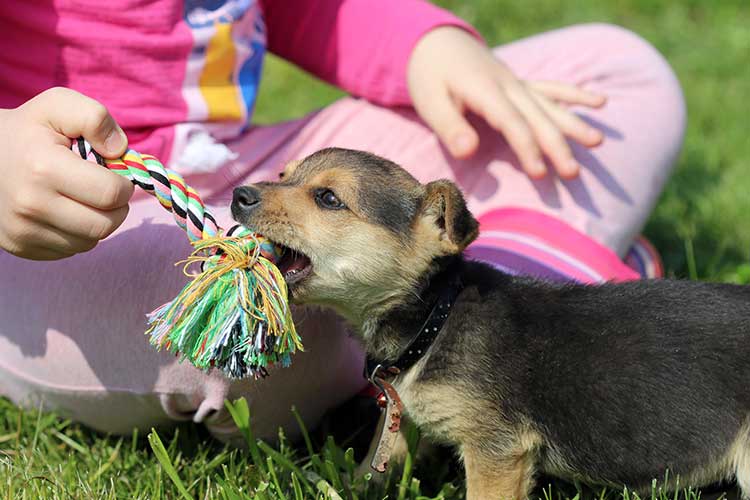
Children and Puppies
goce risteski/Adobe Stock

It’s that time of year where families are bringing new puppies home. One major concern most new pet owners have is introducing their new puppy to their children. Before your new puppy arrives, hold a family meeting and discuss each puppy safety tip in detail with your children. It’s vital to teach young children polite behaviors around puppies. While most of these safety tips pertain to dogs of all ages, there are a few specific to puppies only.

1. Crate Your Puppy in a Quiet Room

Place your puppy’s crate in a quiet place, such as your master bedroom. When puppies are crated, they need peace and quiet to rest and enjoy food filled toys. Refrain from placing your puppy’s crate in your children’s playroom, living room, kitchen or another busy area. Children should not harass your puppy, so close the bedroom door to ensure privacy.

2. Never Disturb Your Puppy While Eating

Puppies should be left alone during mealtime. When children approach a puppy’s food bowl, pet the puppy while eating or stick their fingers in the food bowl, this can cause a puppy to resource guard her food. It’s best to feed puppies in their crates with the crate door securely closed. Even better would be to feed your puppy her meals from food stuffed toys when crated. This applies to when your puppy is chewing on a bully stick or toy too.

3. Give Your Puppy Plenty of Space

Many children like to pick up and hold puppies like babies, but this can quickly annoy a puppy. It’s important for children to understand that puppies need plenty of space and that they should have the choice to be held or picked up.

Hugs and kisses are fine, if the puppy walks over and initiates this behavior. However, children should not walk over and hug or kiss a puppy first. Also, children should never sit, step on or lie down on a puppy. This hurts, and will cause the puppy to growl or bite.

4. Never Take Toys From Your Puppy

Puppies will chew anything and everything; it’s part of being a puppy. When a puppy grabs your child’s favorite toy, it’s important your child doesn’t pull the toy out of your puppy’s mouth. This will cause a tug-of-war game, and some puppies learn to resource guard toys from children. Instead, teach children 5 years and older to play the “trade” game. For children under 5 years of age, you should play the “trade” game.

5. Pet With Gentle Hands

Children should learn to gently pet puppies the moment a new puppy arrives in the home. Gentle petting involves slow strokes with light pressure along a puppy’s side. When children pet a puppy, they should use a flat palm and move slowly. Children should not pet puppies on top of the head, touch their faces, pull their tails, poke with fingers or throw items at the puppy. When children or adults pet puppies too quickly, it causes puppies to get excited.

6. Never Leave Children and Puppies Alone—Ever

Children and puppies (dogs too) should never be left alone together unsupervised ever. It can take less than a second for a young child to unintentionally hurt a puppy, and the puppy bites the child out of self-defense. When in doubt, place your puppy in her crate with lots of yummy treats if you need to answer the front door or cook dinner.

Filed Under: Puppies, Safety, Training Tagged With: children and puppies, dog trainer, how to teach a dog, how to train a dog, introducing puppy to child, introducing puppy to toddler, kids and puppy tips, puppy training, safety for kids and puppies, safety tips for children and puppies, teaching a dog, tips for puppies and children, training a dog, training puppies, what children should know before getting a puppy

Help! My Puppy Just Growled At Me, What Should I Do?

December 26, 2017 by Fanna Easter

How to Handle Puppy Growling

Puppy Growling
Fabian Faber/Adobe Stock

When dogs growl, it can be scary. However, when puppies growl, it can become very confusing and concerning. As a professional dog trainer, I can tell you most clients are more concerned when puppies growl than when adult dogs do it. Let’s discuss why puppies growl and how to prevent the behavior.

What Causes Puppies to Growl?

Many pet owners have a hard time telling the difference between “play” and “scared” puppy growling. Puppies mostly growl when playing; it can sound vicious, but it’s harmless. During playtime, a puppy’s body language is rounded and fluid. A puppy moves quickly, and will growl and show his teeth while playing.

A scared puppy’s body language looks completely different from that of a playful puppy. Fearful puppies will freeze, and then move backwards. Their body language becomes straight and stiff. These puppies growl because they’re scared or uncomfortable, especially when children are holding them and they can’t get away. Basically, when a puppy growls due to fear, he is begging everyone to stop what she is doing.

Prevention is Best

Puppy play growling is fun, but it can scare some pet owners. If your puppy growls while playing, just stop the game. Once your puppy stops growling, start the game again. This teaches him that growling makes the fun stop. And when growling stops, the fun begins again.

When a puppy growls while playing with another dog, it’s best to monitor their puppy play session. Watch each dog’s body language, and step in and separate dogs with an interrupter cue if body language becomes rigid. If a puppy growls while being held or when approaching his food bowl, back off immediately. 

How to Change This Behavior

If a puppy is growling while being held or touched, it’s time to change his behavior. Instead of walking over and picking up your puppy, call your puppy to you and reward him with cheese when he gets to you. Choices are important to puppies too, so only pick him up if he’s comfortable. Some puppies will growl when touched because they’re scared, so it’s important to pair something good with touching.

Also, it’s best to partner with a professional dog trainer who only uses positive reinforcement methods to address this behavior. There may be other things going on within the household, so a professional dog trainer can observe and address potential issues quickly.

Filed Under: Puppies, Training Tagged With: aggressive puppy, dog training, Dog Training Tips, growling puppy, help for puppy growling, how to teach a puppy, how to train a puppy, puppy growling, puppy growls at children, puppy growls at me, puppy play growling, puppy training, stop puppy growling, teaching a puppy, training a puppy, why puppy growls

Why It’s A Bad Idea To Surprise Your Child With A Puppy

December 13, 2017 by Fanna Easter

Puppies are Not Presents

Puppies are Not Presents
Saksoni/Adobe Stock

Yes, it’s tough to hear, but it’s true. Puppies are not presents, and you shouldn’t surprise your child with a puppy for Christmas. Allow me to be very honest about this subject because it’s a sensitive one for passionate dog lovers and dog trainers. Here are reasons why puppies make terrible Christmas gifts.

Little Research Conducted

Most people put in more time researching a new DVR than a new puppy. This blows me away every time. Potential pet owners see a beautiful dog on TV and instantly want “that” puppy. As Christmas approaches, potential pet owners turn to the Internet to find a specific breed of puppy in time for the holiday. Please don’t let this happen to you or someone you know. Gifting a puppy is the worst thing you can do to your family, including the new puppy.

[perfectpullquote align=”right” bordertop=”false” cite=”” link=”” color=”” class=”” size=””]Puppies and dogs are a forever commitment, so make sure to take your time choosing the right puppy for you and your family.[/perfectpullquote]

Instead, spend time reading about your desired dog breed online first. Then, reach out to AKC dog breed clubs for free information and chat with reputable breeders listed on the website of your chosen breed’s parent club. Meet several of your chosen breeds in person and ask questions. Attend a local dog show in your area, and chat with exhibitors after they’ve shown. These folks are breed experts.

Once you’ve decided on a reputable dog breeder, wait for the puppy to be born. If you prefer to rescue, contact AKC breed parent clubs since these folks volunteer for breed rescue and can certainly put you in touch with adoptable dogs. In fact, 90% of purebred rescues are directed by a member of AKC, so do your research first.

Puppies and dogs are a forever commitment, so make sure to take your time choosing the right puppy for you and your family.

Holidays are Extremely Busy

It’s one of the busiest times of the year, and trying to incorporate a new puppy into a holiday schedule is impossible. Many pet owners become frustrated when their new puppy potties in the house moments before holiday guests arrive. Puppies will chew and gnaw on expensive flooring or shoes if left unsupervised. Choose a quieter time of the year to bring home a new puppy. It’s the best way to set your family and your new puppy up for success.

Here Come the Excuses

When puppies are brought into unprepared homes, the poor puppies are the ones that suffer the most. When January and February roll around, frustrated pet owners start creating excuses about their puppy’s behavior, such as:

  • “He’s impossible to potty train.”
  • “She chews everything in my house.”
  • “We don’t have time for a puppy.”
  • “I didn’t know it was this hard.”
  • “Wow, puppies shed!”
  • “I didn’t know he would get this big.”

Puppies don’t come with a manual. It’s their pet owners’ job to train them and teach them polite behaviors. Some pet owners enroll in puppy group classes, which is the right thing to do. Most pet owners don’t, and then the excuses continue to mount.

Unfortunately, surprising a child with a puppy for Christmas often results in looking for a new home for the puppy after the holidays since the family was completely unprepared. At first, pet owners look for “good” homes, but as time ticks away, they end up dropping their puppy off at a shelter. While this scared puppy is sitting in a strange place, surrounded by other dumped Christmas puppies, their previous family moves on with their lives. Please don’t let this happen!

Please, never give a puppy as a Christmas present. It’s not fair to the puppy.

Filed Under: Clients, Training Tagged With: a puppy for christmas, christmas dog, christmas puppies, christmas puppy, dog behavior, dog training, Dog Training Tips, don't give pets as gifts, how to find a christmas puppy, how to suprise your child with a puppy, how to teach a dog, how to train a dog, pets are not gifts, puppies are not for christmas, puppies are not presents, puppy training, teaching a dog, training a dog, where to find a christmas puppy

Should Your Dog Chew Pig Ears?

April 7, 2017 by Fanna Easter

Pros and Cons of Pig Ears for Dogs

Pig Ears for Dogs
klaventure1976/Adobe Stock

Dogs love and need to chew. Chewing provides mental stimulation and exercise, keeps teeth clean, is fun and super relaxing. If dogs aren’t given plenty of chewing opportunities, they’ll likely create their own, which is never a good thing. So, should your dog chew pig ears? It depends. Learn the pros and cons of pig ear chews for dogs.

Pros of Pig Ear Dog Treats

The most appealing advantage about pig ear chews is dogs find them simply delicious! In my 20-plus years as a dog trainer, I’ve never witnessed a dog turning his or her nose up at a smoked pig ear dog treat.

Their thick hide and density make pig ears easy to chew for small, delicate chewers and senior dogs. Another huge plus is pig ear chews keep your dog’s teeth clean and gums healthy, which means fresh breath. Pig ear chews are also odorless even while your dog chews them.

Due to their popularity, pig ear dog treats are readily available at pet retailers and online, and are relatively inexpensive compared to other dog chews.

RELATED: Are Antler Chews for Dogs Safe?

Cons of Pig Ear Dog Treats

Pig ear dog treats are high in fat. When consumed daily, pig ear chews can cause vomiting and diarrhea. Overzealous chewing dogs (power chewers) may choke or swallow large chunks, causing GI obstruction hazards.

Another pro about pig ear chews is power chewers can literally consume a pig ear chew within seconds, which can get very expensive. Most pig ear dog treats are also covered in chemicals, additives and preservatives, so choose chews made in the USA only.

Since pig ear chews for dogs taste so delicious, some dogs may exhibit resource guarding behavior and protect these treats from other dogs, people and children.

Pig Ear Chew Safety

If your dog is prone to obesity, has pancreatitis, is currently eating a bland diet or consumes chews too quickly, then it’s best to provide a different type of dog chew.

Pig ear chews are best for small dogs, delicate chewers and seniors in moderation (one chew per week). For power chewing dogs, bully sticks are a better option. Remember, supervision is vital while dogs chew. It’s the best preventative for choking or digestive obstructions.

Filed Under: Health, Puppies, Training Tagged With: best treats for dogs, best treats for puppies, chew stick dogs, chew sticks puppy, dog training, Dog Training Tips, how many pig ears can I give my dog, my dog ate a whole pig ear, pig ear chews, pig ear chews for dogs, pig ears vs bully sticks, pig ears vs rawhide, puppy training, puppy training tips

Why You Should Avoid Pet Stores Selling Puppies

March 13, 2017 by Fanna Easter

Puppy Mills & Pet Store Puppies

Puppy Mills
sommai/Adobe Stock

Over the last couple of years, passionate dog lovers have successfully brought attention to a sore spot in the pet industry—pet store puppies. It seems like this movement is finally picking up momentum, as many large cities are now banning pet stores from selling puppies and dogs. This is certainly a win for dog lovers everywhere, and here’s why.

[perfectpullquote align=”full” cite=”” link=”” color=”” class=”” size=””] Puppy mills are run by heartless individuals looking to raise dogs cheaply and make a quick profit.[/perfectpullquote]

What are Puppy Mills?

Puppy mills are deplorable dog breeding factories. They mass produce purebred and designer dogs to fill demand for new puppies. Puppy mills ship very young puppies to any location regardless of distance.

Why Puppy Mills are Bad

Puppy mill dogs are kept in tiny cages where they’re forced to live in their own feces and urine. They don’t have access to veterinary care, are skinny from lack of nutrition, and have matted coats and severely overgrown nails due to lack of basic care.

Breeding stock aren’t health or temperament tested. Instead, they’re forced to have litter after litter to feed consumer demands from pet stores and unknowing pet owners. Puppy mills are run by heartless individuals looking to raise dogs cheaply and make a quick profit.

RELATED: Finding a Dog Breeder: How to Find the Right One

Looking at pictures of puppy mills is sickening enough, but witnessing a puppy mill in person is gut-wrenching. The stench will knock you off your feet and burn your eyes. These poor dogs are barely able to turn around in their cages and are left in dark rooms with no access to sunlight. Most puppy mill dogs have never walked on grass.

Watching these sickly momma dogs covered in mats and feces feeding tiny puppies just makes your heart hurt. Since these dogs have been handled and treated this way, puppy mill dogs are completely terrified of humans.

Given these horrible conditions, it’s easy to see why puppy mills are bad. Unfortunately, puppy mills are everywhere. Most are hidden in rural areas. When one is shut down due to animal cruelty laws, another one pops up to fill demand for puppies. It’s a never-ending battle, and dogs are the victims.

Pet Store Puppies

High consumer demand for puppies is the reason pet stores turn to puppy mills. Pet stores selling puppies are looking to fill inventory quickly, and puppy mills are the most convenient way to fulfill these needs.

Pet stores don’t help these poor puppies out. Pet store puppies are kept in crates 24 hours per day with no access to the outdoors and are forced to potty where they sleep. Potty training a puppy mill puppy is beyond challenging because they’ve learned to potty anywhere. Puppies are little sponges until they’re 16 weeks old, so keeping a puppy in a crate with limited interaction with the world is detrimental. In addition, pet stores don’t properly screen prospective pet owners. This means these innocent pet store puppies could end up anywhere.

Just Say No

Nothing will be done until we do something about it. As a concerned pet owner, I urge you not to buy pet store puppies and educate prospective dog owners on why puppy mills are bad. Don’t shop at pet stores that sell puppies and don’t purchase dog treats from pet stores that don’t sell dogs or puppies. At the very least, please share this article to educate others.

Don’t feed puppy mills. Just say no.

Filed Under: Breeds, Clients, Resources, Training Tagged With: dog training, pet store bans puppies, pet store puppies, pet stores selling puppies, puppy at pet store, puppy mill bans, puppy training, where not to buy a puppy, where to buy a puppy

  • 1
  • 2
  • 3
  • …
  • 5
  • Next Page »

About

Dog Training Nation is a community of dog trainers, dog owners and dog lovers. Our mission is to provide trainers and owners valuable information to enrich dogs' lives. We cover a range of topics, from socializing puppies to dealing with aggressive dog behavior to selecting the best dog products. It is our hope you share our content to make the dog and owner world a better place.

​

Facebook

Video

Dog Training Nation is a dog training blog for pet owners and dog lovers. We cover a range of topics from puppy socialization tips to dog aggression to dog health. It is our hope you share our content to make the world a better place for dogs.

Dog Training Nation

Quick Links

Dog Training
Dog Behavior
Dog Training Videos
Become a Dog Trainer
About
Contact Us

Copyright © 2026 · Lifestyle Pro Theme on Genesis Framework · WordPress · Log in