Dog Training Nation

In Dogs We Trust

  • Home
  • Training
    • Dogs
    • Puppies
    • Clients
  • Behavior
    • Breeds
  • Health
  • Safety
  • Resources
    • Equipment
    • Books
  • Dog Training Videos
  • About
You are here: Home / Archives for puppy training

Choosing the Right Dog Trainer

July 23, 2014 by Fanna Easter

Find a Trainer for Your Dog

Dog Trainer
Happy dog trainer!

How do you pick the right dog trainer for you and your dog?

Dog Trainer Requirements

  1. Use positive reinforcement training. This means he uses treats to reward good behaviors and redirects or ignores bad behaviors. Positive reinforcement works!
  2. Use positive reinforcement on humans too! Basically, dog trainers are teaching you how to train your dog. And if it’s not fun, who wants to do it, right? 🙂
  3. Provide a safe, clean and fun learning environment. Potty accidents must be cleaned immediately. Dogs should not be allowed to bark and growl at each other. Good dog trainers will provide visual barriers to ensure everyone is safe and having fun! If a dog is barking constantly, the dog trainer should be offering the pet parent tips to manage this barking.
  4. Has excellent communication skills. Dog trainers should smile, encourage, ignore mistakes, offer different tips to ensure success. Students should feel comfortable and encouraged.
  5. Understands dogs are individuals. Dogs learn differently, just like humans, so a dog trainer should have plenty of fun ideas in his Dog Trainer Tool Box. He needs to find what works for your dog.
  6. Provides plenty of time to practice behaviors during class. While your dog trainer will explain how to teach a behavior, his stories should be kept to a minimum. About 70% of class time should be focused on practice time.
  7. Shows up on time for each session and is available to answer questions after class.
  8. Helps pet parents meet or exceed their training goals. Dog trainers should check in with each team before, during and after class even if it’s a “thumbs up”or “high five” when they reach their goal 🙂
  9. Leaves you feeling empowered. You must feel successful during and after each class. Fabulous dog trainers strive to ensure you and your dog are always successful.

For additional details, click here.

Locating a Dog Trainer

My advice is to begin searching for dog trainers at Animal Behavior College Certified Dog Trainers, Karen Pryor Academy, Council of Certified Dog Trainers Database, International Associates of Animal Behavior Consultants,  and American Veterinary Society of Animal Behavior Consultants.

Interviewing a Dog Trainer

Now that you understand the requirements and have located a dog trainer, it’s time to interview them. It’s best to speak with dog trainers on the phone and ask to observe a class in session. Dog trainers are honored when pet owners ask to observe a class because they can show off their skills. Using your list of dog trainer requirements, observe a group class in session. Are they meeting your requirements? If, at any time, you are not comfortable observing/practicing any techniques, stop and speak with your trainer. I’m empowering you to be your dog’s voice. 🙂

Tell us about your dog trainer in the comment section below!

More: 
Dog Trainer Fanna Easter 
Dog Trainer Karen Pryor 
Dog Training Classes 
Dog Obedience Training

Filed Under: Dogs, Training Tagged With: animal behaviorist, dog behavior, dog obedience training, dog trainer, dog training, dog training classes, Dog Training Tips, how to train a dog, how to train a puppy, how to train your dog, obedience training, puppy training, puppy training classes

How to Choose Dog Training Treats

July 16, 2014 by Fanna Easter

Dog Training Treats

Puppy Training Treats
Fabulous treats! L-R: Dried venison, cheese, blue cheese, salami, peanut butter and hot dogs.

So many times, clients bring their dogs into the training center and their bait bag is filled with dry kibble or biscuits. Their dogs are overwhelmed with others dogs, sights, smells, sounds and ignore their owners as everything else is more exciting. Learn how to train a dog by choosing treats your dog loves!

Treats are your dog’s currency. Be generous, pay well and often.

Think about it: If I were paying you for a job well done, would you work harder for $100 or $1 bill? Now translate to food: If I paid you with donuts or broccoli, which would you choose? Personally, I would work for donuts and a $100 bill. I think you see my point now. 🙂

Now, I’m not saying you must have treats in your pocket for your dog to sit. We use treats and rewards in the learning phase, and then wean him after the dog understands the cue. By “weaning,” I’m not saying remove treats entirely. I’m saying reward behaviors intermediately (like a slot machine). We, as humans, have an obsession with weaning our dogs off treats too fast. Not sure why we do it. When you are thinking of not rewarding a dog for a great job, think of a stingy boss from your past – yuck!

RELATED: Healthy Dog Treats

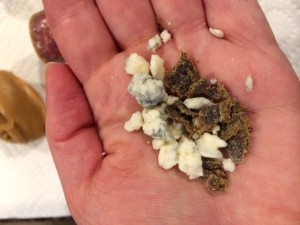
Stinky, small, easy to chew dog treats
Stinky, small and easy to chew dog treats.

Try these dog training tips when selecting fantastic treats for your pooch. He will thank you with his full attention and polite behavior.

  1. Treats must have a strong aroma. The stinkier, the better, as your dog has a fabulous nose. Meat-based treats, especially fish, smell luscious!
  2. Tiny like the size of a pea. Look for treats that break up easily and don’t crumble. Keeping the treat size tiny keeps your dog hungry, calories down and treat cost low. We ask pet parents to bring 100 tiny treats to each class. 🙂
  3. Easy to chew. Soft treats are easy for your dog to chew and swallow quickly. With hard treats, you are waiting for your dog to crunch, crunch and crunch some more before moving forward.

Some dogs love catching their favorite ball or a game of tug as a reward, but 9 times out of 10, most dogs respond to scrumptious treats in high distraction places (i.e. dog training classes). Praise is awesome too. However, this is the icing on the cake with treats. Again, think of working on a project with a friend: praise is nice for a while. Currency is better because you need to pay your bills and eat. 🙂

How to Tell if Your Dog Loves His Treats

  1. As you cut treats or open the bag, your dog is glued to your side sniffing.
  2. You have his full and undivided attention during class.
  3. Immediate and improved success when teaching behaviors.

What’s in my bait bag? Mozzarella cheese sticks, hot dogs, cooked chicken breast, blue cheese (yes, they love it!), cubed round steak and any fish-based treats.

What treats does your dog love? Please comment below and tell us what is in your bait bag!

You may also like: Picky Dog Eaters

Filed Under: Dogs, Health, Resources, Training Tagged With: dog training, dog training classes, dog training treats, dog treats, how to train a dog, how to train a puppy, how to train your dog, how to train your puppy, puppy training, puppy training classes

First Puppy Training Session

June 3, 2014 by Fanna Easter

Training Your Puppy for the First Time

Training Your Puppy
Wait for all four feet on the floor, then click and treat! solovyova/Deposit Photos

Training your puppy to have good manners is best done in the first 16 weeks. Given their short attention span, you should train your puppy in short sessions.

Five-Treat Puppy Training Session

Count out five treats and practice one or two dog behaviors until you’ve given your puppy all five treats.

Potty and play with your puppy for the next 30 minutes. Repeat this short puppy training session three times a day.

  • 1 puppy training session in the morning
  • 1 puppy training session in the afternoon
  • 1 puppy training session in the evening

Instead of treats, you can use your puppy’s morning or evening meal as the reward. This dog training session is great because you can continue to train your dog for as long as you and your puppy like.

RELATED: How to Potty Train a Puppy

One-Minute Puppy Training Session

Unlike the first puppy training session, the one-minute puppy training session requires a timer. Set your timer for one minute and practice teaching your puppy a behavior until the timer rings. Give your puppy a break. Bring him to potty and play for 30 minutes. Repeat this short puppy training session three times a day.

When training your puppy, remember to take breaks. Training breaks are invaluable during the learning process. You’ll be surprised how much your puppy learned during your short training lesson when he’s given time to think and process the behavior he’s learned.

New Behavior

Begin your next training session by practicing a behavior your puppy does really well like “sit” or “touch.” This builds your puppy’s confidence and sets him up for success. Next, introduce a new behavior, such as “down” and break into several puppy training sessions.

If your puppy is struggling, say “down.” End the training session with something your puppy does very well, such as “sit” or “touch.” Take a break and think through your training protocol.

There is a reason your puppy became confused. Maybe your treat wasn’t valued enough or you moved too fast. Think through how you could do better. Ask your dog trainer for advice—dog trainers are invaluable for troubleshooting and problem-solving, as they have trained many dogs!

RELATED: Dog Training Treats

Touch Command

Teach your puppy to respond to a cue. Practice several known behaviors back to back.

  • Example: Teach your puppy to “sit,” “down,” “sit” and “down.” This will strengthen both cues, and your puppy will learn the difference between the cues.
  • Example: Teach your puppy to “sit,” “touch,” “sit” and “touch.” Asking your puppy to “touch” will lead him out of the “sit” behavior, so you can keep practicing!

Make it fun and give him the chance to succeed with some cues he knows. It’s always more fun for your puppy when he’s rewarded for performing the right behaviors in puppy training.

WATCH: Teach Your Puppy the Touch Command

Always remember these tips when training your puppy:

– Keep sessions short with lots of rewards and plenty of break time.
– When you’re stuck, reach out to your dog trainer.
– Make puppy training fun.

What was your experience like when you first trained your puppy?

You may also like: Top 10 Puppy Training Tips

Filed Under: Puppies, Training Tagged With: how to train a puppy, puppy training, puppy training tips

  • « Previous Page
  • 1
  • …
  • 3
  • 4
  • 5

About

Dog Training Nation is a community of dog trainers, dog owners and dog lovers. Our mission is to provide trainers and owners valuable information to enrich dogs' lives. We cover a range of topics, from socializing puppies to dealing with aggressive dog behavior to selecting the best dog products. It is our hope you share our content to make the dog and owner world a better place.

​

Facebook

Video

Dog Training Nation is a dog training blog for pet owners and dog lovers. We cover a range of topics from puppy socialization tips to dog aggression to dog health. It is our hope you share our content to make the world a better place for dogs.

Dog Training Nation

Quick Links

Dog Training
Dog Behavior
Dog Training Videos
Become a Dog Trainer
About
Contact Us

Copyright © 2026 · Lifestyle Pro Theme on Genesis Framework · WordPress · Log in