Dog Training Nation

In Dogs We Trust

  • Home
  • Training
    • Dogs
    • Puppies
    • Clients
  • Behavior
    • Breeds
  • Health
  • Safety
  • Resources
    • Equipment
    • Books
  • Dog Training Videos
  • About
You are here: Home / Archives for puppy training classes

Dog Socialization Tips

December 12, 2014 by Fanna Easter

Socializing Dogs

Dog Socialization
Follow your dog’s lead. Walk away if he’s uncomfortable.

Pet parents are bombarded with: “You’re a terrible owner if you don’t allow your dog to greet other dogs,” “The socialization window closes before 16 weeks so hurry and meet as many dogs as possible,” “Dogs must meet 100 new dogs before a certain age” statements. These statements are valid, but it’s important to add limitations and boundaries first. Follow these dog socializing tips and be their voice.

What is Socialization?

Socialization means puppies and dogs learn how to interact within their worlds. Socialization is vital. Each interaction must be tailored to your dog’s personality with the purpose of teaching him how to interact within his world with confidence.

Greeting: Engage and Disengage

Greeting means a dog walks directly over to another dog with the purpose of engagement. During socialization, puppies and dogs are learning how to politely meet (engage) and end (disengage) greetings. Not all dogs are polite greeters. They can be downright rude by invading space, staring or being too rough. This is where disengaging becomes tricky. It’s kind of hard to move away from a rude greeter while on leash so some dogs will resort to threatening behaviors to make the rude dog go away. Now, your confused disengager learns threats work and is the normal way to disengage.

Living with a Gregarious Greeter
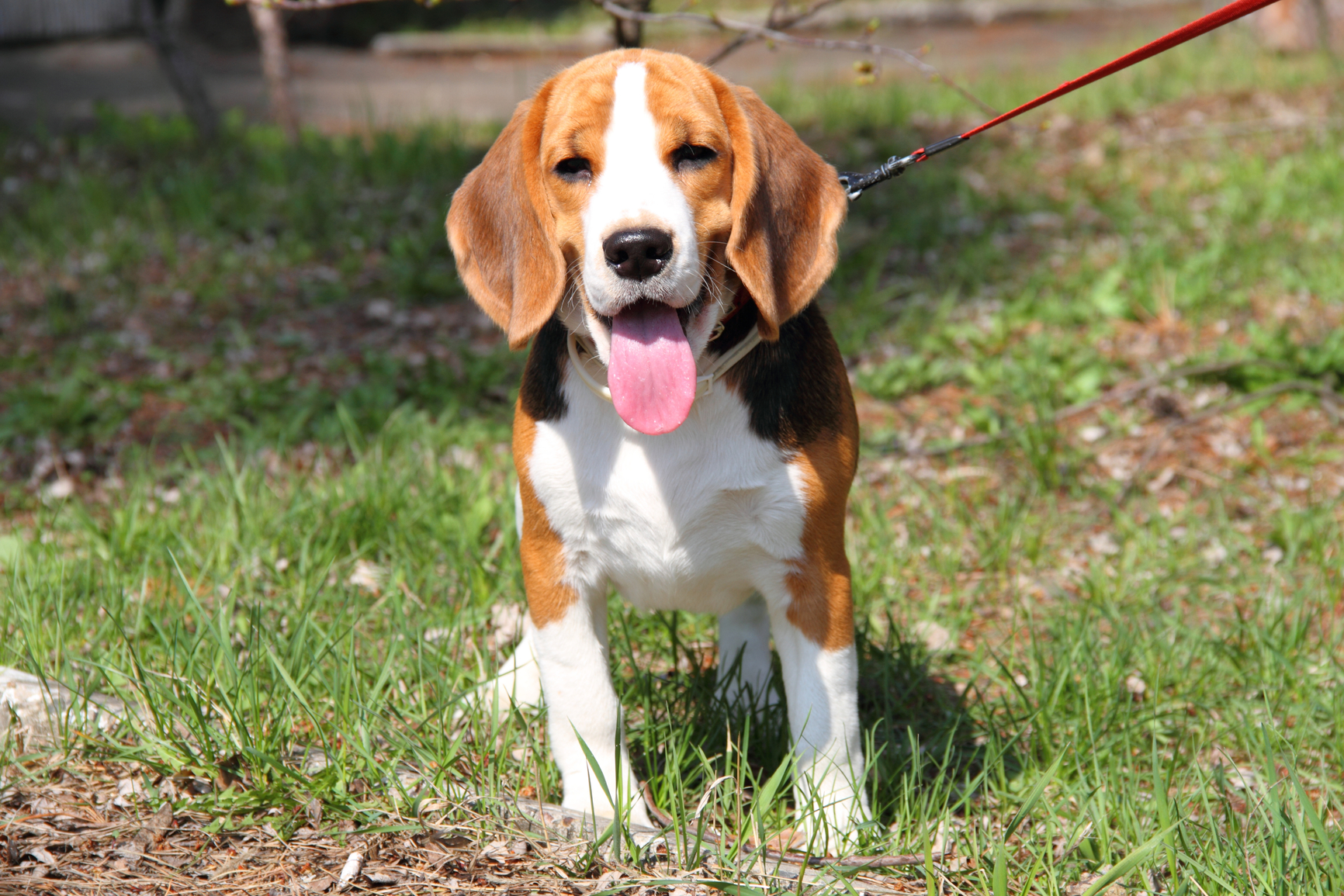
Beagle
“Hello! I’m uber friendly!” Note soft eyes, open mouth and slight panting moving forward.

Not all dogs are comfortable meeting your gregarious greeter. Always stop 15 feet away and ask first. It’s the polite thing to do. If the other dog looks uncomfortable or scared, walk away quickly. Sticking around will make it much worse.

Think of it from a human perspective: Do you shake hands with everyone shopping at the grocery store? “Hi, I see you’re buying grapefruits today. My name is Fanna,” “Hi, those pork chops are lovely. My name is Fanna” or “Oh I buy that type of toilet paper too! My name is Fanna.” Could you imagine?! You would think I was nuts, right? But what if I followed you down an aisle saying, “But I want to meet you. My name is Fanna!” Creepy, especially for people not comfortable greeting strangers!

Instead, while shopping at the grocery store, we make eye contact with a stranger, smile, nod and continue walking past him. When walking past, provide plenty of room by turning sideways, walking down a different aisle or politely allowing a stranger to walk past you because it’s human etiquette. This works in the dog world too! 🙂

My Dog is a Wallflower
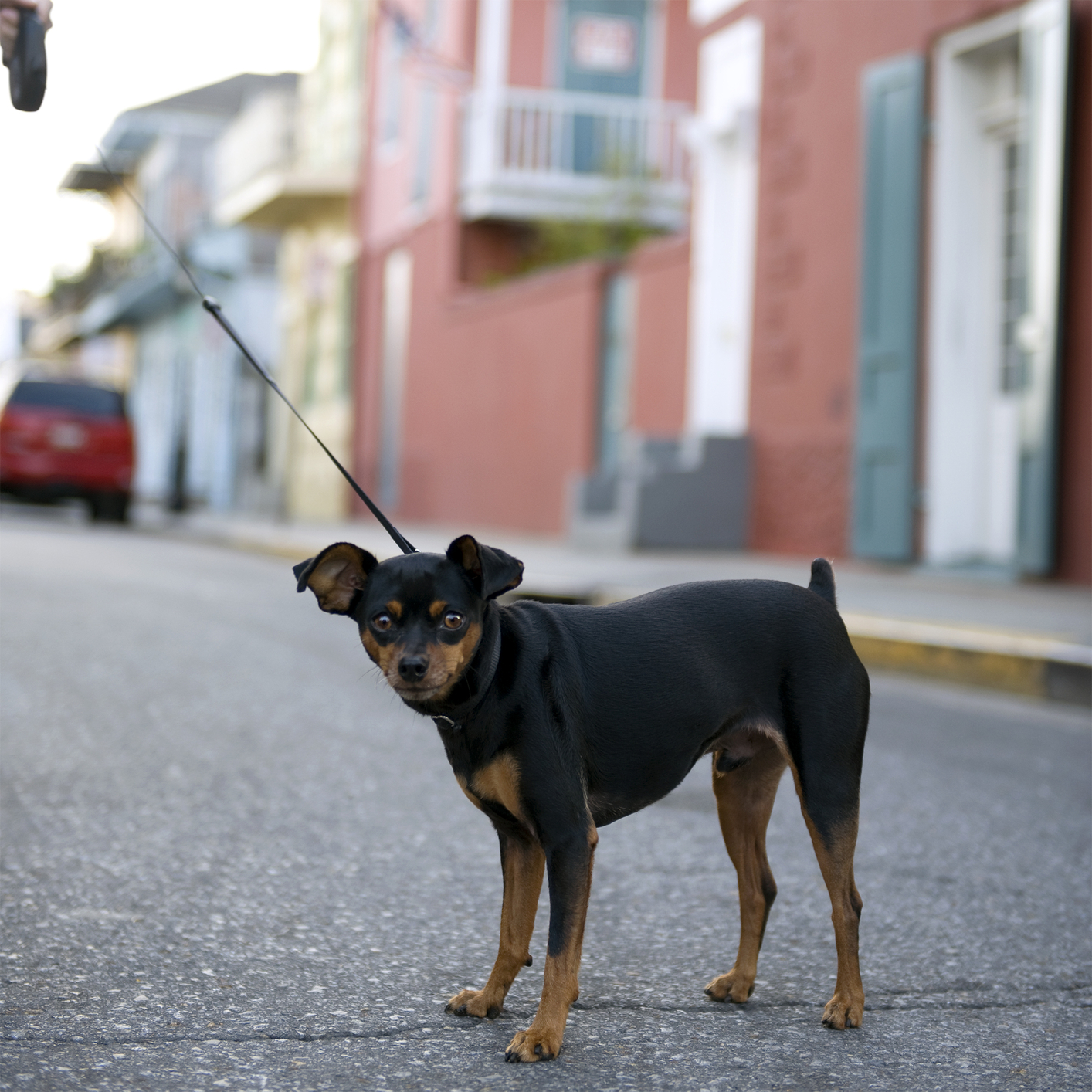
Scared Dog
“Stay away, please!” He’s not sure. Hence, the backwards lean (away from you), mouth closed (no panting), still body and wide eyes.

If your dog finds greeting other dogs stressful, it’s okay. All dogs are individuals. Some are introverts while others are extroverts just like people. An introverted person (withdrawn from strangers) finds attending parties with lots of people torturous. Remember, people are able to control their outcomes. Dogs can’t unless their pet parents notice their uncomfortable behavior around strange dogs or people.

When a dog is forced to meet another dog, scuffles or fights often break out because one dog is not comfortable meeting another dog and tries to disengage using threats. Note, it only takes one scary incident for a dog to become terrified of other dogs. Then the vicious cycle begins. Well meaning pet owners forcibly socialize their newly terrified dogs to fix the aggressive issue, which only makes it worse. Pet owners say, “My dog was really good with other dogs before. So he must need more socialization, right?” This will only make the problem worse.

Never introduce a known aggressive dog to another dog, as this is a recipe for disaster. Socializing known “dog aggressive” dogs will not make your dog better. It will make him much worse. He’s practicing this behavior and we all know practice makes perfect. Plus, there’s a really good chance the other dog, now having a terrible experience, is afraid of other dogs too.

Instead, enroll newly terrified and dog aggressive dogs in a Relaxed Rover class or contact a professional dog trainer or animal behaviorist. By partnering with a professional,  your dog will learn confidence around other dogs while developing skills to engage and disengage greetings without resorting to threats. Shoot, all dogs will benefit from learning these skills. 🙂

Socialization with Boundaries
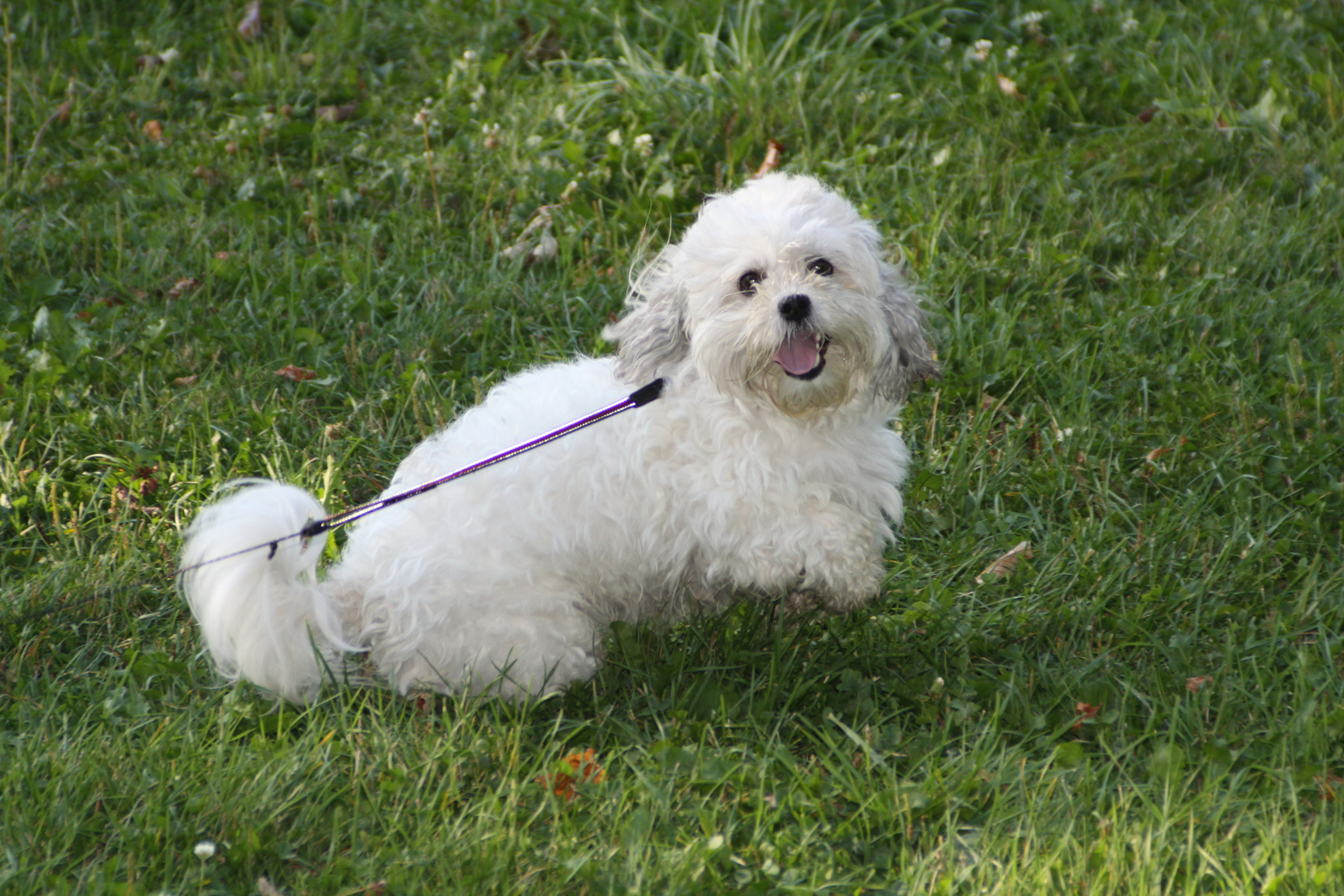
Anxiety in Dogs
“Can we leave? I’m not comfortable.” Note leaning away from you, holding one foot up, ears pulled down and back and worried eyes.

Tip One: Follow your puppy’s or dog’s lead. If he’s not comfortable meeting another dog, walk away (before they greet). You’re teaching polite disengaging behavior by saying “hi” from a distance and politely walking away (remember the nod at the grocery store).

Tip Two: Enroll your puppy in Positive Puppy Manners class and Puppy Playtime after his first puppy vaccination series with a professional dog trainer. If your puppy chooses not to play with other puppies, it’s okay. He probably enjoys human contact more than puppy play.

Allow your dog to choose his friends. Sometimes, dogs and puppies love to play with certain dogs like your neighbor’s or sister’s dog, but he’s not comfortable playing with other dogs. That’s okay too. Personally, I have a tiny group of friends while my sister has unlimited friends, and we came from the same litter. 🙂

Tip Three: When accidentally meeting another dog on leash, allow them to briefly greet for two seconds, then walk away. You’re interrupting the greeting to keep it positive and teaching polite disengaging behaviors. By keeping greetings short with strange dogs, it prevents rude behavior from sneaking up.

Tip Four: If a person and his dog are making a beeline towards your dog, say, “We’re training, sorry,” and step away, turn around or cross the street. Trust me, you’re not being rude by moving away from the approaching pair. You’re speaking up for your dog and he thanks you. 🙂 As for the beelining dog and person, they’re learning that not all dogs should meet, which is a good thing!

I know this is a controversial topic and you can never go wrong by following your dog’s lead. Always socialize, but put a few boundaries in place first. 🙂

Filed Under: Behavior, Clients, Dogs, Training Tagged With: best dog training tips, do dogs want to meet all dogs, dog aggression, dog behavior, dog is aggressive to other dogs, dog socialization tips, dog socializing tips, dog training, Dog Training Tips, how to train dogs, how to train puppies, my dog hates other dogs, obedience training, puppy socialization ideas, puppy socialization tips, puppy training classes, top dog training tips

Is Your Dog Confused?

August 4, 2014 by Fanna Easter

Confused Dog: Dog Training Tips

Confused Dog
Huh? What do you want?

If you’re wondering whether or not your dog is confused, the answer is probably yes!

I will say it: it’s our fault when a dog becomes confused. We didn’t give clear instructions. Many teachers are quick to blame their students, but it’s not the students’ fault when they make mistakes. The teacher wasn’t clear enough for the students to understand. Students must be successful within 1-2 attempts. If not, they will become confused.

Don’t allow your dog to make mistakes. If he doesn’t understand within 1-2 attempts, stop and make the next attempt easy. Mistakes are part of the learning process, but too many mistakes cause frustration, which stops the learning process.

What does a confused dog look like?

Confused dogs display many signs, such as:

  • Become hyperactive
  • Ignore you and their high value treats
  • Startle easily
  • Bark or lunge at other dogs
  • Lay on the ground and totally ignore you

During group dog training class, when I notice a confused dog, the owners are usually very frustrated at this point. They feel the dogs are blowing them off. I gently explain their dogs are simply confused and they should take a break. If you keep pushing, your dog will shut down completely, and we never want to get this far ever.

What should I do?

When you have a confused dog, remain still and drop 10 treats on the ground for your dog. Take 5 deep breaths and relax for a few minutes. Continue relaxing until you and your dog feel better. Pushing, pulling, tugging or yelling will only make the situation worse.

In a few minutes, your dog will look up at you, so smile and ask your dog to “touch.” Touch is an easy cue, which sets your dog up for success immediately. We all like small wins, right? Now, you and your dog are feeling much better, so you can get started again.

VIDEO: Teach the “Touch” Behavior

How to Prevent Confusing Your Dog Again

  • Use treats your dog loves! Confused dogs are more forgiving if you’re using fabulous treats. 🙂
  • Take lots of breaks: Let your dog drink some water, enjoy a quick play session in the backyard or let him sniff outside. Meanwhile, you should sit and relax, drink some water, or read the paper.
  • Keep dog training sessions short: Think 1-2 mins.
  • If your dog becomes confused and isn’t successful within 2 attempts, this means it’s too difficult for him to understand. End the dog training session with an easy behavior, such as “touch.”  Then, try to simplify the behavior further by breaking it into smaller sections.
    • Example 1: Your dog will stay until you step away. This is normal, as your dog has learned that your movement means he’s moving too.
    • Instead of stepping away, shift your feet while remaining in the same place.
    • When your dog is successful, take one step back and then one step forward, and so on.
    • Move at your dog’s pace until he learns “stay” means to remain in this spot while you walk away.

Prevent Learned Helplessness

Learned helplessness is when your dog shuts down, meaning he’s become so discouraged. Make sure to listen to your dog.

It’s your turn! When does your dog become confused?

READ ALSO: Leash Corrections & Leash Pops Don’t Work

Filed Under: Behavior Tagged With: clicker training, dog behavior, dog training, dog training advice, Dog Training Tips, how to train a dog, how to train a puppy, how to train your dog, how to train your puppy, obedience training, puppy training classes, puppy training tips

Choosing the Right Dog Trainer

July 23, 2014 by Fanna Easter

Find a Trainer for Your Dog

Dog Trainer
Happy dog trainer!

How do you pick the right dog trainer for you and your dog?

Dog Trainer Requirements

  1. Use positive reinforcement training. This means he uses treats to reward good behaviors and redirects or ignores bad behaviors. Positive reinforcement works!
  2. Use positive reinforcement on humans too! Basically, dog trainers are teaching you how to train your dog. And if it’s not fun, who wants to do it, right? 🙂
  3. Provide a safe, clean and fun learning environment. Potty accidents must be cleaned immediately. Dogs should not be allowed to bark and growl at each other. Good dog trainers will provide visual barriers to ensure everyone is safe and having fun! If a dog is barking constantly, the dog trainer should be offering the pet parent tips to manage this barking.
  4. Has excellent communication skills. Dog trainers should smile, encourage, ignore mistakes, offer different tips to ensure success. Students should feel comfortable and encouraged.
  5. Understands dogs are individuals. Dogs learn differently, just like humans, so a dog trainer should have plenty of fun ideas in his Dog Trainer Tool Box. He needs to find what works for your dog.
  6. Provides plenty of time to practice behaviors during class. While your dog trainer will explain how to teach a behavior, his stories should be kept to a minimum. About 70% of class time should be focused on practice time.
  7. Shows up on time for each session and is available to answer questions after class.
  8. Helps pet parents meet or exceed their training goals. Dog trainers should check in with each team before, during and after class even if it’s a “thumbs up”or “high five” when they reach their goal 🙂
  9. Leaves you feeling empowered. You must feel successful during and after each class. Fabulous dog trainers strive to ensure you and your dog are always successful.

For additional details, click here.

Locating a Dog Trainer

My advice is to begin searching for dog trainers at Animal Behavior College Certified Dog Trainers, Karen Pryor Academy, Council of Certified Dog Trainers Database, International Associates of Animal Behavior Consultants,  and American Veterinary Society of Animal Behavior Consultants.

Interviewing a Dog Trainer

Now that you understand the requirements and have located a dog trainer, it’s time to interview them. It’s best to speak with dog trainers on the phone and ask to observe a class in session. Dog trainers are honored when pet owners ask to observe a class because they can show off their skills. Using your list of dog trainer requirements, observe a group class in session. Are they meeting your requirements? If, at any time, you are not comfortable observing/practicing any techniques, stop and speak with your trainer. I’m empowering you to be your dog’s voice. 🙂

Tell us about your dog trainer in the comment section below!

More: 
Dog Trainer Fanna Easter 
Dog Trainer Karen Pryor 
Dog Training Classes 
Dog Obedience Training

Filed Under: Dogs, Training Tagged With: animal behaviorist, dog behavior, dog obedience training, dog trainer, dog training, dog training classes, Dog Training Tips, how to train a dog, how to train a puppy, how to train your dog, obedience training, puppy training, puppy training classes

How to Choose Dog Training Treats

July 16, 2014 by Fanna Easter

Dog Training Treats

Puppy Training Treats
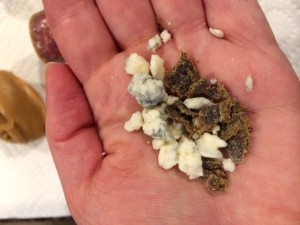
Fabulous treats! L-R: Dried venison, cheese, blue cheese, salami, peanut butter and hot dogs.

So many times, clients bring their dogs into the training center and their bait bag is filled with dry kibble or biscuits. Their dogs are overwhelmed with others dogs, sights, smells, sounds and ignore their owners as everything else is more exciting. Learn how to train a dog by choosing treats your dog loves!

Treats are your dog’s currency. Be generous, pay well and often.

Think about it: If I were paying you for a job well done, would you work harder for $100 or $1 bill? Now translate to food: If I paid you with donuts or broccoli, which would you choose? Personally, I would work for donuts and a $100 bill. I think you see my point now. 🙂

Now, I’m not saying you must have treats in your pocket for your dog to sit. We use treats and rewards in the learning phase, and then wean him after the dog understands the cue. By “weaning,” I’m not saying remove treats entirely. I’m saying reward behaviors intermediately (like a slot machine). We, as humans, have an obsession with weaning our dogs off treats too fast. Not sure why we do it. When you are thinking of not rewarding a dog for a great job, think of a stingy boss from your past – yuck!

RELATED: Healthy Dog Treats

Stinky, small, easy to chew dog treats
Stinky, small and easy to chew dog treats.

Try these dog training tips when selecting fantastic treats for your pooch. He will thank you with his full attention and polite behavior.

  1. Treats must have a strong aroma. The stinkier, the better, as your dog has a fabulous nose. Meat-based treats, especially fish, smell luscious!
  2. Tiny like the size of a pea. Look for treats that break up easily and don’t crumble. Keeping the treat size tiny keeps your dog hungry, calories down and treat cost low. We ask pet parents to bring 100 tiny treats to each class. 🙂
  3. Easy to chew. Soft treats are easy for your dog to chew and swallow quickly. With hard treats, you are waiting for your dog to crunch, crunch and crunch some more before moving forward.

Some dogs love catching their favorite ball or a game of tug as a reward, but 9 times out of 10, most dogs respond to scrumptious treats in high distraction places (i.e. dog training classes). Praise is awesome too. However, this is the icing on the cake with treats. Again, think of working on a project with a friend: praise is nice for a while. Currency is better because you need to pay your bills and eat. 🙂

How to Tell if Your Dog Loves His Treats

  1. As you cut treats or open the bag, your dog is glued to your side sniffing.
  2. You have his full and undivided attention during class.
  3. Immediate and improved success when teaching behaviors.

What’s in my bait bag? Mozzarella cheese sticks, hot dogs, cooked chicken breast, blue cheese (yes, they love it!), cubed round steak and any fish-based treats.

What treats does your dog love? Please comment below and tell us what is in your bait bag!

You may also like: Picky Dog Eaters

Filed Under: Dogs, Health, Resources, Training Tagged With: dog training, dog training classes, dog training treats, dog treats, how to train a dog, how to train a puppy, how to train your dog, how to train your puppy, puppy training, puppy training classes

Why You Should Enroll in Puppy Training Classes

April 14, 2014 by Fanna Easter

The Importance of Puppy Training Classes

Puppy Training Classes
Bigandt_Photography/iStock

One of my favorite classes to teach is puppy training class! Attending puppy training classes is vital for so many reasons. Let me explain why.

Benefits of Puppy Training Classes

  • Plain and simple: Puppy training classes provide your puppy valuable opportunities to experience new situations positively.
  • During your puppy training classes, your puppy will experience new people, puppies, dogs, places, sounds, smells, car rides, leash and collar wearing, and body handling.
  • Puppy training classes allow for plenty of opportunities to reward your puppy for polite behavior.
  • You’ll get to work with a fabulous dog trainer to assist you in training your puppy.

When to Train a Puppy

Puppies learn fast. They’re sponges just like human children, constantly learning and exploring new things in their environment. From birth to 16 weeks of age, puppies are open learning funnels. For this reason, you should train your puppy within the first 16 weeks.

During this critical time, puppies are learning how to navigate and participate in life and their environments. You should make sure you’re introducing your puppy to new experiences in a positive way.

How to Train a Puppy
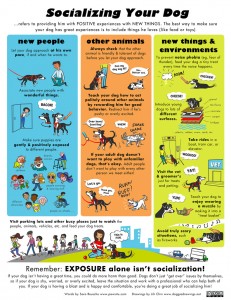
Tips on socializing your puppy by DoggieDrawings.

Puppy Socialization

Most puppies will walk right up to strangers and other dogs. Puppies generally chase or approach new objects (trashcans, butterflies, flowers, etc.) with curiosity. Allow your puppy to watch, sniff and meet different types of people when he chooses to do so.

Expose your puppy to: 

  • Men
  • Women
  • Children
  • People wearing hats
  • People wearing hoodies
  • People wearing sunglasses
  • People who are walking strangely
  • People making loud noises
  • People with beards
  • People carrying and opening umbrellas
  • People jogging behind you or in front of you
  • People approaching you
  • Babies crying

How to Socialize Your Puppy

Puppy Socialization
Two puppies playing politely.

Socializing a puppy “is the process by which puppies learn the skills needed to mature into normal adult dogs,” according to Wikipedia.

Always allow your puppy to take the lead he’s when meeting a new object. He should walk to the person, dog or object on his own and you should reward your dog for it profusely. If your puppy won’t approach the object, never force or pull him toward the object. Simply ask the person or dog to move away from your puppy, or you may move the object further away.

Personally, I’m still traumatized by Santa Claus at the mall. My momma (bless her lil’ heart) picked me up while I was screaming and crying, and placed me on Santa Claus’ lap. In the picture, I was crying uncontrollably—not a cute look! While I’m comfortable seeing Santa Claus at the mall from a distance now, he still creeps me out. Don’t force your puppy to do something that he’s uncomfortable with. This will only scar your puppy to continue feeling uncomfortable in similar situations later in his life.

If Your Puppy Got Scared

Oops, your puppy got scared! It’s OK. It’s our job as dog trainers and pet parents to let puppies know that the object is safe. If your puppy becomes startled, take a step back from the object. Next, click or treat your puppy when he looks back at the scary object. Clicking and treating your puppy is the reward that lets your pet know he did the right thing.

Repeat the approach and reward the process at least 10 times to reinforce the proper behavior. You will also want to click or treat your puppy each time he walks toward the object. Again, this helps your puppy learn a scary object is OK to approach. Eventually, your puppy will touch the scary object, which is the goal.

So run, don’t walk, and enroll in a puppy training class. Your puppy will thank you with polite behavior for a lifetime!

Tell us how puppy training classes have benefited you and your puppy in the comments below.

More on puppy training:
New Puppy
How to Potty Train a Puppy
Puppy Biting
Complete New Puppy Checklist

Filed Under: Puppies, Training Tagged With: how to train your puppy, puppy training classes, puppy training tips

About

Dog Training Nation is a community of dog trainers, dog owners and dog lovers. Our mission is to provide trainers and owners valuable information to enrich dogs' lives. We cover a range of topics, from socializing puppies to dealing with aggressive dog behavior to selecting the best dog products. It is our hope you share our content to make the dog and owner world a better place.

​

Facebook

Video

Dog Training Nation is a dog training blog for pet owners and dog lovers. We cover a range of topics from puppy socialization tips to dog aggression to dog health. It is our hope you share our content to make the world a better place for dogs.

Dog Training Nation

Quick Links

Dog Training
Dog Behavior
Dog Training Videos
Become a Dog Trainer
About
Contact Us

Copyright © 2026 · Lifestyle Pro Theme on Genesis Framework · WordPress · Log in