Dog Training Nation

In Dogs We Trust

  • Home
  • Training
    • Dogs
    • Puppies
    • Clients
  • Behavior
    • Breeds
  • Health
  • Safety
  • Resources
    • Equipment
    • Books
  • Dog Training Videos
  • About
You are here: Home / Archives for teach a dog

How To Greet A Dog For The First Time

August 25, 2017 by Fanna Easter

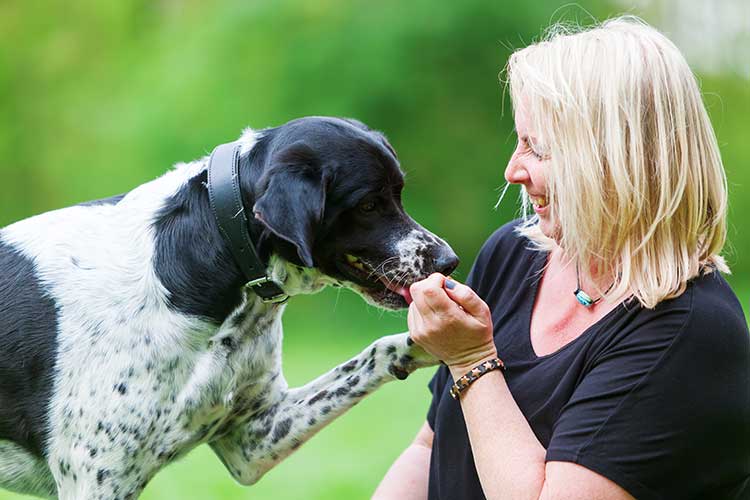
Politely Greeting a Dog

Greet a Dog
innervisionpro/Adobe Stock

As a dog lover, it’s hard to resist a furry face. The moment I see a dog or puppy, I suddenly stop in my tracks and grin from ear to ear. As I adore the dog from afar, I fight the urge to run up and pet the darling. Yes, my dog trainer self steps in and immediately reminds my dog lover side that not all dogs like to greet people and other dogs. So, I smile and walk away. It’s the best thing for the dog.

Within the dog world, polite greetings have recently changed. Instead of approaching a dog, and holding out your closed fist for a sniff, there’s a safer way to greet a dog for the first time. Not only is this greeting safer for people, but it’s also much safer for and more respectful to dogs.

What’s the Big Deal About Petting Dogs?

Many dogs strongly dislike greeting strangers; it’s just their personality. When people greet dogs, they walk straight over and start petting them. While some dogs love greetings, many dogs find greetings uncomfortable due to unwanted physical contact.

Many fearful dogs try backing away, but their leash prevents them from moving, so dogs learn to bite to stop greetings. Think about it this way: Would you be comfortable having complete strangers walk over and pat your head? That’s exactly how some dogs feel, so respect their personal space.

RELATED: Should You Treat Dogs Like Humans?

When Greeting a Dog for the First Time

When you see a darling dog, stand still and don’t make eye contact with the dog. Look over at the pet owner and ask if you can pet her dog. Pet owners who listen to their dog’s choices will promptly let admirers know their dog is not comfortable with greetings.

The pet owner may say “My dog is not friendly” or “He will jump on you.” If that’s the case, respect the pet owner’s decision to not allow greetings. Trying to convince a pet owner that you’re a dog wizard will only make the situation awkward. Just say, “Your dog is gorgeous, and I admire you for standing by your dog’s choices.”

Let the Dog Choose to Greet

If a pet owner agrees to let her dog meet you, it’s important to ask the dog first. Let the dog make the first move while you stand still. If a dog moves toward you, let the dog walk toward you and sniff your legs and shoes. Don’t bend over and pet the dog; instead bend down and let the dog greet you first.

When petting a dog, rub his chest slowly and ask the pet owner if you can give her dog a treat. Slowly stand back up, while chatting with the pet owner, and let the dog continue to sniff you.

If the dog chooses to ignore or walk away from you, respect the dog’s decision. Just say, “It’s okay, I can adore you from over here.” Forcing close physical contact will only frighten the dog even more, and he will learn humans are unpredictable. Just stand still and make light of the situation, and know you taught a fearful dog that people can be trusted. 🙂

As dog lovers, it’s so important to make good impressions, especially to all dogs.

Filed Under: Clients, Safety, Training Tagged With: dog behavior, dog training, Dog Training Tips, greet a dog, how to greet a dog, how to greet a dog for the first time, how to greet a puppy, how to meet a dog, how to teach a dog, how to train a dog, safe way to meet a dog, teach a dog, train a dog

How And When To Use A Long Dog Leash

August 23, 2017 by Fanna Easter

Walking Your Dog on a Long Leash

Long Dog Leash
DoraZett/Adobe Stock

Most pet owners feel short dog leashes are restrictive, so they dream of walking their dogs off leash. While this thought process is understandable, it’s not a safe option. Leashes are used as safety lines because they prevent dogs from running away, accidentally walking into roadways, and running up to strange dogs and people. There’s a reason states are issuing mandatory leash laws and that’s because leashes save dogs’ lives. The solution? Use a long dog leash.

Walking a dog on a long leash will provide your dog a sense of freedom, yet keep him safely contained. Before teaching your dog to walk on a long leash, you should first understand how and when to use a long dog leash. Plus, you’ll need to teach your dog a certain skill set before wandering around.

Choosing a Long Dog Leash

Safe long leashes are between 8- to 15-feet long and are made of nylon. These leashes look like super long leashes with a soft hand loop on one end and a sturdy clip on the other end. Retractable leashes are not considered safe long leashes. They’re not user-friendly due to the fickle “stop” button and the weak leash attachments inside the handle. Safe long leashes are sold in most pet retailers and online.

Use Only With a Body Harness

To keep your dog safe, only attach a long leash to your dog’s body harness. Long leashes attached to collars are extremely harmful and can cause permanent damage to a dog’s neck. Attach a long leash to your dog’s harness back clip and not the front one (i.e. located on your dog’s chest) to prevent sudden injury.

Use a Long Line Once a Dog Has Learned Polite Behaviors

Long leashes provide dogs more freedom, but dogs must have a certain skill set before walking 15 feet ahead of pet owners. Once your dog will walk politely (won’t pull) on leash 90% of the time, then it’s time to practice these behaviors using a long line.

Your dog should also respond 90% of the time to the cues below to ensure you and your dog are safe during walks with a long leash.

  • Come when called
  • Leave it
  • Sit
  • Down
  • Stay

As an example, dogs walking on a longer leash are able to chase small vermin or gobble up discarded food before pet owners are able to see it. If you’re not sure if your dog will respond to these cues, it’s best to use a 6-foot nylon leash instead of a long line.

[perfectpullquote align=”full” cite=”” link=”” color=”” class=”” size=””]Think of holding a long leash like a fishing pole; pet owners must constantly adjust the line tension, depending on their dog’s location. [/perfectpullquote]

Start With a Shorter Leash First

Walking a dog on a long leash can be challenging for the pet owner because certain handling skills are needed. Before loading up your dog and going for a walk in the woods using a 15-foot leash, practice reeling in a long leash. Think of holding a long leash like a fishing pole; pet owners must constantly adjust the line tension, depending on their dog’s location. Start slow, let out 8 feet of leash at first, and then slowly increase 1-2 feet of leash based on your environment.

Long leashes should not touch the ground during walks. Keeping it above ground prevents the leash from tangling around a dog’s legs and trees. When your dog walks closer to you, gather up the extra leash in your hands. This may seem cumbersome, but with lots of practice, it becomes an automatic response as a dog moves back and forth.

WATCH: How and When to Use a Long Dog Leash

Filed Under: Equipment, Resources Tagged With: dog behavior, dog training, Dog Training Tips, how to teach a dog, how to train a dog, how to use a long leash during dog walks, long dog leash, long dog leash for outside, long leash, long line, long line dog training, teach a dog, train a dog, using a long leash dog

Use A Positive Interrupter Cue To Stop Bad Dog Behavior

August 18, 2017 by Fanna Easter

How to Stop Bad Dog Behavior

Dog Behavior
Christian Müller/Adobe Stock

Dogs will be dogs. They bark, run away, chase squirrels, dig, rough house and get super excited. Interestingly, these unwanted behaviors are natural dog behaviors; they’re part of being a dog. Dogs don’t understand why humans find these fun behaviors so annoying.

To stop bad dog behaviors, many pet owners tend to scream “no” or physically punish their dogs. However, there’s a more positive way to interrupt your dog’s behavior. Interrupter cues stop unwanted behaviors by having your dog do something else. Learn how you can incorporate this cue in your training.

Choose a Positive Interrupter Cue

An interrupter cue stops unwanted behavior, so you can redirect your dog’s attention. Yelling “no”or “stop it” doesn’t work, and it will likely frighten your dog. Plus, pet owners tend to become angry when saying “no,” which snowballs into an angry hot mess.

Using a positive word as an interrupter makes a huge difference. Try screaming “no” out loud; it’s a bit scary as it echoes out of your mouth. Now scream “cupcake” out loud. Can you hear and feel the difference? It’s hard to be angry when screaming “cupcake” unless that’s your dog’s name and she’s running away from you. 🙂 This tiny difference is why it’s so important to choose a positive and fun word as an interrupter cue.

An interrupter cue can be a verbal cue (“treat”) or physical cue (one finger touches dog’s body). When choosing a verbal cue, pick something fun and quick, such as:

  • Treat
  • That’ll do
  • Woohoo
  • Cupcake
  • Sprinkles
  • Tequila
  • Beer
  • Cookie

While it’s tempting to use your dog’s name, many pet owners have used it so much that their dogs ignore it. Some pet owners sound like they’re screaming “no” when saying their dogs’ name too, so use a new cue. For hearing impaired dogs, a simple finger touch on their back works beautifully as an interrupter cue.

Once you’ve chosen a positive interrupter cue, pair it with super yummy food.

How to Introduce an Interrupter Cue

Grab lots of super yummy treats, such as baked chicken, chopped up hot dogs or cheese cubes. Treats are your dog’s paycheck, so skip commercial dog treats and use the good stuff! The better the treat, the faster your dog will respond to an interrupter cue.

Start Indoors First

An interrupter cue stops your dog from doing a specific behavior. When your dog is walking forward or looking out of a window, an interrupter cue will stop this behavior. Once a behavior is stopped, it’s important to reward your dog for doing something else like stopping the previous behavior and looking at you.

Start with your dog in the living room and say your interrupter cue. The moment your dog turns around and looks at you, say “yes” (marker word) and give your dog a treat. Practice this behavior 5 times in a row, and then end it. Continue to practice in short training sessions indoors and reward your dog every time he responds to the interrupter cue.

Once your dog responds to the interrupter cue 90% of the time, use the interrupter cue randomly throughout the day. While watching TV, if your dog barks out the window, say “treat” and generously reward your dog when she stops barking and looks at you. Drop your dog’s earned treat at your feet, so your dog walks over to get the treat. This teaches your dog to hang around you instead of the window.

Practice Outdoors

When your dog becomes really good at this behavior indoors (i.e. responds 90% of the time), it’s time to practice the behavior outdoors. Leash your dog and practice saying the interrupter cue, marking and rewarding this behavior for 1-2 minutes. Practice daily for 1-2 minutes with your dog on leash.

Keeping your dog on leash during the first steps of the learning process prevents your dog from wandering off and increases your chances of success. Once your dog will respond quickly to your interrupter cue, take your dog’s leash off and practice saying your interrupter cue and generously reward good behavior.

Using an Interrupter Cue With Multiple Dogs

If you share your home with multiple dogs, practice introducing an interrupter cue indoors with one dog first. Once the first dog responds to your interrupter cue 90% of the time, bring another dog into the mix. Mark and reward each dog when she responds. Once all dogs respond quickly, it’s time to practice with one leashed dog at a time outdoors.

When to Use an Interrupter Cue

Once your dog consistently responds to an interrupter cue, it’s time to use this valuable cue when your dog is barking, playing roughly or digging. Remember, an interrupter cue will only stop bad dog behavior, so ask your dog to do something else.

When indoors, most dogs will stop and look at you once they hear the interrupter cue, so reward this behavior generously. If your dog is in another room or outdoors, say the interrupter cue and toss the reward next to your feet. This will stop your dog’s unwanted behavior and teach him to come to you for the treat. When dogs are playing too roughly, say the interrupter cue and reward each dog the moment she stops playing and looks at you.

It’s important to note that an interrupter cue is different than the “look at me” cue because the interrupter cue is used to stop your dog’s unwanted behavior (barking), so you can redirect him to do something else (look at you). Of course, you can certainly reward your dog the moment she stops barking with a marker word and toss a treat next to your feet. Usually though, unless the dog walks away from the window or digging pit, the unwanted behavior will quickly resume.

What If the Unwanted Behavior Happens Again?

Sometimes, barking, playing and chasing squirrels resumes immediately after hearing an interrupter cue. When this happens, say the interrupter cue again and remove your dog from the situation. Close blinds for window barking, separate rough playing dogs temporarily and bring your dog indoors. This prevents dogs from reengaging in the behavior.

Make interrupter cues more fun than barking, digging and playing, and you’ve hit the jackpot!

Filed Under: Dogs, Puppies, Training Tagged With: dog behavior, dog training, Dog Training Tips, how to stop bad puppy behavior, how to stop dog doing bad things, how to stop unwanted dog behavior, how to teach a dog, how to train a dog, stop bad dog behavior, teach a dog, train a dog

Your Dog Is Anxious, Now What?

August 14, 2017 by Fanna Easter

Behavior Protocol for Dog Anxiety

Dog Anxiety
mdennah/Adobe Stock

It’s a difficult moment when a dog trainer confirms your sneaking suspicion: your dog has anxiety. While it’s something you always kind of knew, it’s still difficult to digest once a professional confirms it. Before freaking out, and withdrawing from society, there are steps that can help reduce your dog’s anxiety. These tips will help get you started on a behavior protocol for success.

Take a deep breath, summon all your patience and get busy teaching your dog that scary things make good things happen. It works!

Stop the Trigger Exposure

Give your dog a trigger-free siesta from scary stuff. This will reduce your dog’s stress level and prevent your dog from practicing unwanted behavior (e.g. barking, lunging, running away, etc.). This seems simple, but it’s very difficult for most pet owners. A “trigger-free” siesta means halting all trigger exposure until your dog learns how to handle scary exposure positively. A undetermined “behavior” siesta will have a profound effect on your and your dog’s success.

During your dog trainer’s consultation, your dog’s triggers were likely discussed in detail. Triggers are events or things that cause your dog to become anxious. If your dog is afraid of meeting new people, stop all greetings immediately. When guests come over, crate your dog in another room (away from guests) with a food stuffed toy and play soft music in the background.

Many dogs are afraid of other dogs, so stop all dog-to-dog greetings and daycare events immediately. If you’re unsure of your dog’s triggers, consult a professional dog trainer who has experience working with anxious dogs.

Put a Plan Into Place

During the consultation, your professional dog trainer should provide you a list of recommended behaviors to reduce your dog’s anxiety. Of course, a trigger-free siesta should be the first step.

Next, your dog trainer should explain, demonstrate and provide a dog training plan with exact steps for the next 2 to 3 weeks. It may seem odd teaching your dog “touch” and “leave it” when your goal is to reduce your dog’s anxiety, but there’s a reason for it.

Teaching your dog to do something else, instead of freaking out, works great. Once your dog is ready and willing to greet people, “touch” is a non-confrontational way to greet guests. Also, your dog trainer should recommend tips for counter conditioning and desensitizing your dog to scary triggers, which is another important part of your dog’s behavior protocol.

Follow Your Training Plan

Training sessions should be short and fun with lots of yummy rewards. Practicing over and over again becomes exhausting so much so that many dogs will react or quit. Keep dog training sessions to 1-2 minutes long, and progress to the next step only when your dog is ready. Work at your dog’s pace, and reward generously!

Follow Up With a Dog Trainer

Solving complex dog behavior issues within a one-hour consultation is impossible, so plan to follow up with your dog trainer regularly. On average, plan a virtual phone consult every 2 weeks and an in-person consult monthly.

Each session will build upon itself until your dog’s anxiety is reduced. Skipping regular follow-up sessions will certainly halt your dog’s training process, so it’s important to have a professional guide you through the next steps.

When to Seek Additional Help

Sometimes, dogs and pet owners need additional help and that is OK. Professional dog trainers will bring in veterinary behaviorists when progress has halted. Many times, dog trainers will reach out to fellow dog trainers for a second opinion, which is a wonderful way to identify any issues. Partnership is critical when progress has stopped, so ask your dog trainer for a second opinion to boost your success.

Anxiety in dogs is quite common, but you can help reduce it by following these steps. Remember to always reach out for help when progress halts or regresses. 

Filed Under: Behavior Tagged With: anxiety dogs, anxious dog tips, dog anxiety, dog behavior, dog training, Dog Training Tips, help for anxious pet, help for scared dog, help for scared puppy, how to teach a dog, how to train a dog, my dog is fearful, my dog is scared, puppy anxiety, teach a dog, train a dog

Next Time Someone Wants To Greet Your Dog, Ask Your Dog First

August 7, 2017 by Fanna Easter

Give Your Dog Choices During Greetings

Dog Greeting Behavior
tamifreed/Adobe Stock

It’s all about choices, especially for dogs. Let’s face it: Dogs really don’t have many choices in life. Dogs don’t choose their roommates (i.e. other dogs), veterinarian, food, treats, daily walking path and potty times.

While I have discussed choices extensively in other articles, let’s discuss giving our dogs choices when they’re meeting other dogs or people. It’s important to note that many dogs react aggressively during greetings because they’re scared. They don’t want to meet other dogs or people, so they run away or lunge forward to stop introductions. Giving your dog a choice during greetings will drastically reduce fearful dog behavior.

Not All Dogs Want to Meet Other Dogs & People

There’s a huge human social element when dogs meet other dogs and people. Most pet owners are painfully embarrassed when their dog dislikes greetings, but they don’t know how to handle the situation. No one enjoys saying “no” to strangers or children; some may even feel conflicted, especially if their dog dislikes greetings.

Pet owners hold their breath, hoping the greeting will be better than the last one, so they stand rigidly holding their breath while their dog’s eyes widen. But there is a better way—a human socially acceptable way to stop this from happening.

Do know, most dogs are uncomfortable with greetings even if they’re meeting friendly people. If this helps, my dogs don’t meet other dogs on leash and I’m a professional dog trainer. When my dogs meet people, I give them choices during the greeting and I support my dogs’ decisions overtime.

Ask the Dog First

In the past, I instructed pet owners to say, “We’re training. No petting please” to strangers, children and other dogs when they approached for greetings. While it worked to keep others away from their dog, many pet owners felt awkward and a bit rude during these “no, stop it” interactions.

There had to be a better way that worked for everyone, especially the dog. The method I now use and tell my clients is the “Asking the dog first” method. It’s a socially acceptable way of disrupting a greeting while allowing your dog to make a choice.

Next time someone barrels toward your dog with an outreached hand, asking to pet your dog, step between your dog and the person and say, “Let’s ask my dog first.” If your dog walks over and greets the person, then reinforce calm behavior (i.e. no jumping and sitting politely for petting).

If your dog decides not to engage, respect your dog’s choice and explain, “Well, he’s feeling a bit shy today and that’s okay, so we’ll respect his choice. Maybe next time.” Many pet lovers graciously understand this explanation because no one wants to force a dog to do something he doesn’t want to do.

When Your Dog Chooses to Disengage, It’s Okay!

When your dog makes a choice, support his decision every time. Yes, it’s uncomfortable watching your dog choose to disengage and the person’s feelings may be hurt. Instead of standing quietly and awkwardly, take a moment and explain why choices are so important for dogs.

[perfectpullquote align=”right” cite=”” link=”” color=”” class=”” size=””]When your dog makes a choice, support his decision every time. [/perfectpullquote]

Lightheartedly explain, “Dogs really don’t have many choices in this world, so this is my way of offering my dog choices and it works well for both of us.” Not only are you supporting your dog’s choice, but you’re also planting the seed that dogs need choices. Soon, pet lovers will mimic this behavior, which will drastically reduce dog bites and prevent aggression.

Choices are everything!

Filed Under: Behavior Tagged With: ask the dog first, dog greeting behavior, dog greeting human, dog greeting people tips, dog greetings, dog hate people, dog hates greetings, dog hates other dogs, dog interactions, dog is scared of other dogs, dog is scared of people, dog meeting dog behavior, dog training, Dog Training Tips, how to teach a dog, how to train a dog, teach a dog, train a dog

  • « Previous Page
  • 1
  • 2
  • 3
  • 4
  • …
  • 17
  • Next Page »

About

Dog Training Nation is a community of dog trainers, dog owners and dog lovers. Our mission is to provide trainers and owners valuable information to enrich dogs' lives. We cover a range of topics, from socializing puppies to dealing with aggressive dog behavior to selecting the best dog products. It is our hope you share our content to make the dog and owner world a better place.

​

Facebook

Video

Dog Training Nation is a dog training blog for pet owners and dog lovers. We cover a range of topics from puppy socialization tips to dog aggression to dog health. It is our hope you share our content to make the world a better place for dogs.

Dog Training Nation

Quick Links

Dog Training
Dog Behavior
Dog Training Videos
Become a Dog Trainer
About
Contact Us

Copyright © 2026 · Lifestyle Pro Theme on Genesis Framework · WordPress · Log in