Dog Training Nation

In Dogs We Trust

  • Home
  • Training
    • Dogs
    • Puppies
    • Clients
  • Behavior
    • Breeds
  • Health
  • Safety
  • Resources
    • Equipment
    • Books
  • Dog Training Videos
  • About
You are here: Home / Archives for teaching a dog

Can A Dog Be Too Food Motivated?

January 16, 2017 by Fanna Easter

Your Food Obsessed Dog May Just Be Distracted

Food Obsessed Dog
Mikkel Bigandt/Adobe Stock

When pet owners are introduced to positive reinforcement, a common question they ask is, “Can a dog become too food motivated?” I must say the concern is a very misunderstood one.

When teaching your dog new behaviors, there are no black-and-white answers. Instead, there are shades of gray that can confuse novice pet owners and dog trainers alike. What seems like excessive excitement about food may simply be something completely different.

Before assuming your dog is too food motivated, you should make a few dog training adjustments, which can make a huge difference in food obsessed dogs.

Signs of a Food Obsessed Dog

When dogs get excited about food, many pet owners feel they’re “too food motivated.” From another perspective, I know many people that behave similarly when margaritas are served. 🙂 When dogs are excited, they may:

  • Jump up
  • Drool
  • Knock over furniture and people
  • Lack focus
  • Focus only on food in hand, on floor, etc.
  • Ignore (not listen to) “commands”
  • Will only sit for a treat
  • Mug, bump or steal from treat bag

Is It Really Food Causing Excitement?

Dogs get excited about food; it’s natural canine behavior. When dogs are introduced to high value treats (i.e. baked chicken, cubed cheese, chopped up lunch meat), especially if they’ve never eaten it before, over excitement is understandable.

Excessive excitement can frustrate the pet owner and dog, so it’s important to bring a dog’s arousal level down a bit. Plus, excited dogs have a harder time learning because they lose focus. During dog training sessions, pet owners should be aware of their own behavior too.

To keep your behavior in check during training sessions, record both you and your dog on your smartphone. Then, make the following adjustments suggested below and record again. You’ll notice a quick and positive difference in your food obsessed dog’s behavior.

Avoid High-Pitched Rapidly Repeating Sounds

Dogs love high-pitched and rapidly repeating sounds—that’s why dog toys have squeakers. When dogs hear squeaky sounds, they get excited. They jump up, run over to the sound, focus on the person or thing making the sound, and dance around because they’re excited!

Fortunately, humans can easily mimic these high-pitched sounds. While many pet owners use these sounds as rewards for good behavior, they can inadvertently use these sounds during dog training too. When pet owners rapidly repeat a cue (e.g. “sit,” “sit,” “sit”), this can cause excitement even if said in a deep tone.

When teaching your dog a new behavior, or practicing an old behavior, say the “sit” cue once. If your dog doesn’t respond, he or she probably doesn’t understand what the verbal cue means. Or your dog has never practiced this behavior in that situation, and is too distracted. Never assume your dog understands a cue. Even if your dog has done the behavior before or will do it elsewhere, it may have been a fluke or you forgot to reward it.

RELATED: What Is Your Dog Saying? Interpreting Dog Sounds

Go Slowly

Oh, this is a big one! Fast movement will get a dog super excited—and quickly! Don’t believe me? Try running around the backyard with your dog. Even better, try running around the backyard while your dog watches you from a window. 🙂 Not only is movement fun, but it’s very distracting for dogs too.

During dog training sessions, it’s important to move slowly. Stand still and hold a treat in one hand. When luring a dog, place the treat on your dog’s nose and move slowly. If you move a food lure too quickly, your dog will move just as fast. When in doubt, put the treat back in your pocket and take a deep breath. Slowly remove the treat from your pocket and try moving slower. Make sure to keep the food lure in front of your dog’s nose. Holding treats too high will cause your dog to jump up for the treat. When you move slowly, your dog will too. 🙂

Make It Clear

When teaching or practicing a dog behavior, clear communication is key. Confusion can look like excitement, especially if a treat is bouncing around a dog’s face. If someone is holding a $100 bill in front of you, while speaking in a foreign language, you’ll try to figure out how to earn the $100.

Now, if this person moves the money around your face really fast, while repeating a sound over and over again loudly, you’ll likely snatch at the money due to frustration. From your perspective (learner), this person is teasing you with a $100 bill, right? From the other person’s perspective (teacher), he’s just holding the money in his hand while asking you to “sit.” 🙂

When in doubt, stop and video record your dog training sessions. When re-watching the video, ask yourself if you’re clearly communicating with your dog. If not, take a moment and think through your plan. Better yet, ask a certified dog trainer for tips. They can help jump-start your training sessions.

Still Think You Have a Food Obsessed Dog?

High-pitched, rapidly repeating sounds coupled with fast movements are exciting for your dog. Add a dash of confusion into the mix, and your dog is bouncing around like a ping-pong ball. Ninety percent of the time, a dog will sit still around food when pet owners remove these exciting and distracting factors. As for the other 10%, these dogs will relax quickly after earning and consuming a high value reward a few times. If a dog still leaps into the air for baked chicken, it’s time to reward impulse control games.
Filed Under: Behavior, Dogs, Puppies, Training Tagged With: dog gets excited with treats, dog too food motivated, dog training, Dog Training Tips, dogs loves training treats too much, food driven dog, food obsessed dog, how to teach a dog, how to train a dog, teaching a dog, training a dog

Training Your Dog Through An Interactive Dog Camera System

January 4, 2017 by Fanna Easter

Interactive Dog Cameras for Dog Training

Best Dog Cameras
Annetics/iStock

Over the Christmas holidays, it seems every pet owner had an interactive dog camera under her Christmas tree. Interactive dog cameras allow pet owners to peek in on their dogs while they’re away from home. Plus, these pet surveillance cameras offer special features, so pet owners can talk to or toss a treat to their dogs, making these dog cameras so popular. When used correctly, you can successfully train your dog through your interactive dog camera too—with a few caveats.

Let Sleeping Dogs Sleep

Most dogs sleep when pet owners are away, which is quickly confirmed after installing an indoor camera system. While it’s tempting to toss a treat or speak to your dog over the microphone, it’s best not to wake sleeping dogs.

Think about it this way: Waking up to the pinging sound of a treat being dispensed loudly from across the room is startling. Same things goes for when pet owners speak to their dogs through a microphone. These sounds can certainly scare some dogs so much so that they avoid hanging around the scary camera.

When dogs associate scary things with a pet camera, they’ll sleep in another room, defeating the purpose of camera check-ins throughout the day.

Common Dog Behavior Issues

Barking

Many pet owners worry that their dogs will bark incessantly when away at work, which is completely understandable. This is the perfect time to use the interactive treat dispensing feature! Most interactive dog camera systems will email or text a barking alert to notify you when sound is detected in your home. Quickly check the video feed and verify your dog is barking.

When your dog is barking, ignore it. Don’t say anything over the microphone; wait until your dog is quiet. Now, this may take a few minutes, but the moment your dog stops barking (even for a nano-second), dispense a treat. You’re rewarding quiet behavior even if your dog is quick for a split second. Plus, your dog will stop barking while he or she runs over to the camera and eats the treat. If your dog starts barking again, practice a few more times. Your dog will likely wait around the camera quietly, hoping a treat will fall out. 🙂

Take note of what causes your dog to bark, and prevent it from happening again. Close curtains and blinds, or prevent your dog from walking into rooms with front-facing windows by placing baby gates in doorways. Try leaving soft music playing in a windowed room to drown out noises. If ringing doorbells cause your dog to bark, hang a “Do not ring doorbell” note on the doorbell.

Management is an important part of changing dog behavior. Continue rewarding quiet behavior by dispensing treats when your dog is awake and quiet.

RELATED: Help! My Dog Barks Relentlessly at My Neighbor’s Dog

Stress

Separation anxiety is a common reason pet owners purchase dog cameras. It’s important to understand that separation anxiety is a very serious issue. In true cases of separation anxiety, dogs have complete panic attacks when left alone. Panicked dogs will bloody themselves trying to escape, vocalize for hours, pace, drool excessively and completely stress out. Pet surveillance cameras can only confirm your dog has separation anxiety, but it won’t help change the behavior.

When dogs panic, they won’t eat treats. And hearing a microphone version of your voice will likely freak your dog out even more. Unfortunately, this behavior won’t get better on its own. It’s important to work with a professional if your dog suffers from separation anxiety.

Schedule an appointment with a veterinary behaviorist. Record and save a video of your dog stressed out at home and send it to your veterinary behaviorist before your scheduled appointment. The information captured through your interactive dog camera will help you and your veterinary behaviorist determine whether or not your dog’s behavior is improving when you’re away.

Chewing

Sometimes, when peeking in on dogs, pet owners notice their dogs chewing or destroying furniture. Instead of screaming over the microphone, make a smooching sound to distract your dog. When your dog looks away from whatever he or she is chewing, quickly dispense a treat. If your dog walks right back over and continues to chew on the pillow, make a smooching sound again over the microphone. Dispense a treat the moment your dog looks at the camera.

Usually, a recently rewarded dog will hang out, and sometimes fall asleep, next to the pet camera until you return home. They’re hanging out in hopes of treats dispensing from the camera again (smart dogs!).

Once home, management is important. Remove pillows from sofas, or block dogs from going into rooms containing chewable items. Crating your dog works well too; just make sure someone brings your dog potty after 3-4 hours.

Potty Accidents

Potty accidents happen, but an interactive dog camera system won’t change your dog’s behavior. Refrain from scolding your dog through the camera microphone—no use crying over spilled milk. Clean up the potty mess silently when you get home. To prevent your dog from pottying inside your house again, crate your dog while you’re away. Remember, it’s unfair to crate dogs longer than 3-4 hours, so hire a pet sitter to take your dog out to potty.

What have you witnessed while watching your dog through a dog camera system?

Filed Under: Clients, Equipment, Resources, Training Tagged With: 2 way pet camera, best pet surveillance camera system, dog camera treat dispenser, dog trainer recommend pet camera system, dog training, Dog Training Tips, drop cam camera system dogs, furbo camera review dogs, furbo camera review pets, how to teach a dog, how to train a dog, interactive pet camera, pet monitor camera reviews, pet surveillance camera, pet surveillance camera reviews, separation anxiety dog camera system, teaching a dog, tips for dog camera system, training a dog, training tips pet surveillance camera

New Year’s Resolutions For You And Your Dog

January 3, 2017 by Fanna Easter

New Year’s Resolutions List

New Year's Resolutions List
monkeybusinessimages/iStock

2016 has been a challenging year for most, so let’s start 2017 off on the right paw. While you may be percolating on personal New Year’s resolutions, don’t forget the dog! Starting on January 1st, incorporate one or two from the below New Year’s resolutions list. Even better, tackle one resolution per month until all become habits. Not sure which resolution would work for your dog? Check out these suggestions. Seriously, your dog will thank you!

1. Spend More Quality Time Together

Everyone is so busy that our dogs’ emotional needs are often pushed aside. Of course, our dogs’ basic needs for food, water and shelter are met, but we need to fill our dogs’ love tank too.

Once a day, take your dog out for a 15 to 30-minute walk around the neighborhood, play a super fun game or polish up on dog training for a few minutes a day. Even better, enroll you and your dog in a super fun dog training course, such as beginner’s agility, nose work or barn hunting! Spending time together will refill your dog’s love tank and strengthen your bond.

2. Provide Daily Mental Stimulation

Most dogs are left alone all day while their pet owners are at work. Sitting home alone is boring, so spice up your dog’s day with mental stimulation. Provide meals in food puzzles, hide treats around your home and provide frozen food stuffed Kongs throughout the day. Once home from work, play a game of tug or “touch.” Hide treats in a puzzle, and applaud when your dog moves latches and levers to uncover hidden treats. Physical exercise is good, but pairing it with mental stimulation is much better!

3. Lose Those Extra Pounds

We all have extra pounds stashed somewhere on our bodies. Dogs have them too. Every dog has an ideal weight. Ask your veterinarian for your dog’s target weight goal. If your dog needs to shed a few pounds, start walking your dog daily for 10 minutes. Slowly add 1-2 extra minutes per week until dog walks last 30 minutes.

Start measuring your dog’s food each day, and cut back on snacks. For dog training treats, choose healthy pea-sized portions of dried fruit or baked chicken breasts. Every calorie counts!

4. Aim for Daily Tooth Brushings

It’s true: Dogs need their teeth brushed daily too. Many chronic diseases are caused by tooth decay, including heart disease. Purchase a small toothbrush and toothpaste made specifically for dogs, and teach your dog that tooth brushing is fun. Tooth brushing sessions should last one minute. We all have an extra minute in our schedule, so aim for daily brushings after your dog’s evening meal.

5. Polish Up on Manners

Every dog has at least one pesky habit that drives us crazy. Maybe your dog barks outside or jumps up on guests. Some dogs pull on leash or beg during dinner. It’s a new year, so it’s time to address your dog’s pesky habit.

Carve out 2-3 minutes per day to teach your dog to do something else instead. Stick to it daily and keep dog training sessions short (1-2 minutes). Through consistency, soon this pesky dog behavior will be gone!

What are your dog’s New Year’s resolutions?

Filed Under: Clients, Resources, Training Tagged With: dog new year's resolution, dog training, Dog Training Tips, how to teach a dog, how to train a dog, new year's solution ideas for your dog, pet new year's resolution, start the new year right dog, teaching a dog, training a dog

Keeping You And Your Dog Safe During Nighttime Walks

December 30, 2016 by Fanna Easter

5 Tips for Walking Your Dog at Night

Walking Your Dog
GunjanGupta/iStock

With shorter daylight during winter, or hot 90-degree summer days, sometimes it’s best to walk your dog at night. Walking at night creates one huge obstacle though: it’s difficult to see in the dark. Many things can hide in darkness, so it’s best to take a few safety precautions before going on a nighttime walk with your dog.

1. Wear Reflective Collars & Harnesses

When it’s dark outside, it’s impossible to see moving objects in the distance. Visibility is key at night, and it’s important for drivers, cyclists, joggers and fellow walkers to see you and your dog ahead in the dark. Choose a reflective or glow-in-the-dark dog collar or harness. While white dogs reflect light better than dark-colored dogs, it’s important for all dogs to wear some type of light reflective material during nighttime walks.

These principles apply to pet owners too. Wear light-colored reflective clothes or shoes or carry a flashlight.

2. Walk on Lighted Paths

When walking your dog at night, choose lighted pathways for safety. You can find these in most parks and neighborhoods. Lighted pathways will allow drivers to see you when you’re walking near roadways, so they slow down.

Lights also provide you security. You’ll be able to see any approaching criminals, so you can react quickly. Additionally, lighted pathways will identify loose dogs, potholes, wild animals, broken glass and other harmful hazards that might be in your way.

RELATED: Walking Two Dogs at Once Tips

3. Use a Short Leash

During nighttime dog walks, it’s important to keep your dog close to you. Attach a 4-foot leash to your dog’s harness, or keep retractable leashes locked at 4 feet. Better yet, keep retractable leashes at home. They’re cumbersome during emergencies.

Dogs can navigate through darkness fairly easy, as their noses detect every scent and their ears hear every sound. Having a short leash on your dog’s harness will prevent your dog from stepping on broken glass, munching on discarded food or encountering wildlife. For you and your dog’s safety, keep your dog close to you during night walks.

4. Choose a Safe Path

Aside from choosing a lighted pathway, make sure it’s safe. Choose a path located in a safe and quiet neighborhood instead of a busy street. Safe paths should be free of loose dogs running around, barking dogs at fence lines, wildlife sightings (i.e. snakes, scorpions, raccoons, opossums) and criminal activity. Walking your dog at night may deter some criminals, but it certainly won’t stop all. Before heading out for a nightly walk, tell a friend or family member the path you’ll take and when you’ll be home.

5. Keep Your Phone in Your Pocket

Keep your phone in your pocket and ear buds at home. Unplug and enjoy this bonding time with your dog. Listening to music and talking on your phone are extremely distracting, which take your focus away from keeping you and your dog safe. Always be aware of your surroundings.

Be safe!

Filed Under: Clients, Safety, Training Tagged With: are you safe walking dog at night, dog training, Dog Training Tips, dog walk night, how to teach a dog, how to train a dog, night time walking dog safety, night time walking dogs, reflective collars dogs, reflective harness dog, should you walk dog at night, teaching a dog, tips for walking your dog at night, training a dog, walking at night tips, walking dog at night

6 Tips For Dining In Dog-Friendly Restaurants

December 28, 2016 by Fanna Easter

Dog-Friendly Restaurant Etiquette

Dog-Friendly Restaurants
IPGGutenbergUKLtd/iStock

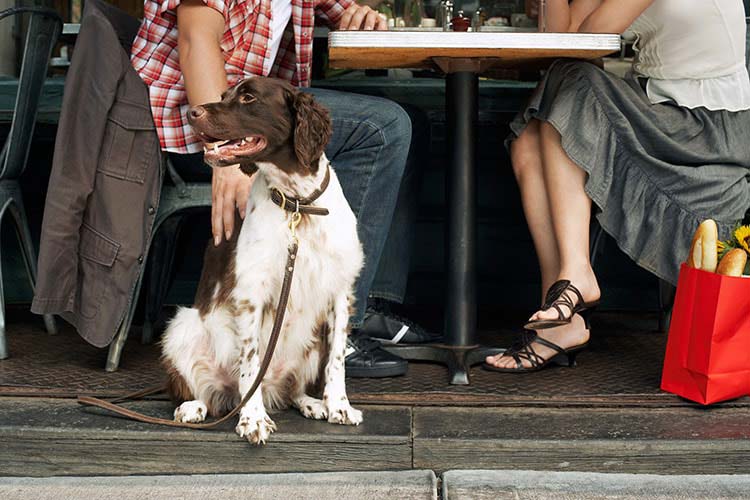
Dog-friendly restaurants are popping up everywhere, and many are now offering outdoor seating for pet owners and their dogs. Enjoying a scrumptious meal while relaxing at a restaurant with your dog is a privilege, so proper dog restaurant etiquette is a must.

1. Leashed Dogs Only

When dining at dog-friendly restaurants, keep your dog on a short leash that’s preferably 4 feet long. Short dog leashes prevent dogs from bugging nearby guests while they eat, snatching fallen food crumbs from nearby tables, or jumping on tables and servers. While it’s tempting to tie your dog’s leash to your chair or table, it’s best to attach it to yourself instead.

For smaller dogs, tie the handle around your belt loop or wrist. For larger dogs, I’d recommend attaching the handle of your dog’s leash to your belt. Unbuckle your belt and slide your belt through the leash handle, and then refasten your belt. If this is too complicated, try waist belts or simply hold your dog’s leash with one hand.

2. No Barking Please

Barking dogs will be asked to leave. If your dog barks at people or dogs, it’s best to keep him at home. Some dogs are uncomfortable in fast-paced environments even if they’re dog-friendly places. They end up hiding under chairs. Movement can scare some dogs too, especially when guests or servers walk toward your table. If, at any time, your dog becomes fearful, worried, stressed or vocal, ask your server to box your meal up to go. It’s the right thing to do for your dog. 🙂

3. Polite Manners are a Must

Dogs should sit quietly near their pet owners and relax while waiting at dog-friendly restaurants. This is tough for most dogs though because they easily get excited around people. Before going to a dog-friendly restaurant, make sure he’s able to “sit,” “down” and “stay” on cue in high distraction areas.

Additionally, your dog shouldn’t jump up on people or pull on leash. Teaching polite manners around myriad distractions may take years before a dog is comfortable enough to relax in a restaurant. Practice, practice and practice some more before expecting your dog to sit quietly for an hour. Start slow by popping into a dog-friendly cafe and practice “settle” while waiting for your order.

4. Bring a Portable Water Bowl

Dogs get thirsty, so bring along a collapsible water bowl. Ask your server for a glass of water, and pour it into your dog’s bowl. Place your dog’s bowl under your table to avoid guests’ feet or your dog from knocking it over. Replenish water as necessary, especially on warm days.

RELATED: Dogs Die in Hot Cars

5. Choose a Quiet Location

Most dog-friendly restaurants offer outdoor seating for pet owners and dogs, so choose a quiet location. Ask for a table off in a corner and away from high traffic areas. Remember, not all guests like dogs, and many may startle when seeing a dog in their path. Additionally, a quiet location prevents guests and servers from stepping on your dog, and provides a nice place for your dog to truly relax.

6. Keep Your Dog Busy

Expecting a dog to sit quietly for an hour around food, noise and fast-moving people in a strange location is impossible. Bring plenty of high-value chew toys or food stuffed toys for your dog to enjoy. Bully sticks are a great high value treat that will keep your dog busy for 10-20 minutes, depending on your dog’s chewing style. If your dog refuses to chew or lick high value treats, he may be nervous. When in doubt, ask the server to box your food up to go.

As pet owners, we represent all pet owners. Take your time and teach your dog how to politely react in a restaurant environment. It will make us all look good! 🙂

Filed Under: Clients, Resources, Training Tagged With: dog friendly restaurant etiquette, dog friendly restaurants, dog training, Dog Training Tips, how to teach a dog, how to train a dog, pets in restaurants, should you bring your dog to a restaurant, teaching a dog, tips for bringing dog to restaurants, training a dog

  • « Previous Page
  • 1
  • …
  • 5
  • 6
  • 7
  • 8
  • Next Page »

About

Dog Training Nation is a community of dog trainers, dog owners and dog lovers. Our mission is to provide trainers and owners valuable information to enrich dogs' lives. We cover a range of topics, from socializing puppies to dealing with aggressive dog behavior to selecting the best dog products. It is our hope you share our content to make the dog and owner world a better place.

​

Facebook

Video

Dog Training Nation is a dog training blog for pet owners and dog lovers. We cover a range of topics from puppy socialization tips to dog aggression to dog health. It is our hope you share our content to make the world a better place for dogs.

Dog Training Nation

Quick Links

Dog Training
Dog Behavior
Dog Training Videos
Become a Dog Trainer
About
Contact Us

Copyright © 2026 · Lifestyle Pro Theme on Genesis Framework · WordPress · Log in