Using Calming Signals to Talk to Your Dog
Do you ever wonder what your dog is trying to say to you?
Well, dogs have a universal language that allows them to communicate with each other as well as humans. Some parts of this language have been understood by people for a long time, such as a dog growling or the positions of their tails and ears.
Other aspects of this canine language are so subtle they’re still being discovered and interpreted today. Some of these subtle body gestures were given the name “calming signals” by Turid Rugaas, a noted author and lecturer on the subject of canine body language. Ms. Rugaas identifies these body gestures in her book “On Talking Terms with Dogs: Calming Signals.” In her book, she identifies specific body gestures and behaviors that dogs use to communicate with one another.
Understanding Your Dog’s Calming Signals
Being able to recognize what your dog is trying to communicate to you will create a better relationship between you and your dog. You can do this by learning how to read the signals your dog offers. These calming signals are often given from a dog to calm nervousness and fear when he feels threatened by dogs and/or people, which can easily be overlooked or misinterpreted by humans.
Dogs, by nature, are conflict-solving animals and will usually attempt to defuse conflicts before they become serious. Sometimes, this is facilitated by offering calming signals. For example, when a dog turns his head away from you, it could mean he feels stressed due to the tone of your voice. By looking away, the dog tries to avoid conflict.
Many humans may misinterpret this calming signal and believe the dog is ignoring them, which could actually escalate the situation. If you, the owner, recognize this calming signal and removed the conflict (i.e. changed the tone of your voice), you’ll find your dog looks back.
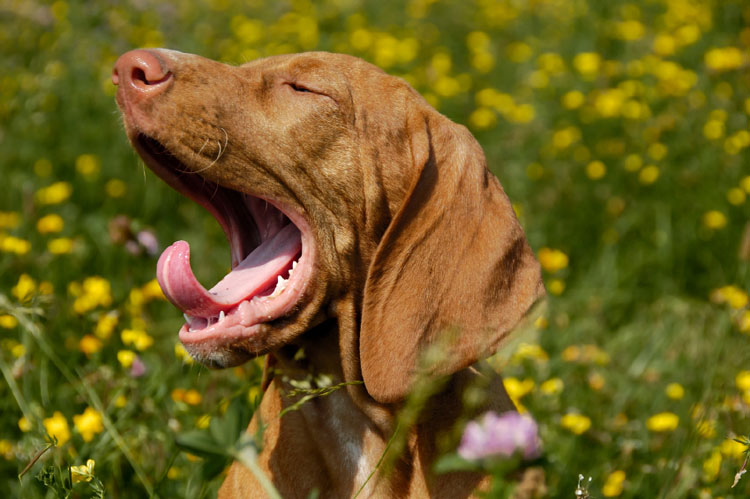
Some dogs will soften their eyes when a person or another dog tries to engage in a direct stare. This is to let the person, or other dog, know they’re not trying to be offensive or cause a conflict. Some calming signals are much more subtle, such as licking their nose, flicking their tongue, yawning and walking, or moving slowly. You’ll notice that sometimes your dog will walk or move very slowly when you holler at him to come to you. This is to encourage you to calm down unlike the common misconception that the dog is being intentionally disobedient “because he knows he’s in trouble.”
Common dog calming signals include:
• Head turning
• Softening of the eyes
• Licking the nose
• Flicking of the tongue
• Freezing
• Walking or moving slowly
• Yawning
• Sniffing
• Curving when walking
• Lying down
RELATED: Dog Socialization Tips
Guidelines When Using Calming Signals
You, as the owner, can use these signals to communicate to your dog just as he is using them to communicate with you. For instance, if your dog makes direct eye contact with you in a not-so-happy fashion, you can turn your head away to show your dog no immediate threat, as we don’t want to escalate the situation.
When your dog jumps on you, simply turn your back to let him know this behavior is not welcomed. If you’re dealing with a fearful dog, walk and move slowly to let the dog know you mean no harm. You’re really just talking to your dog with body language, which speaks louder than most words to him.
Conclusion
To become more fluent with calming signals, I invite you to read the book mentioned above written by Turid Rugaas as well as begin observing your dog as he interacts with other dogs and in different situations.
READ NEXT: How to Trim Dog Nails With a Dremel